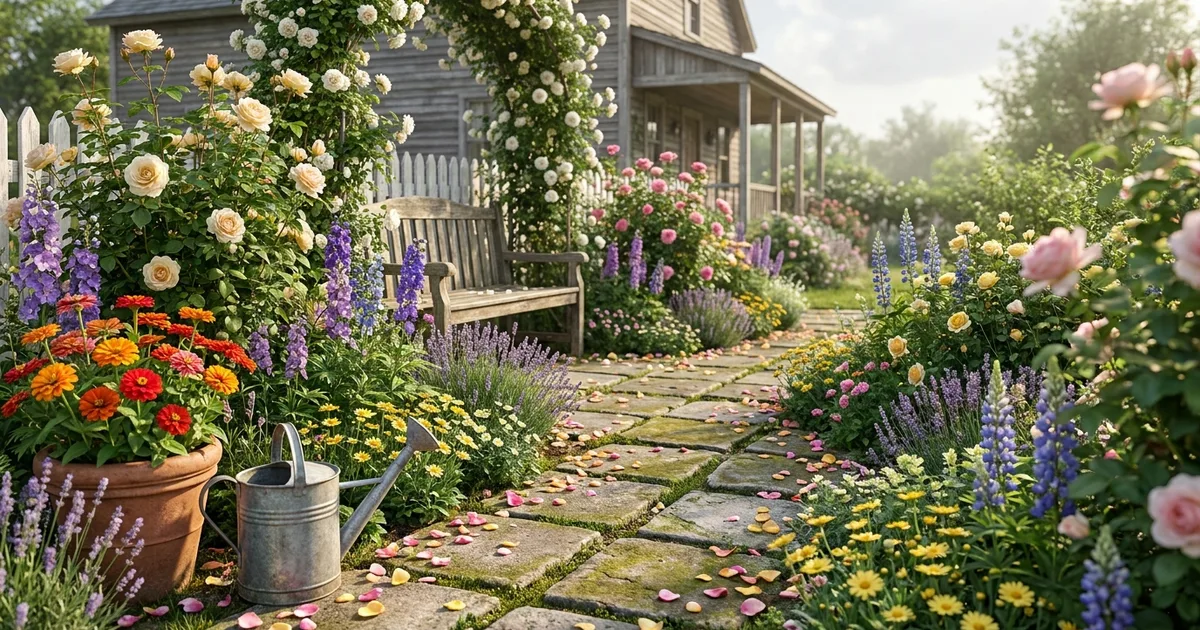
18 Cottage Garden Path Ideas with Stone and Flowers
A cottage garden path is an invitation to wander. It should feel meandering, soft, and overflowing with flowers. These paths look like they’ve grown there naturally, guiding you through the garden with a gentle hand rather than a rigid line.
These 18 path ideas combine natural stone with flowers and greenery to create a look that’s romantic, whimsical, and full of color. From mossy flagstones to thyme-filled gravel, these designs bring the quintessential cottage garden feel to any outdoor space.
What’s inside this article
- Mossy Flagstone Walkway
- Thyme-Filled Gravel Path
- Old Brick Edge Path
- Wildflower Meadow Path
- Stepping Stone and River Rock
- Gravel and Flower Border
- Rustic Stone Slab Path
- Scented Path
- Cobblestone Cottage Path
- Arbored Path
- Mosaic Pebble Path
- Wood Slice and Moss Path
- Perennial-Overhang Path
- Rose-Lined Path
- Grass and Stone Strip Path
- Gravel and Stepping Stone Path
- Edging with Alyssum
- Brick and Thyme Path
Mossy Flagstone Walkway
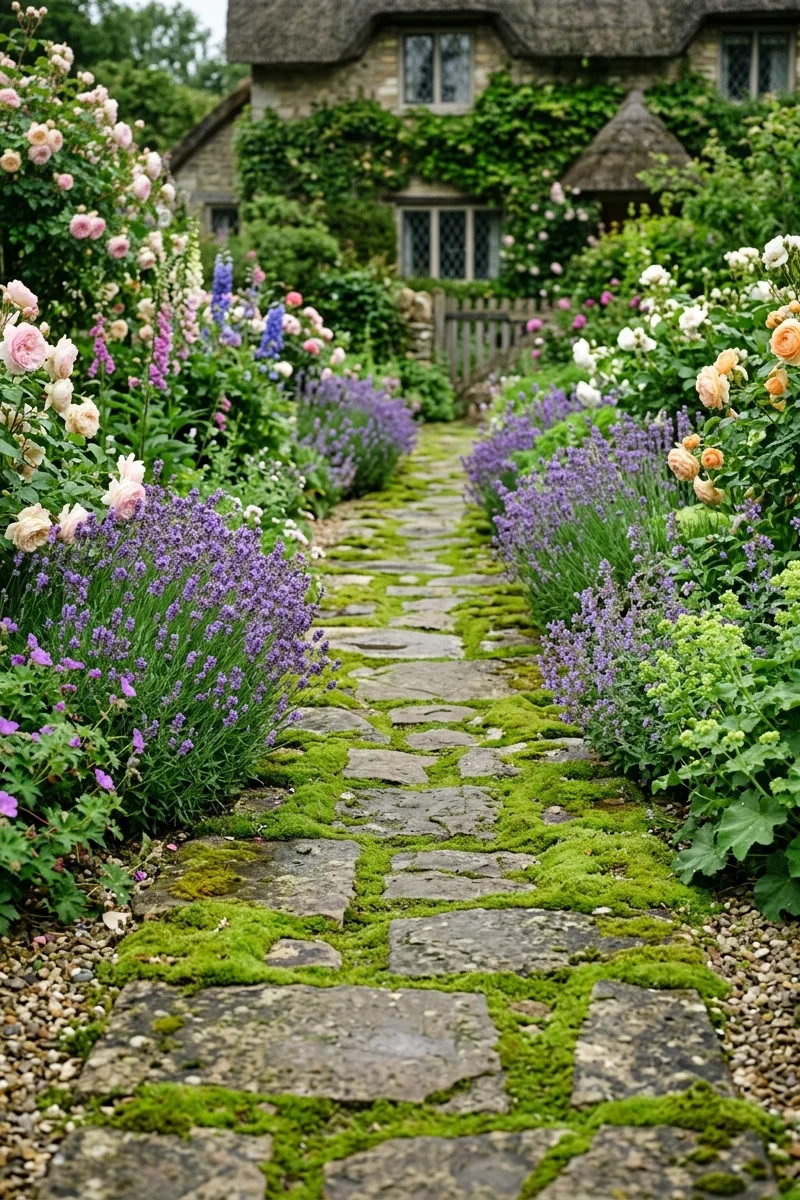
Mossy flagstones are the hallmark of a cottage garden. The irregular stones look like they’ve been there for centuries. Encourage moss growth by keeping the stones damp and shaded. The soft green moss between the stones softens the edges and makes the path feel integrated into the landscape. This path works beautifully in woodland settings or shady side yards.
Thyme-Filled Gravel Path
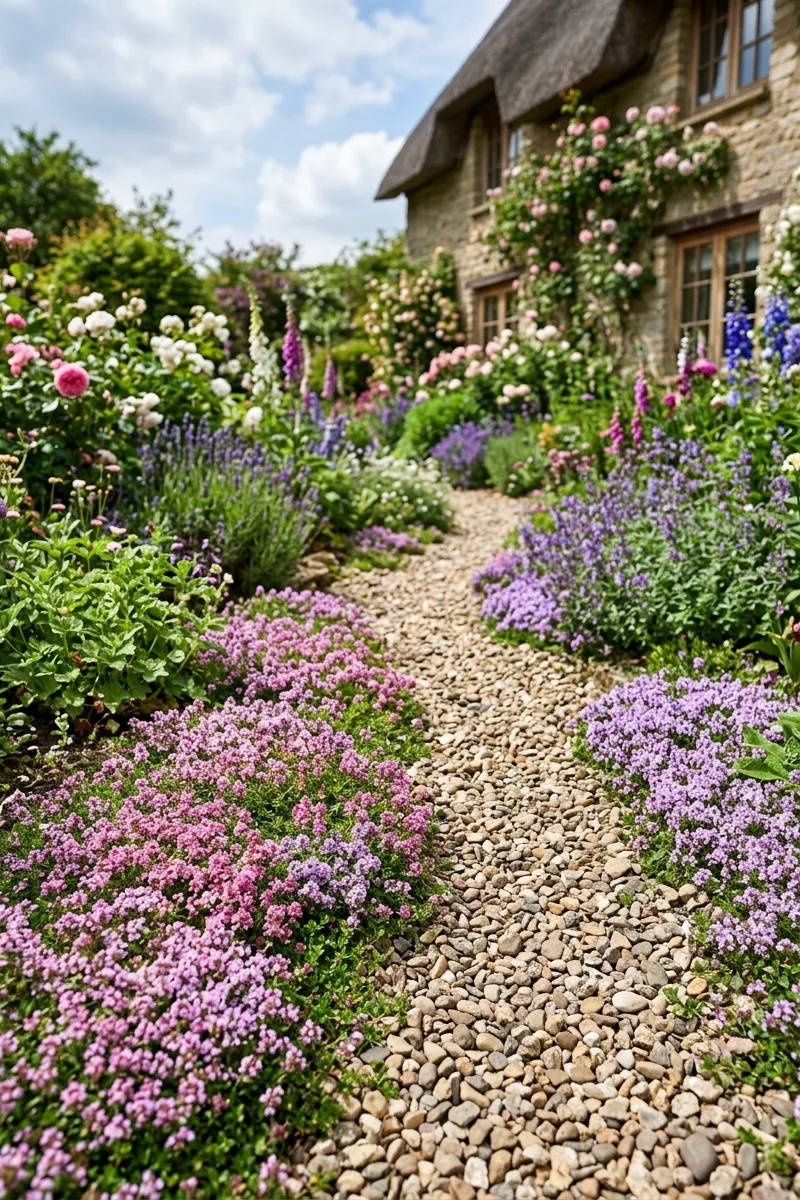
Creeping thyme planted between gravel stones releases a wonderful fragrance when you walk on it. The tiny flowers add a carpet of pink and purple color to the path. Use a low-growing variety like Thymus serpyllum. The combination of grey gravel and green thyme creates a soft, sensory path that’s perfect for a relaxed cottage garden atmosphere.
Old Brick Edge Path
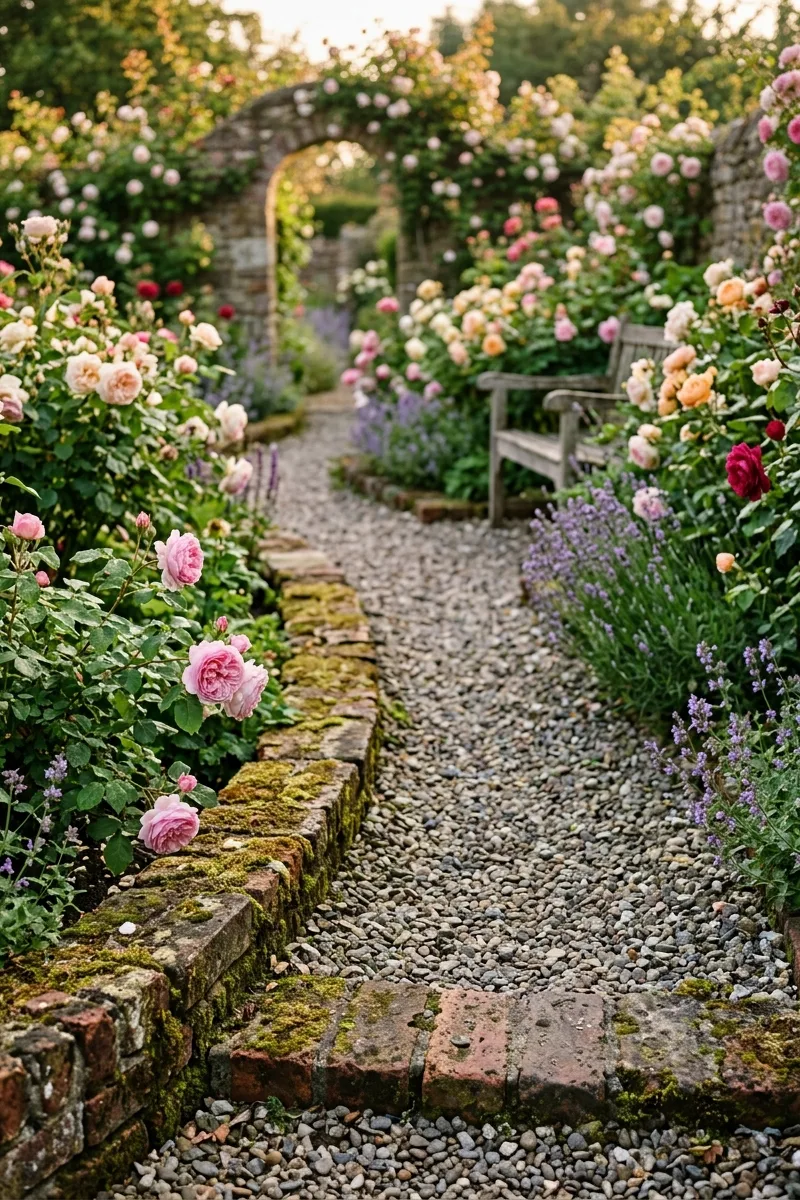
Use old reclaimed bricks to define the edges of a gravel path. The weathered bricks have a warm, varied color and often feature moss and lichen. The brick edge keeps the gravel contained and creates a clean, crisp line that contrasts with the overflowing flowers on either side. This combination is both practical and charming.
Wildflower Meadow Path
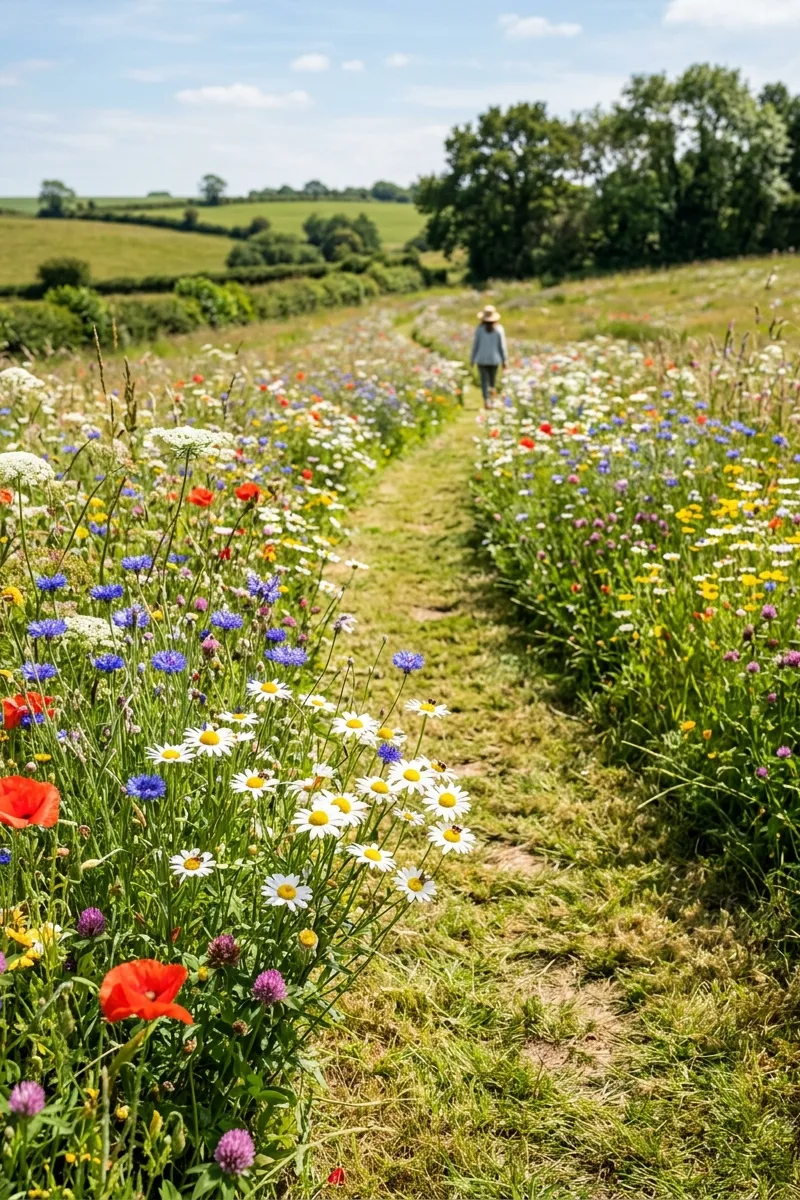
In a larger garden, mow a narrow path through a wildflower meadow. The path is a simple swath through the grasses and flowers. This approach is low-maintenance and creates a sense of immersion in the landscape. The flowers spill over the edges, making the path feel like a secret tunnel through the meadow. It’s a beautiful way to move through a naturalistic garden.
Stepping Stone and River Rock
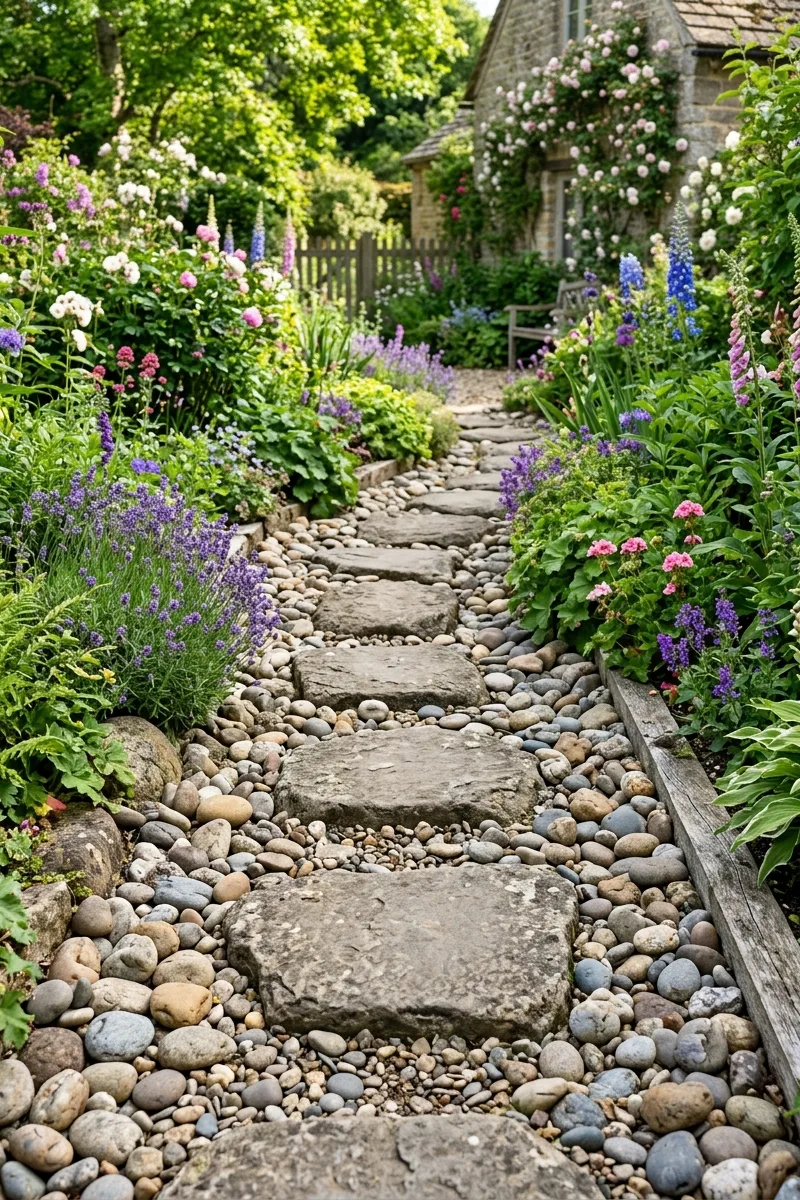
Combine large stepping stones with smooth river rocks for a path that looks like a dry creek bed. The flat stones create a stable walking surface while the surrounding river rocks add texture and visual interest. This combination works well in cottage gardens where the path can also serve as a drainage feature during heavy rain.
Gravel and Flower Border
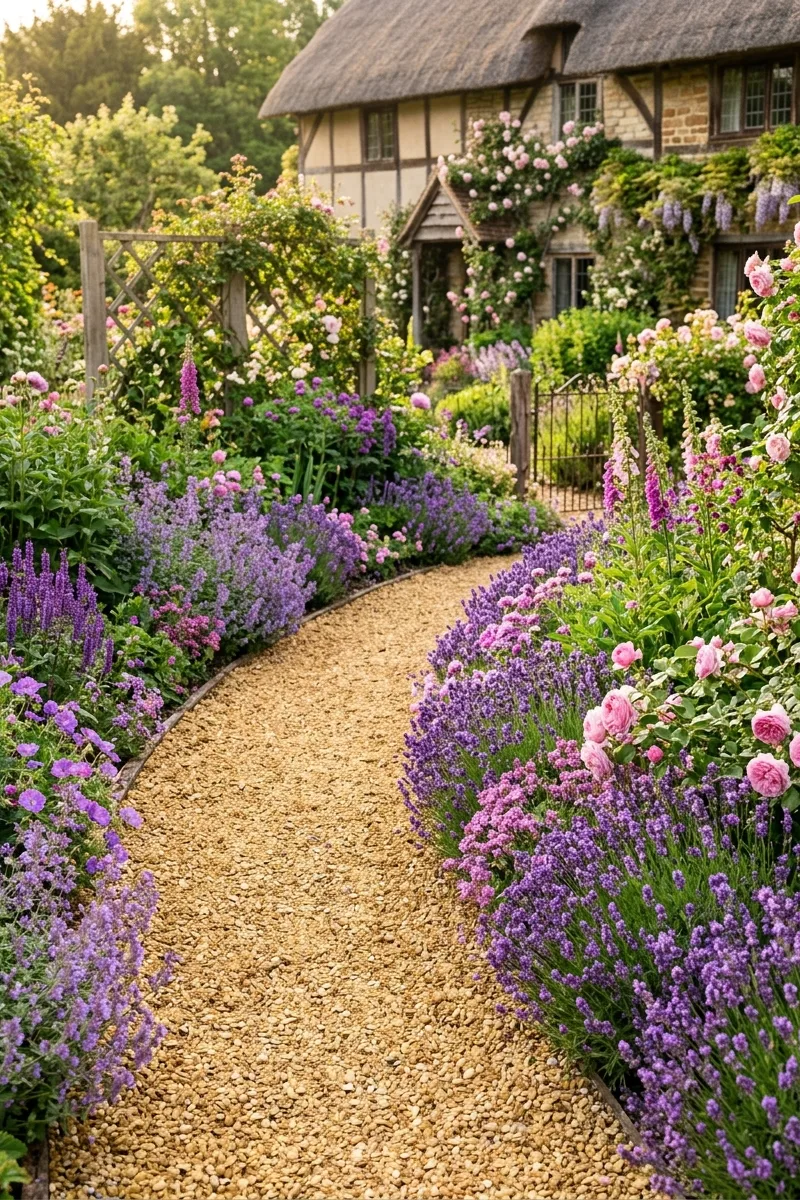
A gravel path with a flower border is a classic cottage garden combination. Use a warm-toned gravel and edge it with a dense planting of lavender, catmint, or alyssum. The flowers soften the path and spill over the edges. This combination creates a bright, inviting path that’s always in bloom, framing the walkway with color from spring through fall.
Rustic Stone Slab Path
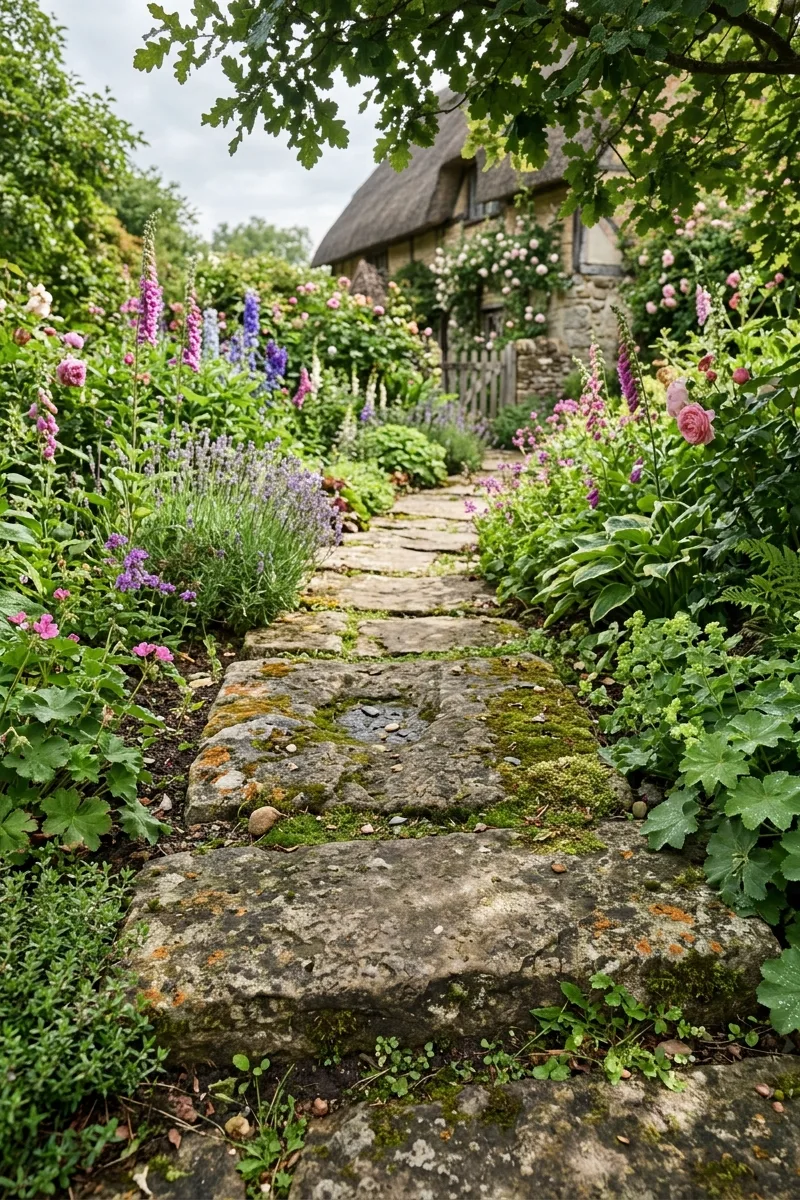
Rustic stone slabs are heavy, irregular, and full of character. Use thick, natural stone like bluestone or sandstone. The uneven surfaces and varied shapes create a path that feels ancient and grounded. The plants of the cottage garden grow right up to the edges and often spill over, softening the stone and completing the cottage look.
Scented Path
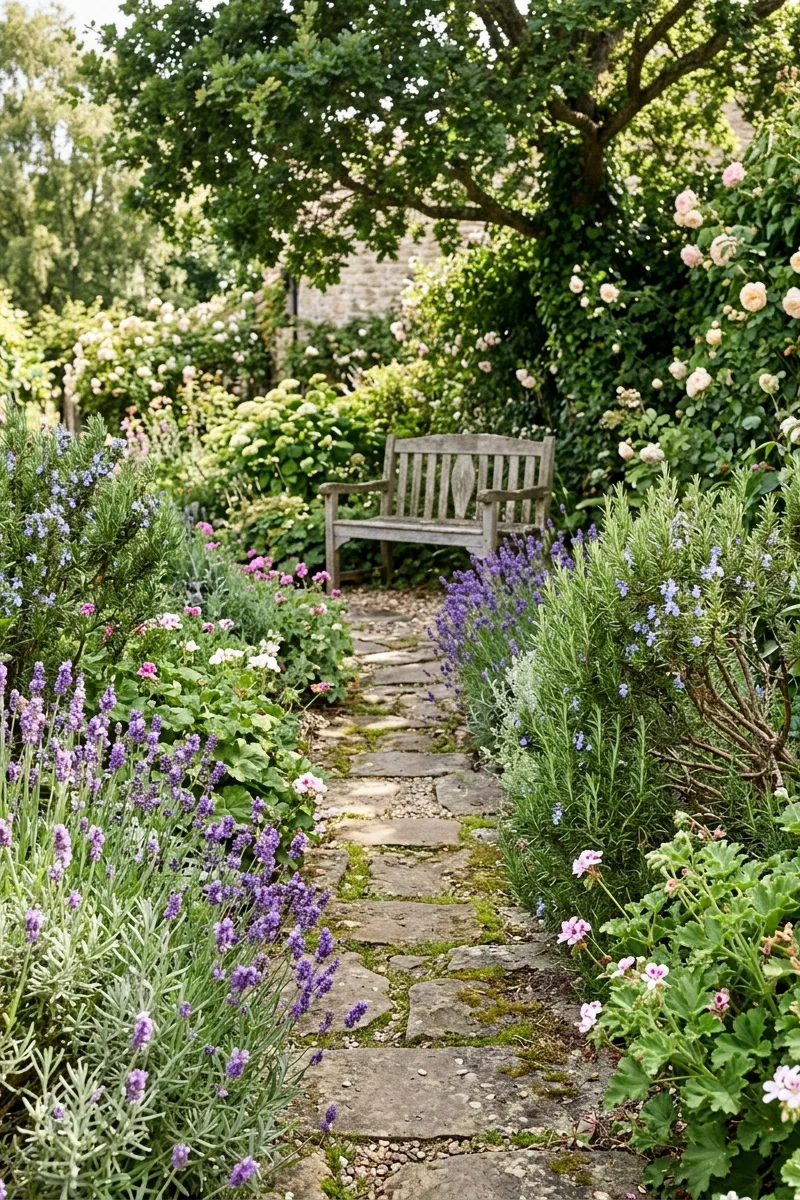
Create a path that engages the nose as much as the eyes. Line your walkway with scented plants like lavender, rosemary, and scented geraniums. The aromas are released as you brush against them. This is a sensory experience that makes a stroll through the garden truly memorable. It’s a simple addition that elevates a path into a destination.
Cobblestone Cottage Path
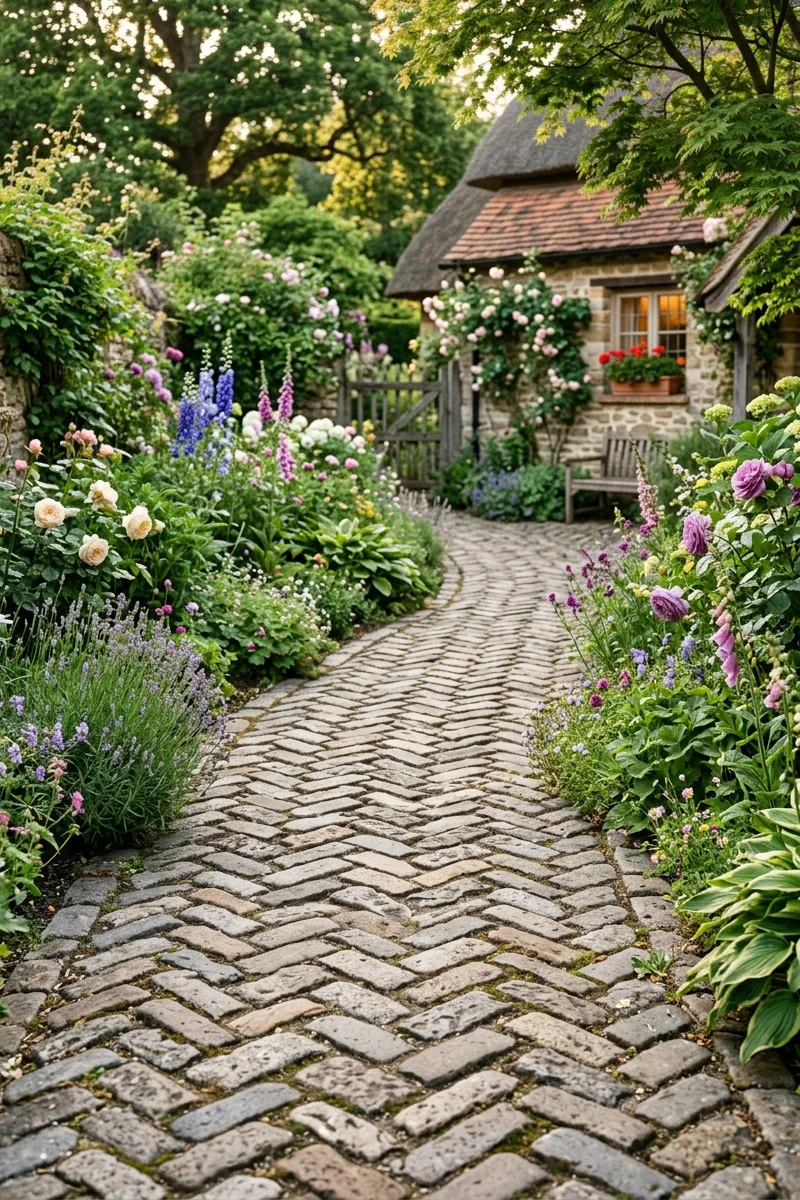
Rounded cobblestones bring a European feel to a cottage garden. The stones are satisfying to walk on and wear well. The herringbone pattern adds visual interest and a sense of classic craftsmanship. Cobblestones stay put and create a solid surface that handles foot traffic beautifully. The muted grey tones are a neutral base for the colorful flowers that surround them.
Arbored Path
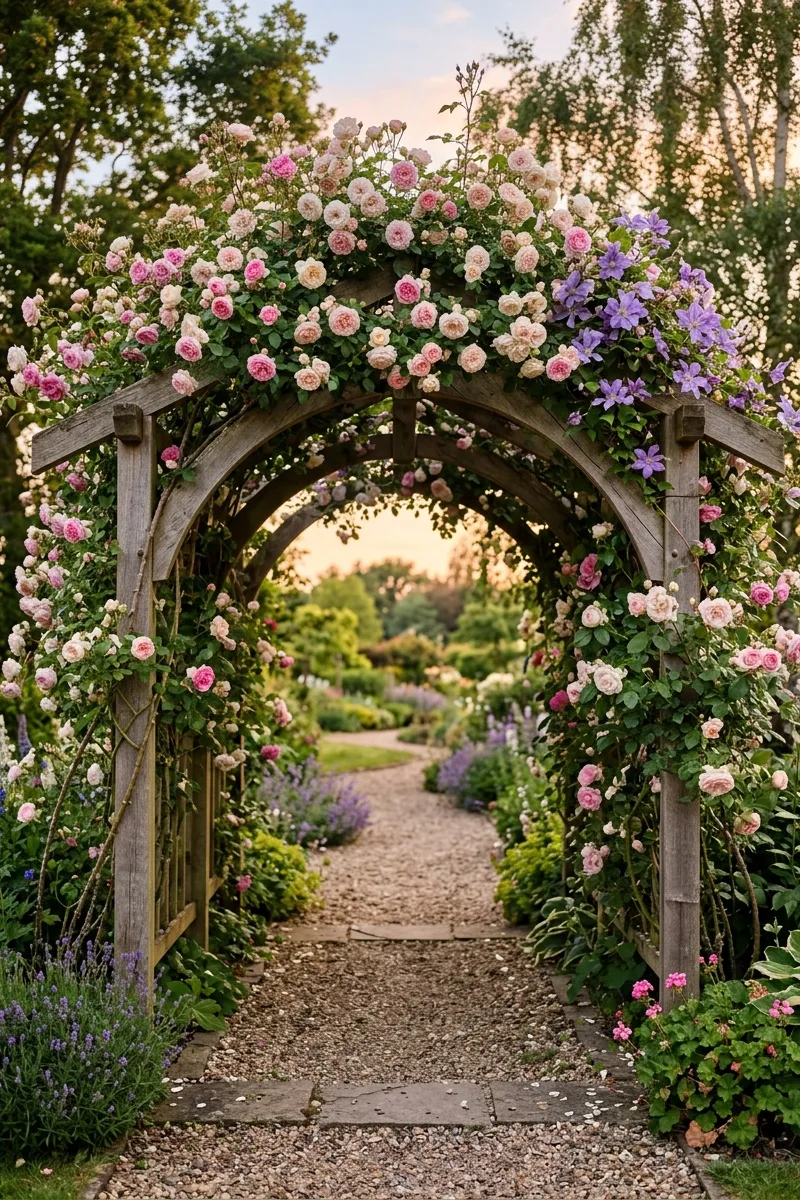
An arbor over a path creates a stunning garden moment. Train climbing roses, clematis, or wisteria over the structure. The arch frames the view and creates a tunnel effect that’s romantic and immersive. This is a focal point in any garden, marking a transition or leading the way to a special area like a seating nook or vegetable garden.
Mosaic Pebble Path
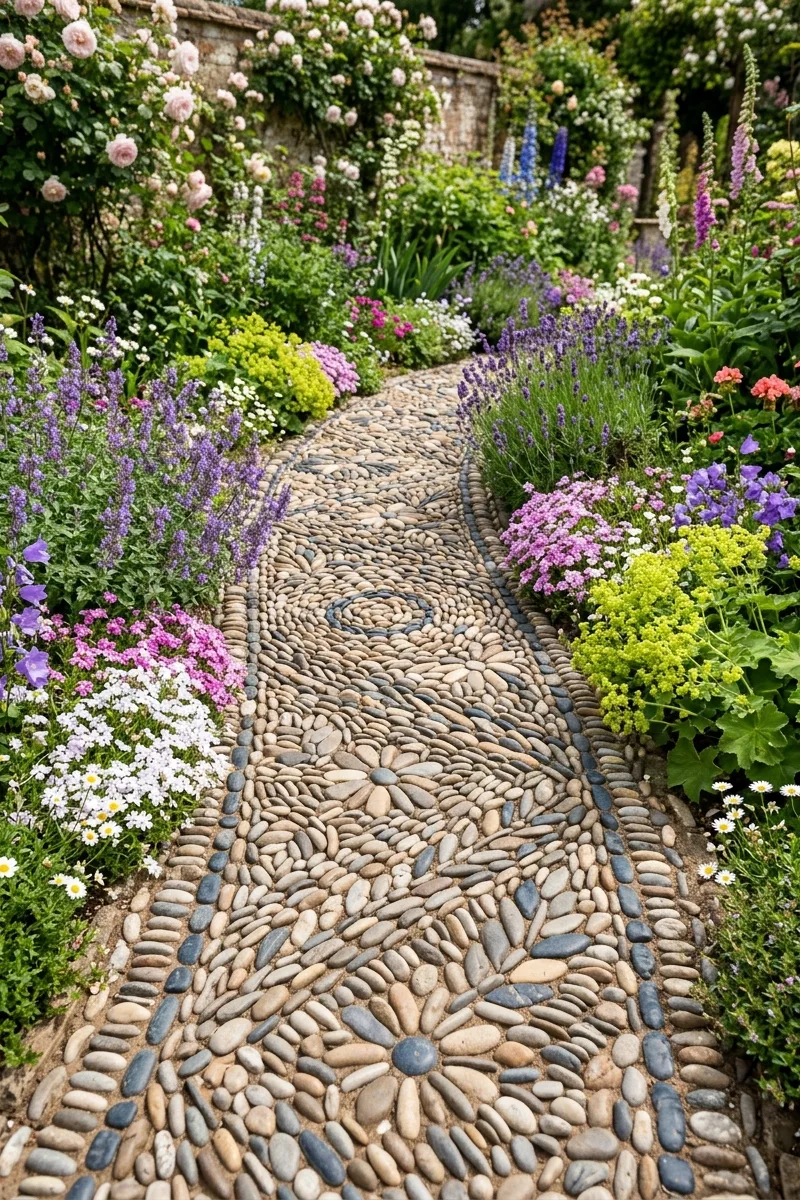
A pebble mosaic path is an artistic project for a dedicated gardener. Arrange smooth pebbles in a mosaic pattern set in concrete or sand. The designs can be simple geometric shapes or elaborate floral patterns. This path is a unique statement piece that stands out in any garden. It requires patience but the result is a personal and beautiful pathway.
Wood Slice and Moss Path
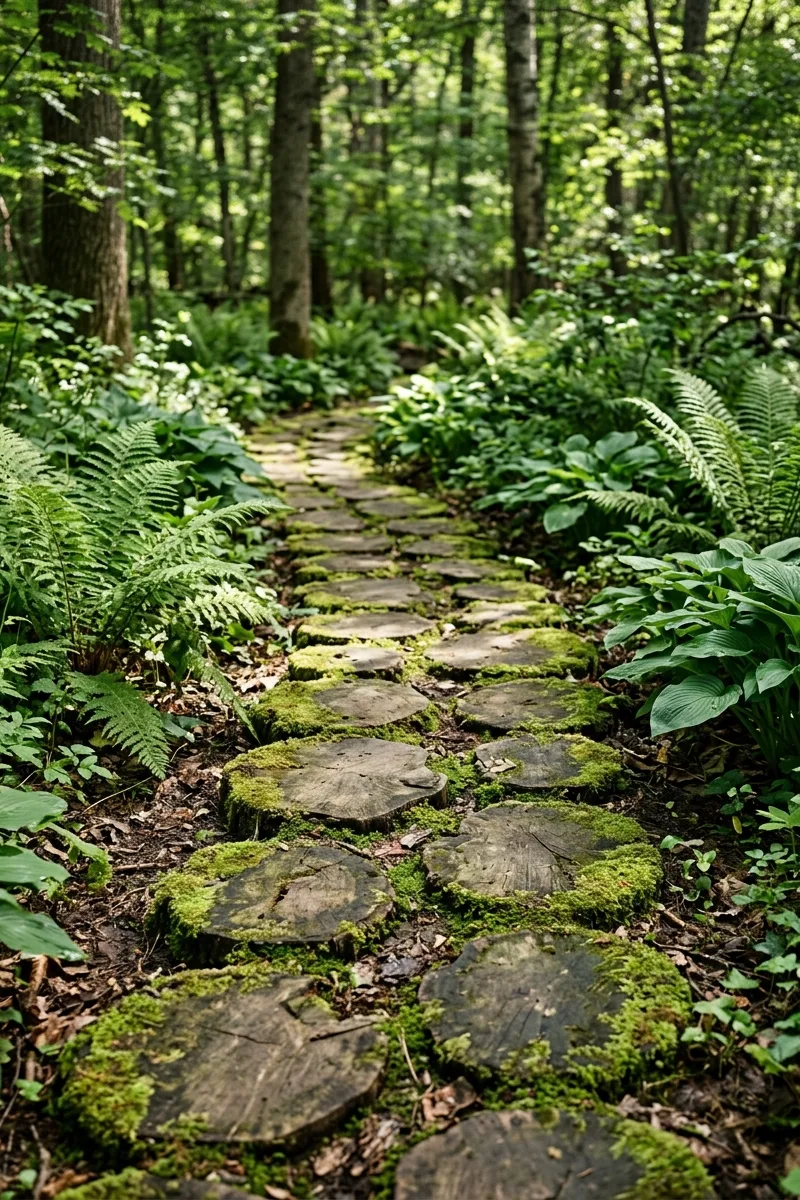
Wood slices make a natural, rustic path in a cottage garden. Cut 2-inch-thick rounds from fallen branches and set them into the ground. As they age, moss and lichen will grow on the wood, integrating the path into the woodland setting. This is an affordable and renewable path material that looks especially good in the damp, shady sections of a cottage garden.
Perennial-Overhang Path
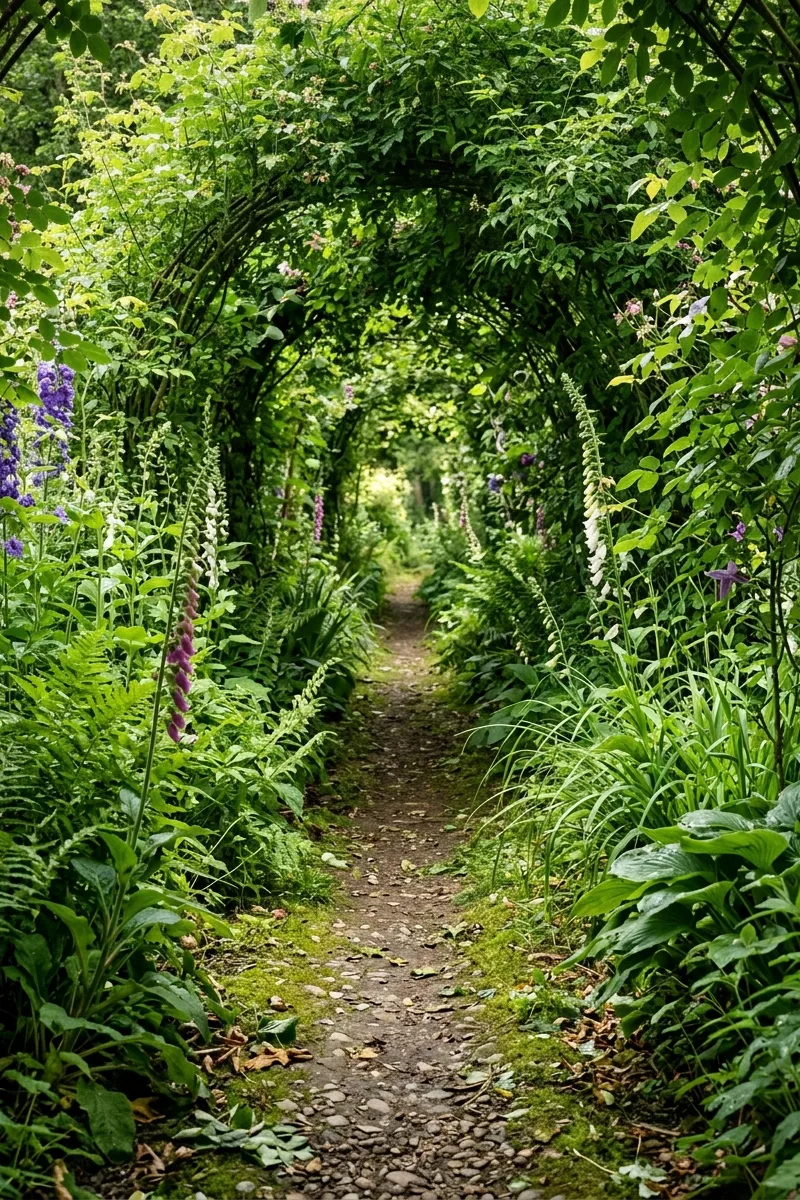
Plant tall perennials so they arch over the walkway. This creates a green tunnel effect that feels intimate and magical. Use plants like phlox, astilbe, or tall sedum. The pathway is just wide enough to walk through, making the garden feel deep and immersive. This is a particularly effective technique for long, straight paths that might otherwise feel monotonous.
Rose-Lined Path
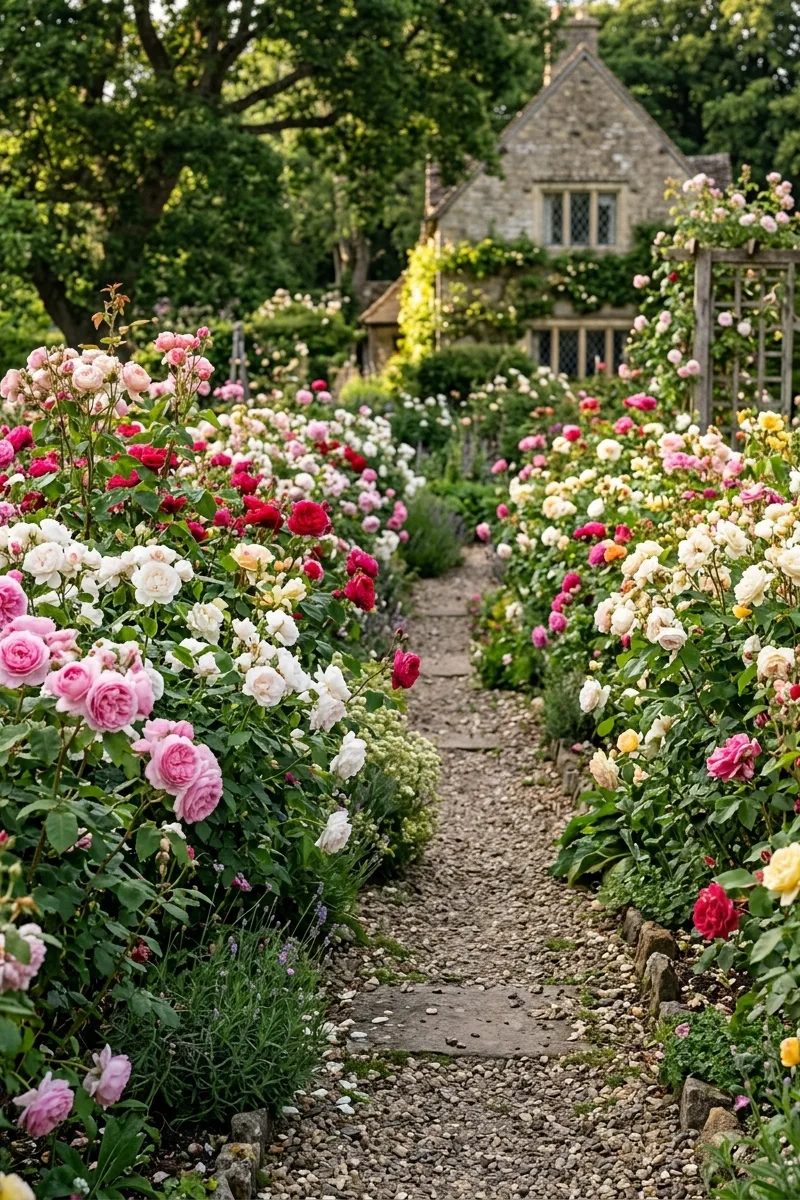
Nothing says cottage garden like a rose-lined path. Plant climbing or shrub roses on both sides of the walkway. As they grow, they create a corridor of color and fragrance. The blooms attract pollinators and add a romantic feel. This is a classic design that fits perfectly in a traditional cottage garden setting, making the walkway as beautiful as the destination.
Grass and Stone Strip Path
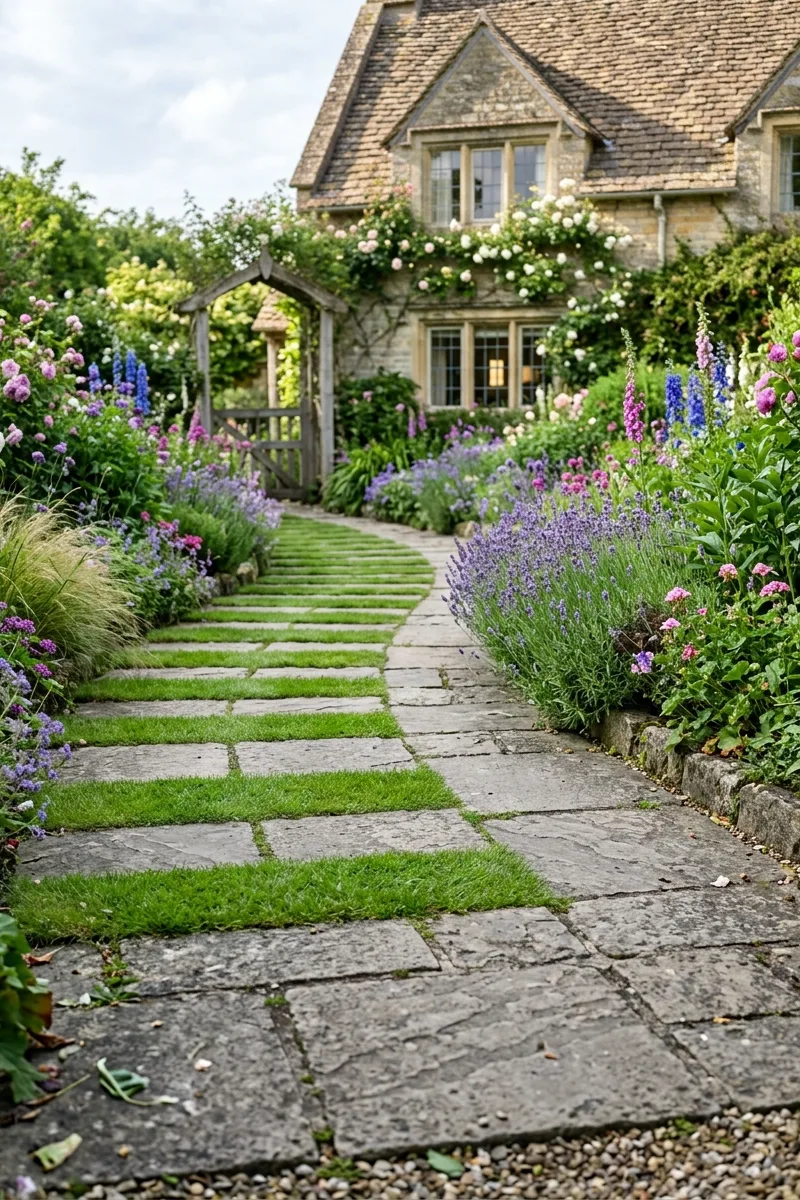
Alternate narrow strips of stone and grass for a path with a rhythmic pattern. This design is more modern but can work in a cottage garden with the right plantings. The grass strips are mowed along with the lawn, while the stone provides a stable walking surface. This pattern creates visual interest and helps slow water runoff in the garden.
Gravel and Stepping Stone Path
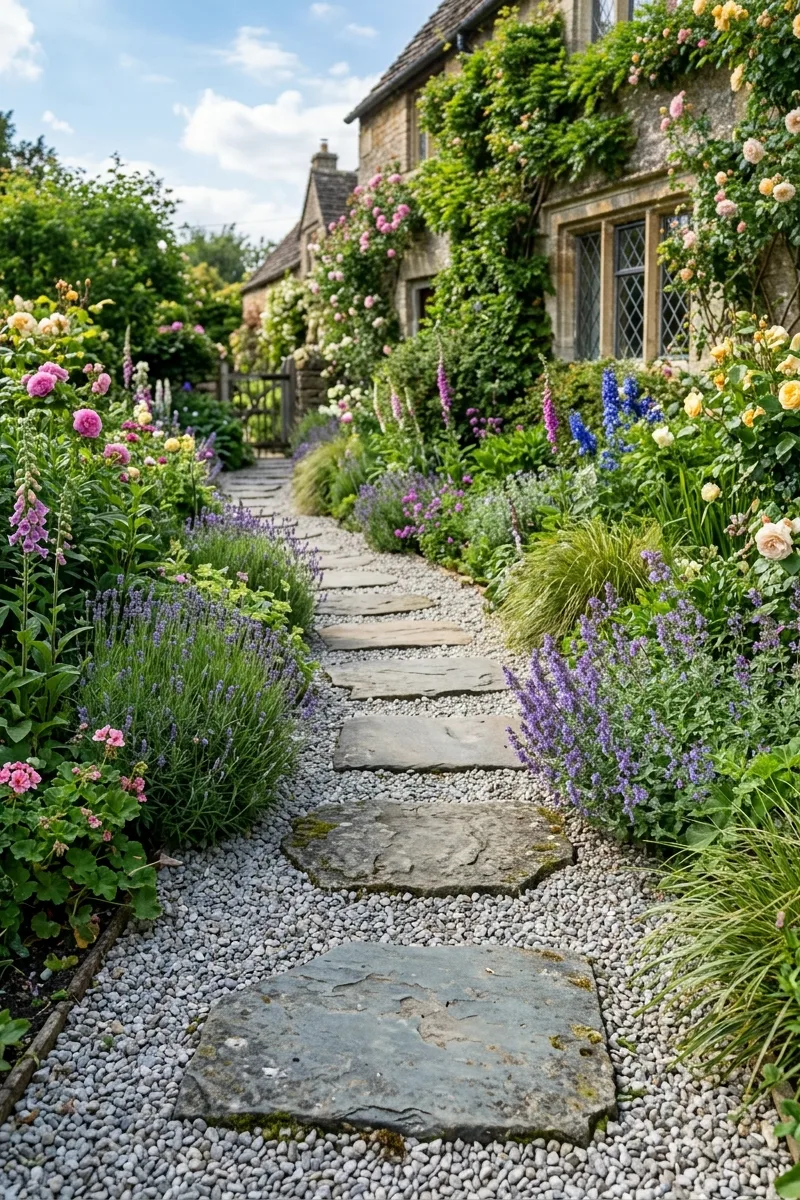
Combine gravel and stepping stones for a practical and attractive path. The gravel provides a weed-suppressing base, while the large stepping stones offer a stable surface. This design creates a path that’s easy to maintain and comfortable to walk on. The gravel also holds moisture for surrounding plants, making it a thoughtful choice for a cottage garden.
Edging with Alyssum
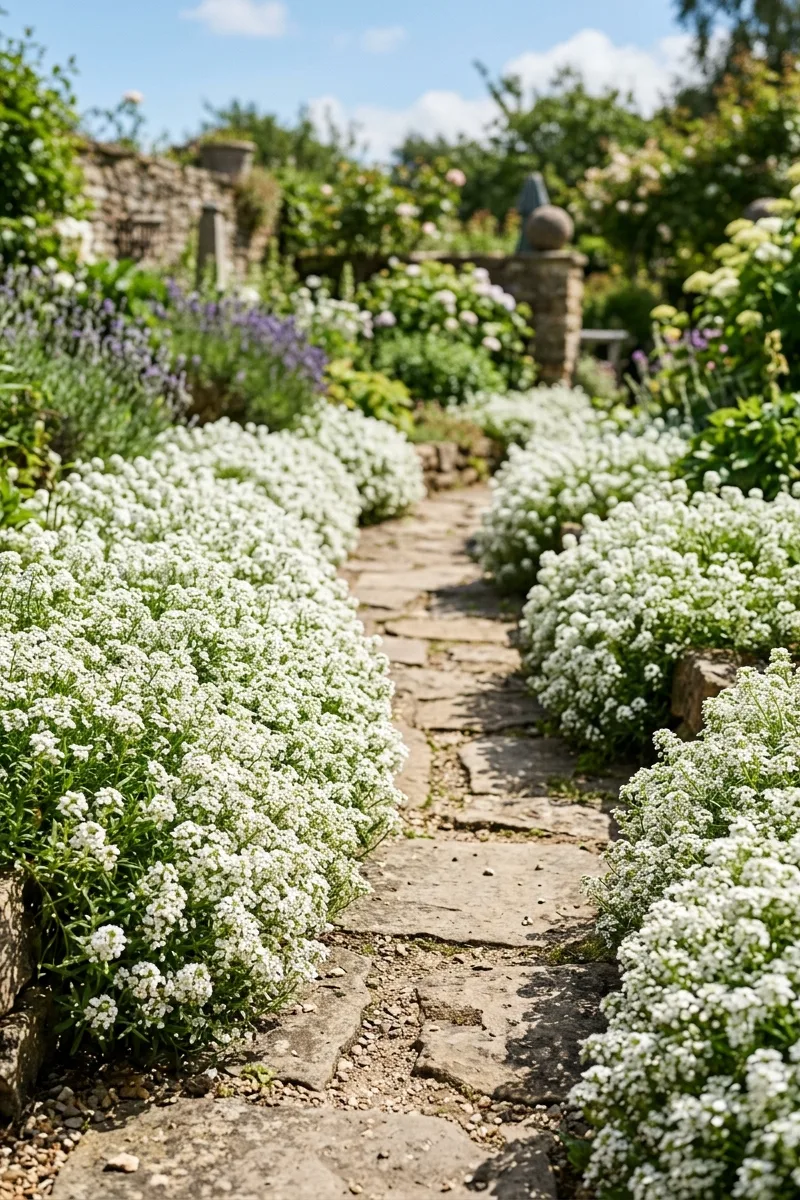
Alyssum is a low-growing annual with tiny white flowers and a honey-like scent. Plant it along the edges of a path to create a soft, fragrant border. It stays low and spreads, spilling over the path edges and softening the walkway. This is a great option for a sunny path where you want a simple, old-fashioned touch that blooms all summer.
Brick and Thyme Path
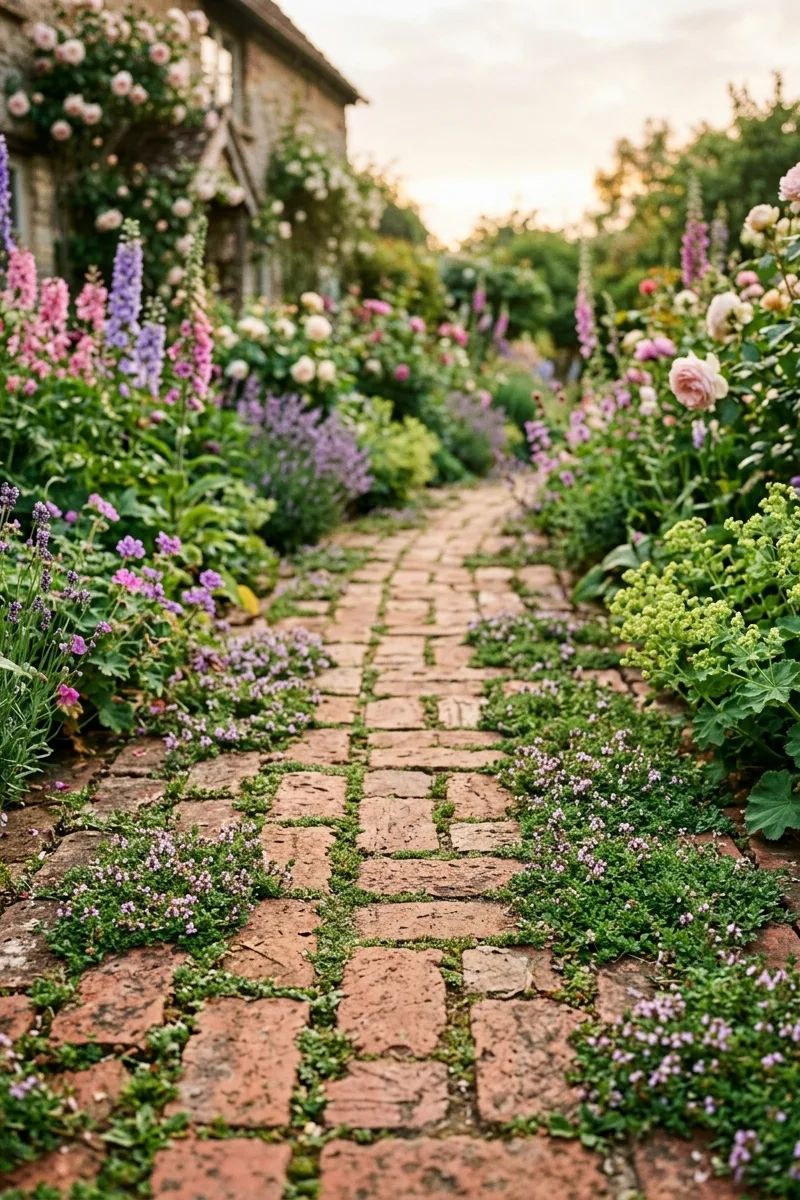
Red brick and creeping thyme are a classic cottage pairing. Set the bricks in sand with spaces for the thyme to grow. The thyme fills in the gaps with a fragrant green carpet. The combination of warm brick and delicate foliage is hard to beat. This path feels established and welcoming, requiring minimal maintenance as the thyme naturally suppresses weeds.
Inspiration gallery recap
Tap any image to open the slideshow — use arrows or swipe to browse.