17 Vegetable Garden Layouts for Maximum Yield
A well-planned vegetable garden produces more food in less space with less work. The right layout ensures every plant gets adequate sun, water, and nutrients while making it easier for you to tend and harvest. Good planning also helps prevent disease and pest problems by promoting air circulation.
These 17 vegetable garden layouts range from the traditional to the innovative. Whether you’re gardening in raised beds, rows, or containers, you’ll find a layout here that boosts your yield and makes your garden more productive.
What’s inside this article
- Classic Row Garden
- Square-Foot Garden Grid
- Four-Bed Crop Rotation
- Three-Sisters Companion Layout
- Raised Bed Intensive Layout
- Trellis Vertical Garden
- Keyhole Garden Layout
- Interplanting Layout
- Mandala Garden Layout
- Perimeter Planting Layout
- Succession Planting Layout
- Container Garden Layout
- Walk-in Bed Layout
- Spiral Herb Garden Layout
- Strip Cropping Layout
- Edible Landscaping Layout
- Hügelkultur Mound Layout
Classic Row Garden
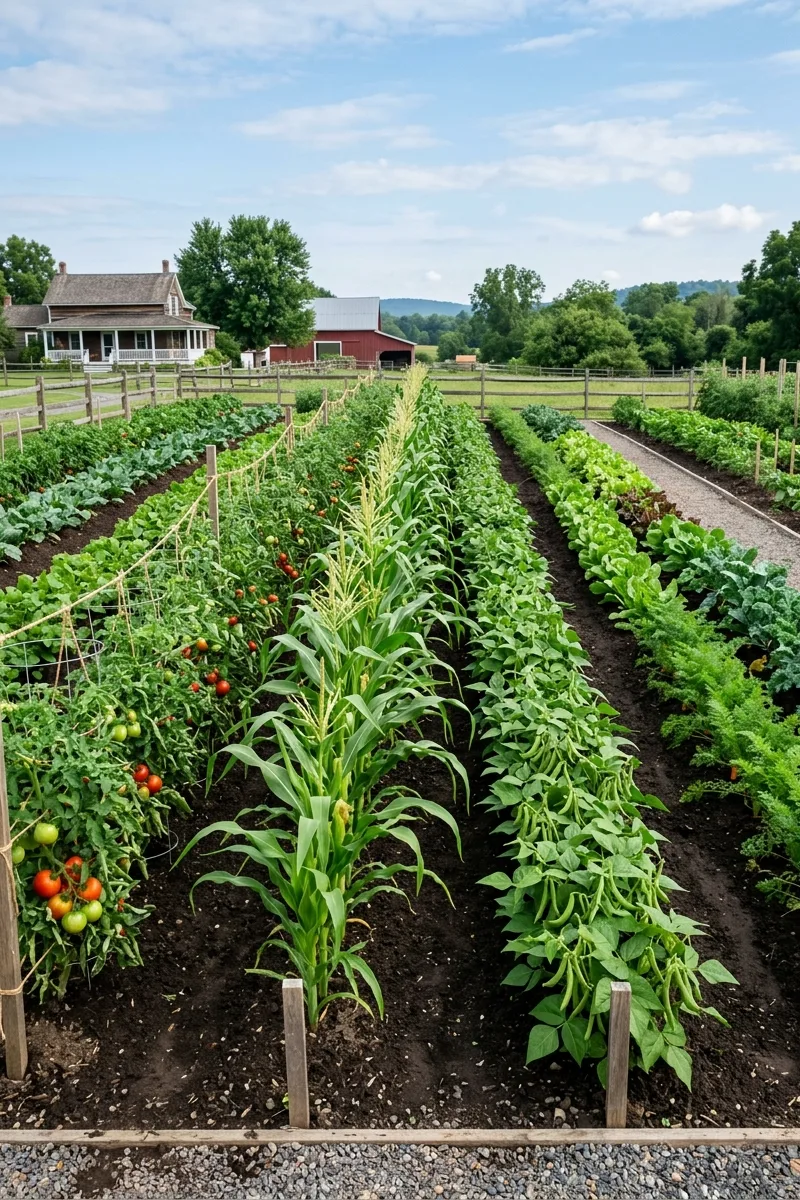
The traditional row layout is simple and practical. Space rows 24 to 36 inches apart so you can walk between them for weeding and harvesting. Plant tall crops like corn on the north side so they don’t shade shorter plants. Row gardening works well for large spaces and makes crop rotation easy. It’s the most common layout for a reason; it just works.
Square-Foot Garden Grid
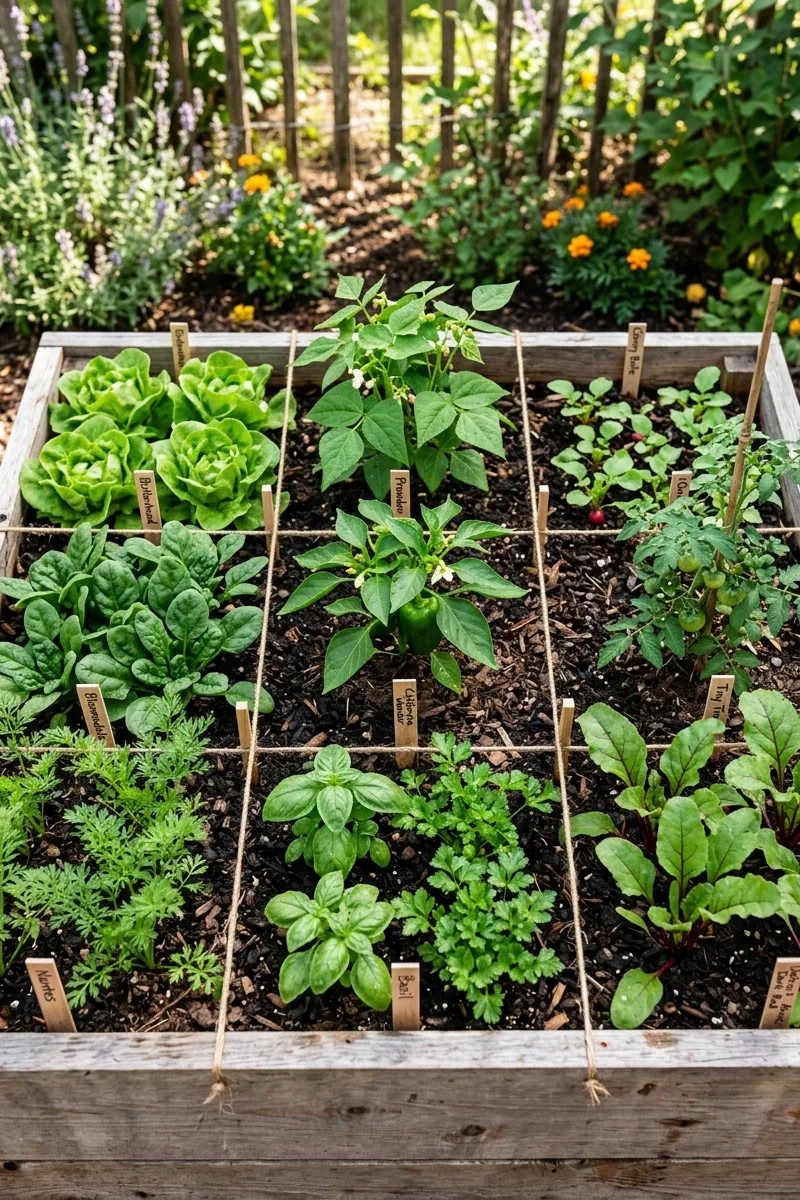
Square-foot gardening uses intensive planting in a small space. Build a 4-by-4-foot raised bed and divide it into 16 one-foot squares. Plant a different crop in each square. This method saves water, reduces weeds, and is perfect for small yards. It’s also a great system for beginners because the small sections feel manageable and the high density is productive.
Four-Bed Crop Rotation
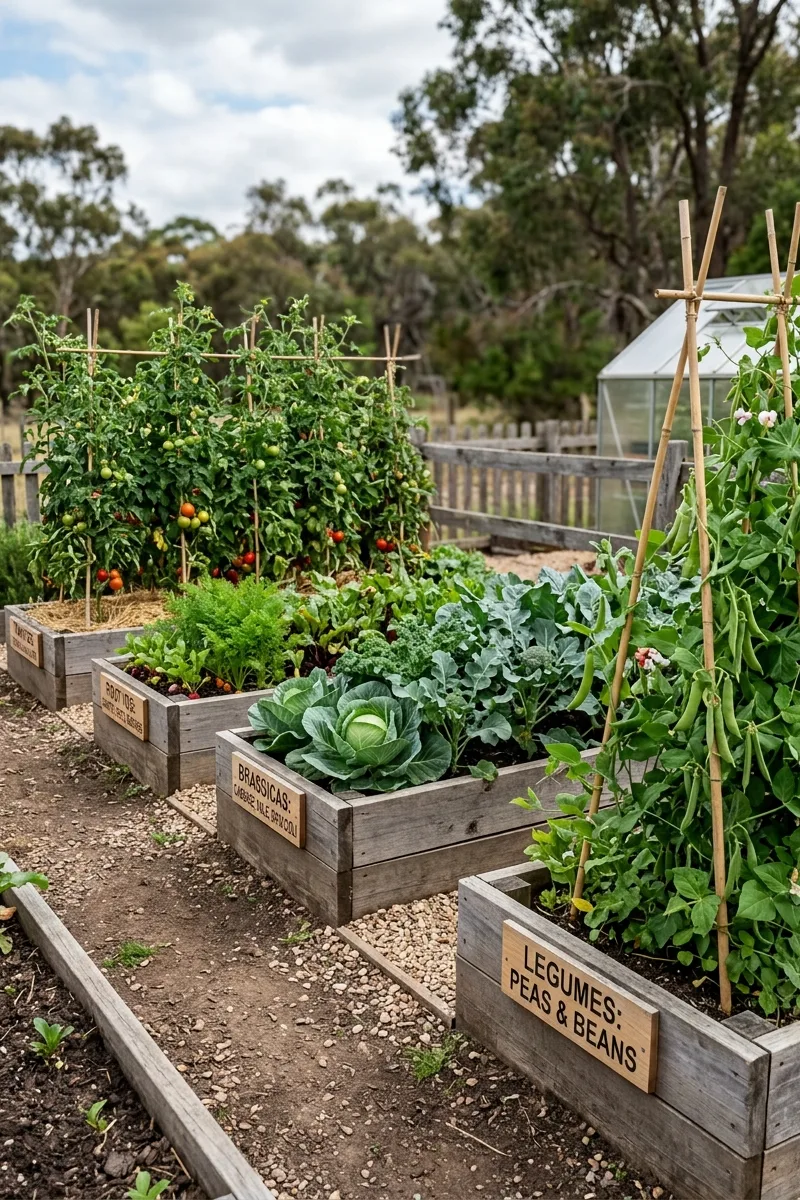
Split your garden into four beds to rotate crop families annually. Group your plants into legumes, brassicas, root crops, and tomatoes. Move each group to a different bed each year. Rotating crops prevents soil depletion and breaks pest and disease cycles. This is a cornerstone of organic gardening that promotes long-term soil and plant health.
Three-Sisters Companion Layout
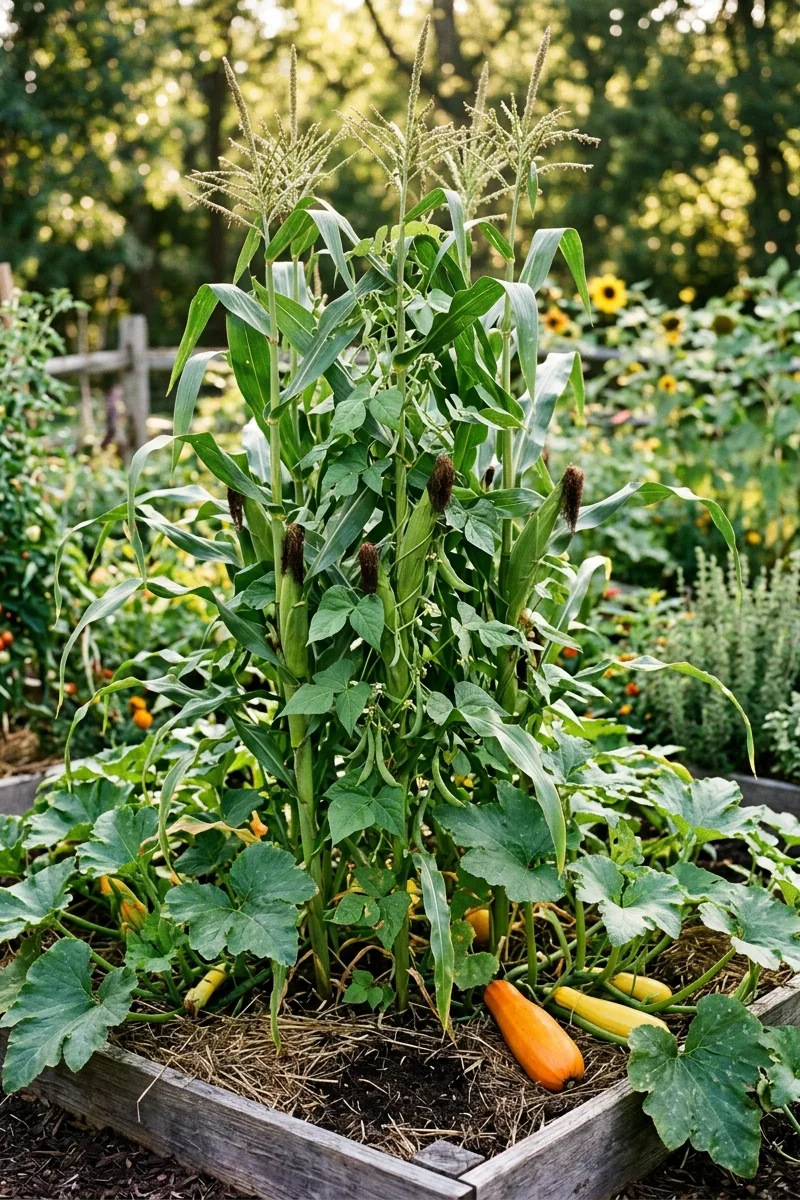
The three sisters planting method features corn, beans, and squash growing together. The corn provides support for the beans, the beans fix nitrogen in the soil, and the squash shades the ground to suppress weeds. This ancient companion planting technique works as well today as it did when it was first developed, maximizing yield in a small area.
Raised Bed Intensive Layout
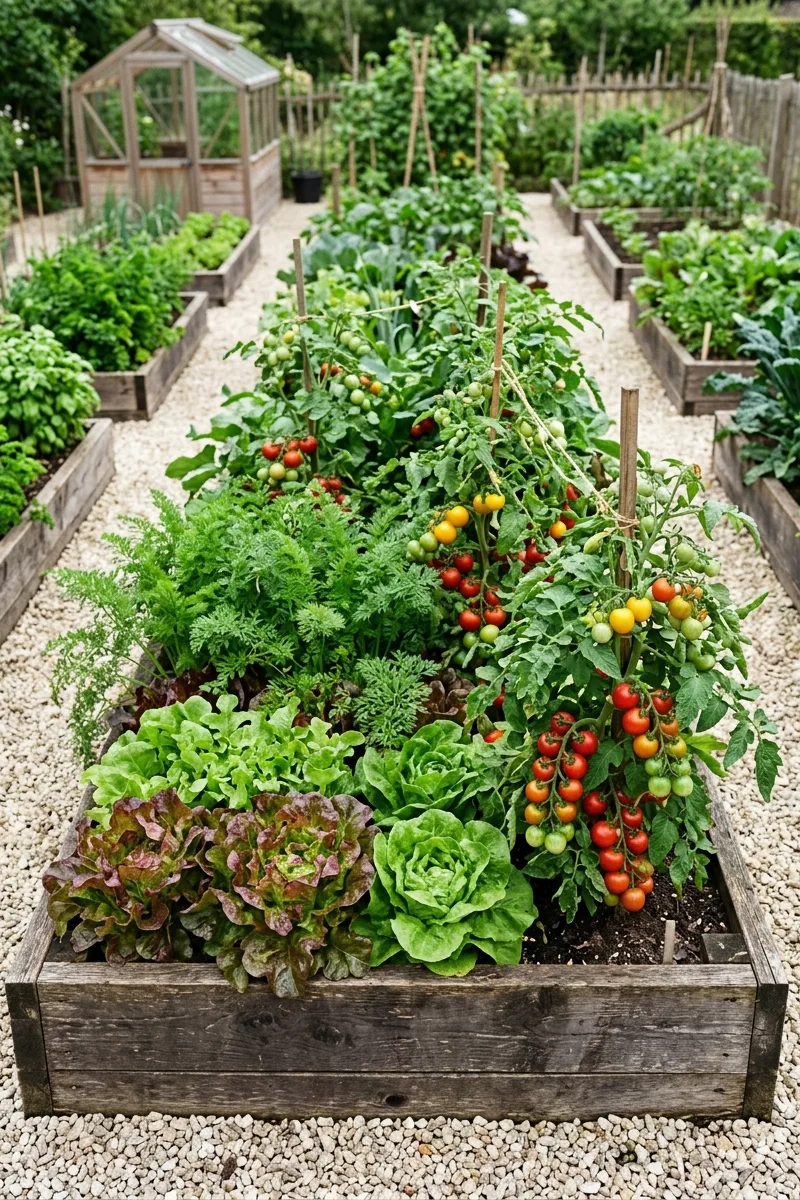
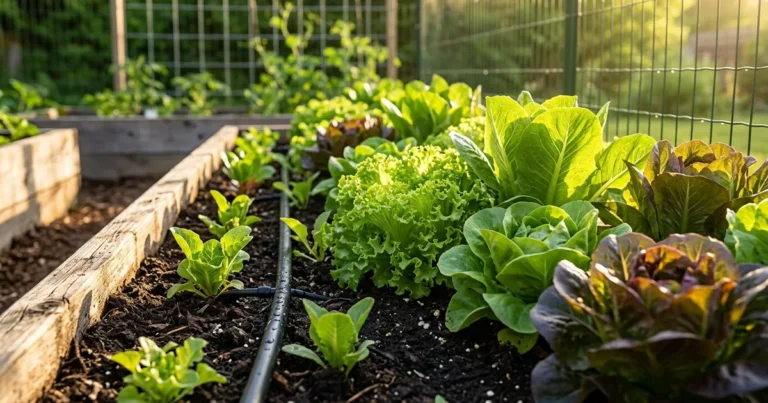
Intensive raised bed planting gets the most from your space. Plant vegetables closer together than traditional row spacing recommends. The dense foliage shades the soil, conserving moisture and preventing weed growth. With rich soil and consistent watering, plants can thrive in a higher-density environment and produce a larger harvest from the same square footage.
Trellis Vertical Garden
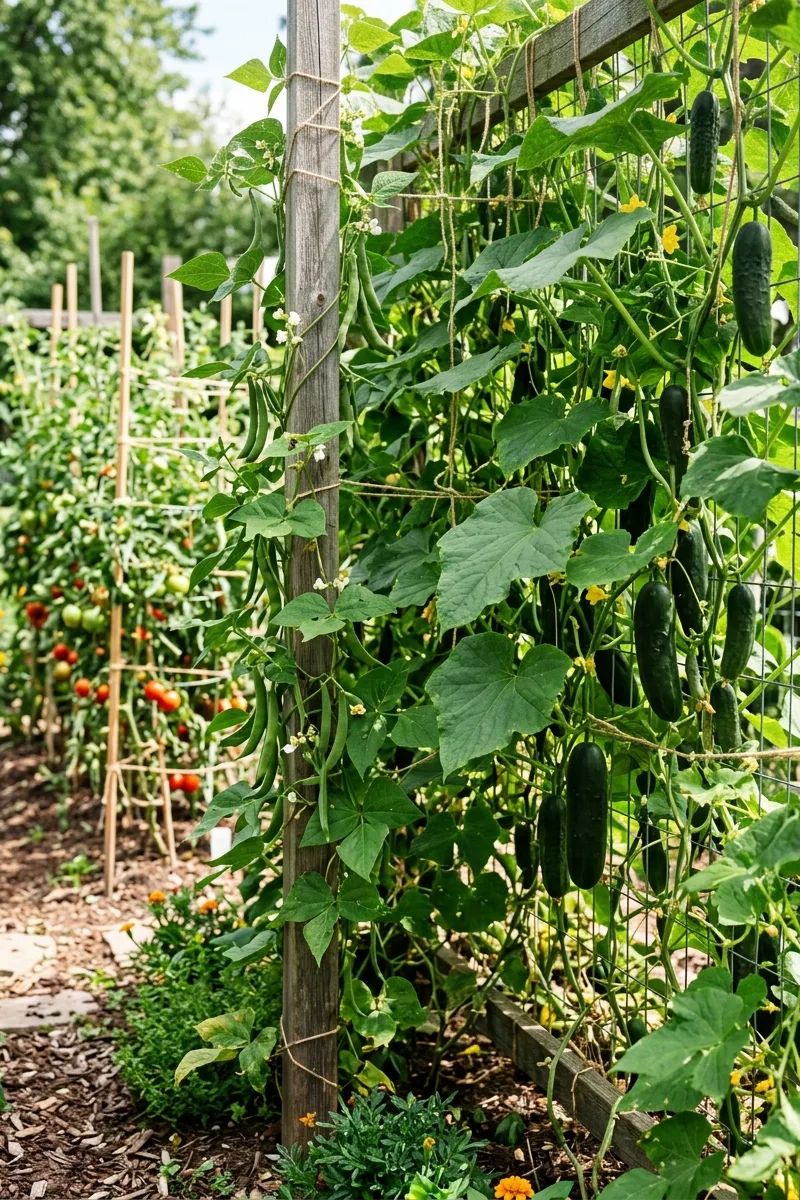
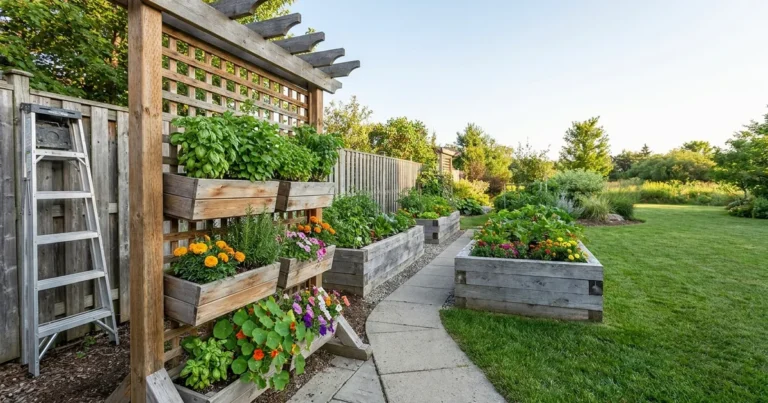
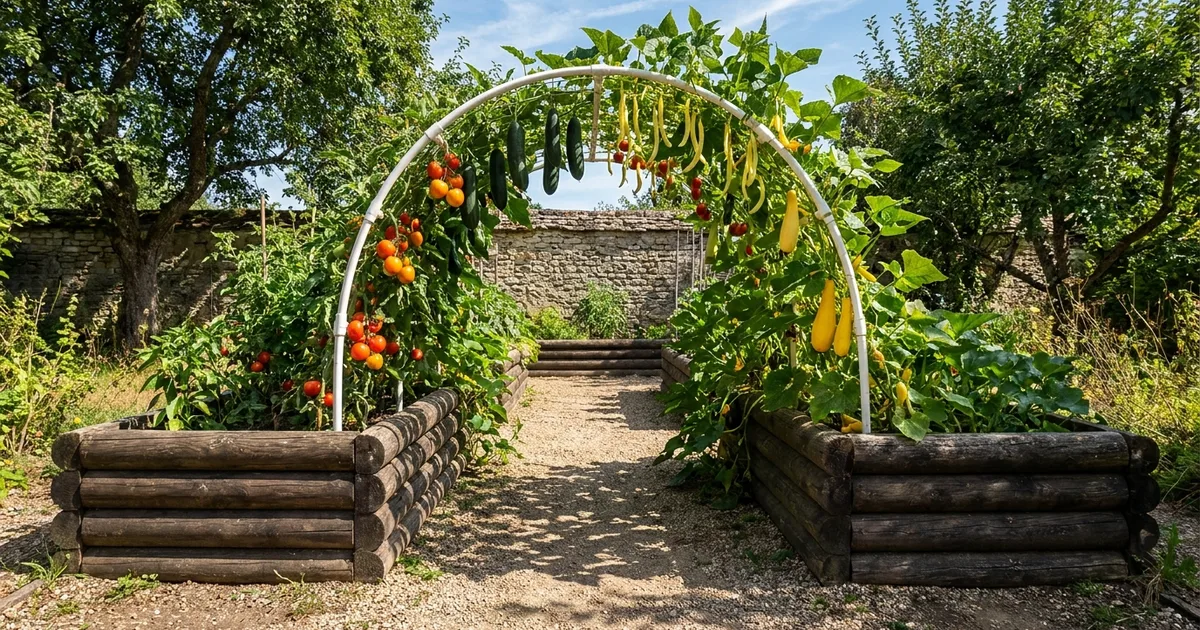
Growing plants vertically is a space-saving technique that boosts yield. Train cucumbers, beans, and tomatoes up trellises or stakes. Vertical plants produce cleaner fruit that’s easier to harvest. This method also improves air circulation around the plants, reducing disease. A single trellis can hold 10 times the plants of an equivalent ground space.
Keyhole Garden Layout
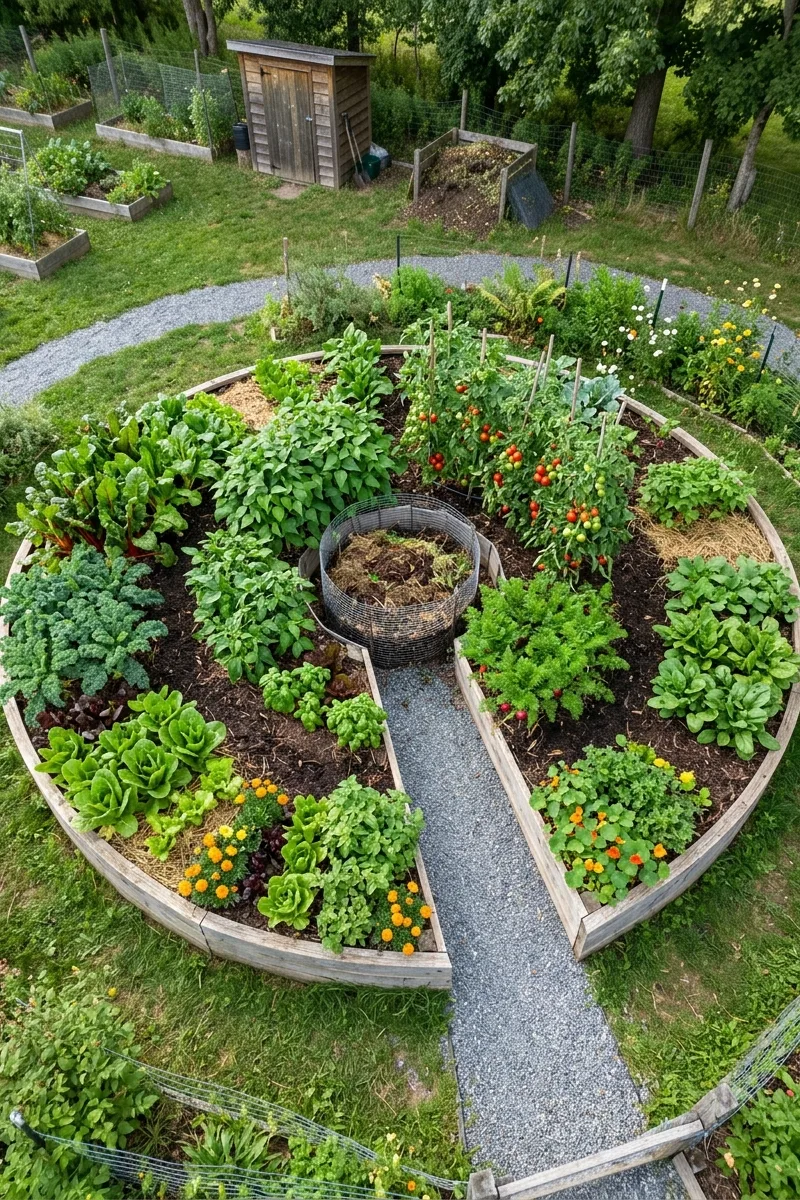
The keyhole garden is an African design that’s perfect for small spaces. The circular bed is accessible from a path that leads to the center. Every plant is within easy reach for harvesting. The center of the bed often contains a composting basket that feeds the surrounding plants. This layout is compact, productive, and water-efficient.
Interplanting Layout
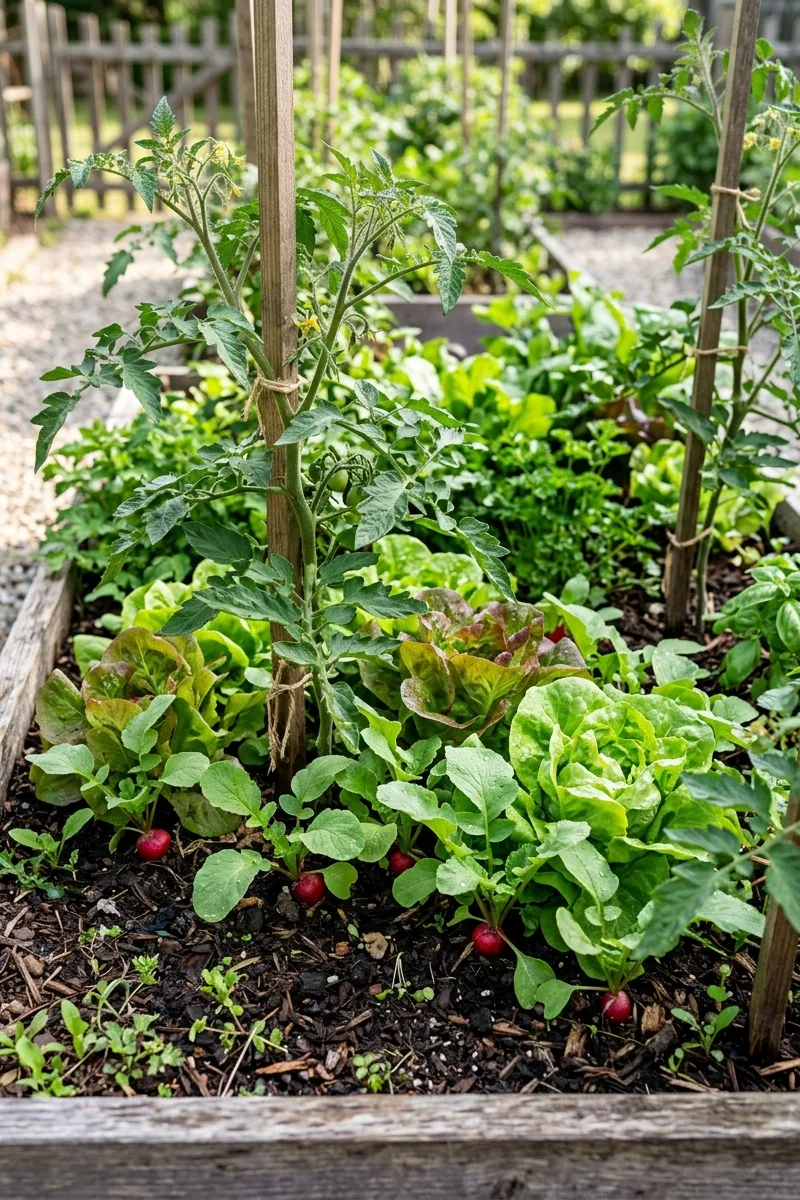
Interplanting means planting fast-growing crops between slow-growing ones. In the spring, plant radishes and lettuce between your tomato seedlings. The quick crops will be harvested before the tomatoes need the space. This technique makes use of every inch of soil and provides early harvests while you wait for the main crop, increasing total yield from the same bed.
Mandala Garden Layout
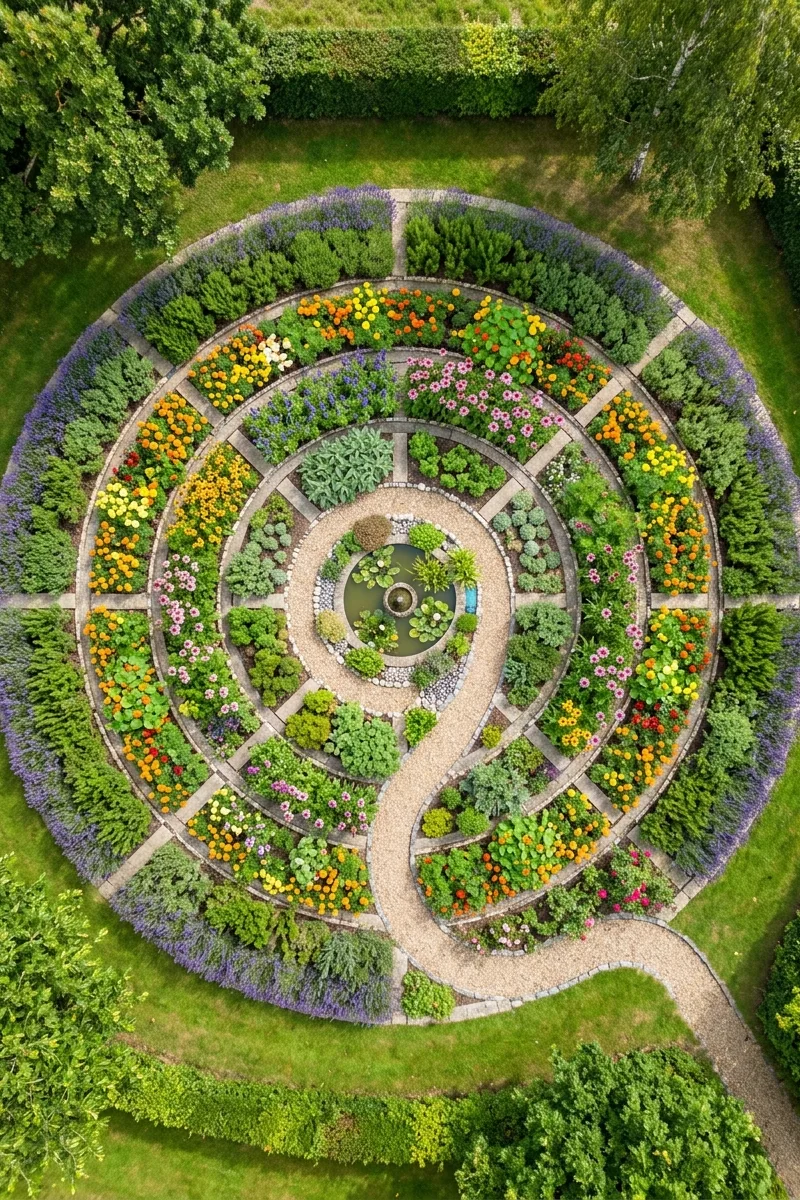
The mandala garden is a circular design that’s both beautiful and functional. Plant in concentric rings with a spiral path leading to the center. Each ring can be a different plant or family. The shape maximizes edge space where plants thrive. The circular layout also creates a natural microclimate, with the center being warmer and the edges cooler.
Perimeter Planting Layout
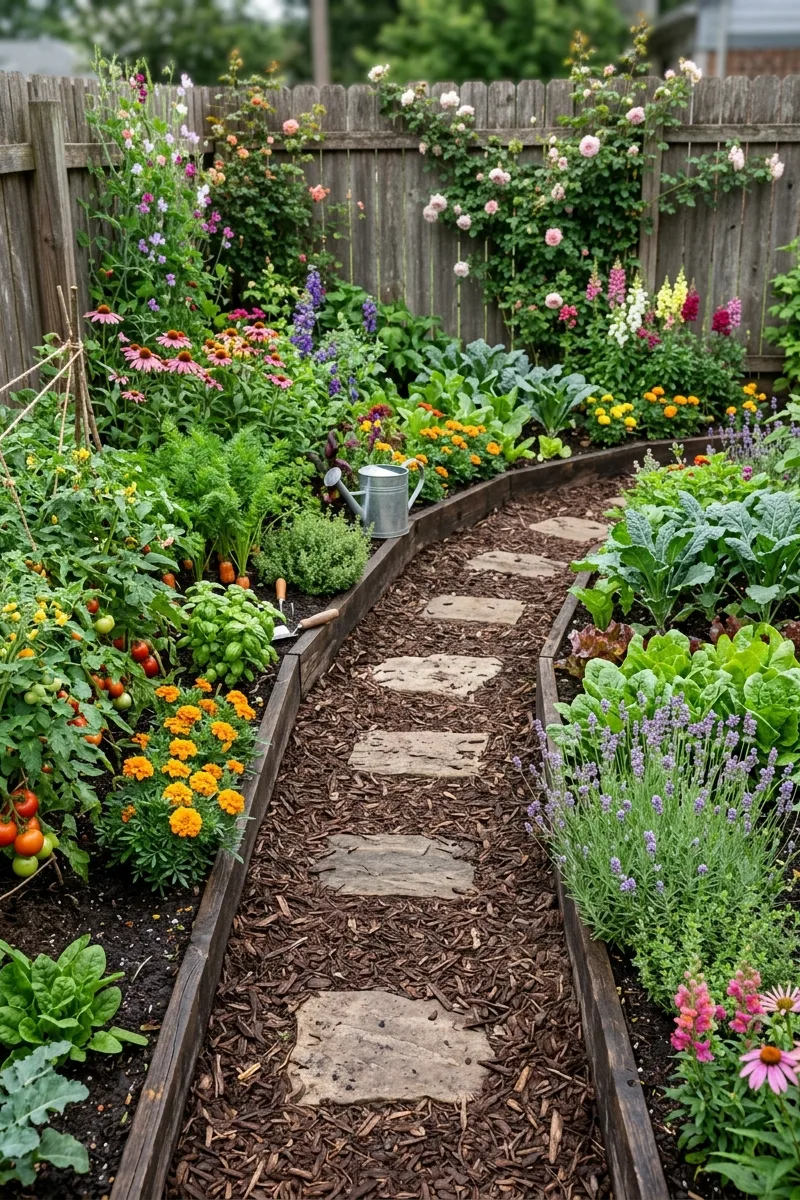
Planting around the perimeter keeps the center of a bed open for access and movement. This layout works well for large, accessible beds. The edge is the most productive part of any garden bed, as plants get more light and air. Perimeter planting also makes weeding and harvesting easy because you can reach everything from the outside.
Succession Planting Layout
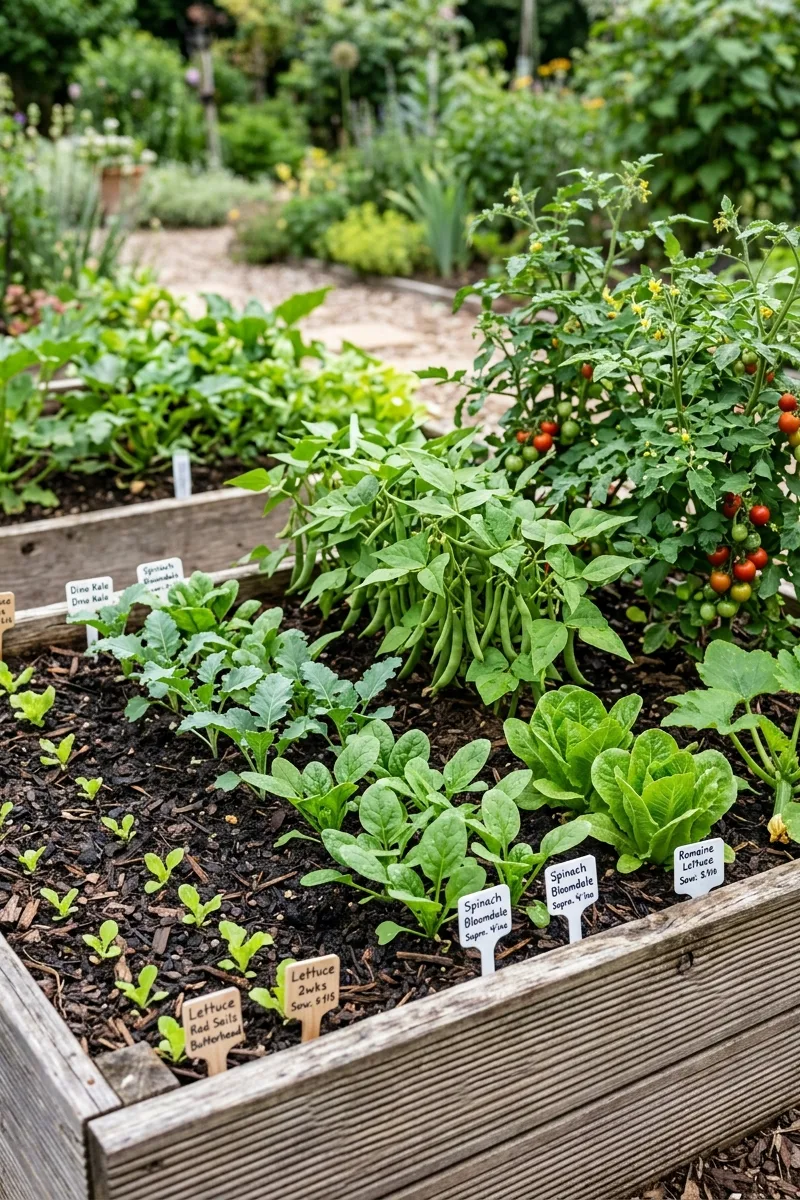
Succession planting keeps a bed in continuous production. Plant a new batch of a crop every two weeks instead of all at once. When one batch is spent, you pull it out and the next batch is already growing. This system gives you a steady harvest over a longer period, making your garden far more productive than a single planting.
Container Garden Layout
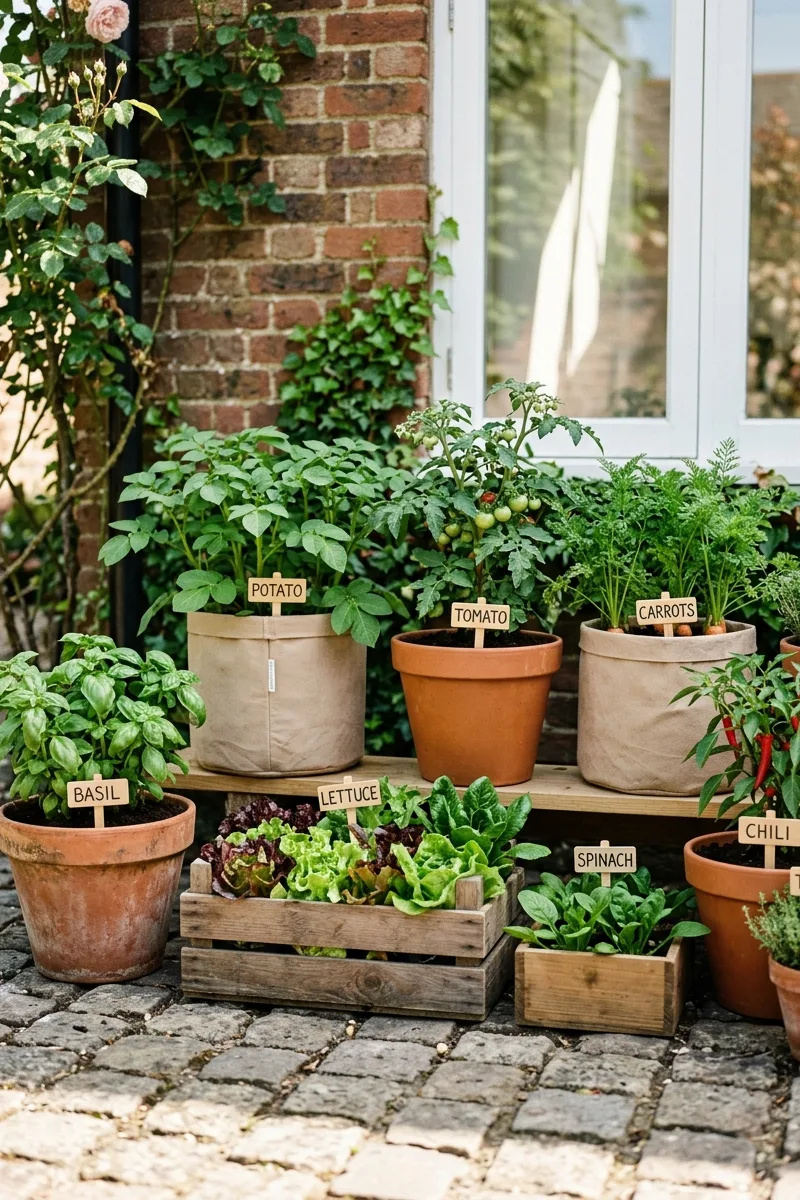
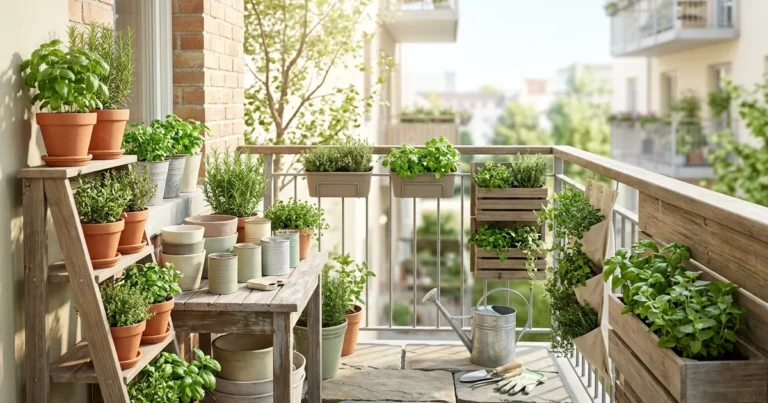
Container gardening is ideal for patios, decks, and small yards. Use fabric grow bags, terracotta pots, and wooden boxes to hold your vegetables. Group containers by watering needs for efficient maintenance. The layout is portable and flexible, allowing you to chase the sun. This is a very accessible way to start vegetable gardening without major construction.
Walk-in Bed Layout
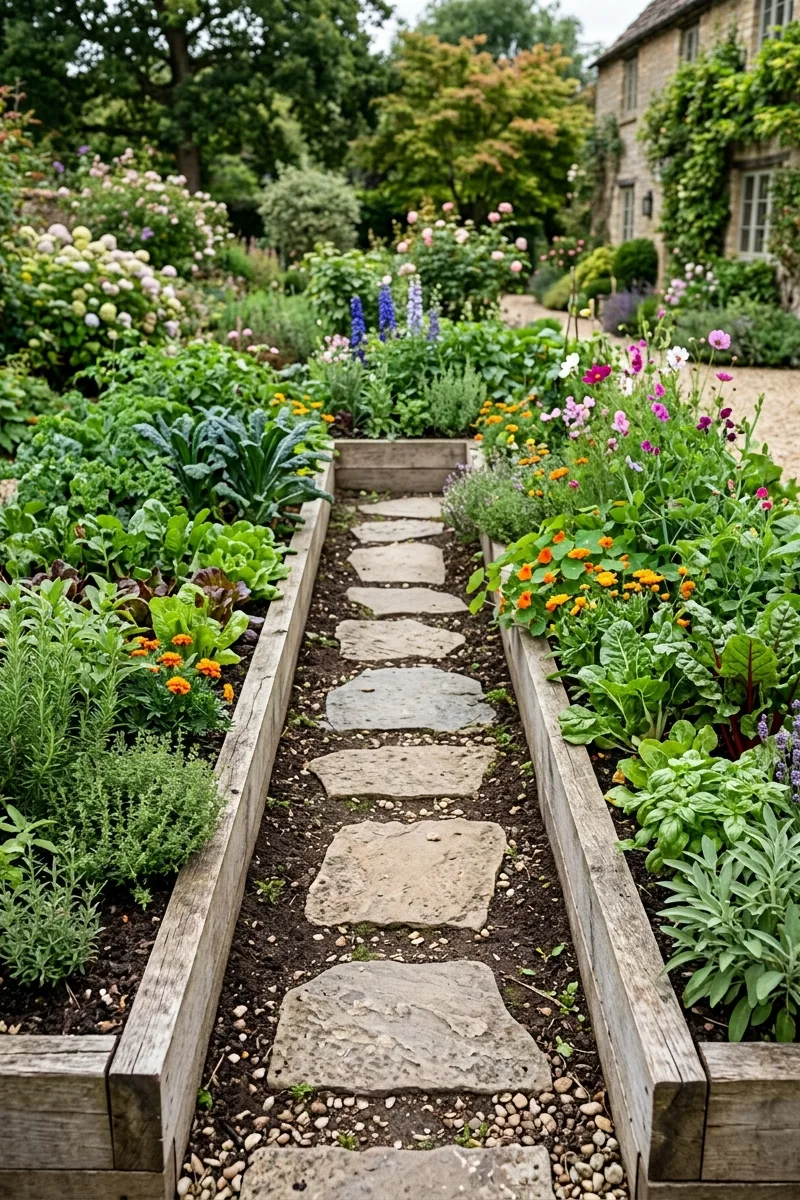
A walk-in bed layout lets you step into the middle of a wide bed without compacting the soil. Place stepping stones in the center of a 6-foot-wide bed. Plant on either side and you can access everything without leaning or reaching. This design is a game-changer for accessibility, making gardening comfortable for everyone and keeping the soil in your beds loose and healthy.
Spiral Herb Garden Layout
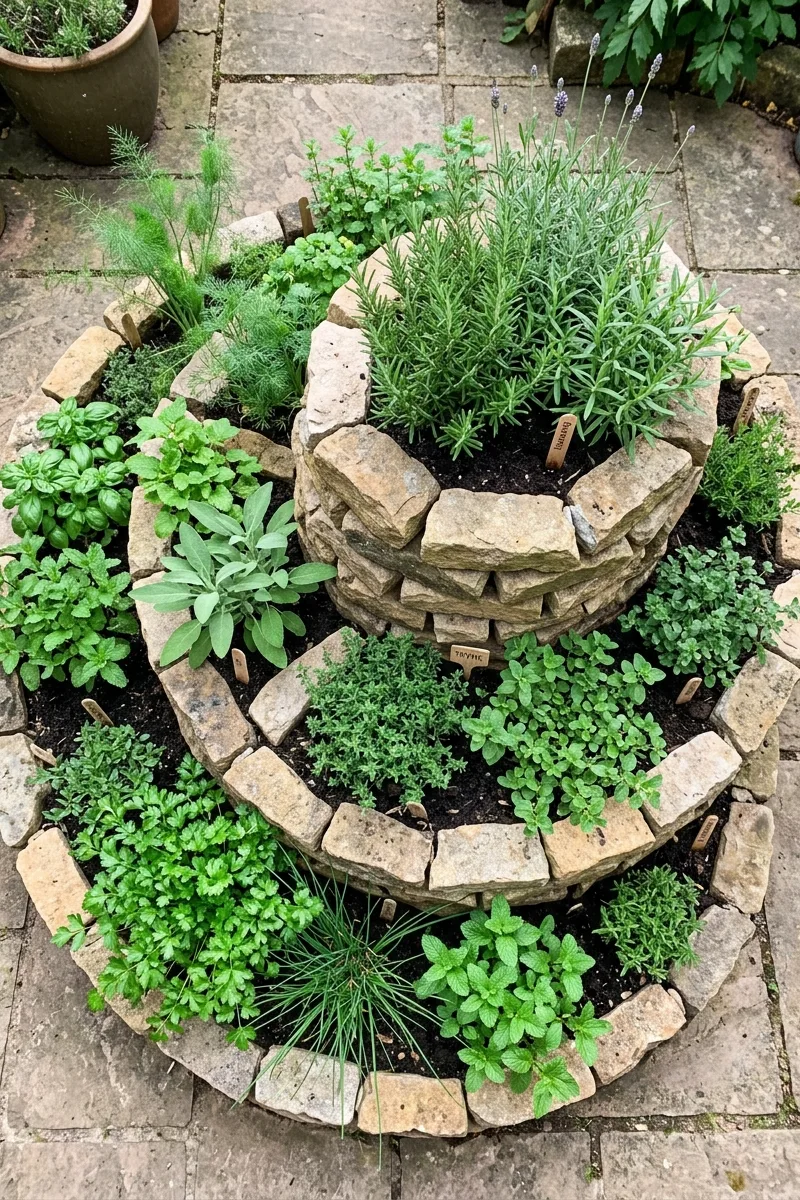
A spiral herb garden is a compact layout that grows many herbs in a small space. The stones wind upward, creating a taller center and lower edges. The top is warm and dry for Mediterranean herbs. The lower edges are cooler and moister for other varieties. It’s a vertical, sculptural, and high-yield design for a small patch of ground.
Strip Cropping Layout
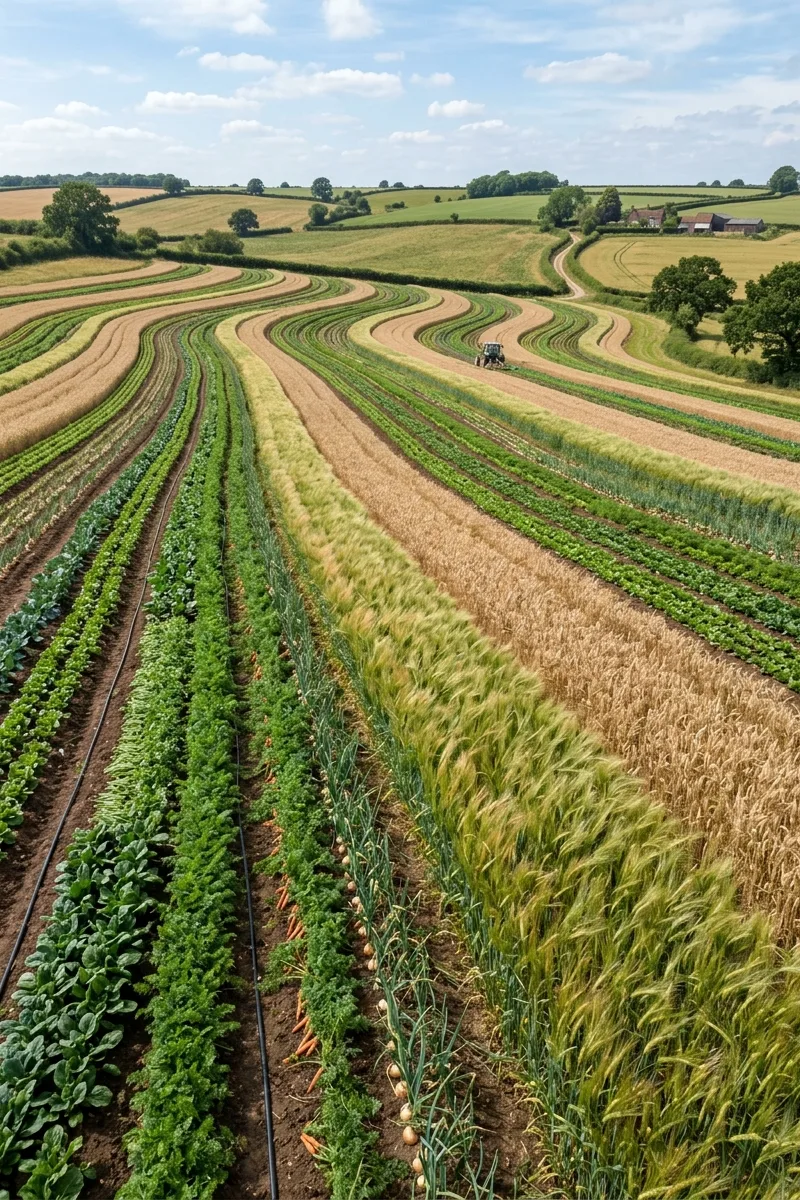
Strip cropping is a technique for sloping ground where you plant crops in alternating strips. The strips follow the contour of the land to slow water runoff and prevent erosion. This layout is used on a larger scale but works in a home garden too, especially on a hillside. It’s a good way to manage soil health in a challenging landscape.
Edible Landscaping Layout
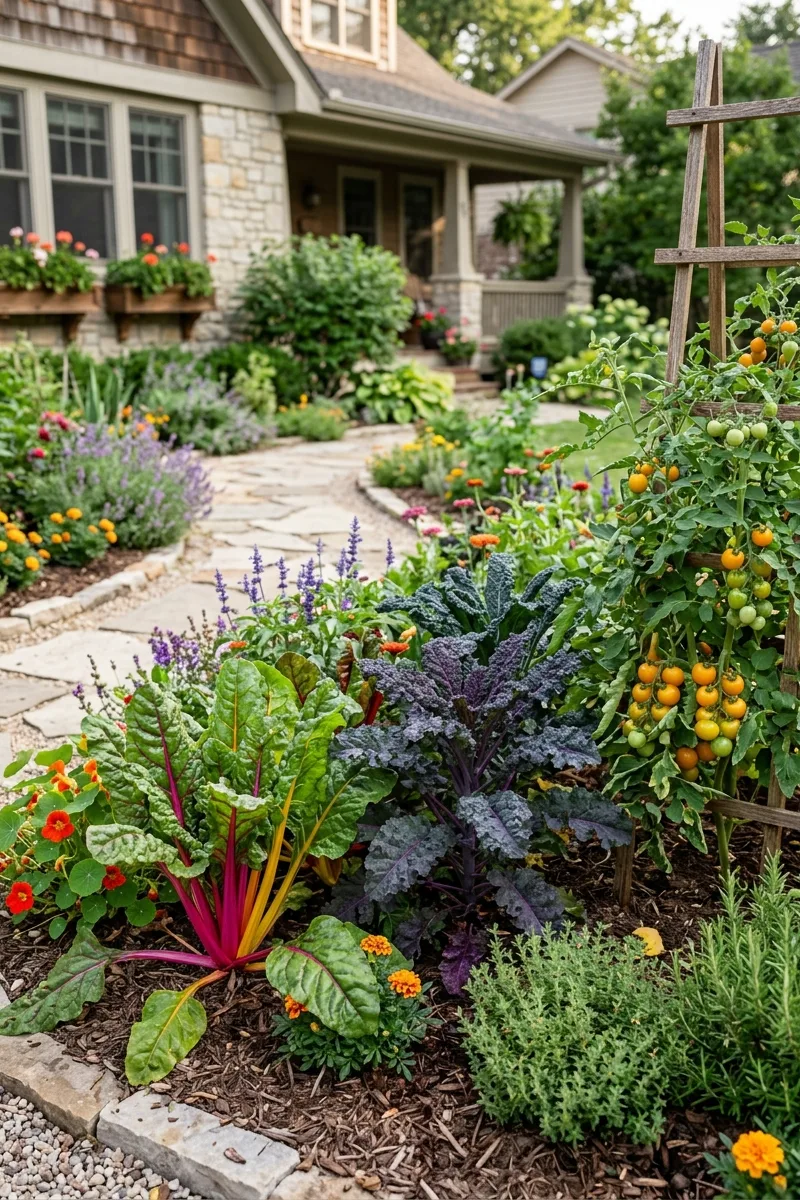
Edible landscaping brings food production into your ornamental garden. Mix colorful vegetables like rainbow chard, purple kale, and red peppers into your flower beds. These plants are just as beautiful as ornamentals and taste great too. This layout lets you grow food even in a front yard where flowers were traditionally required, maximizing the use of all your outdoor space.
Hügelkultur Mound Layout
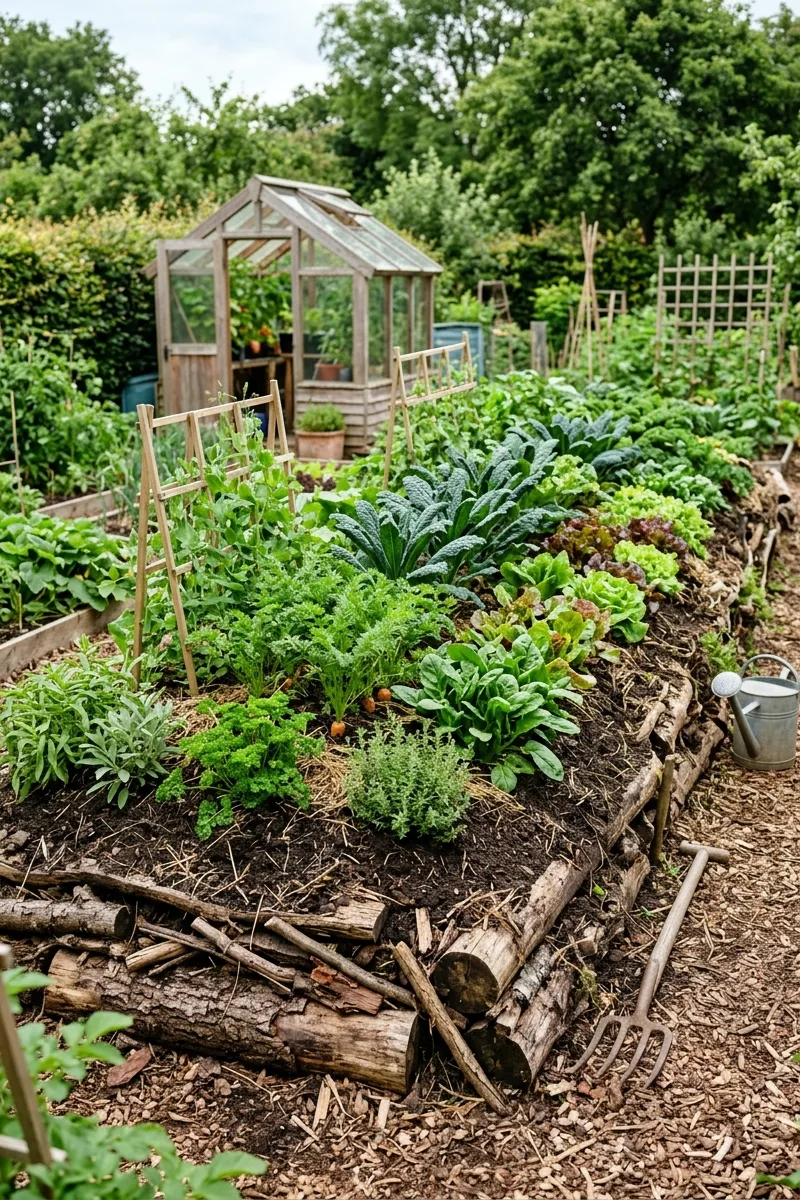
Hügelkultur is a raised bed layout built over a base of rotting wood. The logs and branches act as a sponge, holding water and releasing nutrients for years. The mound is usually 3 to 4 feet high and can be any length. This layout is incredibly productive and requires almost no watering after the first year. It’s a long-term investment in your garden’s productivity.
Inspiration gallery recap
Tap any image to open the slideshow — use arrows or swipe to browse.