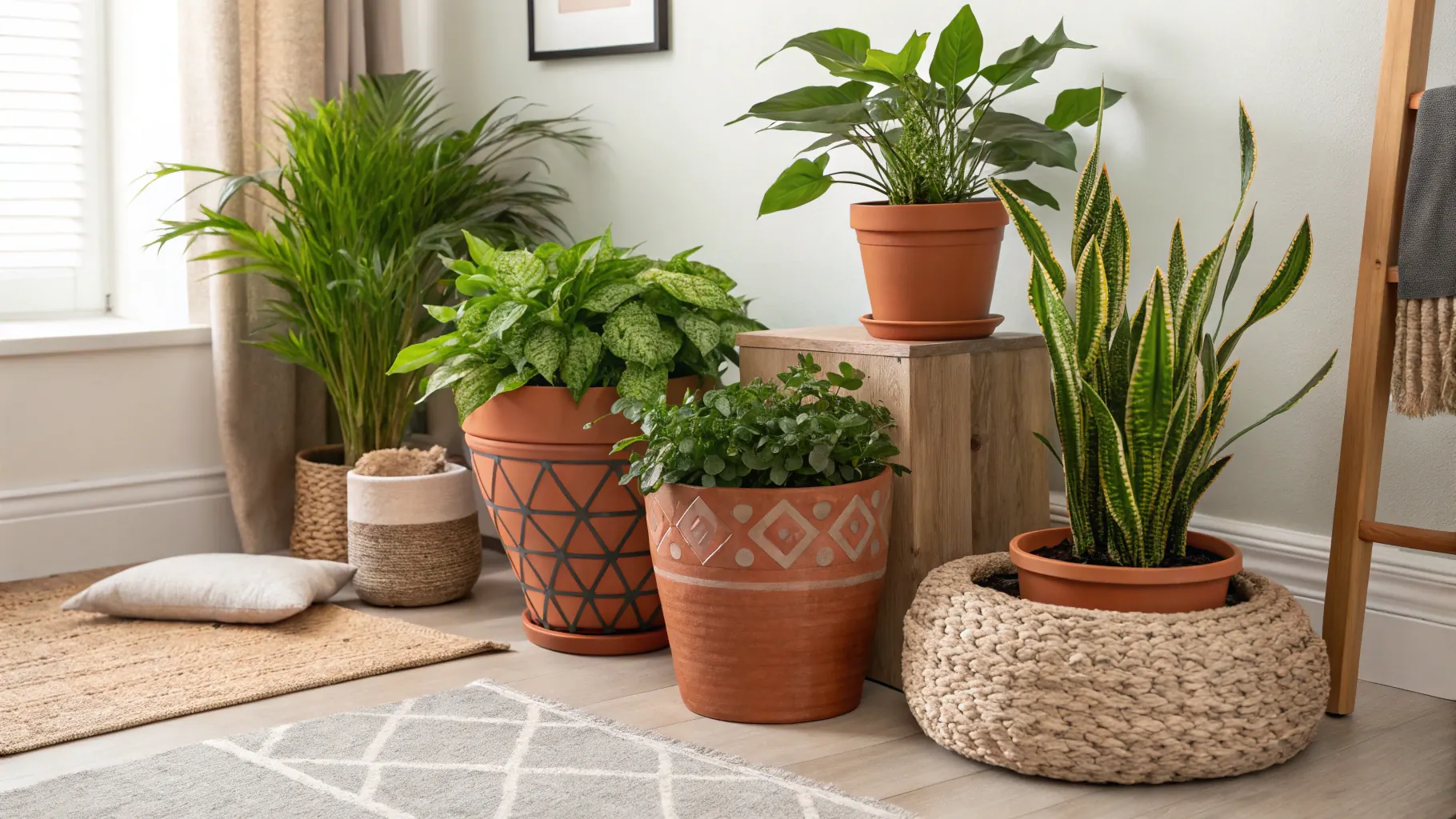
12 Easy Indoor Planter Projects, Creative Home-Grown Greenery
Introduction :
Houseplants are one of the most magical ways to change how a room feels. A single well-placed planter lifts mood, introduces color, and softens hard edges. Over years of indoor gardening with beginners and experienced plant parents, I have learned which planter projects are both forgiving and beautiful. These 12 planter projects are designed to be low-stress, affordable, and highly rewarding: from simple clay pots elevated on wooden legs to creative wall-mounted planters that turn a blank wall into a vertical green tapestry. Each idea includes practical potting notes, material lists, and styling suggestions so you can grow something lovely indoors.
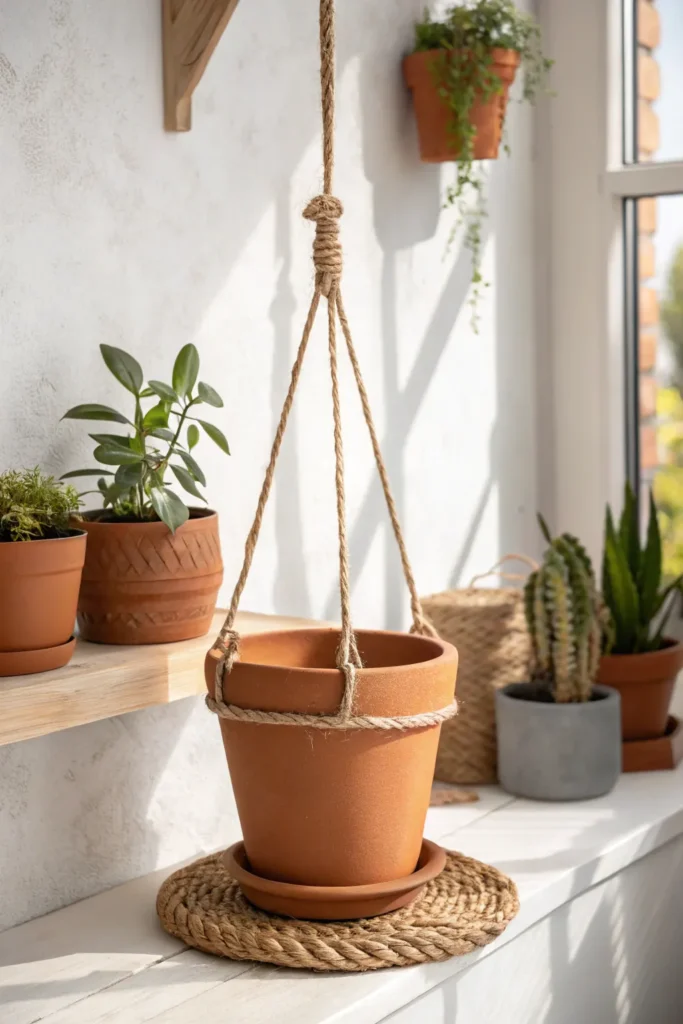
1. Simple Terracotta Pot with Twine Hanger
A classic terracotta pot dressed with a twine hanger is both rustic and modern. Choose a pot with a drainage hole, use a saucer, and knot the twine securely. Practical tip: line the bottom with a small layer of pebbles then quality potting mix for good drainage. The earthiness of terracotta under your fingers and the gentle sway of a hanging planter make for a soothing sensory mix.
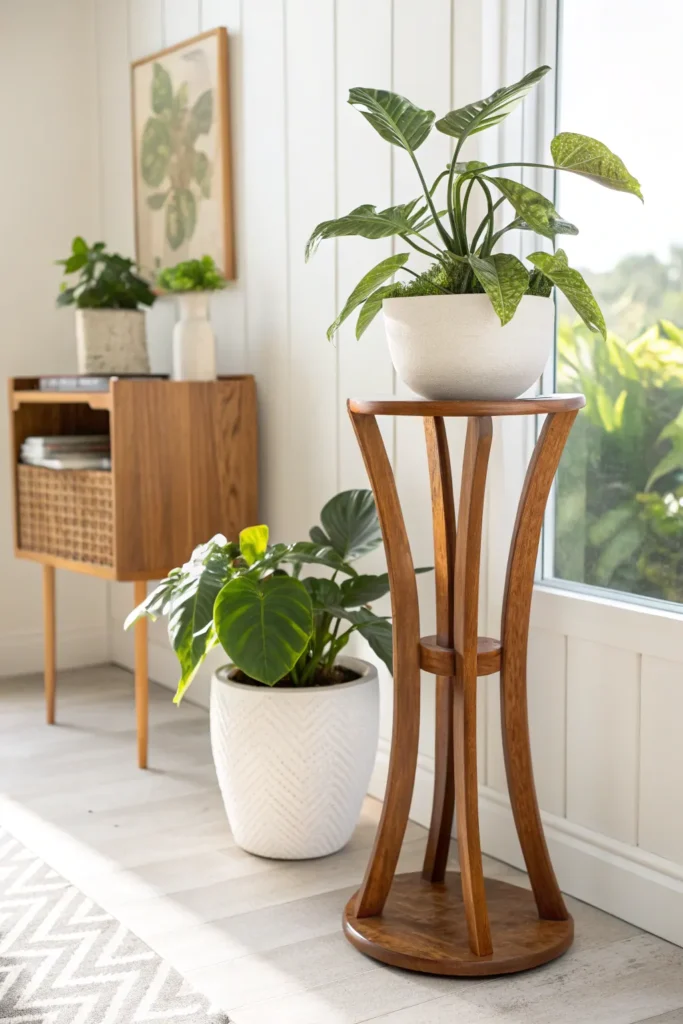
2. Mid-Century Wooden Plant Stand
Build a low wooden plant stand with tapered legs for a mid-century inspired look. Use slatted construction for airflow and oak or walnut for warmth. Practical tip: keep heavier pots low and use felt pads under legs to protect floors. The grain and warmth of the wood complement green leaves beautifully.
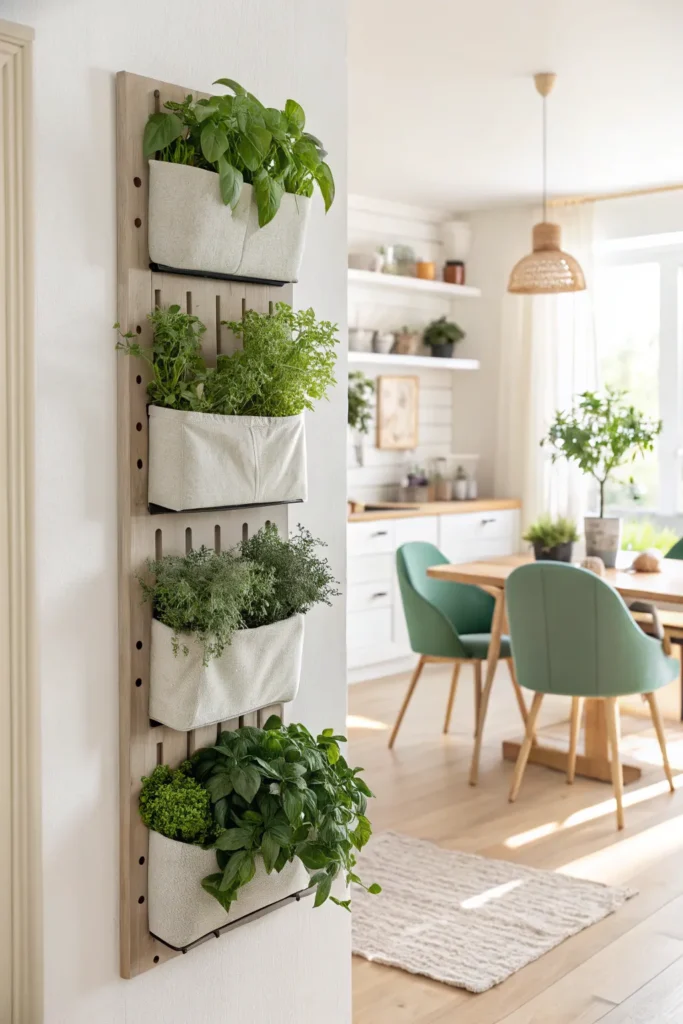
3. Wall-Mounted Pocket Planters for Herbs
Create small wall-mounted pockets for kitchen herbs using corkboard or sewn fabric pockets. Mount near light and keep watering minimal. Practical tip: use a fast-draining mix and rotate pockets for even light. The freshness of herbs close at hand is both practical and sensory, filling the air with soft herbal notes when cut.
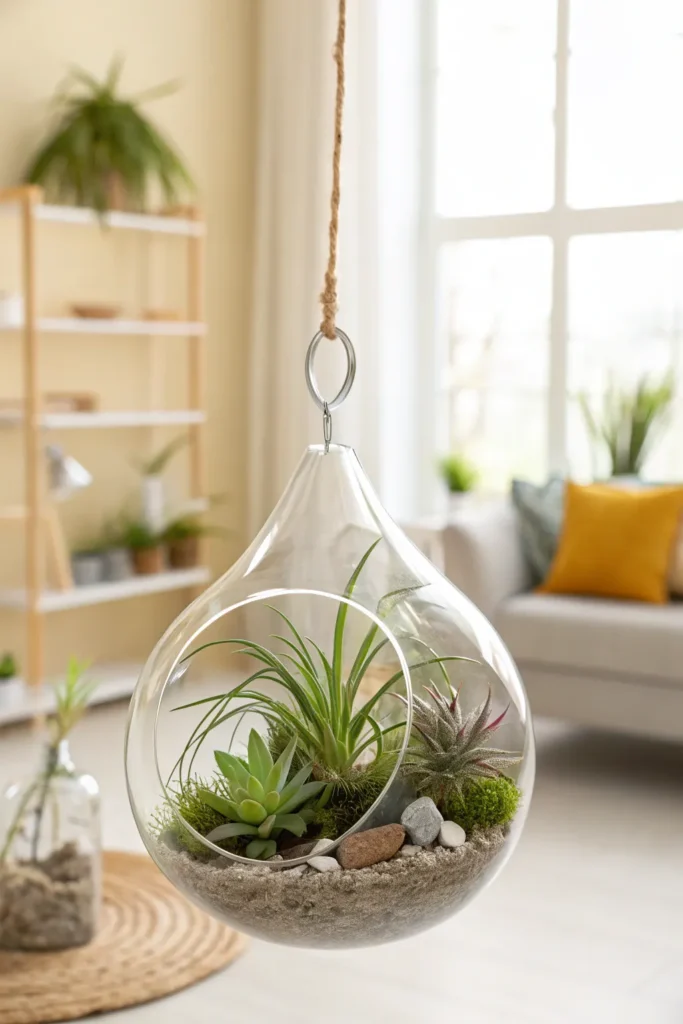
4. Hanging Glass Terrarium for Air Plants
A hanging glass terrarium with air plants is low maintenance and sculptural. Use silica sand, small stones, and a few air plants that prefer bright, indirect light. Practical tip: mist lightly and avoid overwatering; air plants thrive on humidity and good airflow. The glossy glass and delicate greenery create a light, jewel-like accent.
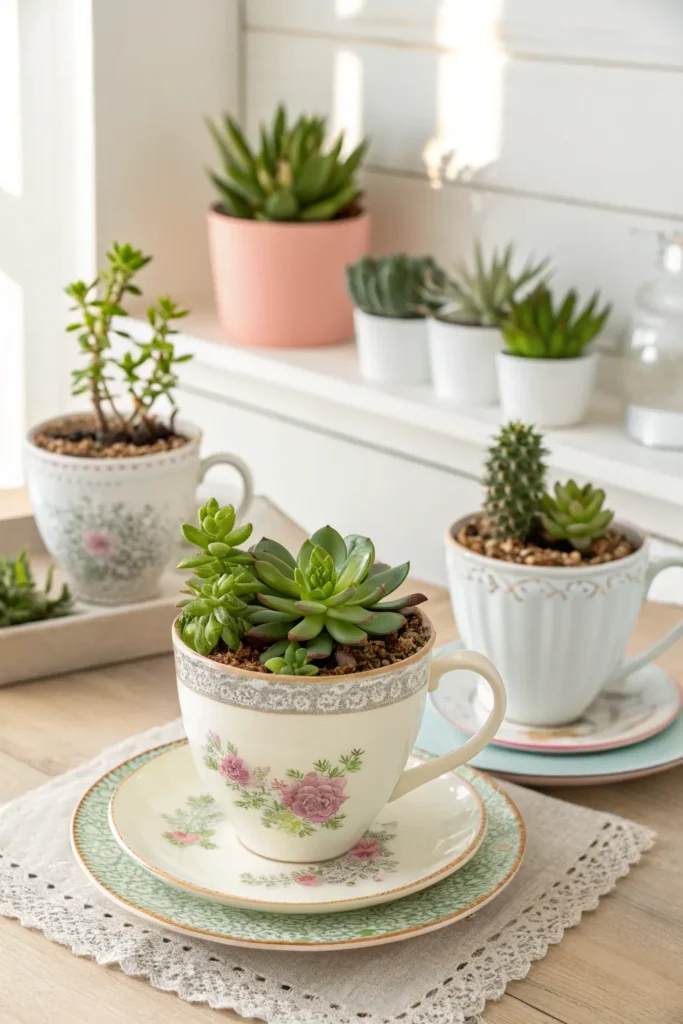
5. Repurposed Teacup Saucers for Tiny Succulents
Use vintage teacups and saucers for petite succulent arrangements, ideal for windowsills or grouped on trays. Practical tip: create a small drainage layer of pebbles and use a fast-draining succulent mix. The delicate porcelain against soft green creates a charming, intimate vignette.
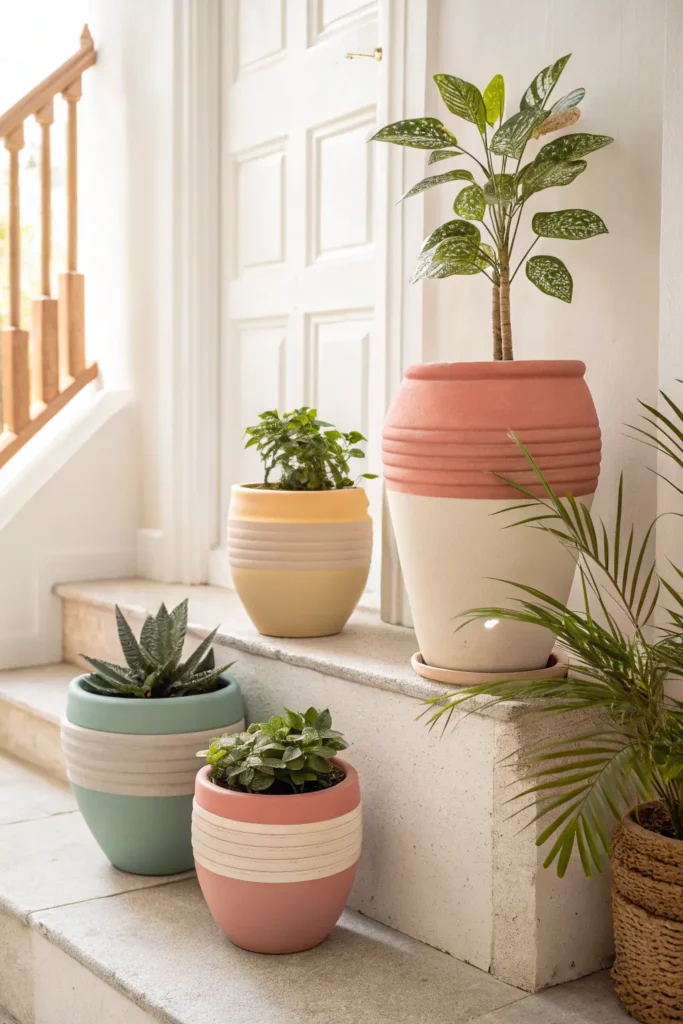
6. Painted Ceramic Pots in Harmonized Palette
Refresh plain ceramic pots with a coordinated palette of warm neutrals and soft pastels. Use chalk or ceramic paint and seal with clear coat if needed. Practical tip: test paint on an inconspicuous area and use painter’s tape for crisp bands. A painted collection of pots feels curated and cheerful on a shelf or plant corner.
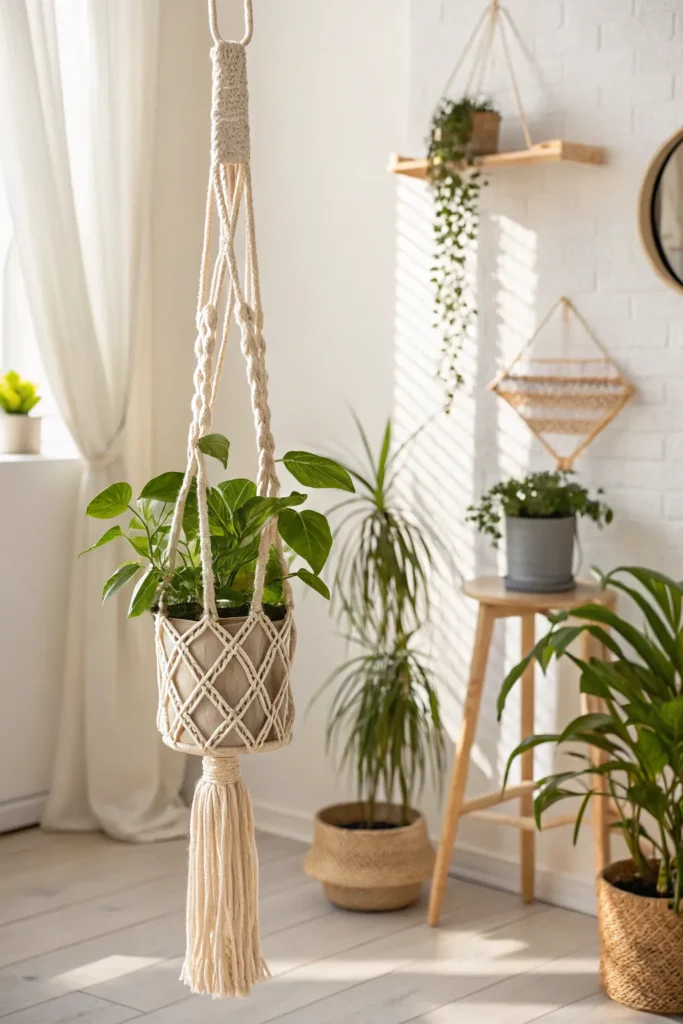
7. Macrame Plant Hanger for Boho Texture
A simple macrame hanger adds boho texture and elevates a planter to eye level. Use cotton cord and a ceramic pot, knotting a basic net pattern. Practical tip: keep heavier pots low and ensure sturdy ceiling anchors for overhead hangers. The knotted texture juxtaposed with glossy leaves gives satisfying tactility.
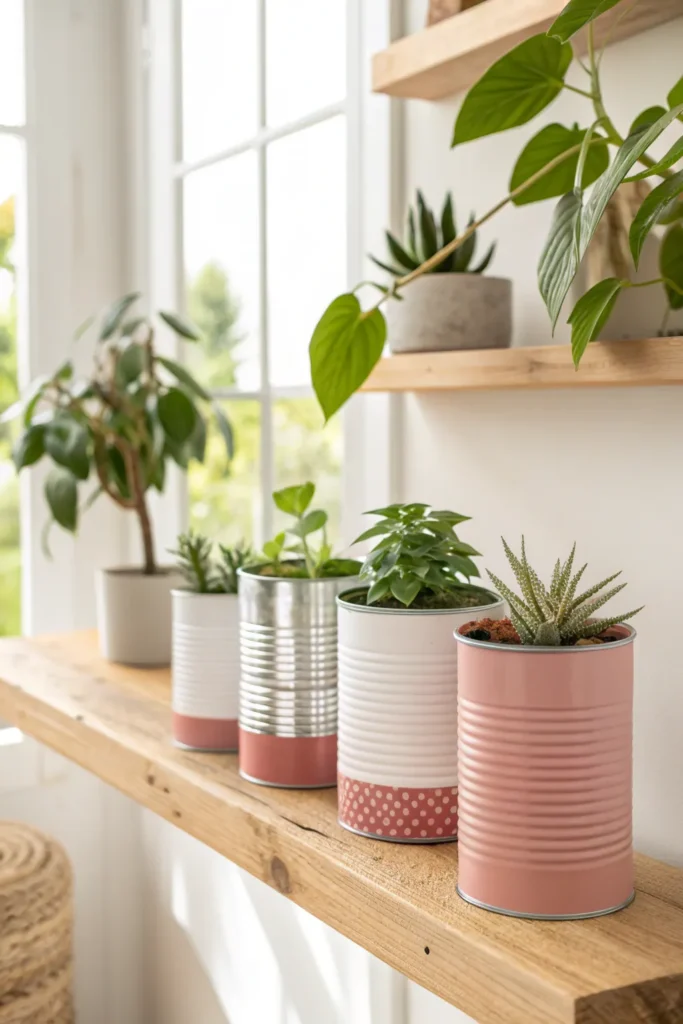
8. Upcycled Tin Can Planters with Wooden Shelf
Paint and mount tin cans on a simple wooden slat to create an industrial-cottage planter strip. Use drainage holes and line with small pebbles. Practical tip: hang at kitchen window height for herbs and small greens. The mix of metal, painted surfaces, and wood reads charming and resourceful.
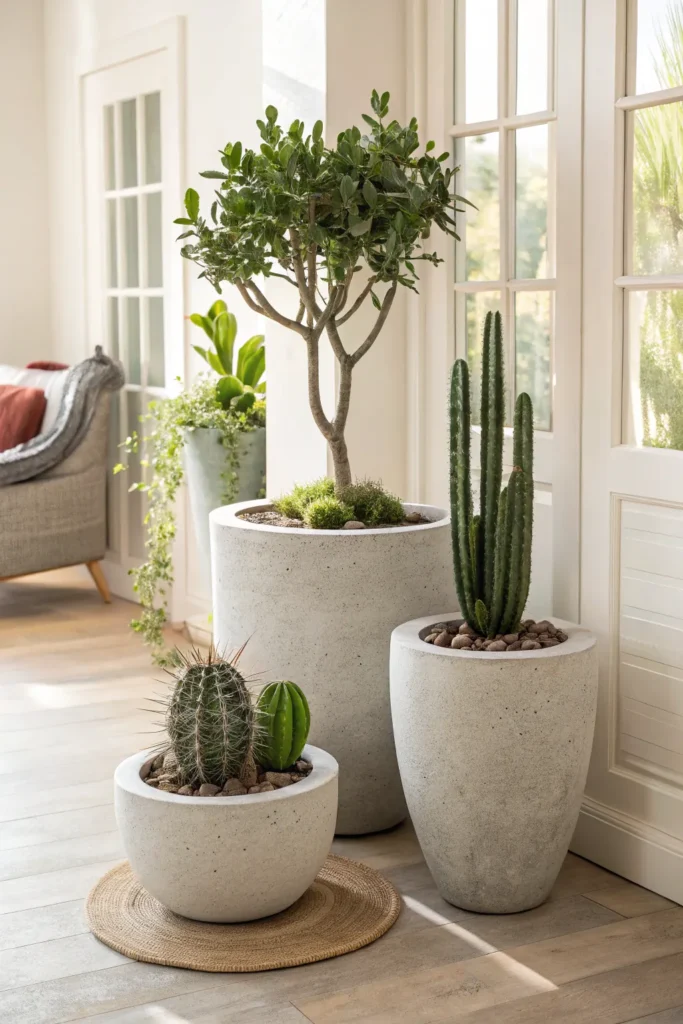
9. Concrete Planters for Sculptural Weight
Make small concrete planters using silicone molds for a minimalist, sculptural effect. Use quick-setting concrete and seal the interior. Practical tip: include a drainage hole or use a liner for wet-loving plants. The cool, solid feel of concrete contrasts beautifully with soft foliage.
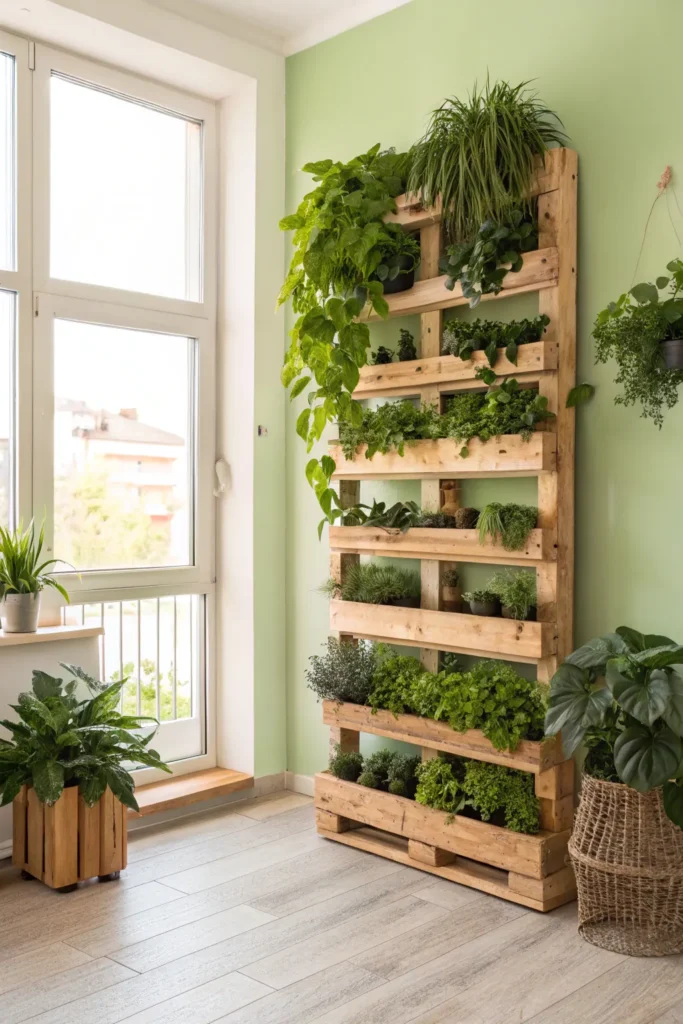
10. Vertical Pallet Garden for a Green Wall
Convert a small pallet into a vertical planter with pockets or small pots for trailing plants. Secure the pallet to a wall with anchors and line with landscape fabric to hold soil. Practical tip: choose drought-tolerant trailing plants and ensure even watering. The green wall effect fills vertical space and creates a living artwork.
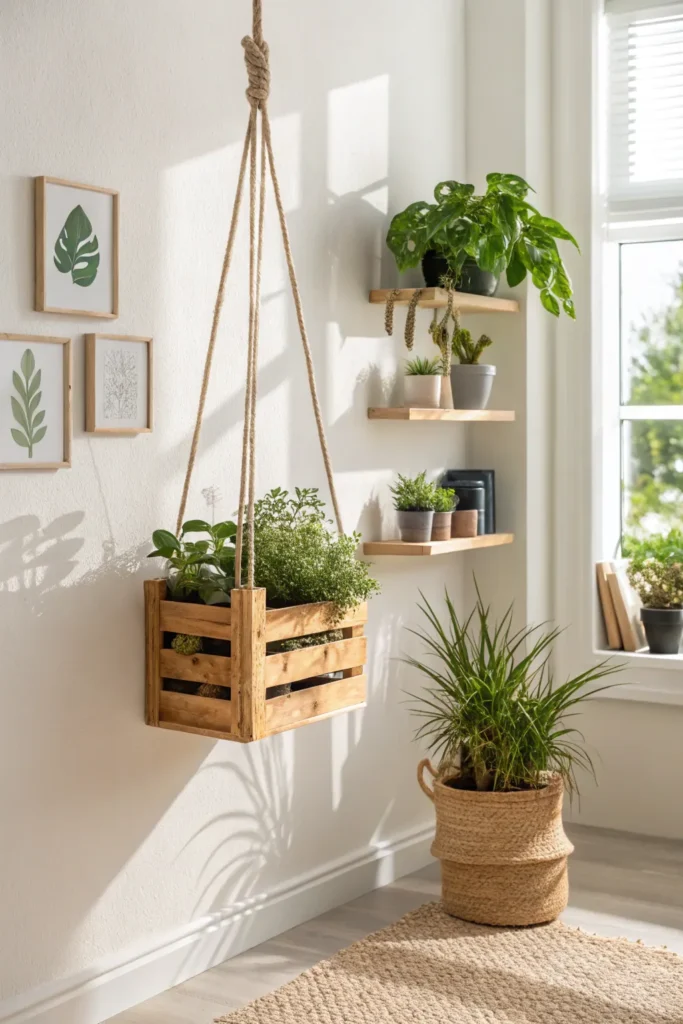
11. Hanging Wooden Box Shelf Planter
Build a shallow wooden box with rope hangers to display several small pots in a row. Use lightweight pots to reduce load and hang near indirect light. Practical tip: reinforce corners and use exterior-grade glue for longevity. The row of pots makes a pleasing rhythm and is easy to water from above.
12. Self-Watering Planter for Busy Plant Parents
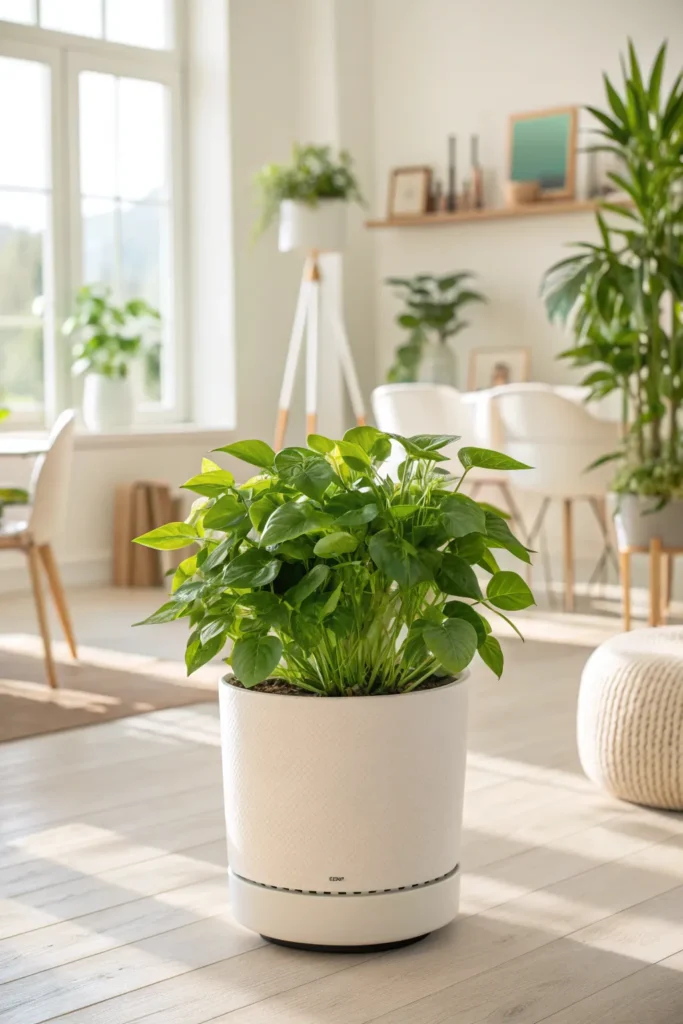
Create a simple self-watering planter using a water reservoir and a wick system to reduce watering frequency. Use lightweight materials and test the wick rate with your chosen soil. Practical tip: monitor first month to calibrate the wick and avoid overwatering. The ease of a steady water supply reduces stress and keeps plants happier.
Common Mistakes to Avoid
– Using garden soil indoors, always use a potting mix suited for containers.
– Ignoring drainage, ensure pots have holes or a drainage strategy.
– Overwatering, check soil moisture before watering to avoid root rot.
Recommended Materials
– Quality potting mix
– Pebbles for drainage
– Terracotta pots
– Lightweight liners
– Cotton macrame cord
– Silicone molds
– Quick-set concrete
– Terracotta saucers
– Plant-friendly tools
FAQs
How often should indoor plants be watered? It depends on plant type and light, generally every 1 to 2 weeks for many houseplants, check soil moisture before watering.
Do I need special soil for succulents? Yes, succulents prefer a fast-draining mix with sand or perlite added.
Can planters damage floors? Use saucers or trays and felt pads under stands to protect floors from water and scratches.
Where is the best place for hanging planters? Near bright windows with indirect light to avoid scorching leaves while providing sufficient light.
Are self-watering planters safe for all plants? They are great for many plants but not ideal for succulents or cacti which prefer drier cycles.
Conclusion:
These 12 planter projects are designed to be approachable and delightful, whether you are planting your first pothos or creating a small herb station for the kitchen. Start with one small project this weekend and watch how a touch of green changes the light, the air, and the mood of your home.