14 Beautiful Garden Walkway Ideas to Transform Your Yard
A well-designed garden walkway does more than guide your steps. It frames your flowers, sets a rhythm for the whole yard, and turns a simple stroll into a sensory experience. Whether you prefer the crisp geometry of brick or the relaxed sprawl of gravel, the right path makes your garden feel intentional and inviting.
These 14 walkway ideas draw from classic materials and fresh layouts to help you create a look that fits your space and style. From rustic stepping stones to sleek modern slabs, each option brings its own texture and mood to the landscape.
What’s inside this article
- Flagstone Meandering Path
- Gravel Garden Path
- Brick Herringbone Walkway
- Stepping Stone Lawn Path
- Cobblestone Street-Style Path
- Wood Slice Walkway
- Permeable Pavers Path
- Mulch and Stone Border Path
- Concrete Paver Grid Walkway
- Stone Slab Steps Path
- Checkerboard Tile Path
- Recycled Brick Path
- Crusher Dust and Stone Edge Path
- Granite Curb and Cobble Path
Flagstone Meandering Path
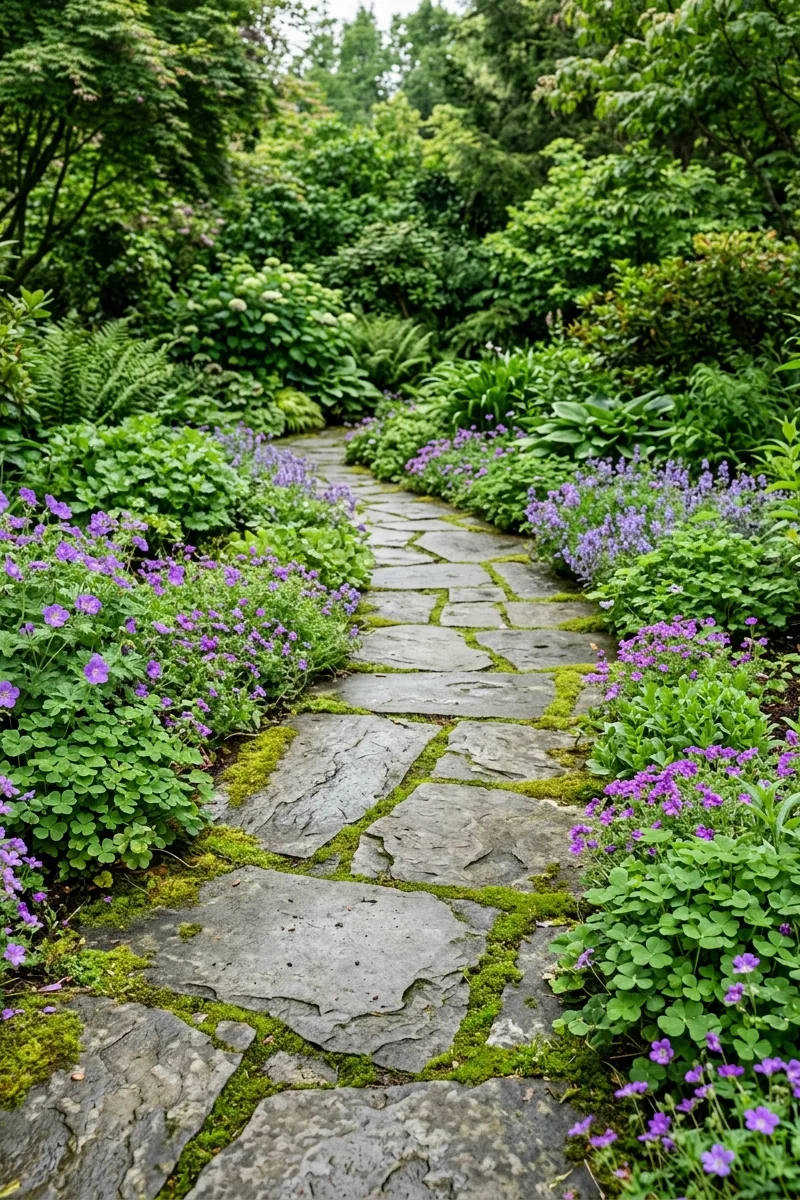
Flagstone paths feel like they’ve been there for decades. The irregular shapes and natural color variations give a meandering route a casual, organic vibe that fits cottage gardens and woodland settings. Set the stones into sand or gravel so you can adjust the spacing and create gentle curves that follow the land. Leave gaps between them for low-growing thyme or creeping jenny to soften the edges. The uneven surfaces and earthy tones make each step feel unique and grounded in nature.
Gravel Garden Path
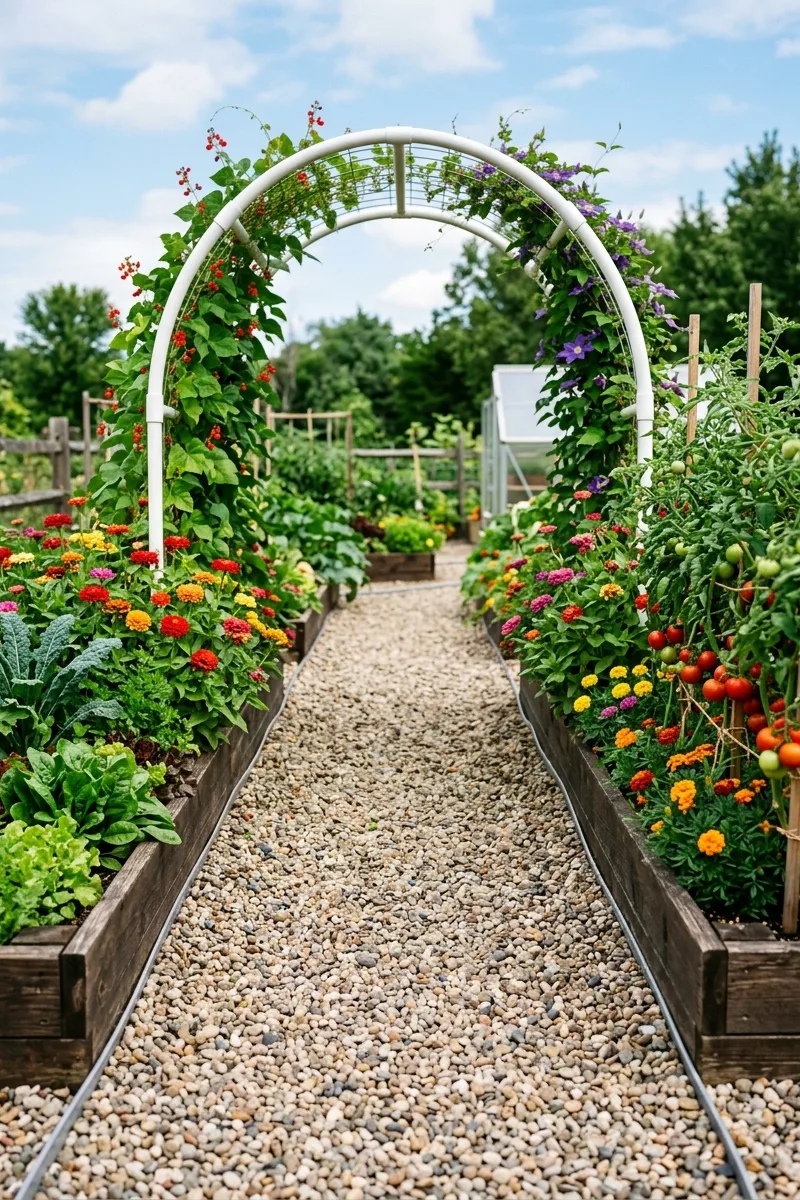
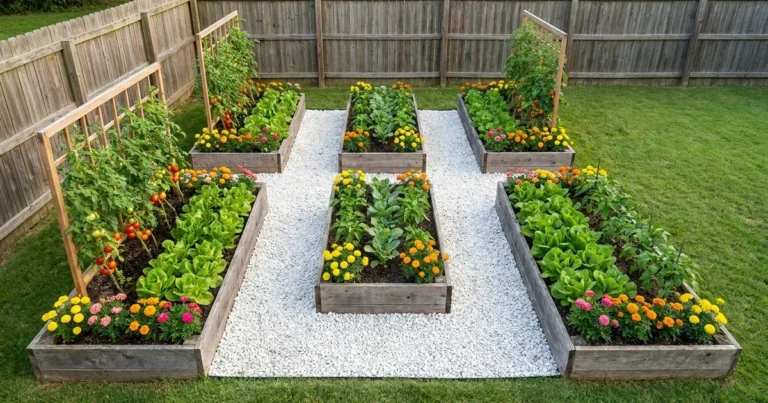
Gravel is one of the most forgiving path materials. It drains well, costs less than stone or brick, and you can install it in an afternoon. Choose angular crushed stone rather than rounded pebbles for a surface that stays put underfoot. A 4-inch layer over landscape fabric keeps weeds down and prevents the stones from sinking into the soil. Rake it smooth now and then to maintain a clean, polished look.
Brick Herringbone Walkway
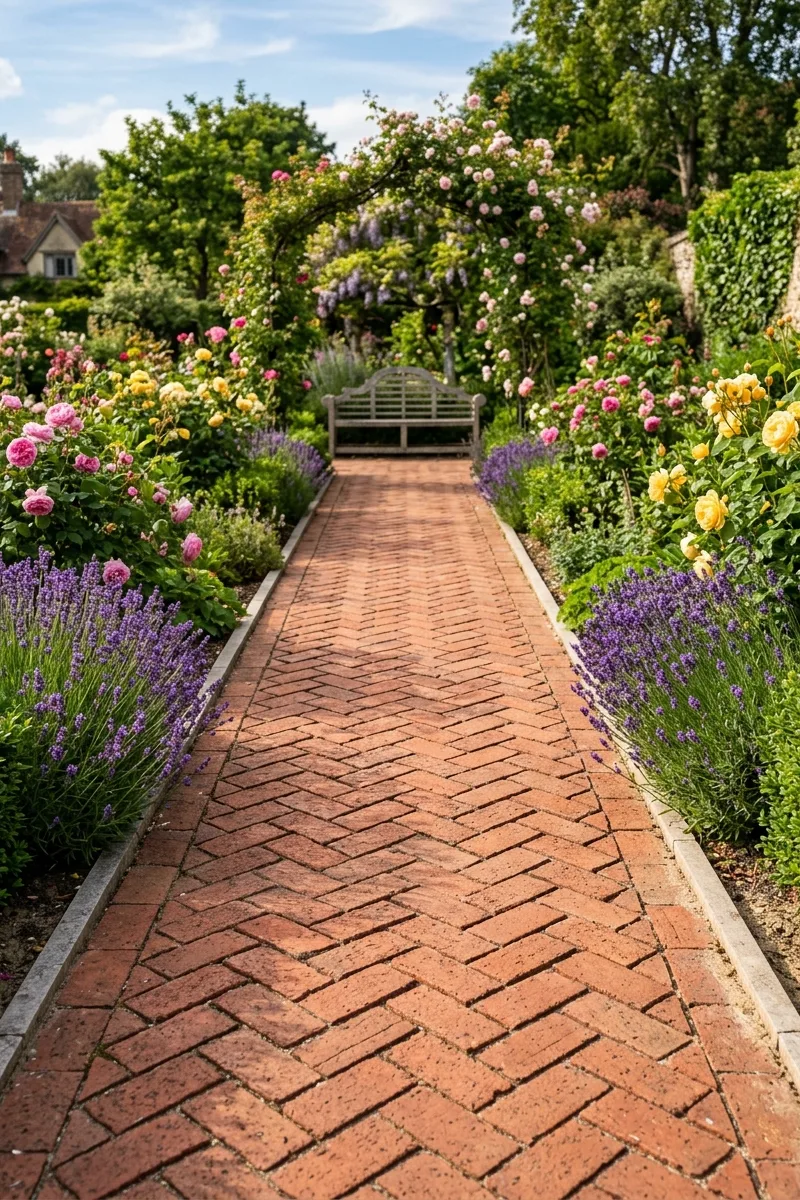
Herringbone brick paths add a formal touch to any garden. The angled pattern creates visual movement and makes the walkway feel wider than a straight-set design. Use standard clay bricks or reclaimed pavers for a weathered look. Set them on a compacted gravel base and sweep sand into the joints to lock everything in place. This classic layout works beautifully at the front of a house or leading to a patio.
Stepping Stone Lawn Path
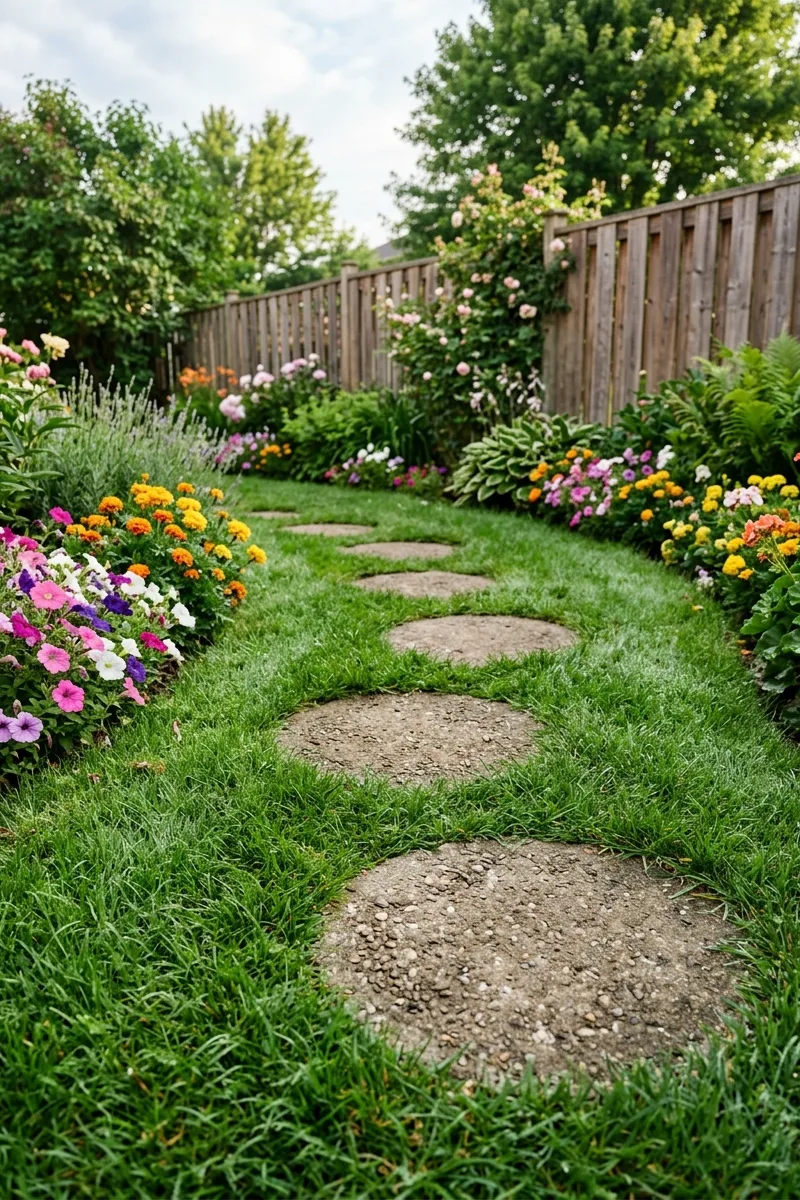
Stepping stones across a lawn create a playful, informal route that doesn’t interrupt the flow of the grass. Space them about 18 inches apart for a comfortable walking pace. Use natural stone or cast concrete rounds that sit flush with the turf so your mower can pass right over them. The contrast between the solid stone and the soft green grass makes this a simple but striking garden feature.
Cobblestone Street-Style Path
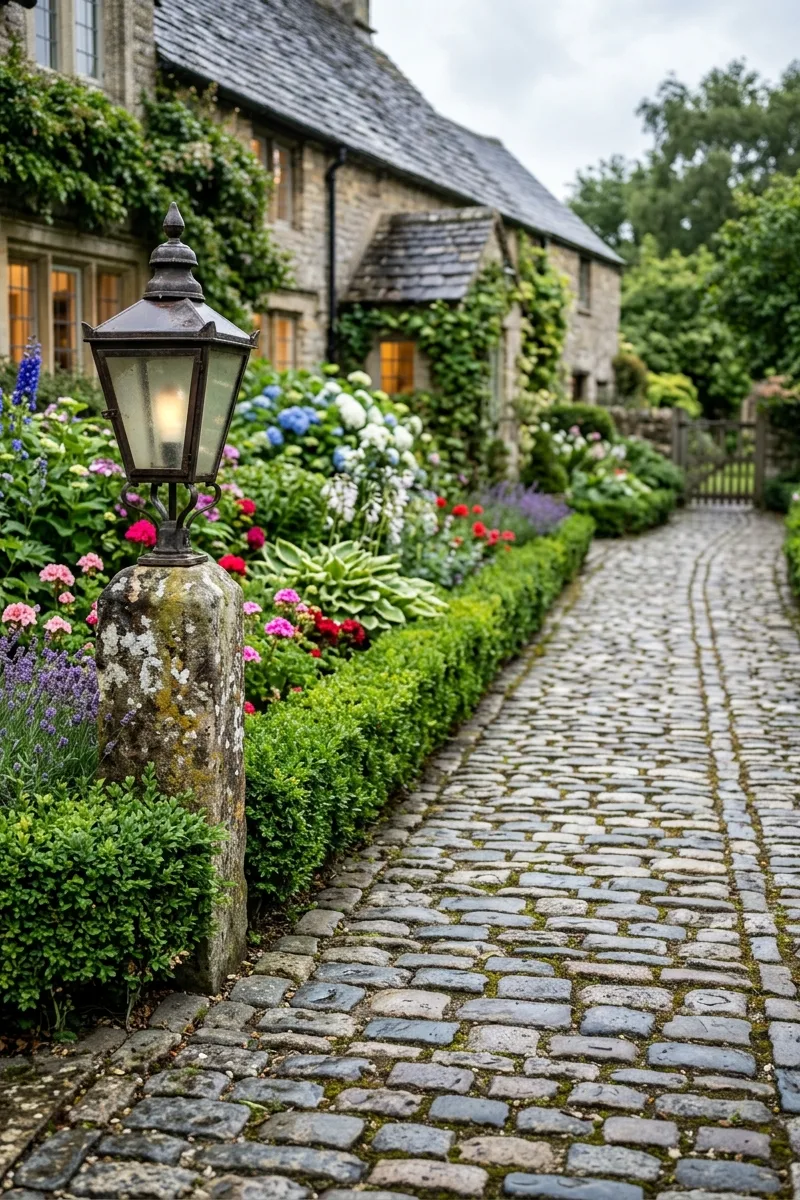
European-style cobblestones bring old-world charm to modern gardens. The rounded stones are satisfying to walk on and hold their color for years. Set them in a sand bed with tight joints or use a mortar base for a more permanent installation. The irregular shapes and muted grey tones pair perfectly with clipped hedges, roses, and classic garden furniture.
Wood Slice Walkway
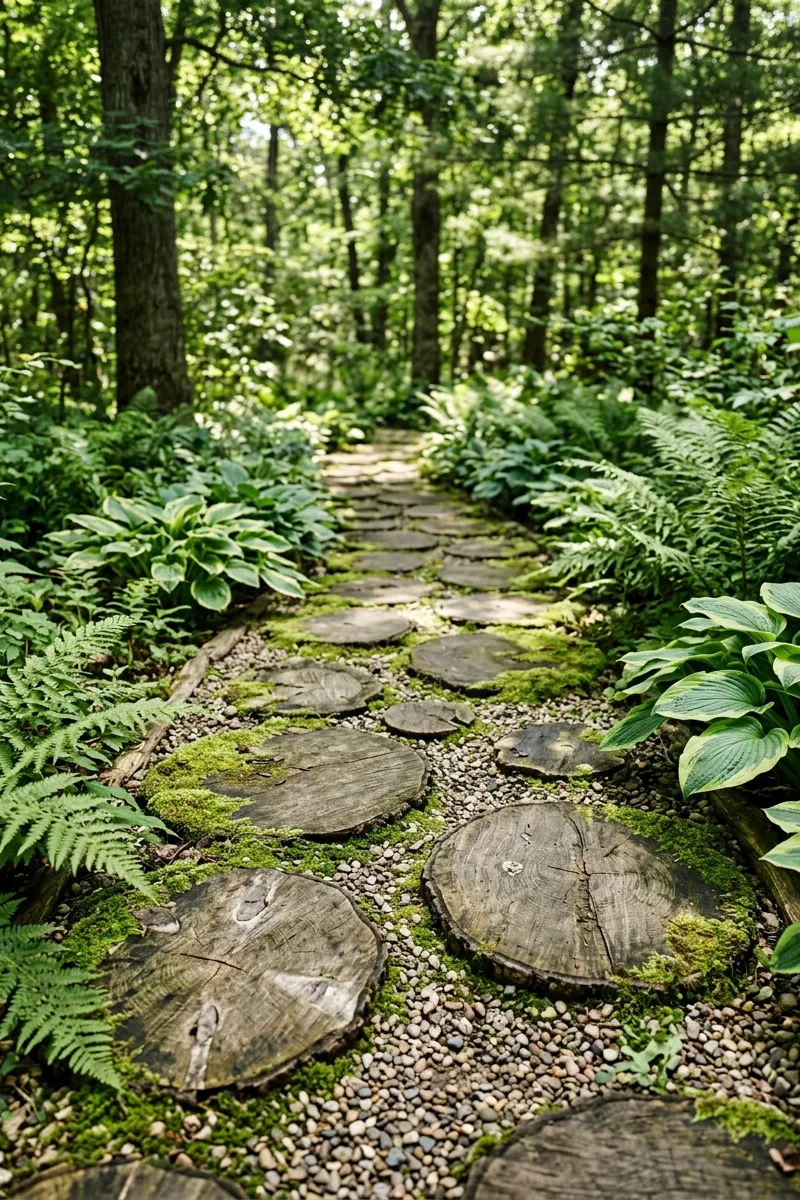
Wood slices are a budget-friendly way to add rustic texture to a garden path. Cut 2-inch-thick rounds from fallen branches or inexpensive logs. Treat them with a wood preservative to slow rot, then set them into a gravel base with the bark still intact. The natural rings and varied diameters create a whimsical, woodland feel that works especially well in shaded side yards or cottage gardens.
Permeable Pavers Path
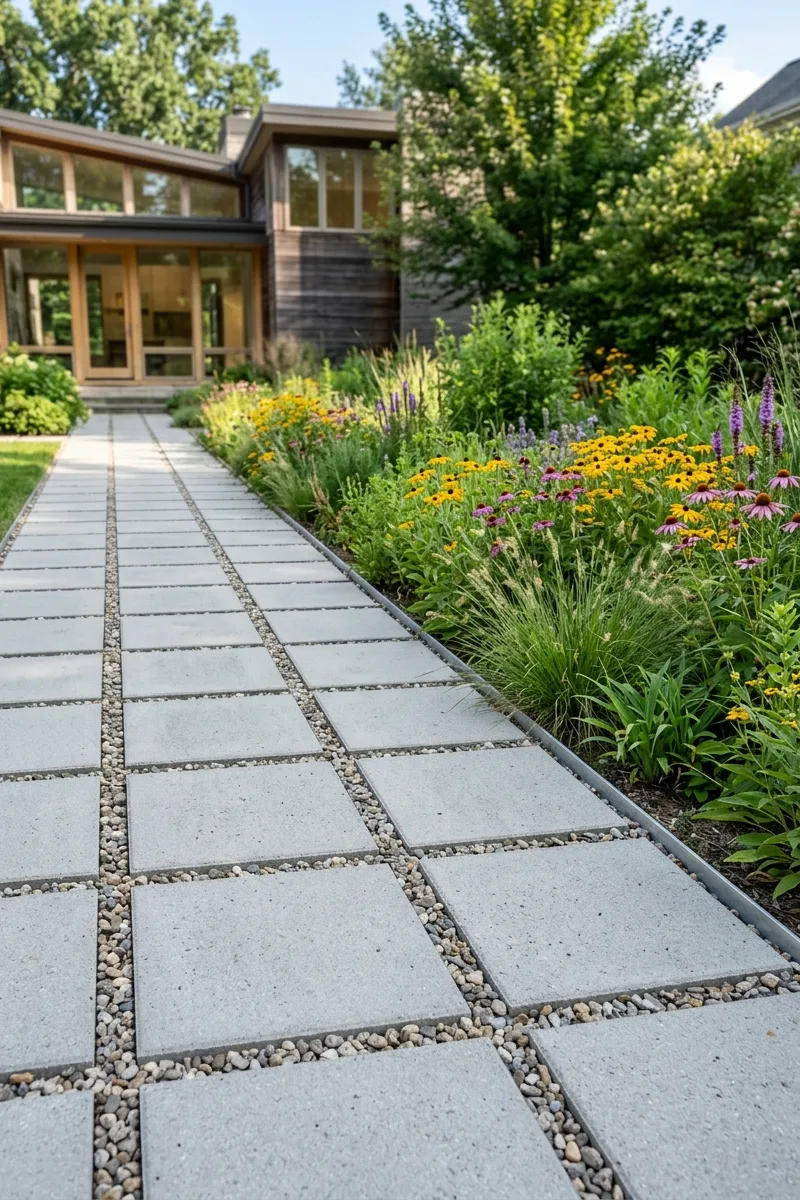
Permeable pavers let rainwater soak through into the soil below, reducing runoff and recharging groundwater. The pavers have built-in gaps filled with small stones that filter water naturally. This eco-friendly option works well in rainy climates and meets many municipal stormwater codes. Choose a neutral grey or warm tan paver that blends with your home’s exterior finishes.
Mulch and Stone Border Path
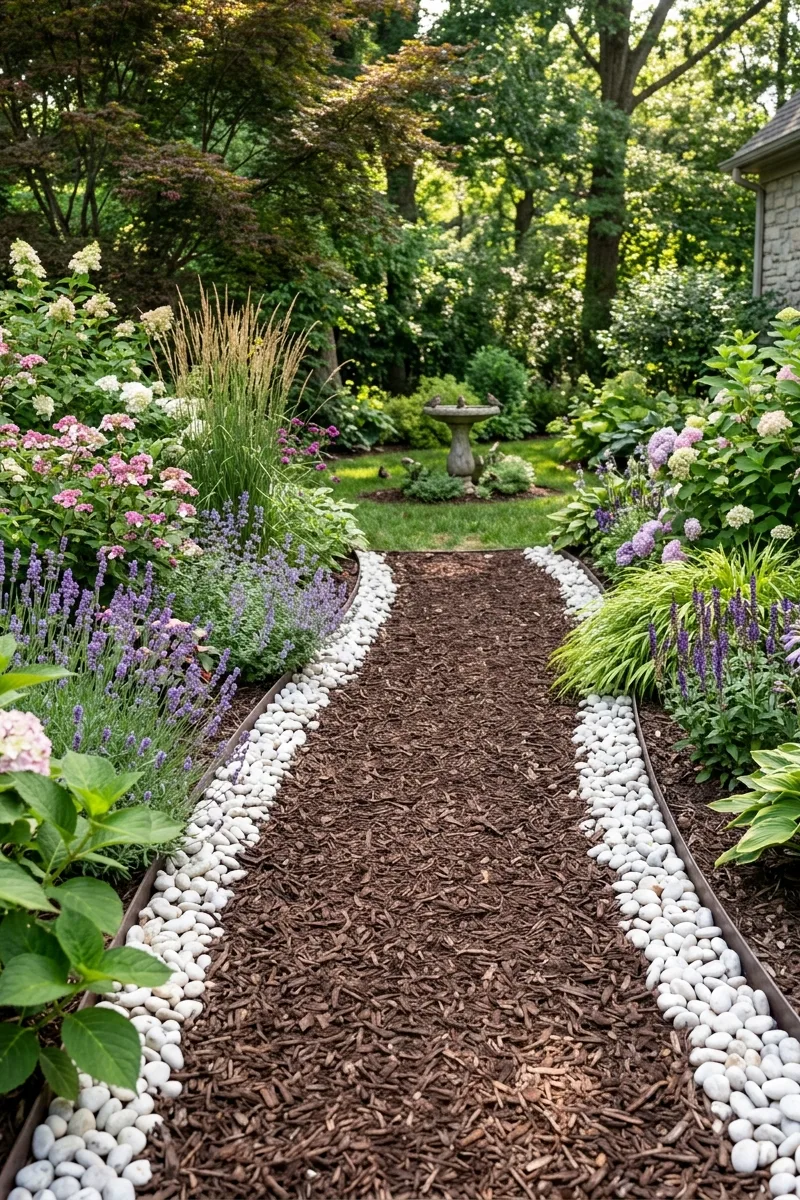
Mulch paths are soft underfoot and blend naturally into garden beds. Use a 3-inch layer of shredded hardwood bark for a rich, dark surface that suppresses weeds and holds moisture. Define the edges with white river stone or salvaged brick to keep the mulch from spilling into the planting areas. This combination works especially well in woodland gardens and shade plantings.
Concrete Paver Grid Walkway
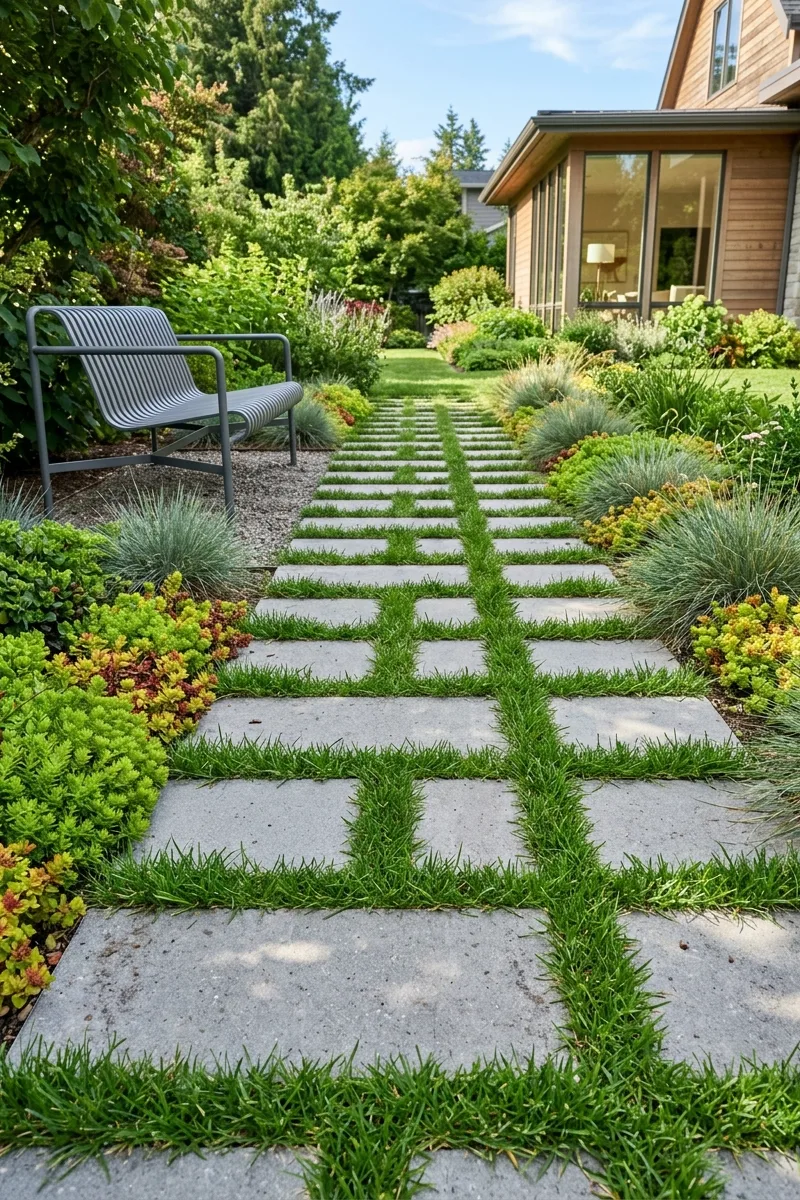
Grid pavers offer a contemporary twist on the traditional path. The concrete units have open cells that allow grass or ground cover to grow through, softening the hard surface. This design reduces stormwater runoff and stays cooler than solid paving on hot days. It’s a great choice for driveways, wide garden paths, or areas where you want a durable surface that doesn’t dominate the landscape.
Stone Slab Steps Path
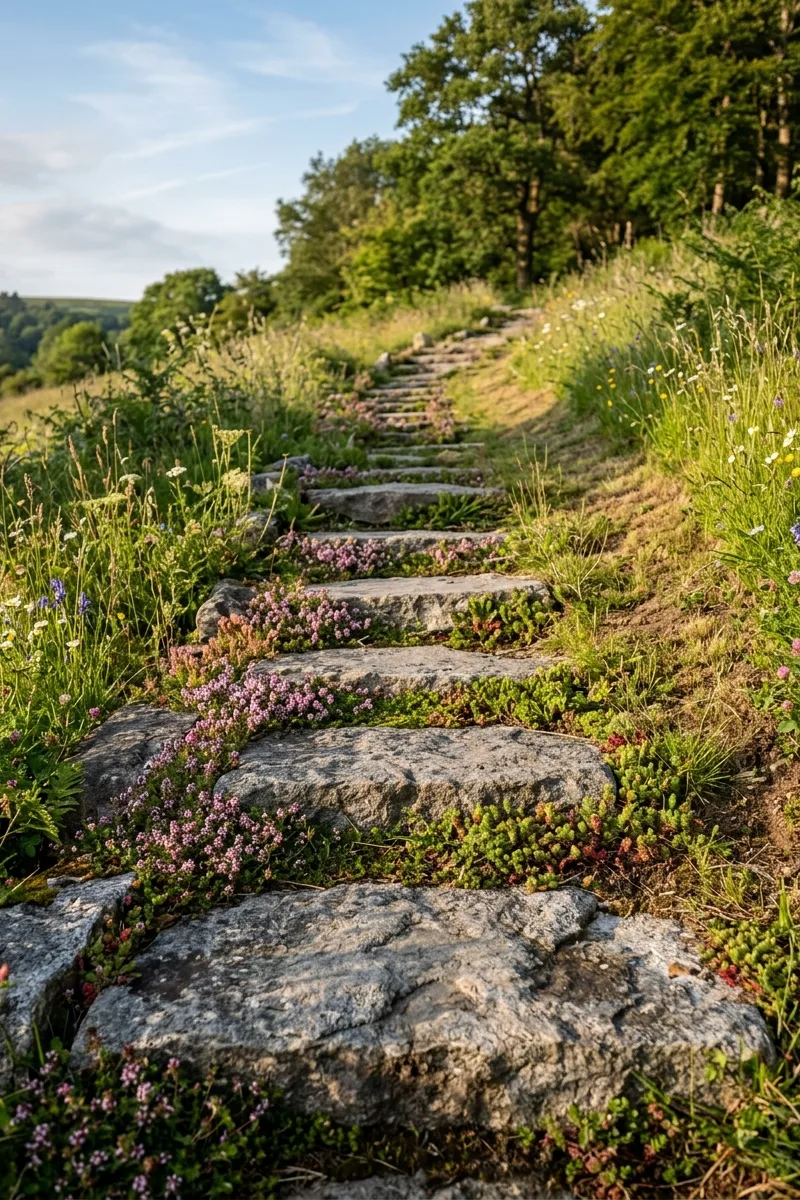
If your garden has a slope, stone slab steps turn a challenging grade into a beautiful design feature. Choose thick, weather-resistant stone like bluestone or sandstone. Set each slab into the hillside so the tread is level and the riser is 6 to 8 inches high. Fill the gaps with low-growing plants to soften the edges and prevent erosion on the slopes around each step.
Checkerboard Tile Path
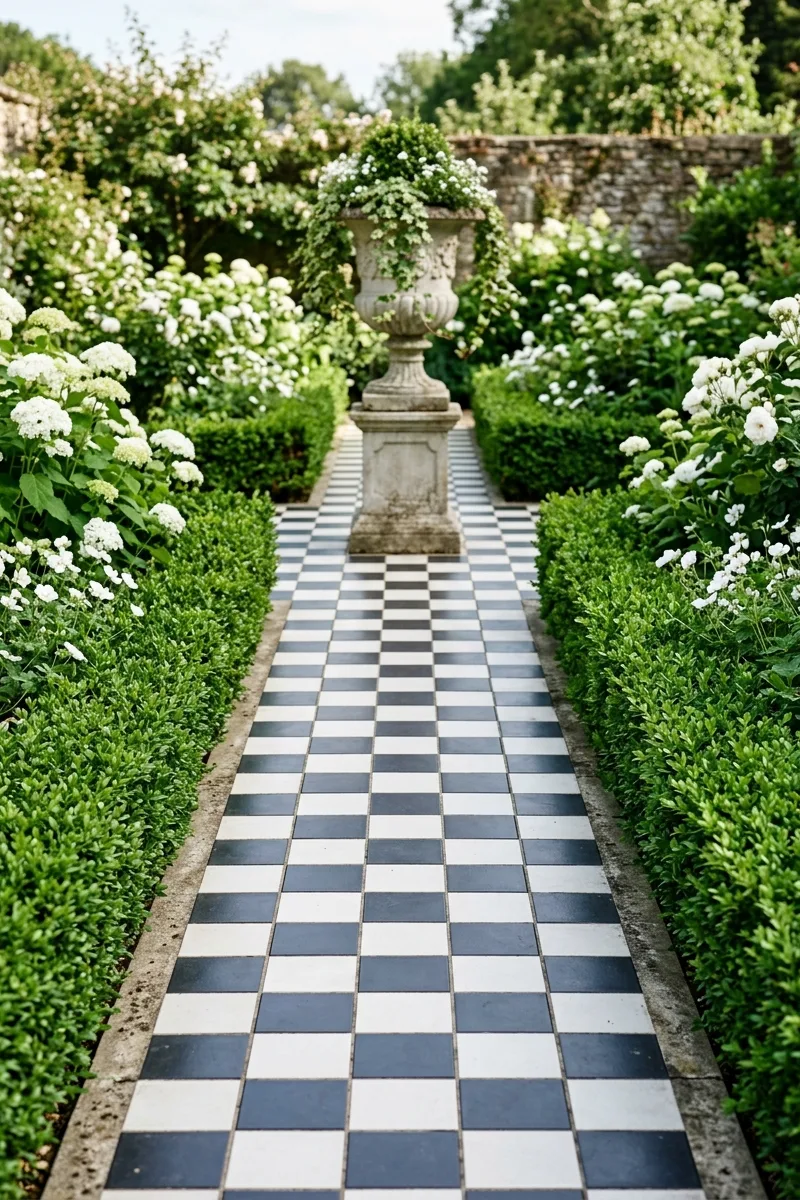
For a bold garden statement, try a checkerboard tile path. Use durable outdoor ceramic or porcelain tiles in contrasting colors, set into a concrete base with good drainage. The crisp geometric pattern creates a formal, garden-room feel that pairs beautifully with symmetrical plantings. This design shines in courtyard gardens, parterre layouts, and Mediterranean-inspired landscapes.
Recycled Brick Path
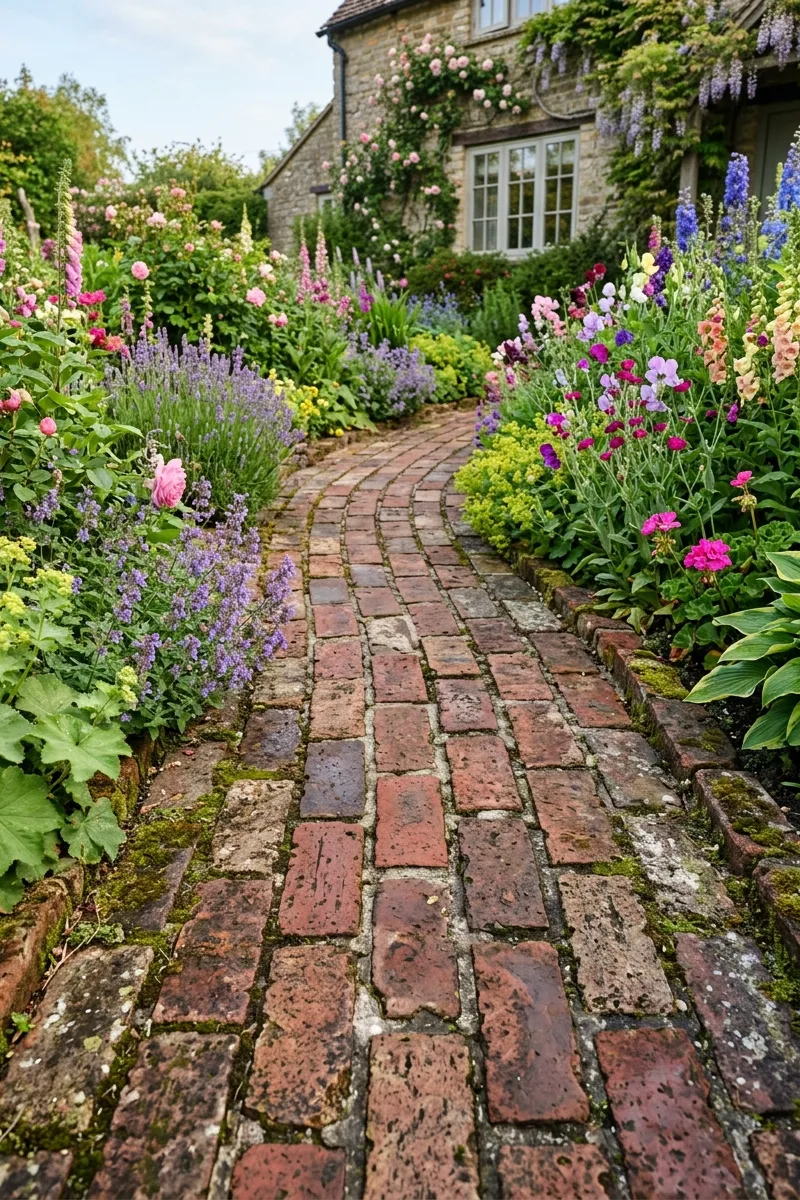
Recycled brick brings instant character to a garden path. Old bricks have varied tones, chipped edges, and a weathered patina that new materials just can’t match. Look for salvage yards or demolition sites for good deals. Clean off old mortar with a hammer and chisel, then lay them in a sand bed. The imperfections add charm and make each walkway unique.
Crusher Dust and Stone Edge Path
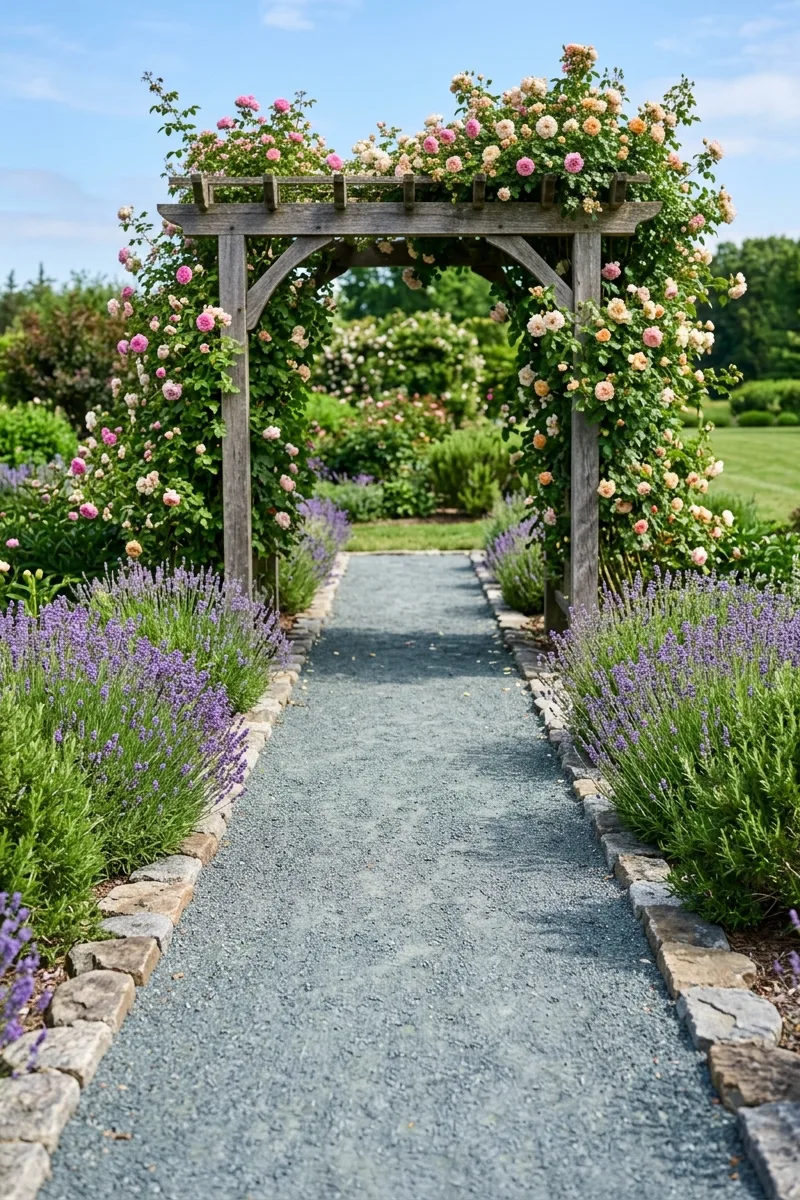
Crusher dust is a fine, compactable material made from crushed stone. It creates a smooth, hard surface that feels almost like concrete but drains well and costs much less. Install a 4-inch layer over landscape fabric, then wet and compact it with a plate compactor. Edge the path with natural stone or timber to keep the material in place and define the walkway’s shape.
Granite Curb and Cobble Path
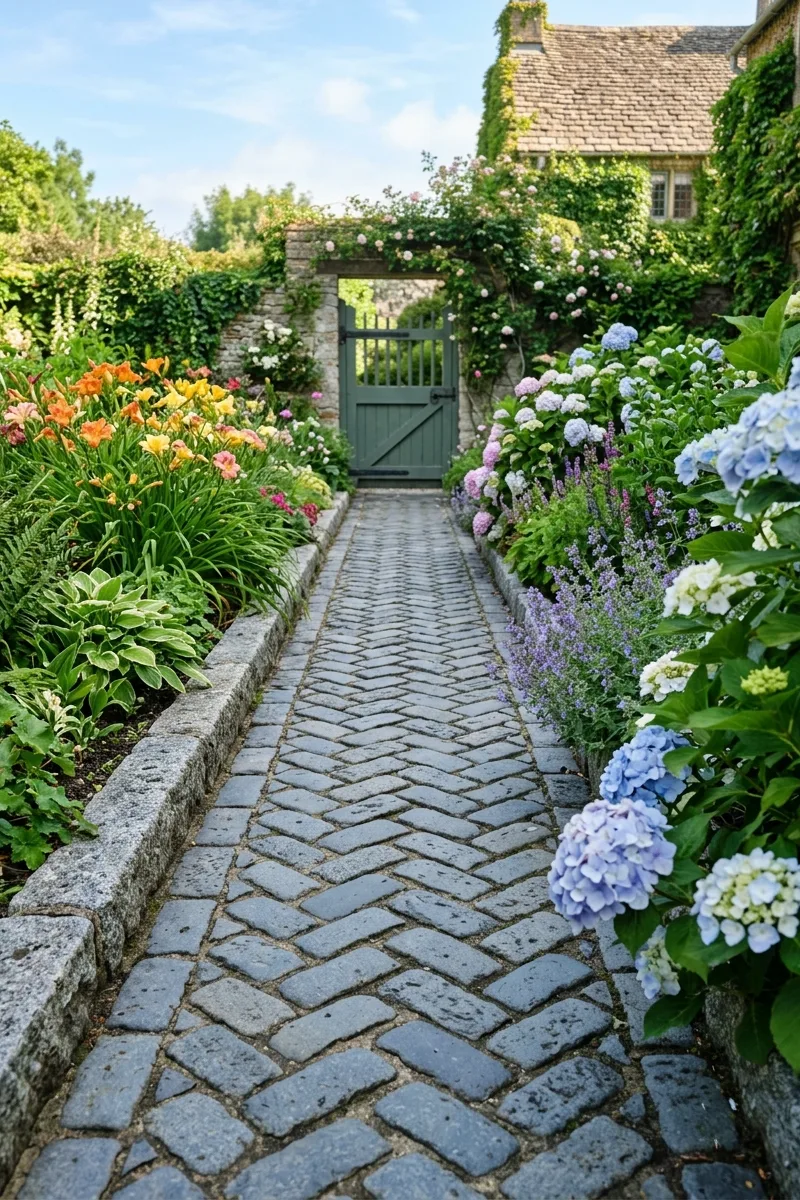
Granite cobbles with matching curbs create a durable, handsome walkway that handles foot traffic and garden equipment without shifting. The rounded stones have a tactile quality that’s pleasant underfoot. Use the larger granite pieces as edging to contain the cobbles and create a clean boundary between the path and your garden beds. This classic combination lasts for generations with minimal maintenance.
Inspiration gallery recap
Tap any image to open the slideshow — use arrows or swipe to browse.