17 Tips for Growing Tomatoes on a Balcony Garden
Growing tomatoes on a balcony is one of the most rewarding urban gardening projects. There’s nothing quite like stepping out your door to pick a sun-warmed cherry tomato from your own plant. With the right variety, pot, and care, you can have a steady supply of delicious tomatoes all summer long.
These 17 tips are tailored specifically for balcony gardeners. They cover everything from choosing the right container to watering techniques and pest control, ensuring you get a great harvest even with limited space.
What’s inside this article
- Choosing a Determinate Variety
- Selecting a 5-Gallon Pot
- Using Potting Mix
- Providing Six Hours of Sun
- Watering Consistently
- Fertilizing Regularly
- Staking the Plant
- Pruning Suckers
- Checking for Pests
- Hand Pollination
- Mulching the Pot Surface
- Choosing a Wind-Protected Spot
- Watching for Blossom-End Rot
- Rotating the Pot
- Cooling the Roots
- Growing Herbs Nearby
- Harvesting at the Right Time
Choosing a Determinate Variety
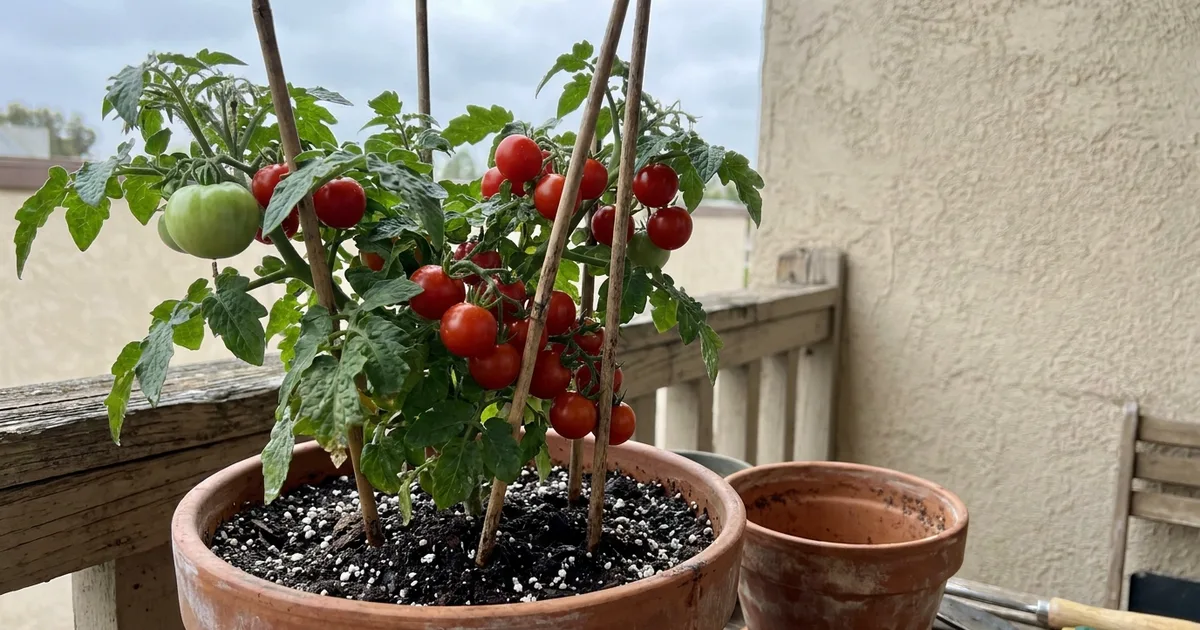
Determinate tomato varieties are perfect for pots. They grow to a compact size and set all their fruit at once, making them ideal for small spaces. Look for ‘Rutgers’ or ‘Celebrity’. Indeterminate varieties keep growing and need more space and support than a balcony likely allows. Pick a determinate type for a manageable and productive plant.
Selecting a 5-Gallon Pot
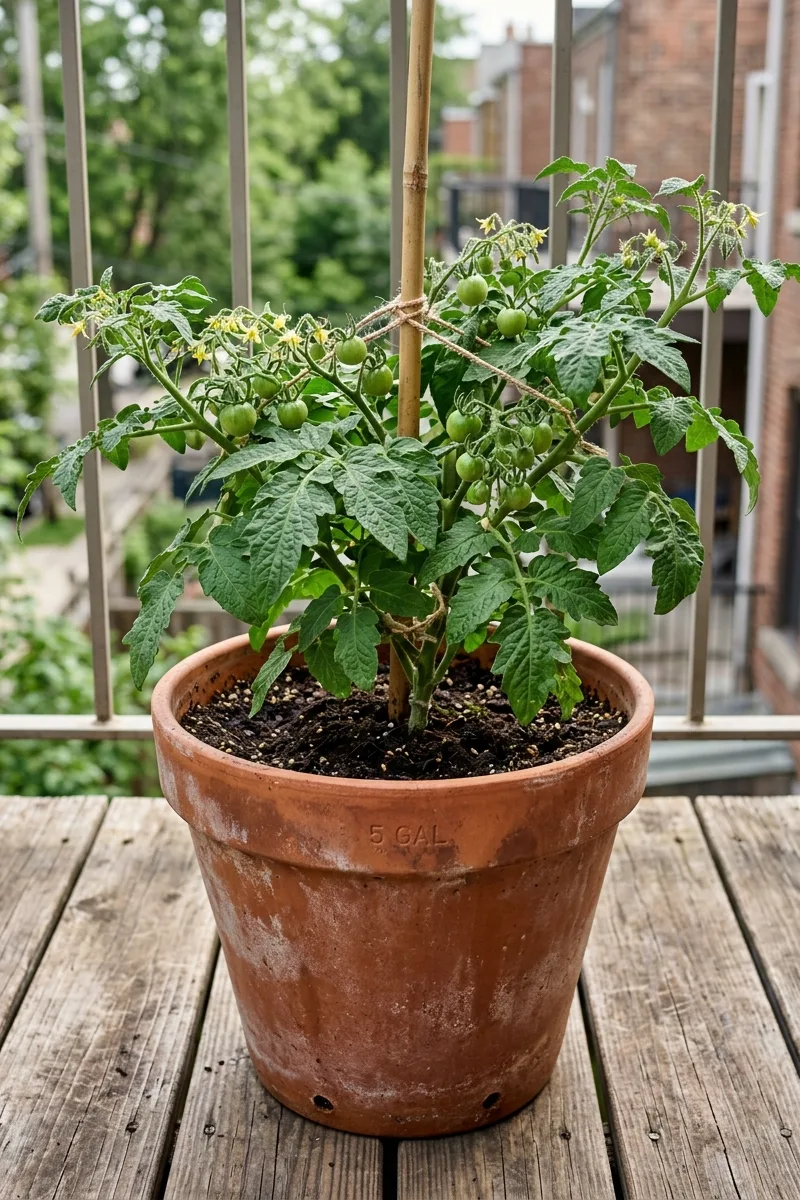
Tomatoes need room to grow. A 5-gallon pot is the minimum size for a single plant. This provides enough space for roots to spread and hold sufficient soil to retain moisture. Avoid smaller pots which dry out too quickly and restrict root growth, leading to smaller plants and lower yields. A good pot is the foundation of a successful container tomato.
Using Potting Mix
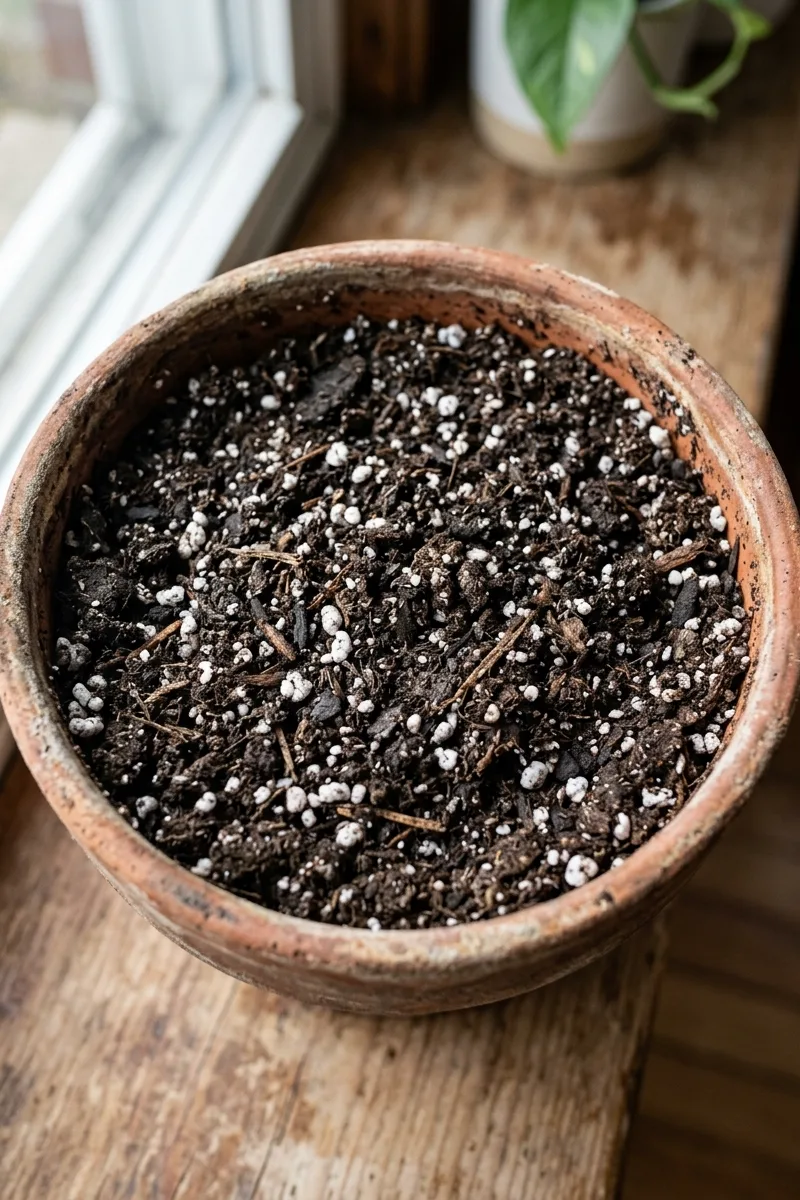
Always use a high-quality potting mix for container tomatoes. Garden soil is too dense and doesn’t drain well in pots. A good potting mix is light and formulated for containers, allowing for proper root growth and drainage. Look for a mix with perlite for added aeration. It ensures your tomato plant gets the right conditions for healthy growth.
Providing Six Hours of Sun
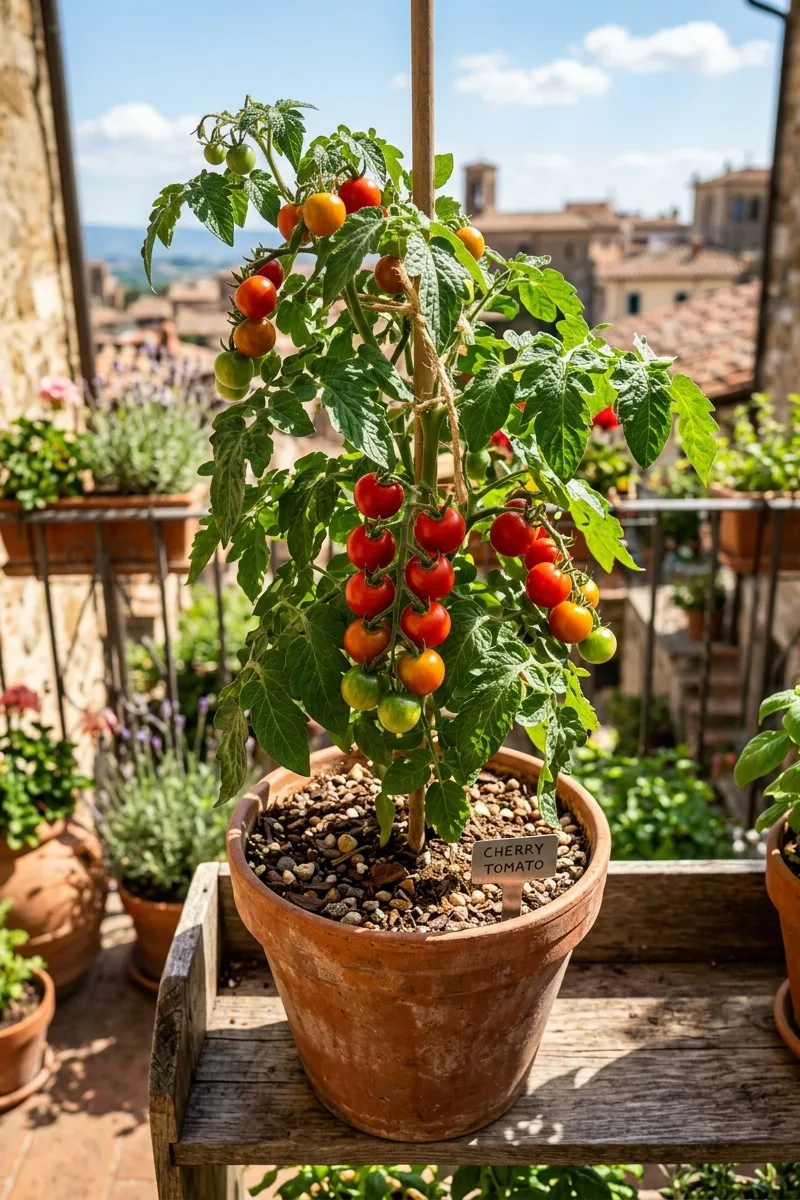
Tomatoes are sun-loving plants. They need at least six hours of direct sunlight per day to produce a good crop. Place your pot on the sunniest part of your balcony. If your balcony is partially shaded, consider a reflective surface to bounce more light onto the plant. More sun generally means more fruit.
Watering Consistently
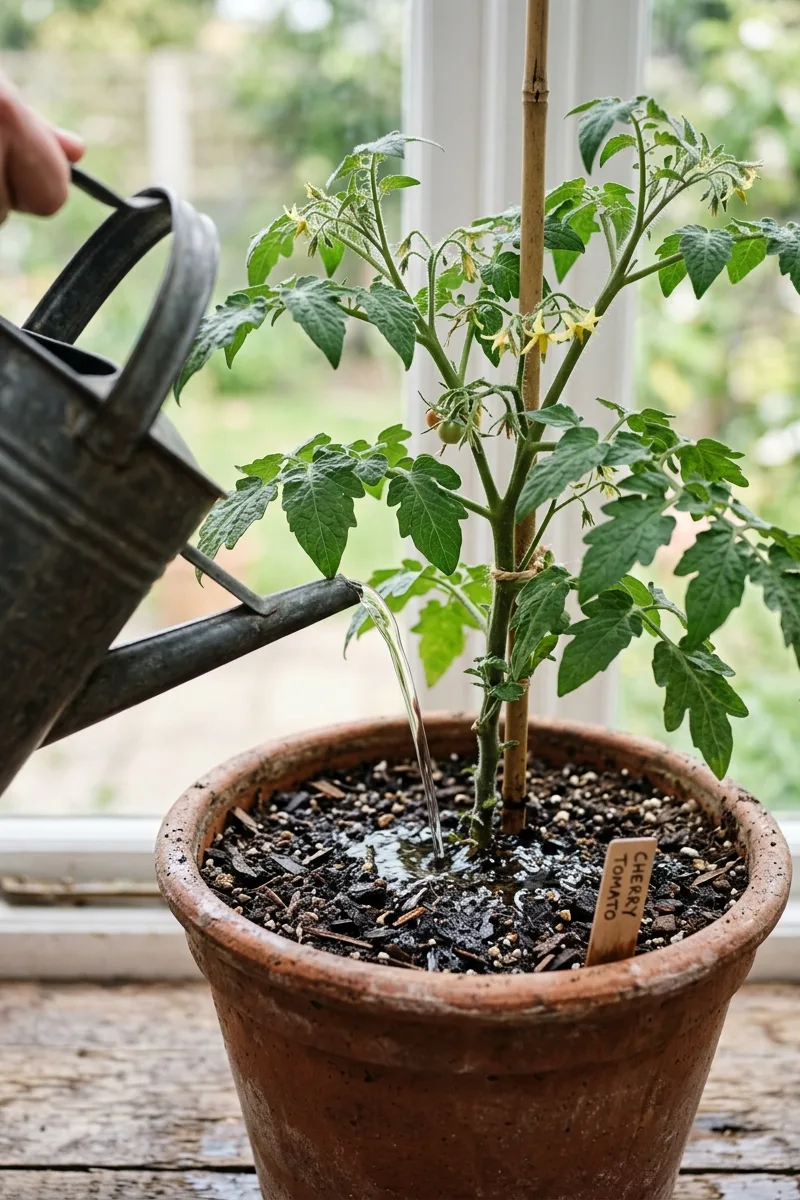
Tomatoes need consistent watering, especially in pots. Water deeply when the top inch of soil is dry. In the heat of summer, you might need to water every day. Inconsistent watering can lead to blossom end rot, a common tomato problem. A consistent watering schedule keeps your plant healthy and productive.
Fertilizing Regularly
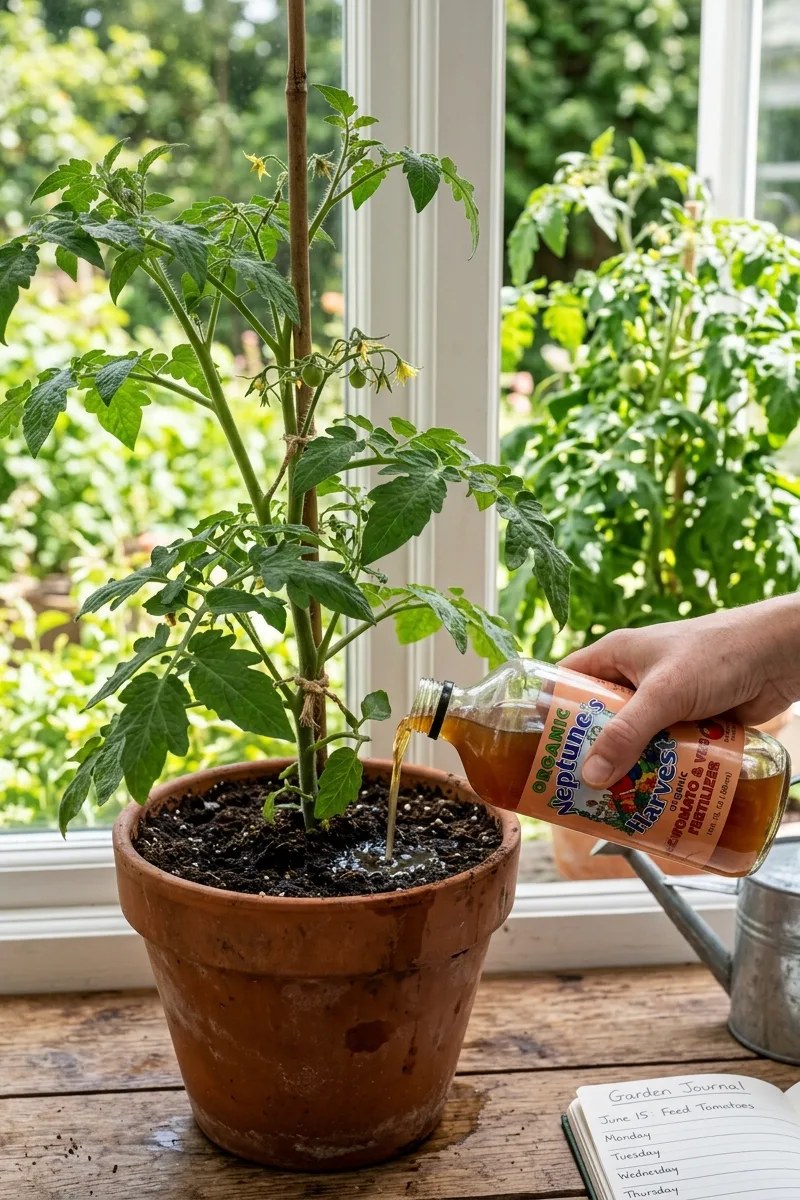
Potted plants need regular feeding. Use a balanced, water-soluble fertilizer every two weeks during the growing season. Look for a fertilizer specifically formulated for tomatoes, which will have the right balance of nutrients. Regular feeding ensures your plant has the energy to produce flowers and fruit throughout the season.
Staking the Plant
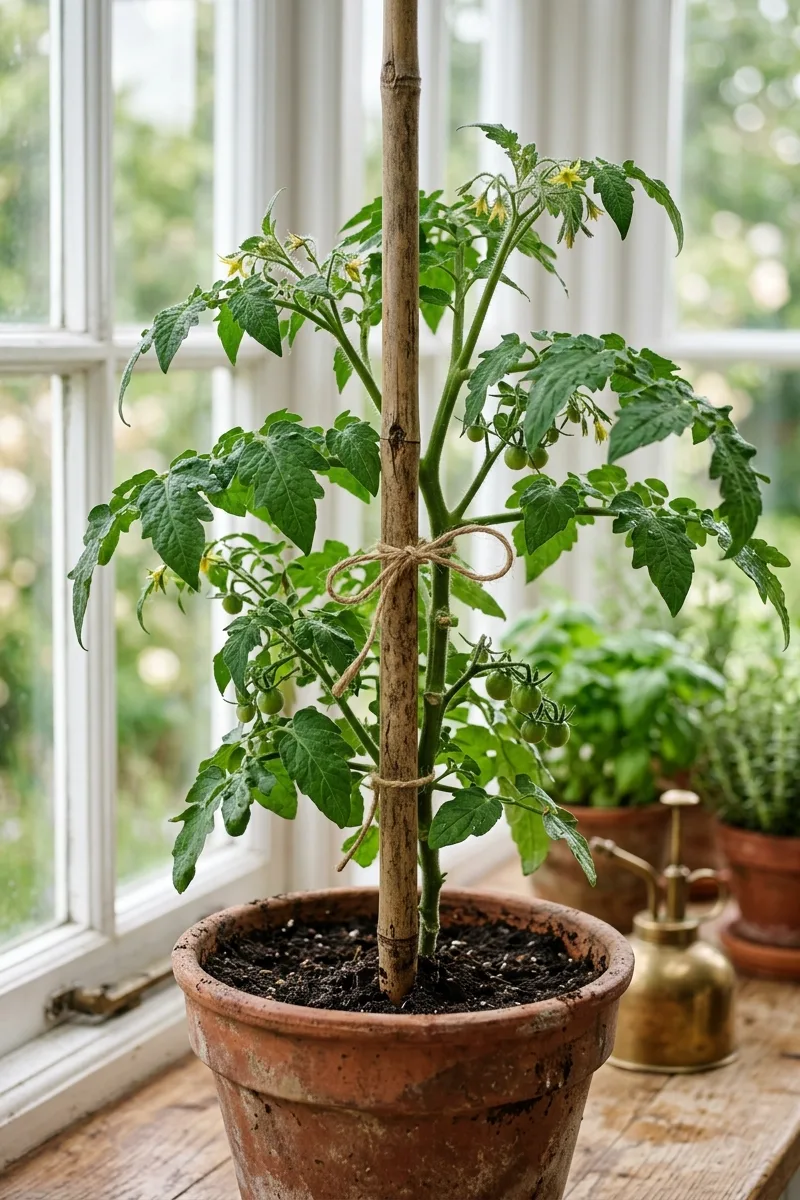
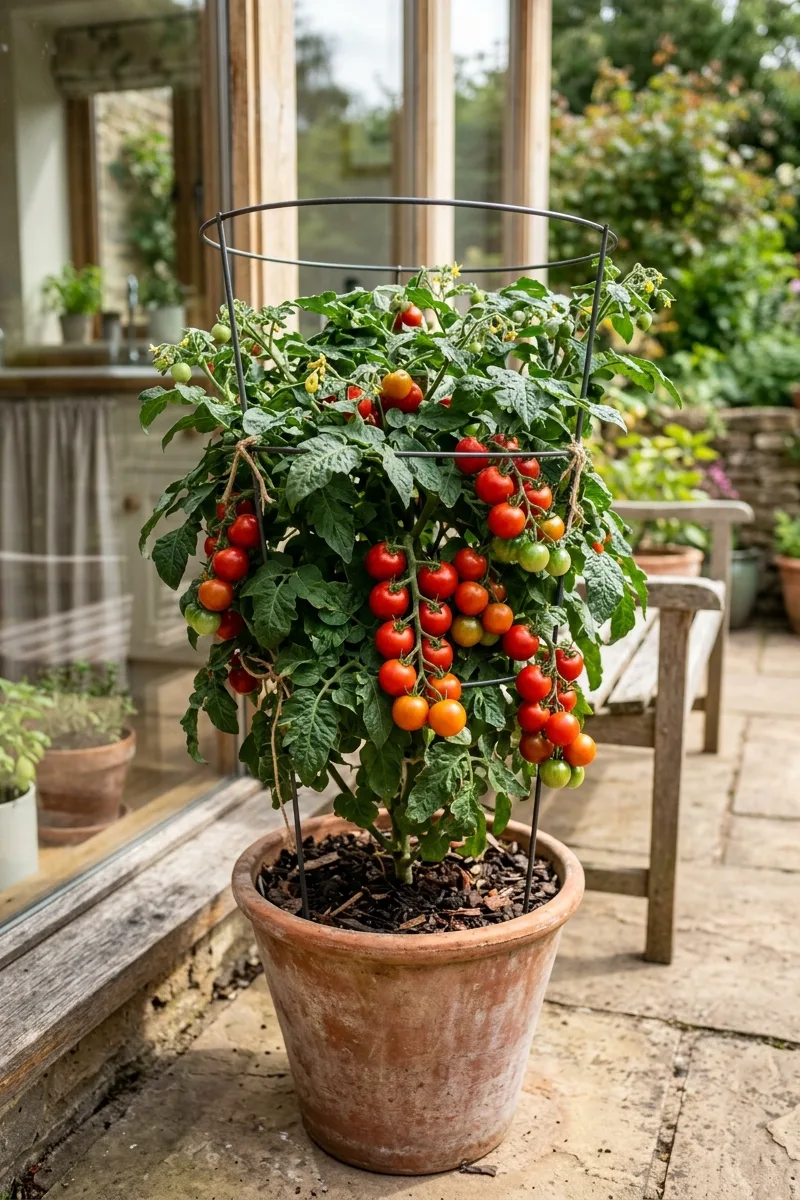
Supporting your tomato plant is crucial. Staking keeps the plant upright, off the ground, and ensures good air circulation. This reduces disease and makes harvesting easier. Use a sturdy stake and tie the plant loosely with garden twine as it grows. A supported plant is a healthier, more productive plant.
Pruning Suckers
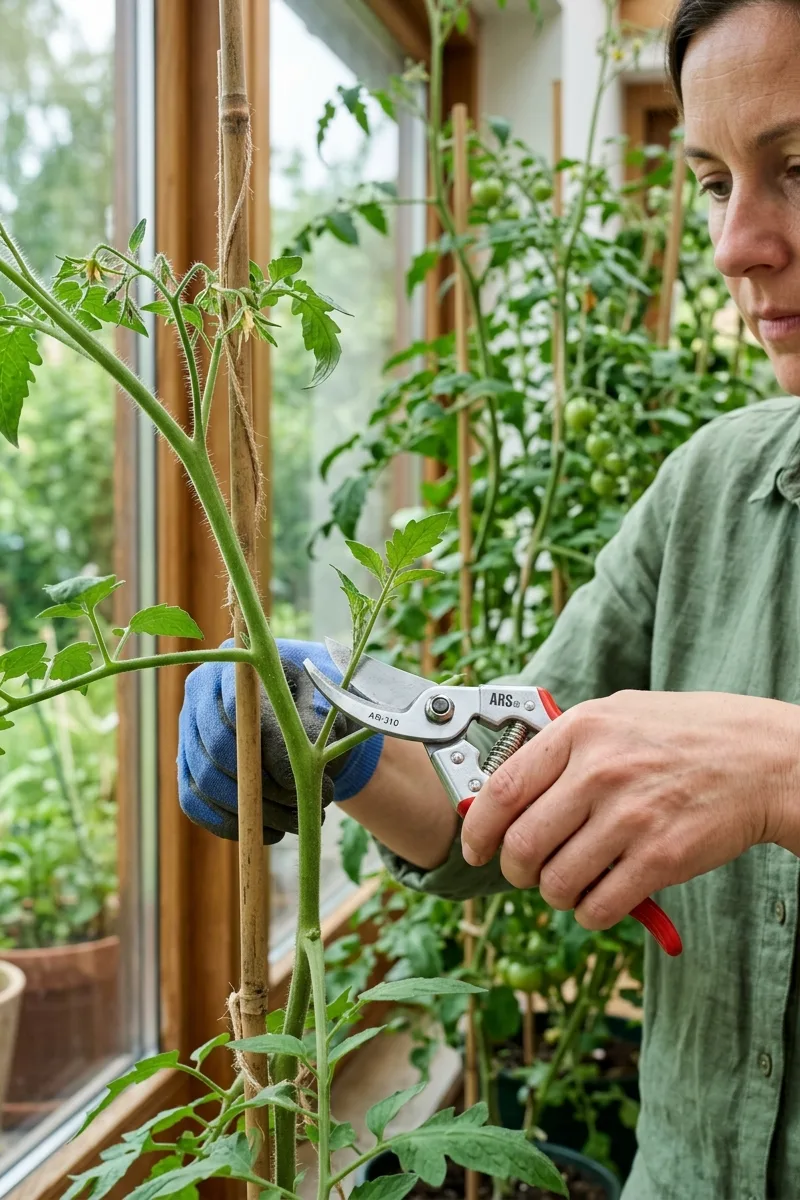
For determinate varieties, pinching out suckers is optional but can help. Suckers are small shoots that grow in the crotch between the main stem and a branch. Removing them directs the plant’s energy into fruit production rather than extra foliage. It’s a simple practice that leads to bigger, better tomatoes.
Checking for Pests
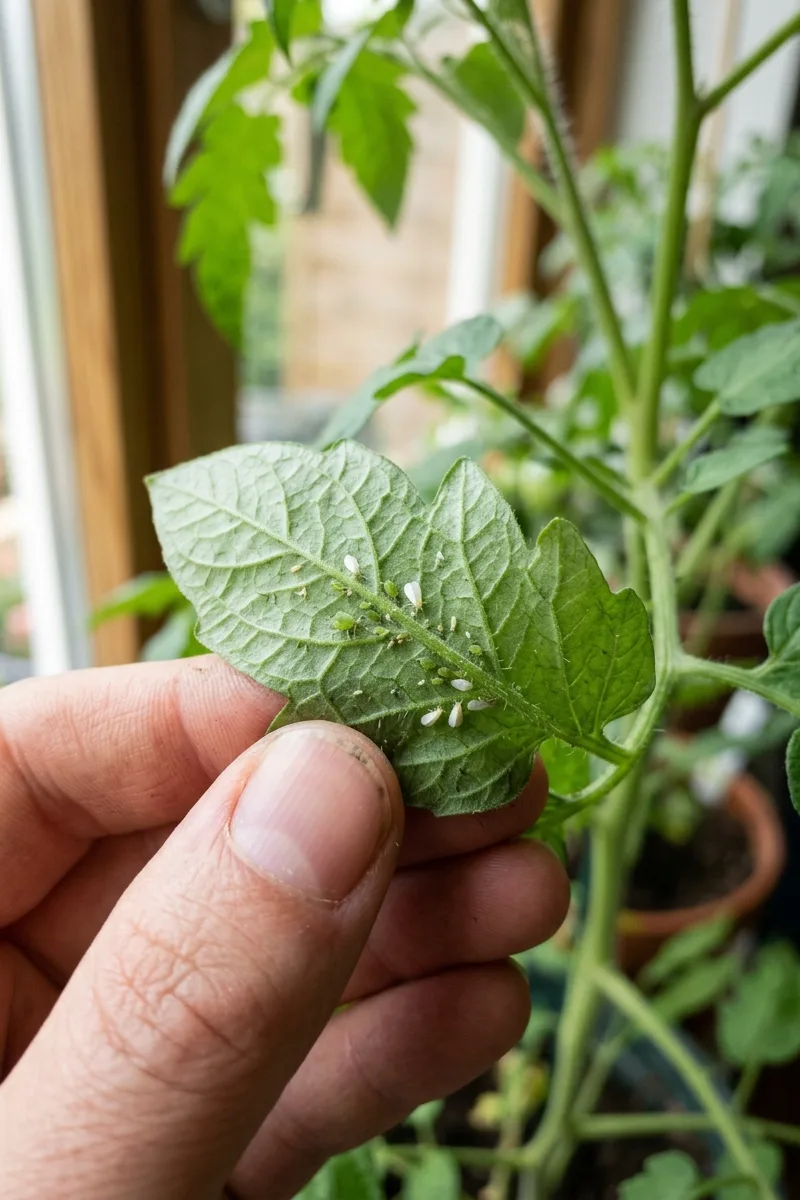
Balcony tomatoes can still have pest problems. Watch for aphids, whiteflies, and tomato hornworms. A strong jet of water can dislodge many pests. Insecticidal soap is effective for more serious infestations. Early detection is key to keeping a pest problem from damaging your plant and reducing your harvest.
Hand Pollination
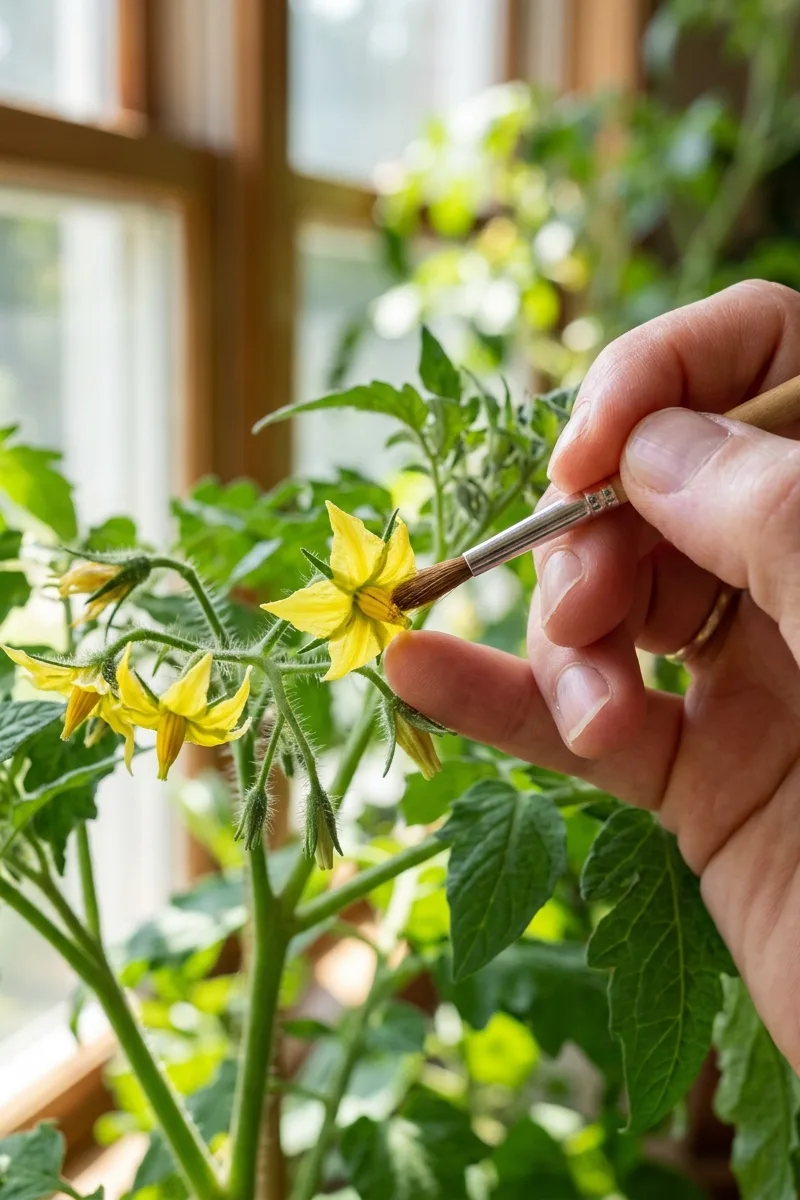
Tomatoes are self-pollinating, but wind is needed to shake the pollen loose. On a protected balcony, there might not be enough breeze. Help your plant out by gently shaking the flowers a few times a week. A small electric toothbrush or hand brush can also help vibrate the flowers and ensure successful pollination.
Mulching the Pot Surface
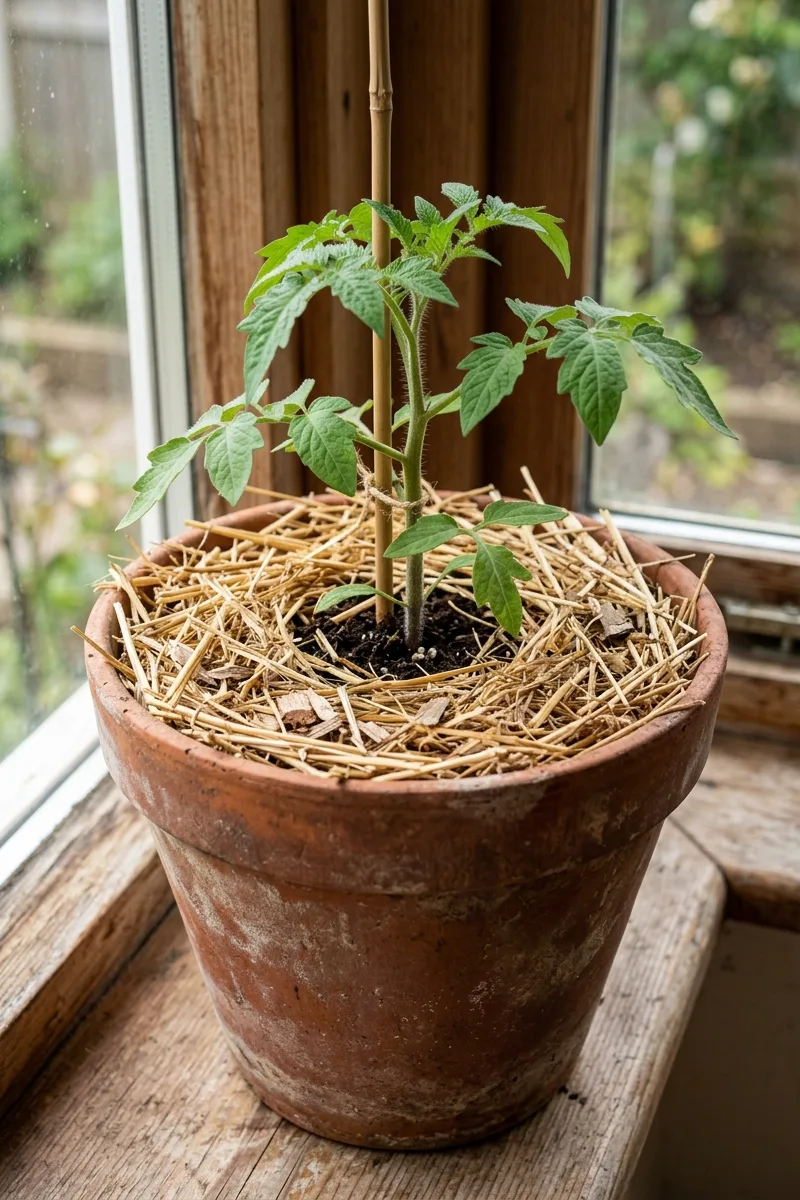
Mulch the surface of the soil in your pot with a thin layer of straw or wood chips. This helps the soil retain moisture, which is critical for potted tomatoes. It also prevents weed growth and keeps the soil temperature more stable. A little mulch goes a long way in reducing the need for constant watering.
Choosing a Wind-Protected Spot
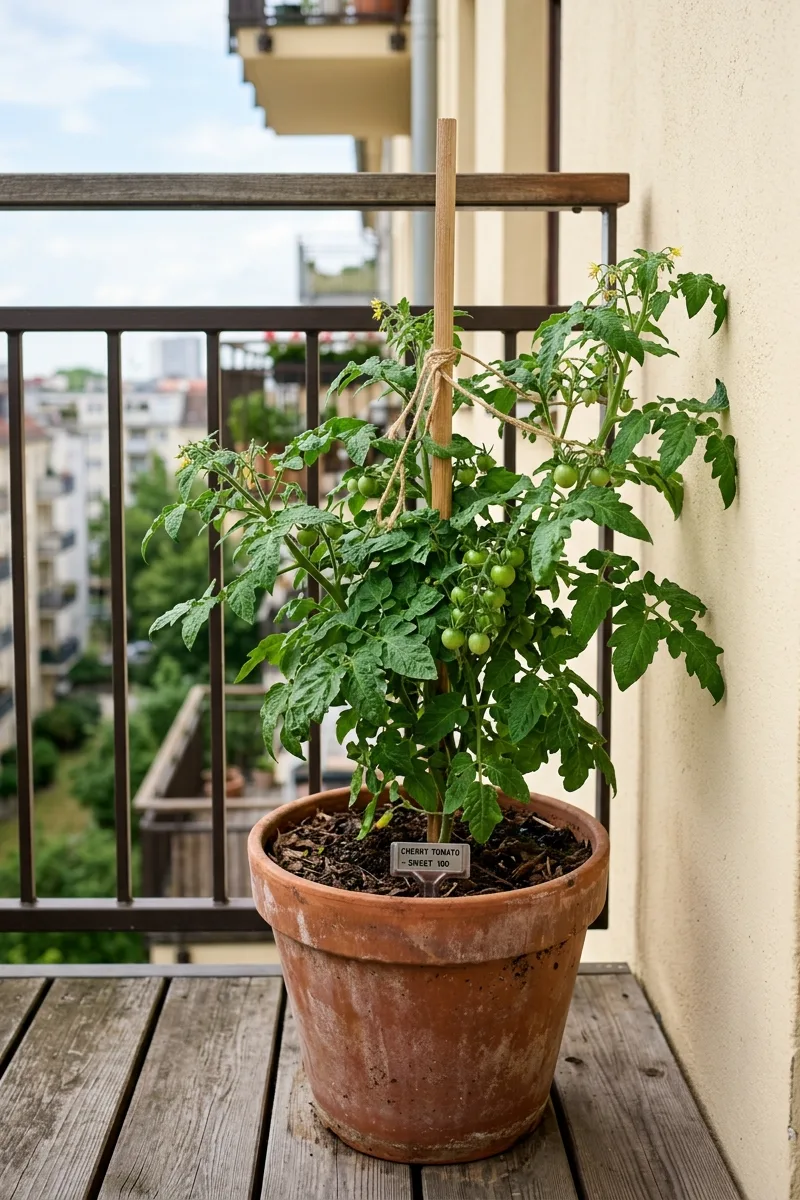
Balconies can be windy, and wind is a stressor for tomato plants. Place your pot in a sheltered corner, against a wall, or behind a windbreak. Strong winds can damage stems, dry out the soil, and stress the plant. A protected spot ensures your plant focuses its energy on fruit, not on dealing with the elements.
Watching for Blossom-End Rot
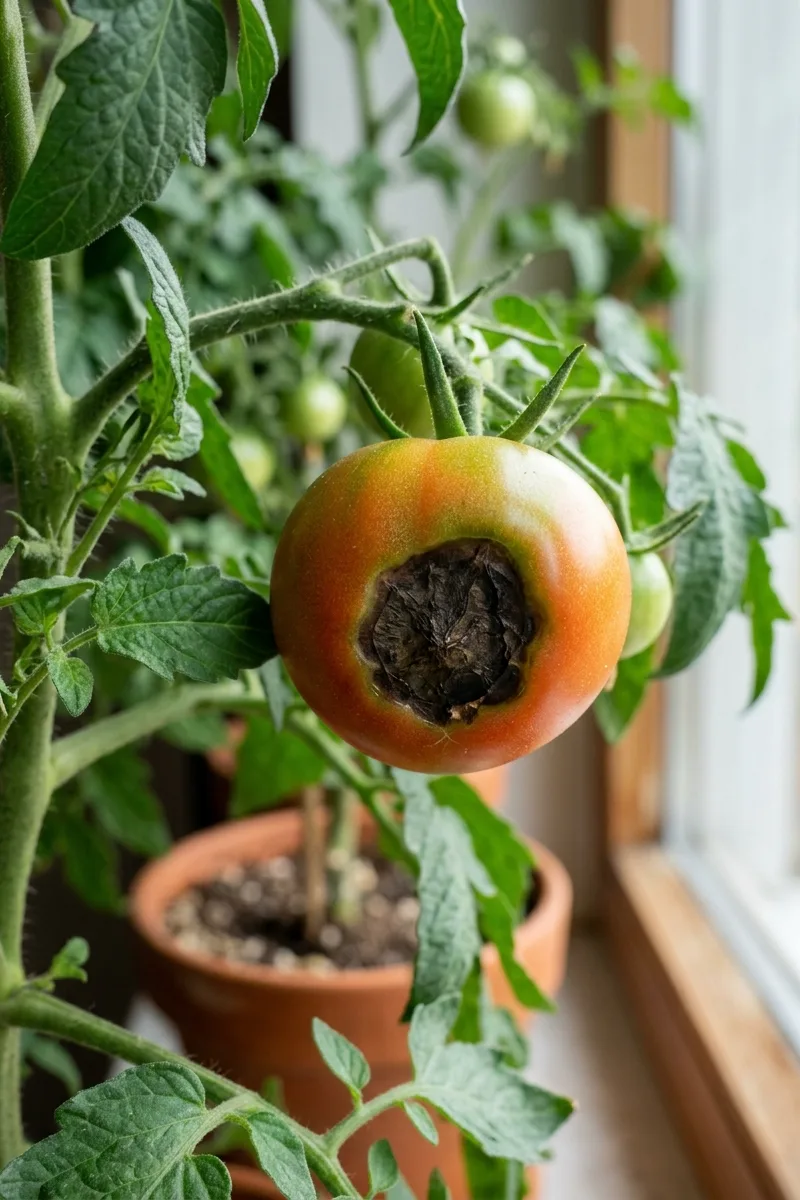
Blossom-end rot shows as a dark spot on the bottom of the tomato. It’s caused by a lack of calcium, often due to irregular watering. Prevent it by keeping the soil consistently moist. A balanced fertilizer can also help. If you see it, adjust your watering routine. It’s a common problem that’s easy to correct.
Rotating the Pot
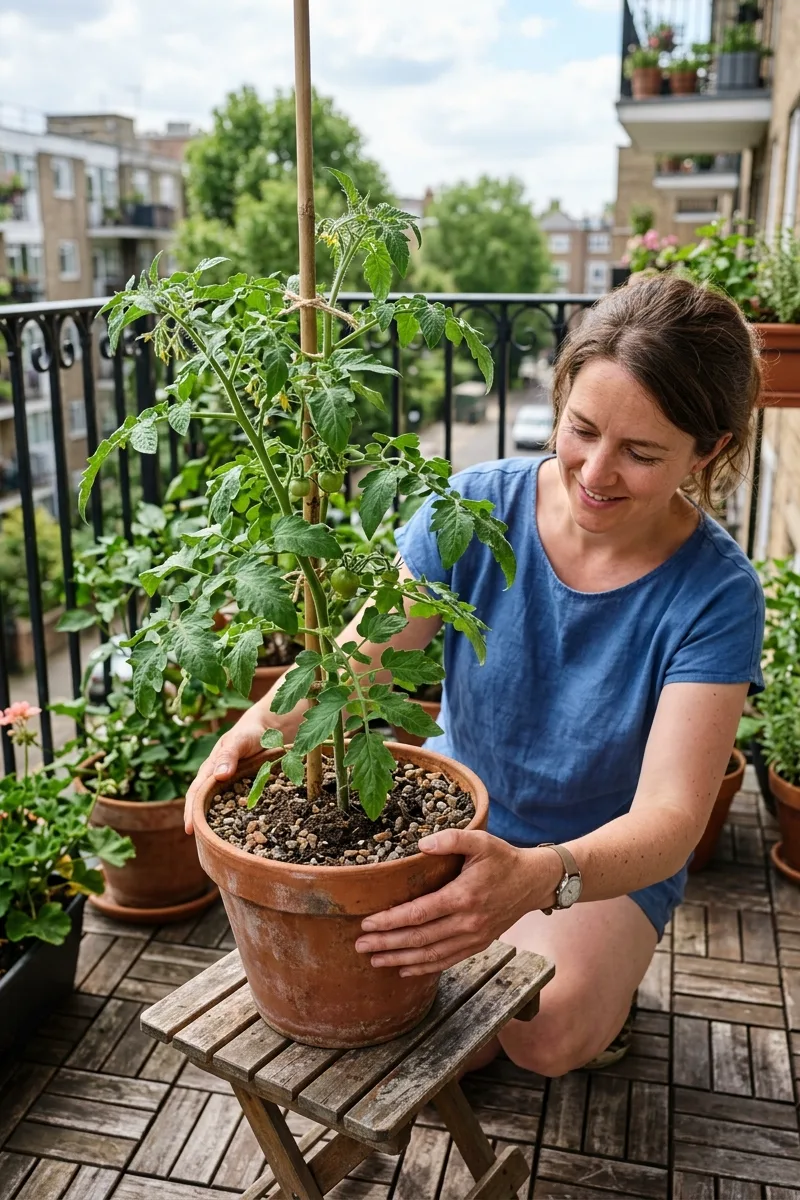
If your balcony has uneven light, rotate the pot regularly. Turning it a quarter turn every few days ensures all sides of the plant get equal sun. This promotes even growth and prevents the plant from leaning. It’s a simple habit that leads to a more balanced, productive plant, maximizing the available light.
Cooling the Roots
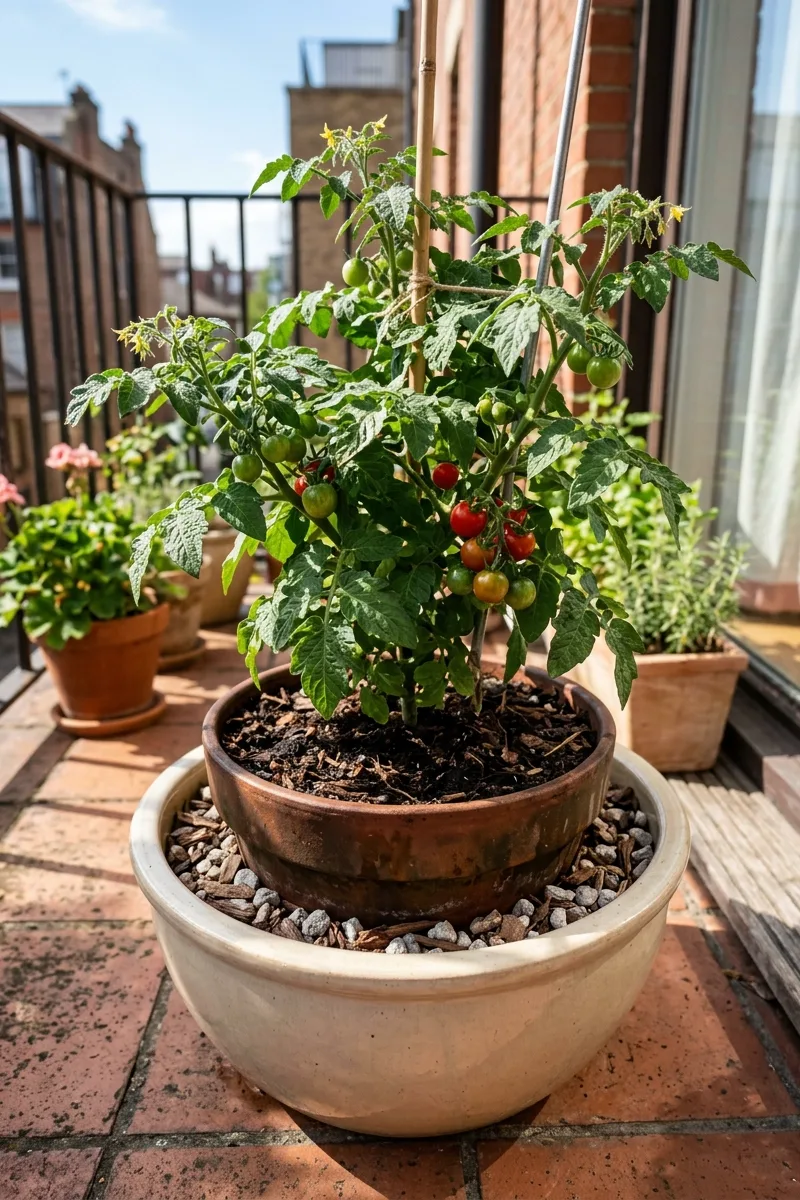
On a hot balcony, roots can overheat. Use a second, larger pot as a double-layer, or wrap the pot with reflective material to protect it from the heat. Keeping roots cool is important for water uptake and overall health. It’s a trick that helps your tomato plant thrive in the hot summer months.
Growing Herbs Nearby
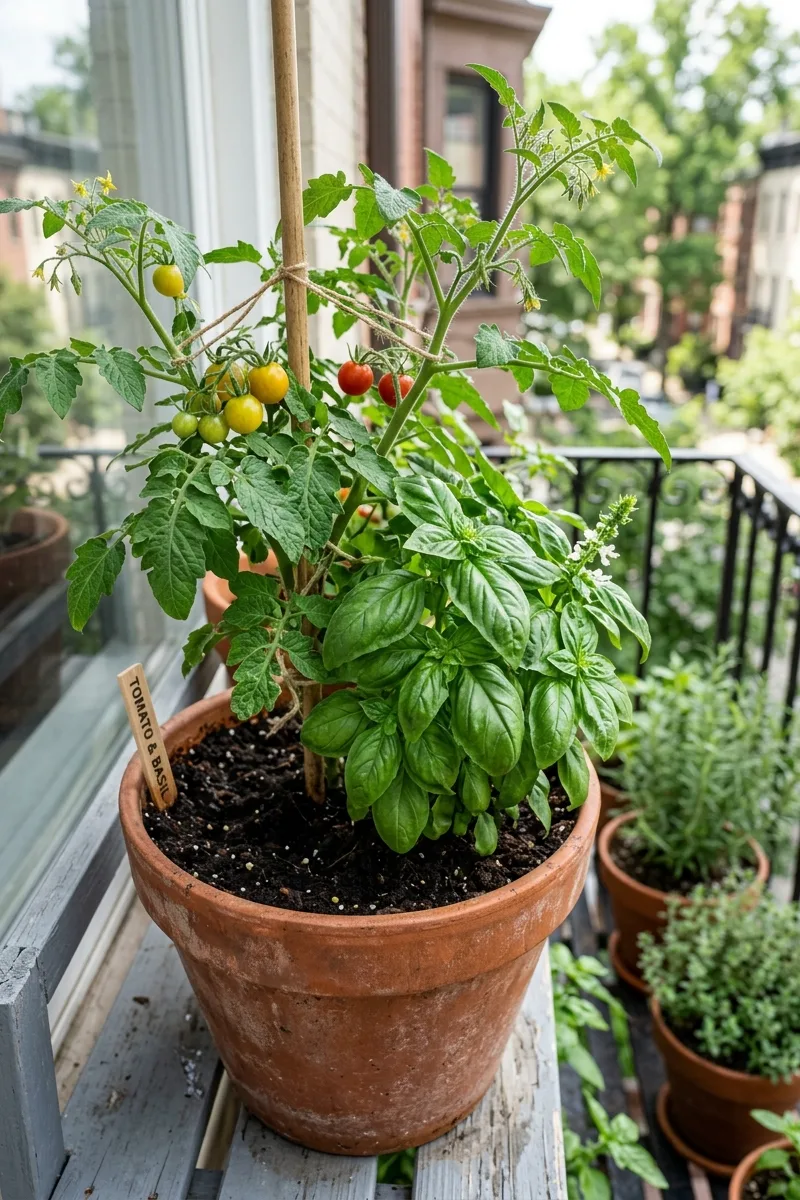
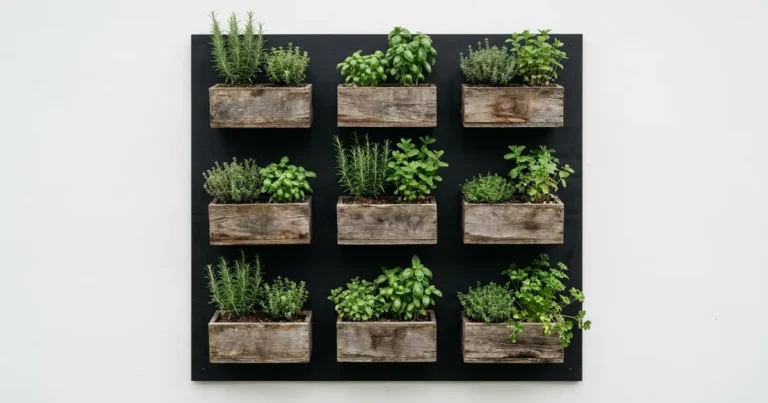
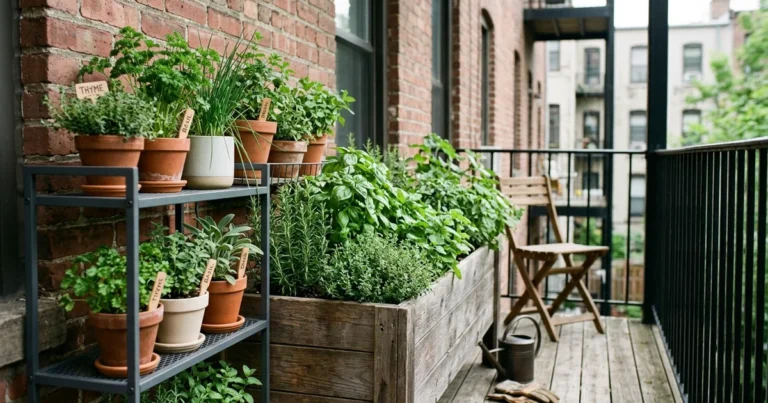
Companion planting can benefit your balcony tomatoes. Grow basil, marigolds, or garlic near your tomato plant. Basil is a classic companion that may improve tomato flavor and deter pests. Marigolds can repel nematodes and other insects. It’s a simple way to add more greenery to your balcony while creating a beneficial ecosystem.
Harvesting at the Right Time
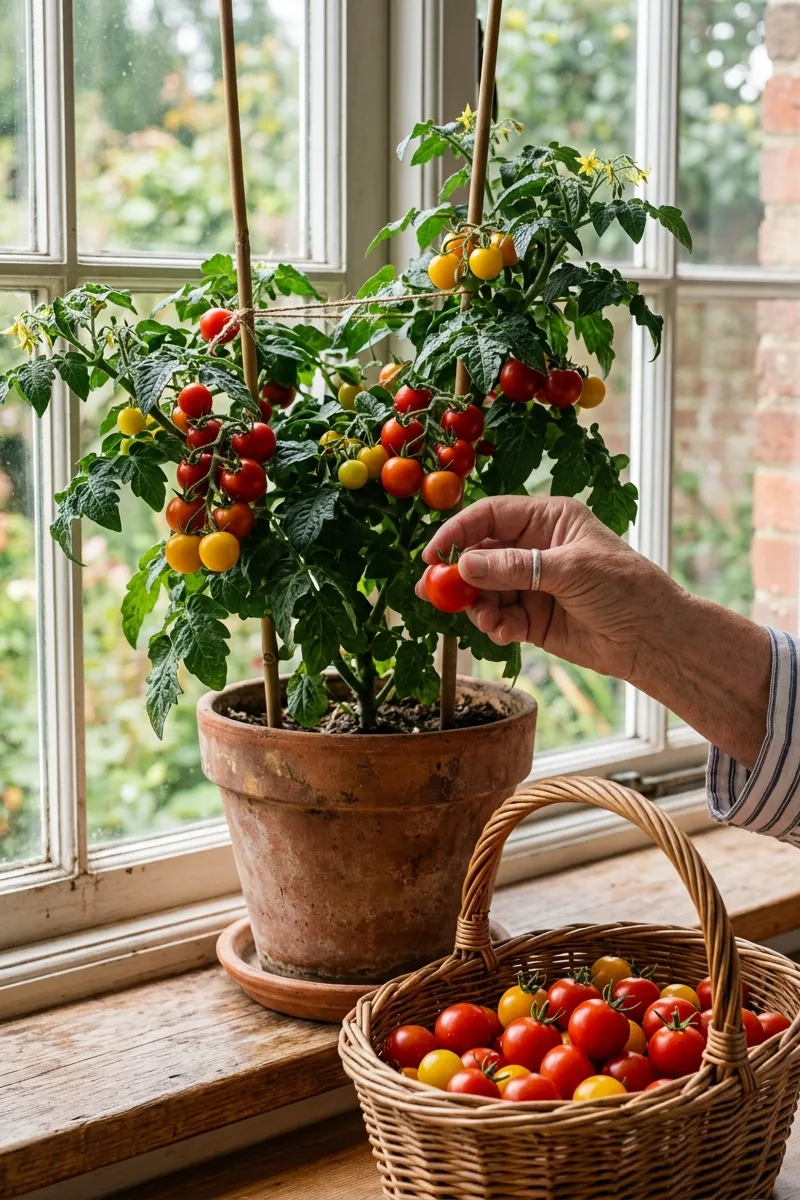
Knowing when to harvest is key to flavor. Tomatoes are ready when they are fully colored and slightly soft to the touch. Pick them promptly once they’re ripe; leaving them on the vine too long can attract pests. For the best flavor, bring them in and let them sit on the counter for a day or two before eating.
Inspiration gallery recap
Tap any image to open the slideshow — use arrows or swipe to browse.