20 Best Botanical Bento Box Ideas
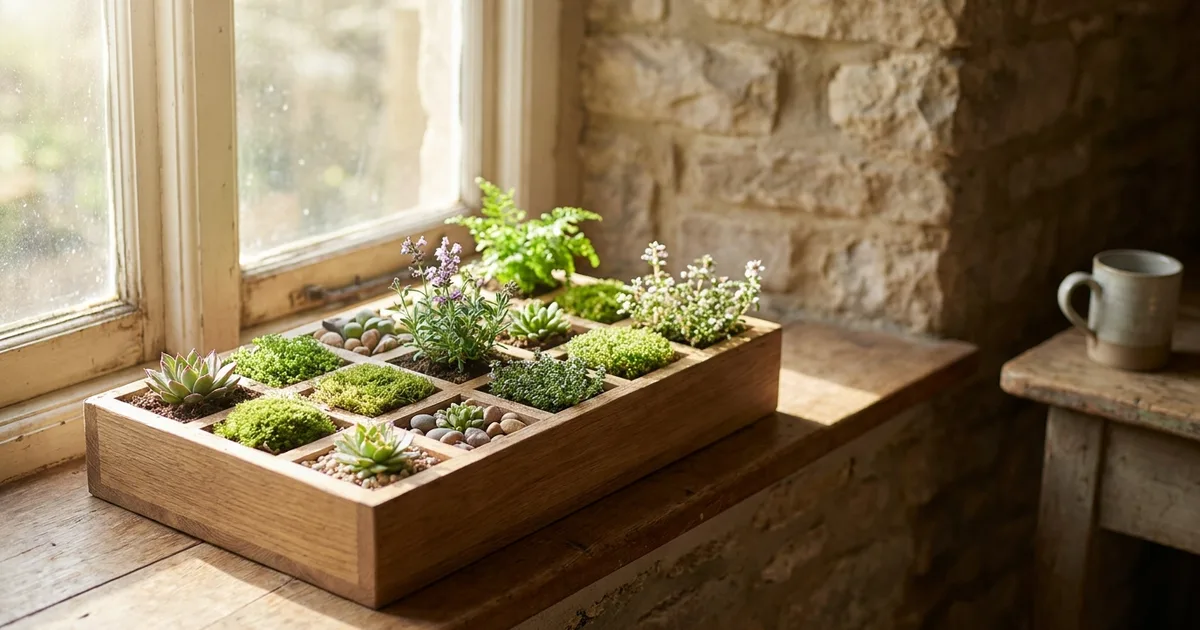
The botanical bento box concept takes the highly organized segmented approach of Japanese lunchboxes and applies it directly to miniature gardening. By dividing a shallow container into a strict grid you create a visually stunning structured display for small plants. This method transforms a messy collection of tiny pots into a cohesive architectural centerpiece.Creating these living grids requires careful attention to soil requirements and plant sizes. You will curate distinct specimens for each compartment ensuring they contrast beautifully while sharing similar watering needs. It is an incredibly satisfying highly controlled way to bring nature indoors.
What’s inside this article
- Choosing the Container
- Proper Soil Selection
- Grouping by Water Needs
- Contrasting Textures
- Color Blocking
- Top Dressing with Gravel
- Incorporating Moss
- Using Miniature Tools
- Creating Height Variation
- Incorporating Small Stones
- Watering with Syringes
- Symmetrical Layouts
- Trailing Edges
- Seasonal Rotations
- Monochromatic Greens
- Using Clear Acrylic Boxes
- Lithops Specimen Boxes
- Gravel Color Zoning
- Air Plant Grids
- Lighting the Display
Choosing the Container
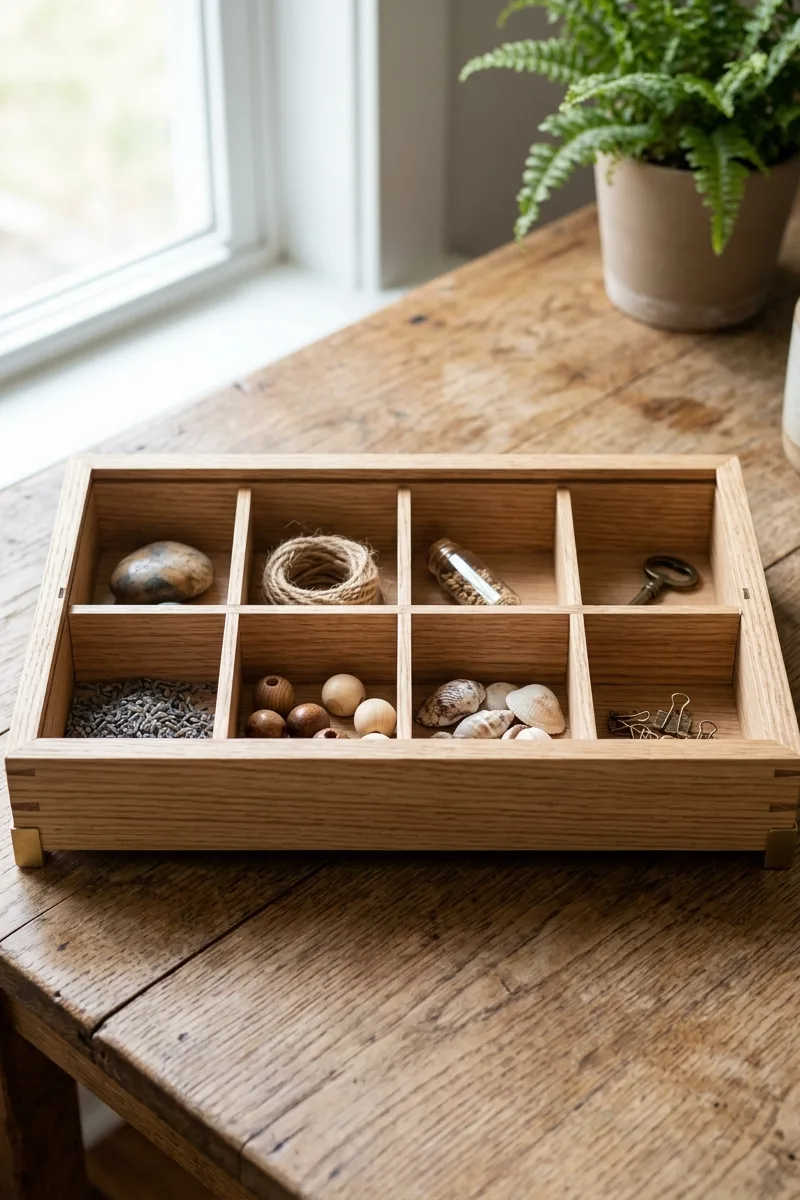
The foundation of this project is selecting a container with strict geometric divisions. A shallow wooden box with thin internal dividers creates the perfect rigid grid necessary for the bento aesthetic. The straight lines of the box provide a sharp contrast to the organic shapes of the plants inside. You must ensure the container has adequate drainage or prepare to water extremely carefully. The right box acts as a clean architectural frame elevating the tiny plants into a highly curated museum-quality display instantly.
Proper Soil Selection
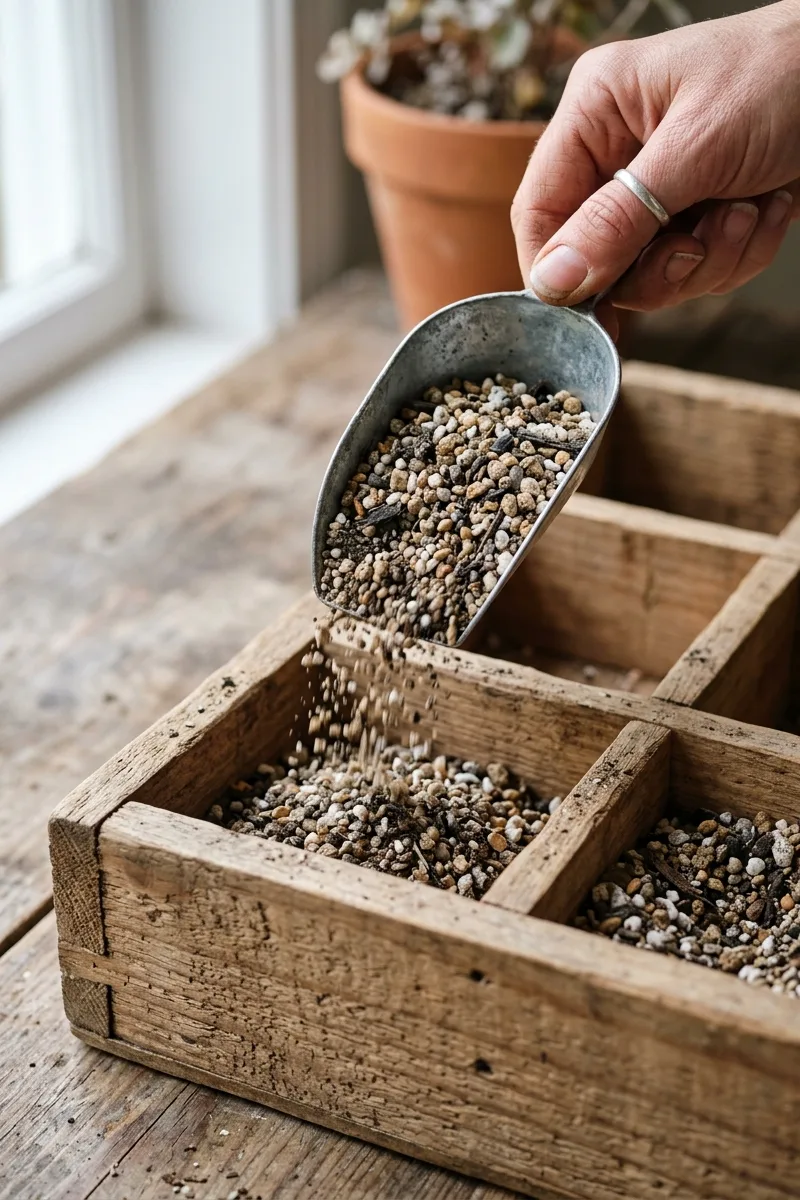
Because the compartments are small and often lack massive drainage holes using the correct soil is absolutely critical for survival. A highly gritty fast-draining succulent mix prevents water from pooling and rotting delicate roots. This specialized dirt ensures moisture moves through the container quickly keeping the environment properly aerated. Avoid heavy potting soils that retain moisture for weeks at a time. Providing the correct foundation guarantees your miniature plants remain healthy and vibrant in their tight restrictive quarters for months on end effortlessly.
Grouping by Water Needs
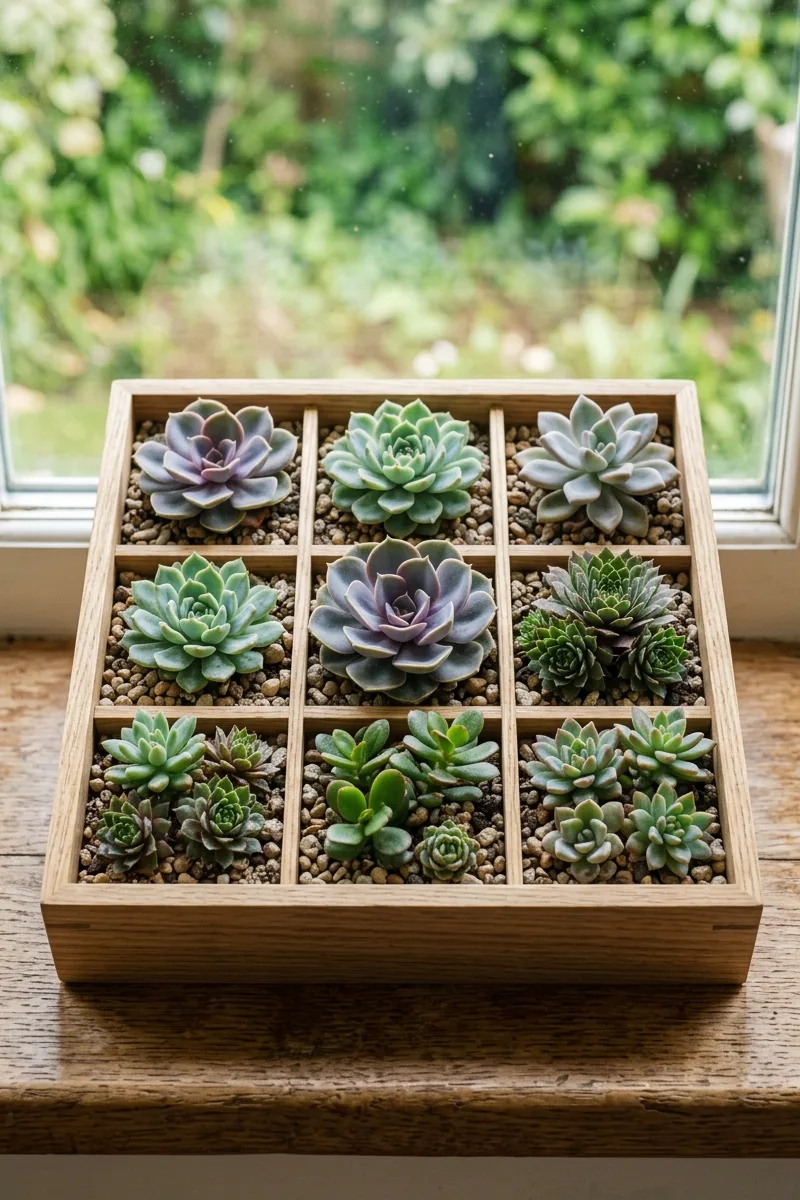
The most common mistake when building a segmented garden is mixing plants with drastically different care requirements together. You must exclusively group plants that share the exact same watering schedule and light needs. Filling a box entirely with drought-tolerant succulents ensures you can water the entire grid simultaneously without drowning sensitive species. This strict curation prevents half the box from dying while the other half thrives. It is the golden rule for maintaining a beautiful long-lasting botanical bento display successfully.
Contrasting Textures
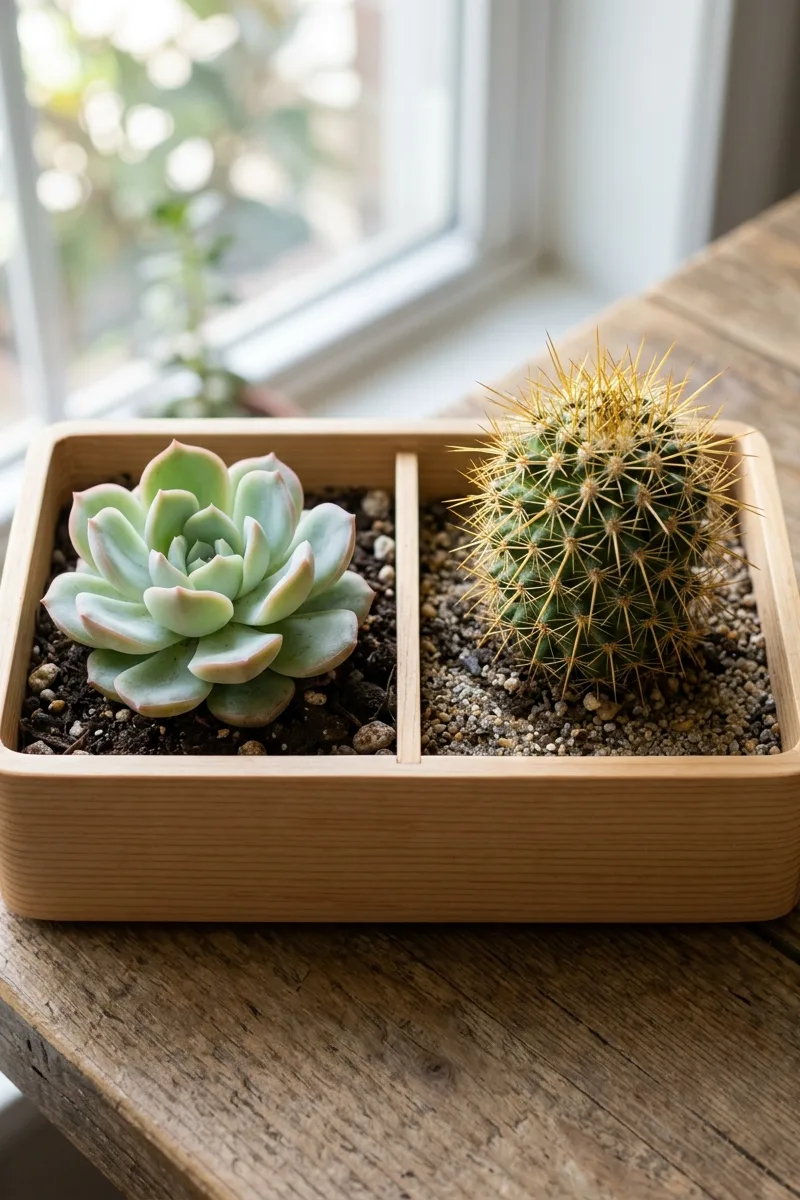
To maximize the visual impact of the grid you must place highly contrasting plant textures directly next to each other. Positioning a smooth plump succulent adjacent to a sharp spiky cactus creates brilliant visual tension immediately. This deliberate juxtaposition highlights the unique characteristics of every single plant in the collection. The strict geometric wooden dividers emphasize these differences making the display feel incredibly dynamic. This styling technique ensures the box looks like a carefully designed living mosaic rather than a random assortment of greenery.
Color Blocking
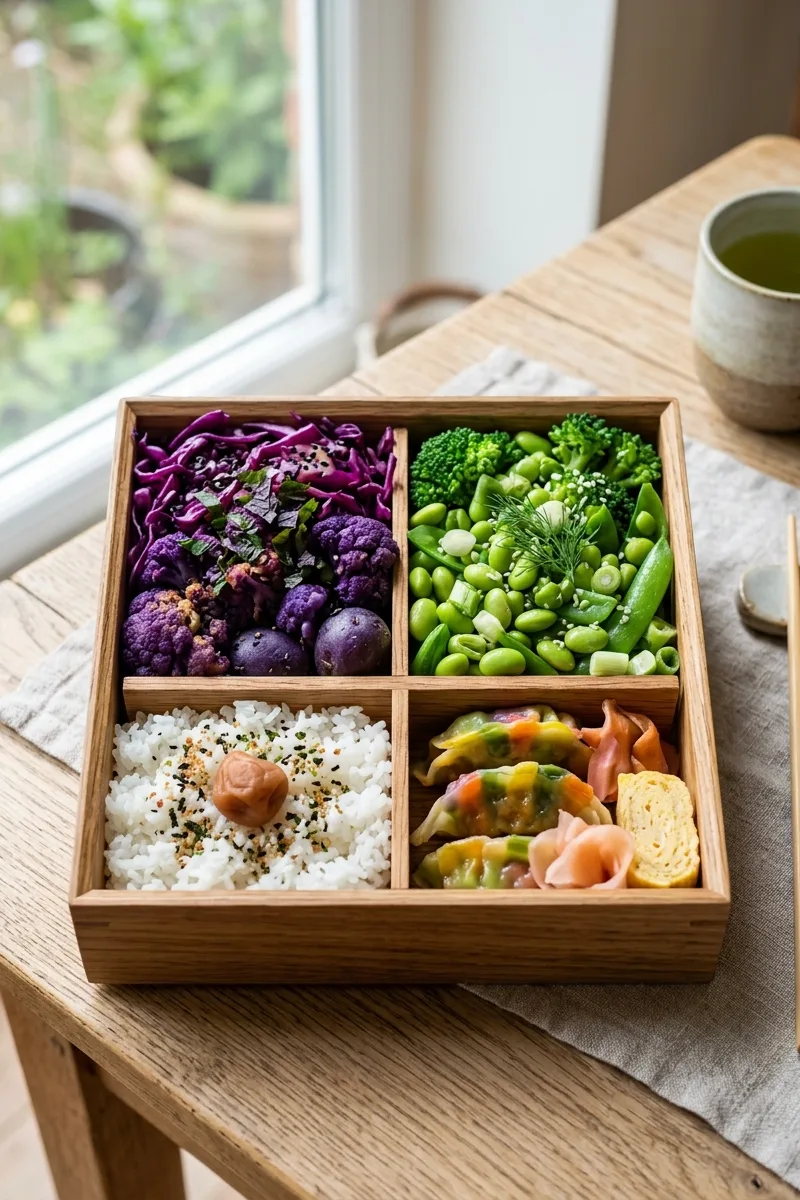
Treating each compartment as a solid block of color elevates the bento box into a striking piece of graphic art. Dedicating one square entirely to deep purple foliage and the next to bright lime green creates incredible visual pop. This color blocking technique organizes the visual chaos resulting in a highly stylized modern appearance. The sharp straight lines of the dividers make the color transitions crisp and absolute. It is a powerful design strategy that makes tiny plants command massive attention.
Top Dressing with Gravel
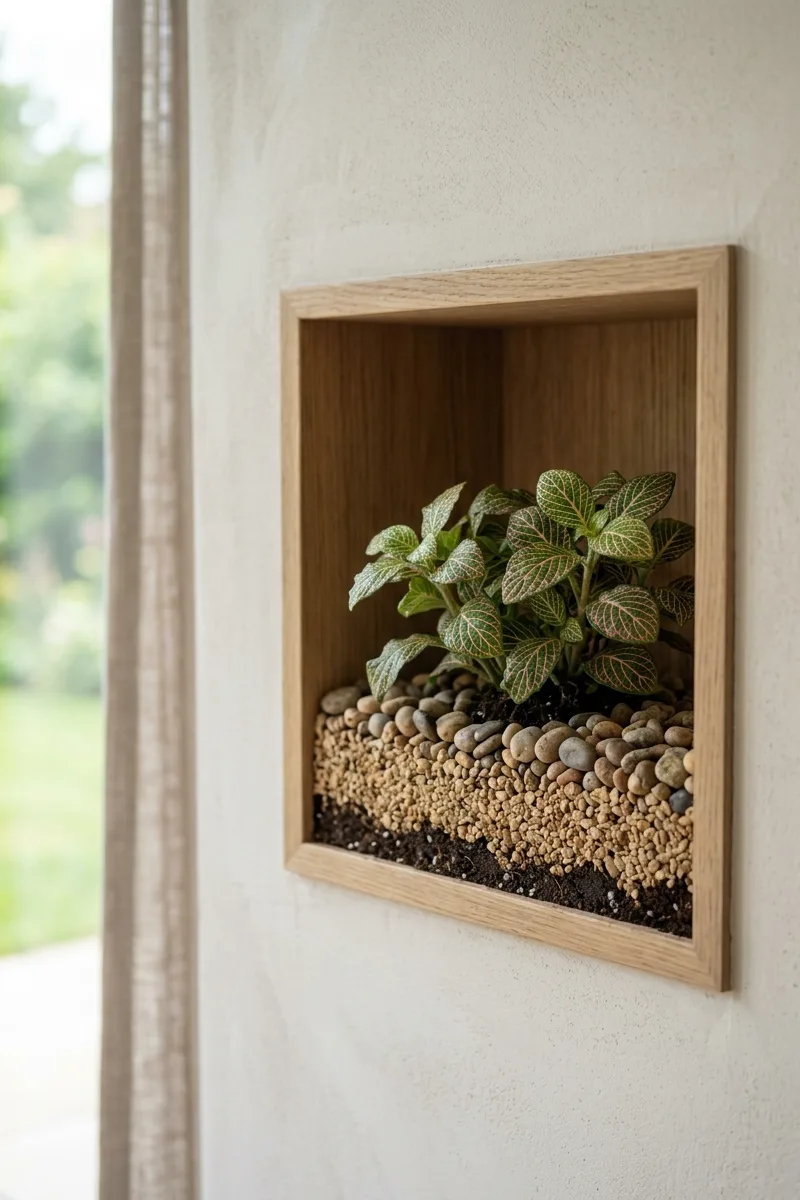
Leaving dark messy soil exposed ruins the clean disciplined aesthetic required for a successful bento presentation completely. Covering the dirt in every compartment with a neat layer of tiny gravel or sand provides a crisp finished look. This top dressing hides imperfections and creates a clean uniform background that makes the plant colors pop brilliantly. It also helps prevent the lightweight perlite in the soil from floating away during watering. This simple finishing touch is what separates a messy pot from a professional display.
Incorporating Moss
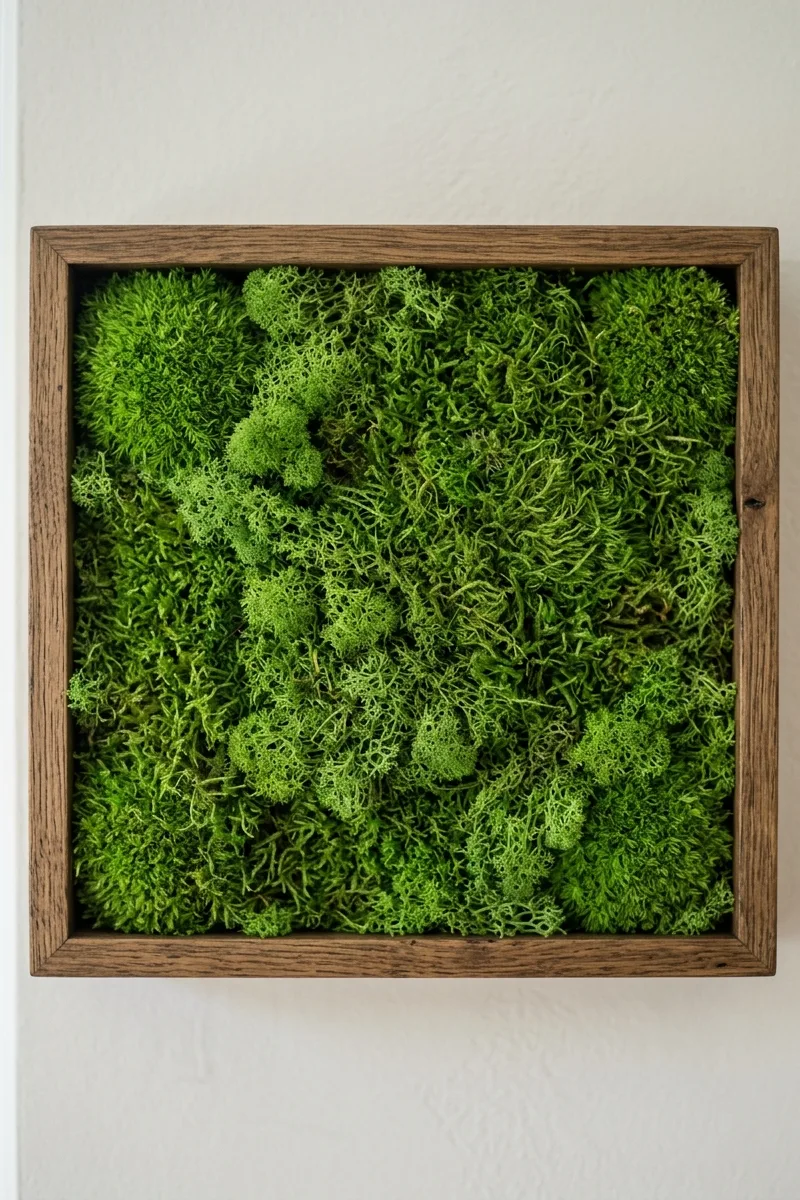
You do not need to place a tall plant in every single compartment of the grid to make it look complete. Dedicating a square entirely to a flat carpet of bright green preserved moss provides a beautiful visual resting place. This smooth soft texture contrasts perfectly with the complex chaotic shapes of the succulents around it. It acts as negative space within the busy box balancing the overall composition effortlessly. This minimalist detail adds a touch of serene Japanese garden styling directly to the arrangement.
Using Miniature Tools

Working within tiny confined squares requires specialized equipment to avoid damaging the delicate plants or making a mess. Using long surgical tweezers to place plants and tiny brushes to sweep away stray dirt is absolutely necessary. These miniature tools allow you to pack the soil tightly into corners and arrange the top dressing with incredible precision. The act of using these precise instruments turns the planting process into a deeply meditative focused activity. They are the secret to achieving perfectly clean sharp bento boundaries.
Creating Height Variation
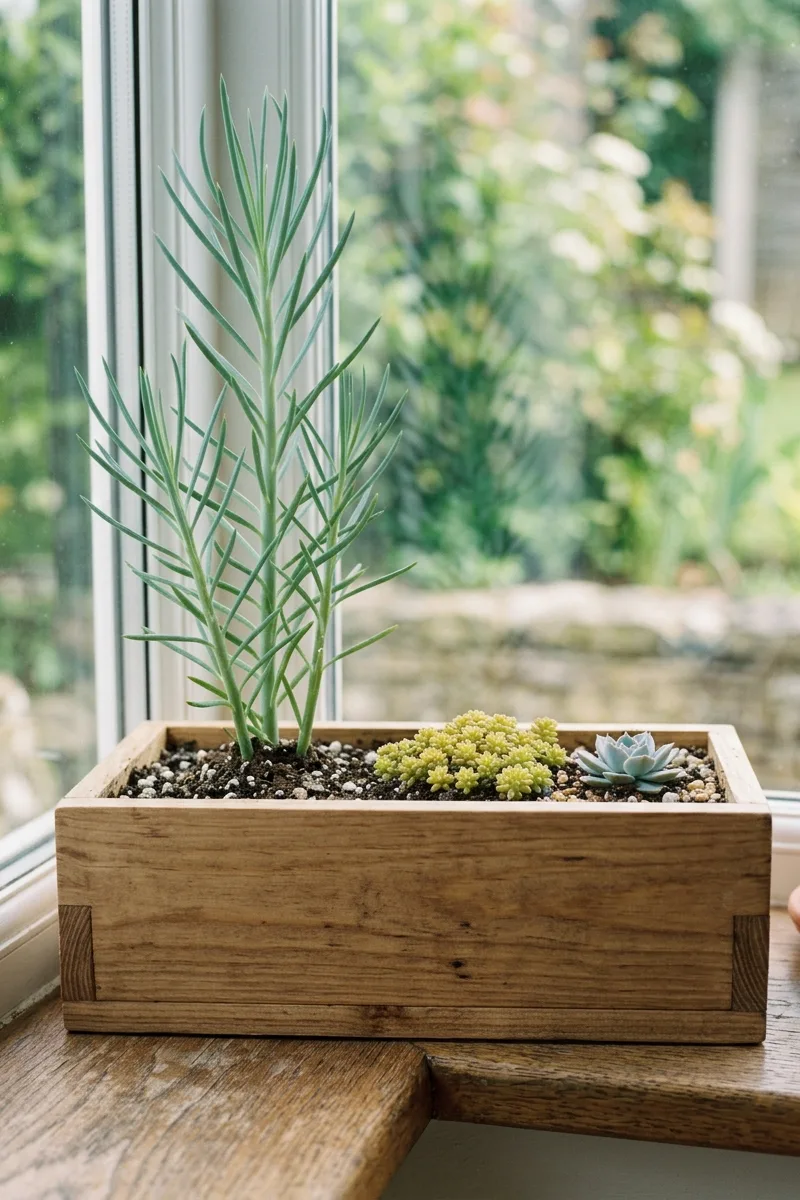
While the box itself is flat the plants inside should offer a dynamic varied topography to keep the eye engaged. Placing taller architectural plants in the back compartments and low creeping varieties in the front creates beautiful depth. This height variation prevents the grid from looking like a flat uninteresting carpet of green. It ensures that every plant is visible and properly displayed without blocking its neighbor. Managing the vertical space is just as important as organizing the horizontal flat grid perfectly.
Incorporating Small Stones
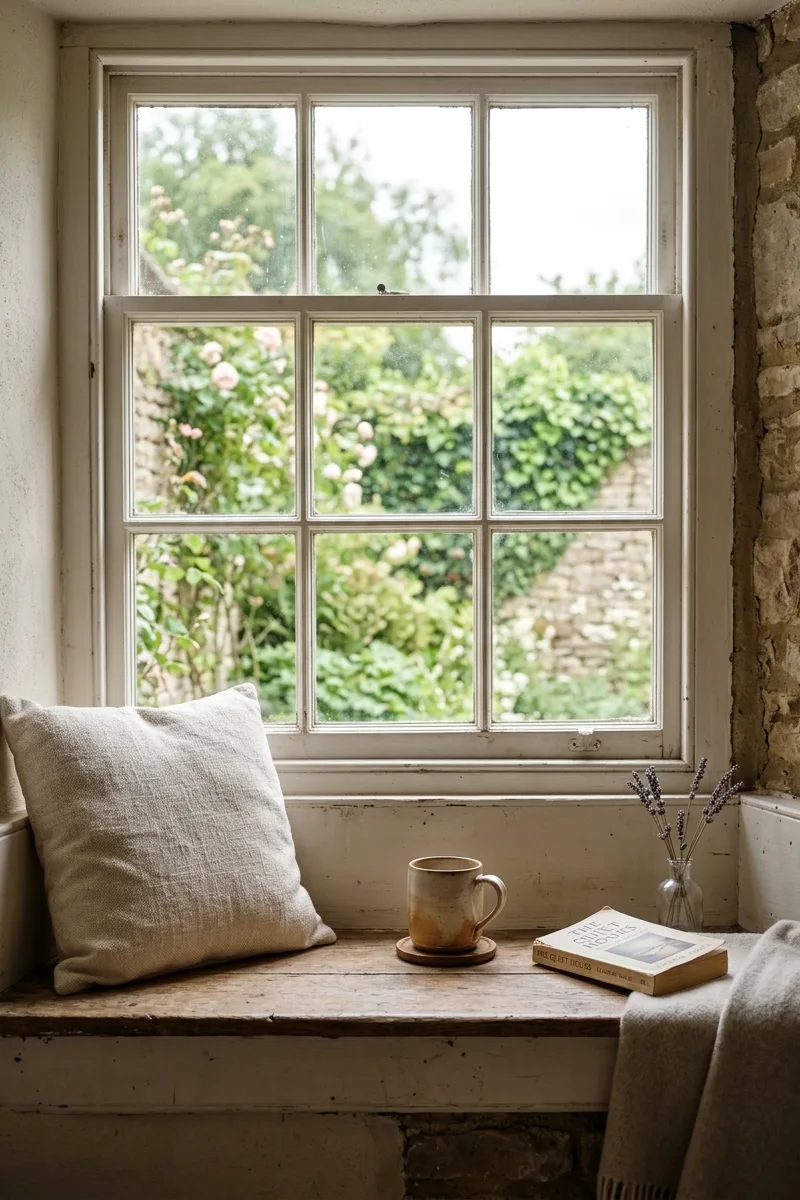
Adding inorganic natural elements breaks up the solid mass of foliage and adds crucial structural interest to the tiny scenes. Nestling a smooth river stone or a jagged piece of slate next to a plant creates a miniature landscape within the square. The heavy solid nature of the rock grounds the delicate leaves beautifully. This addition mimics the look of a full-scale garden reduced to a tiny concentrated footprint. It adds an essential layer of complexity and scale to the overall presentation.
Watering with Syringes
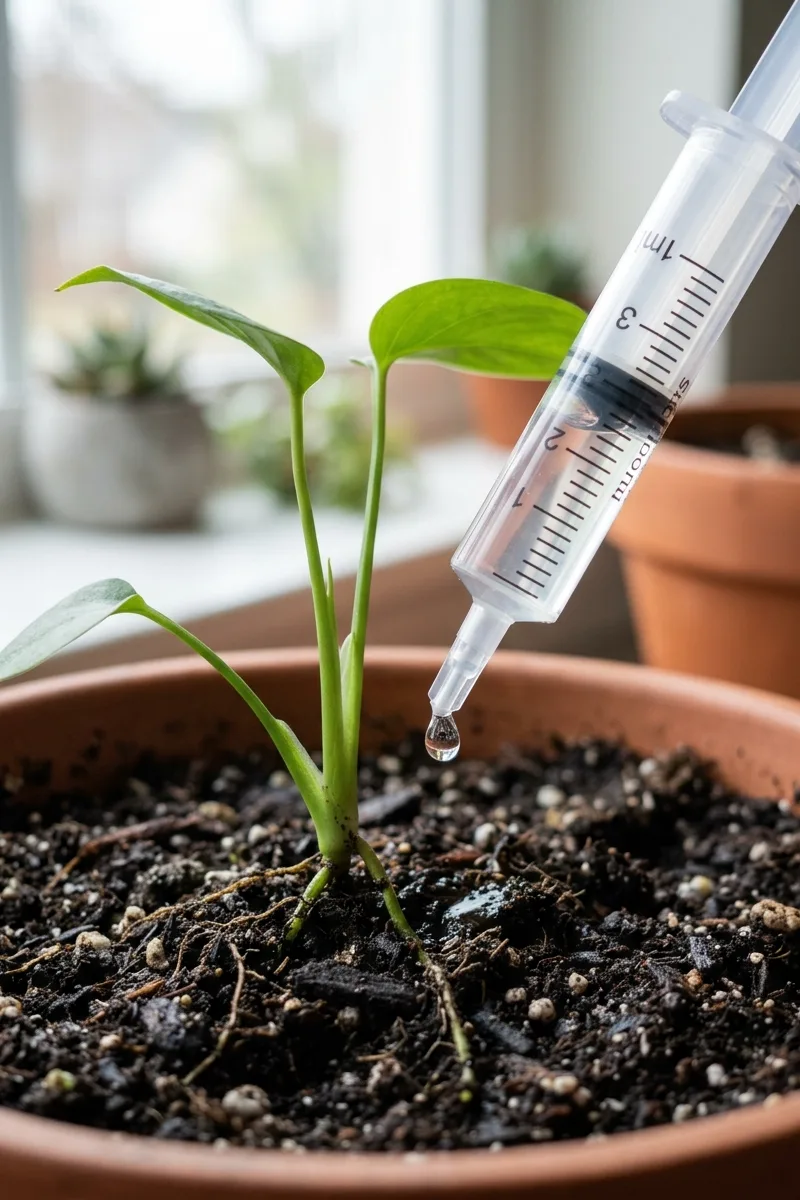
Using a standard watering can will flood the shallow box and ruin the neat gravel top dressing instantly. The most effective way to hydrate these tiny compartments is by using a large plastic syringe or a targeted squeeze bottle. This method allows you to deliver exact amounts of water directly to the roots without splashing the leaves. It provides absolute control preventing overwatering which is the leading cause of death for small succulents. This precise care routine keeps the display looking pristine.
Symmetrical Layouts
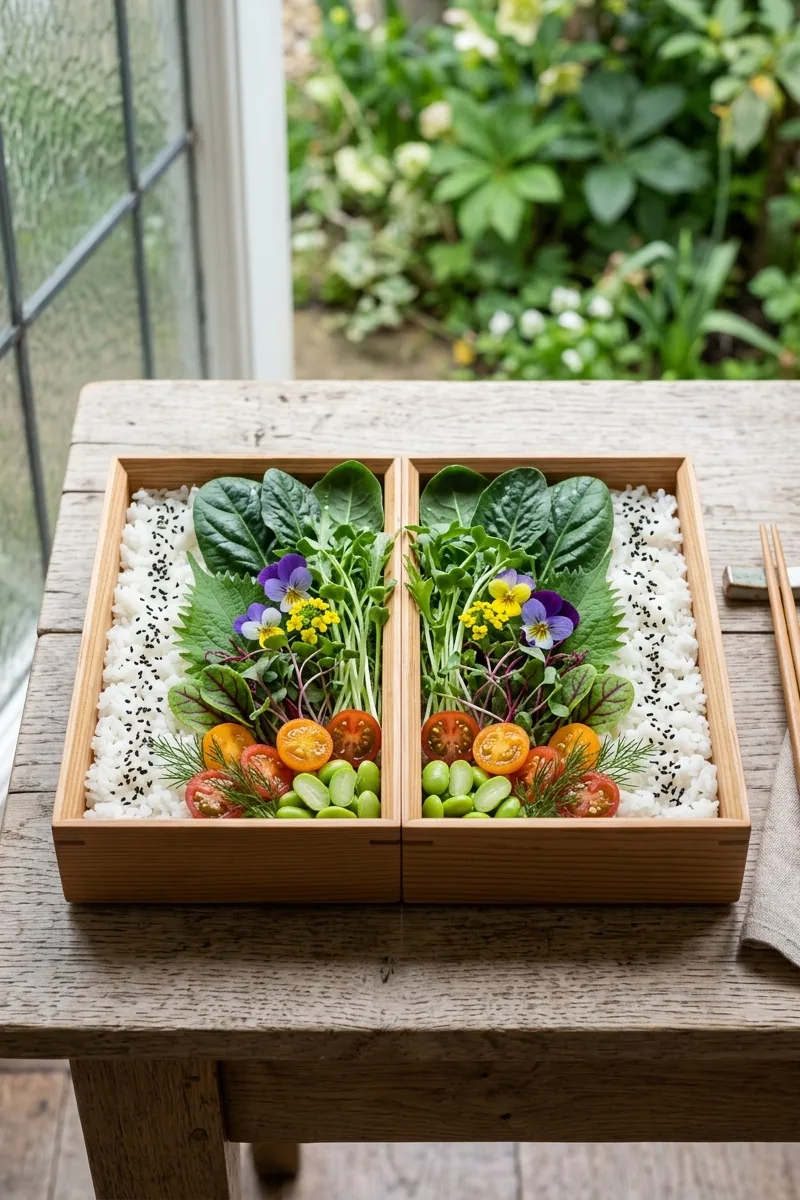
For an incredibly formal and striking presentation arranging the plants in a perfectly mirrored symmetrical layout works brilliantly. Matching the species and colors on the left side exactly with those on the right creates a sense of absolute order. This strict disciplined approach emphasizes the architectural geometry of the wooden grid massively. It transforms the planter into a highly controlled piece of living art that commands attention. This layout is perfect for modern minimalist homes that value crisp structured styling deeply.
Trailing Edges
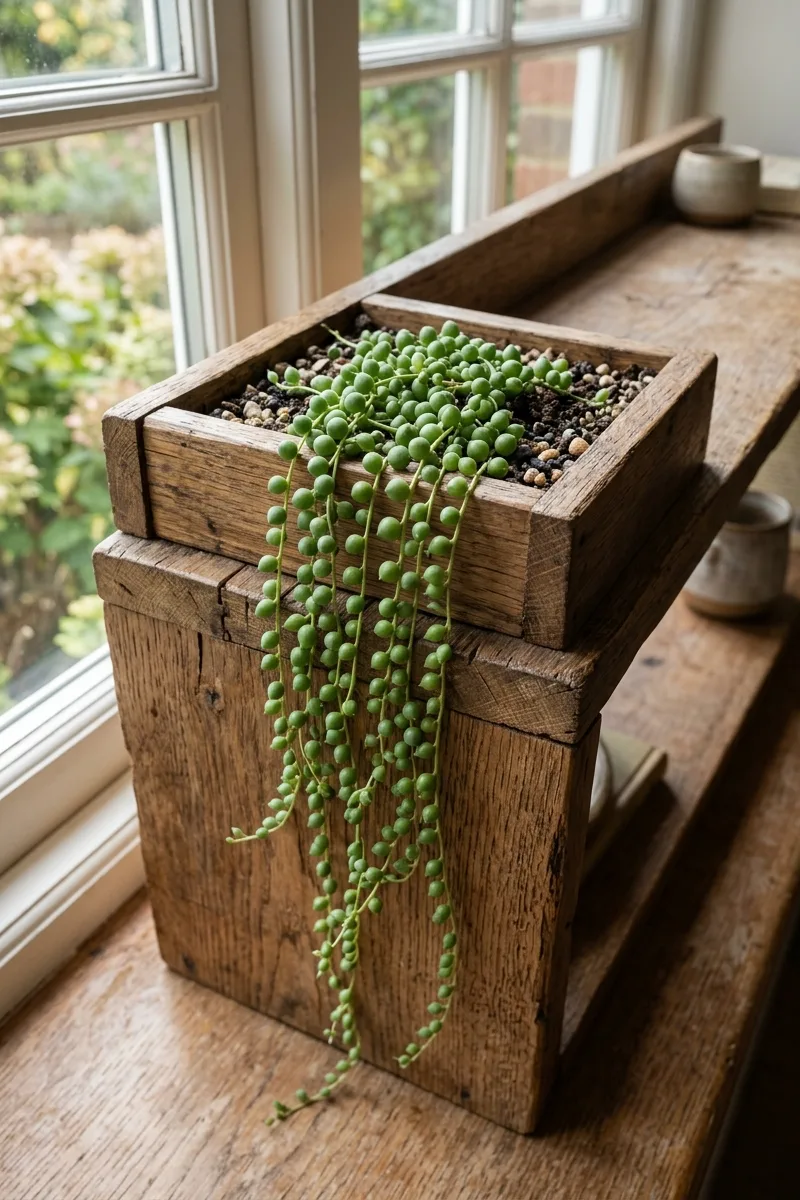
Breaking the rigid boundaries of the box occasionally adds a necessary touch of wild organic growth to the strict grid. Planting a trailing species like String of Pearls in a front compartment allows the foliage to spill gracefully over the wooden edge. This cascading element softens the hard architectural lines of the container beautifully. It creates a dynamic tension between the strict containment of the grid and the natural sprawling habit of the plant. This simple styling trick makes the arrangement feel alive and thriving.
Seasonal Rotations
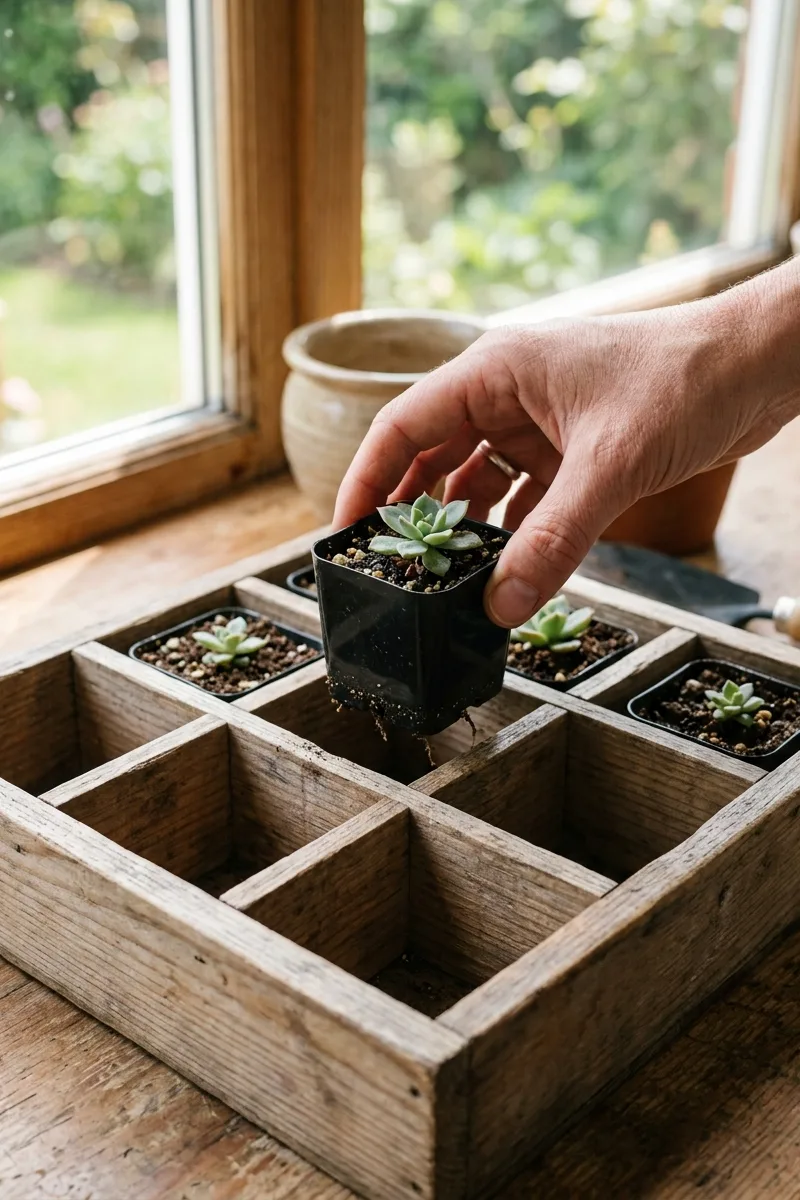
Keeping the plants in their individual square nursery pots within the compartments allows for incredibly easy maintenance and redesign. This modular approach means you can swap out a struggling plant or change the color scheme completely without disrupting the entire box. It treats the planter as an evolving display gallery rather than a permanent static garden. You can rotate different textures and shapes in as your styling preferences change over time. This flexibility guarantees the bento box always looks fresh and perfectly curated.
Monochromatic Greens
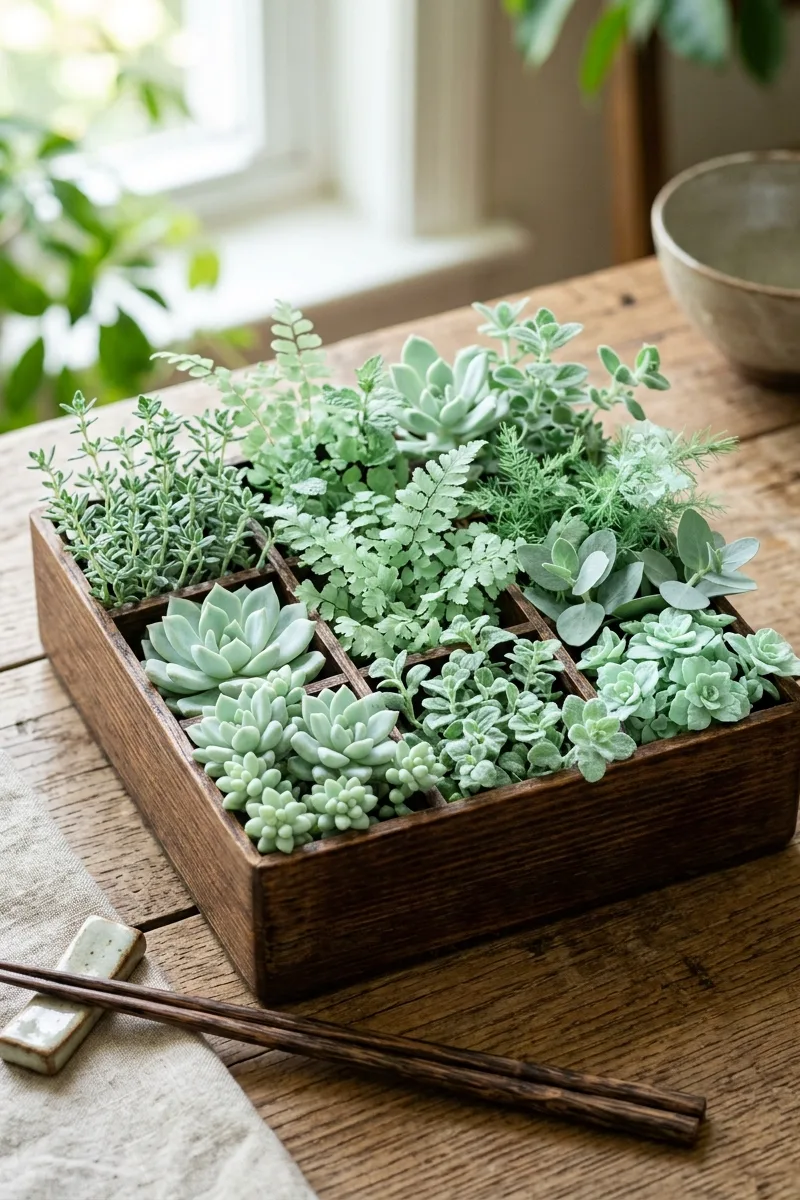
Limiting the color palette to a single shade forces the viewer to focus entirely on the varying shapes and textures. Filling the grid with plants that are all the exact same mint green or pale gray creates a highly sophisticated monochromatic display. This subtle approach feels incredibly calming and fits perfectly into minimalist neutral interiors. The strict color limitation makes the structural differences between the leaves much more apparent and interesting. It is a designer-level strategy that relies on quiet elegance rather than loud colors.
Using Clear Acrylic Boxes
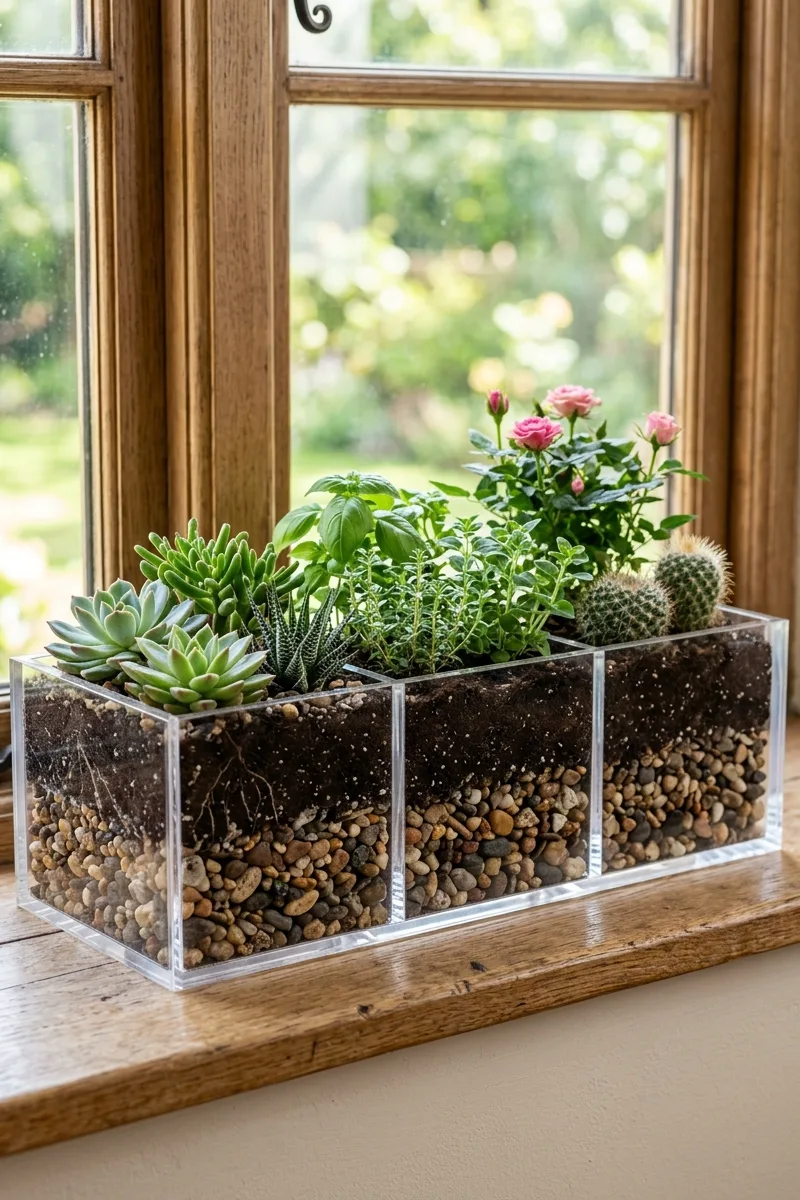
Swapping a traditional wooden box for a completely transparent acrylic container modernizes the bento concept heavily. The clear walls allow you to see the distinct layers of gravel soil and roots adding a fascinating scientific element to the display. This material choice makes the container visually disappear allowing the plants to float beautifully on the table. It is a sleek high-tech presentation that works exceptionally well in contemporary offices or sharp modern kitchens. The transparency demands perfect soil layering adding a new dimension of craft.
Lithops Specimen Boxes
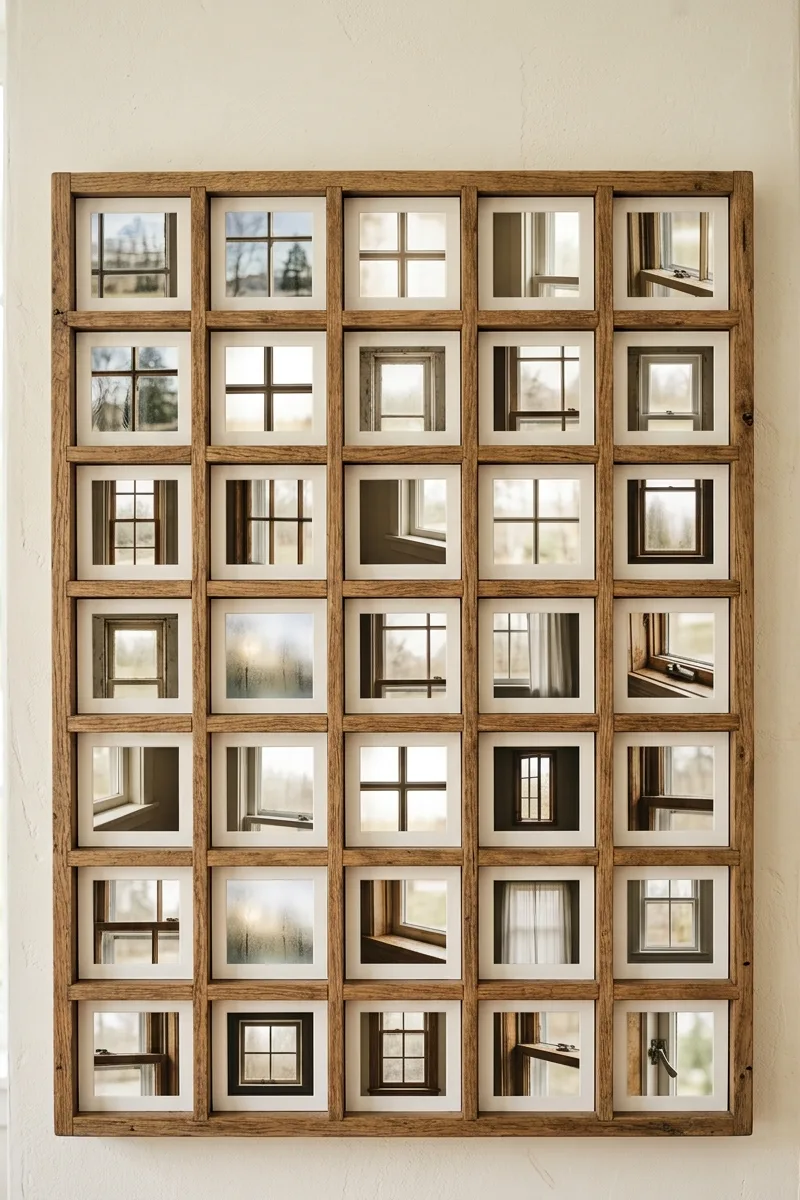
Dedicating an entire bento box to a collection of Lithops or living stones creates a bizarre and captivating specimen display. These tiny strange plants look exactly like colorful pebbles and thrive in highly restrictive dry environments. Placing one unique plant centered in each square creates the look of a curated museum collection or a jewel box. The strict grid highlights their weird camouflage shapes brilliantly. This specific planting strategy is guaranteed to start conversations and fascinate anyone who looks closely at the table.
Gravel Color Zoning
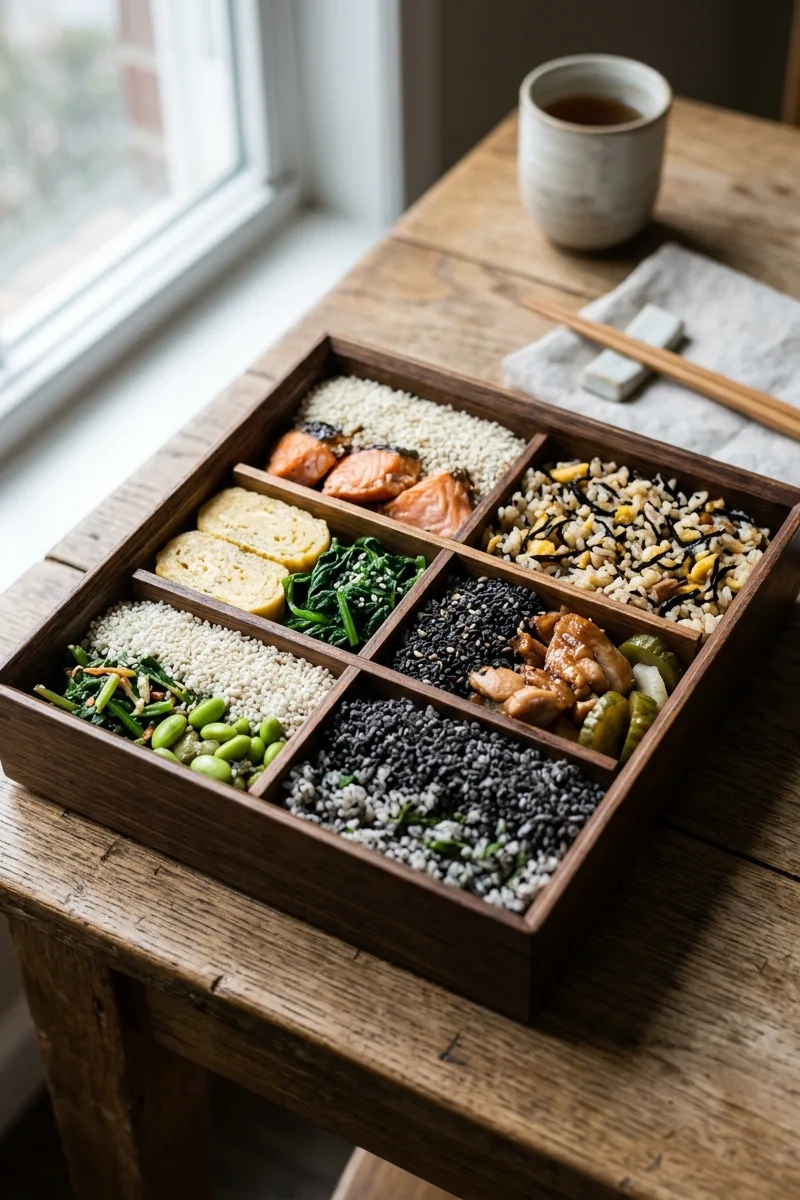
You can enhance the separation of the grid by changing the color of the top dressing in different compartments. Alternating between stark white sand and dark charcoal gravel creates a striking checkerboard effect beneath the plants. This intense graphic base adds massive visual interest even before the plants grow to fill the space. It is a bold styling choice that emphasizes the strict geometry of the container aggressively. This technique ensures the box looks highly designed and intentionally structured from every angle.
Air Plant Grids
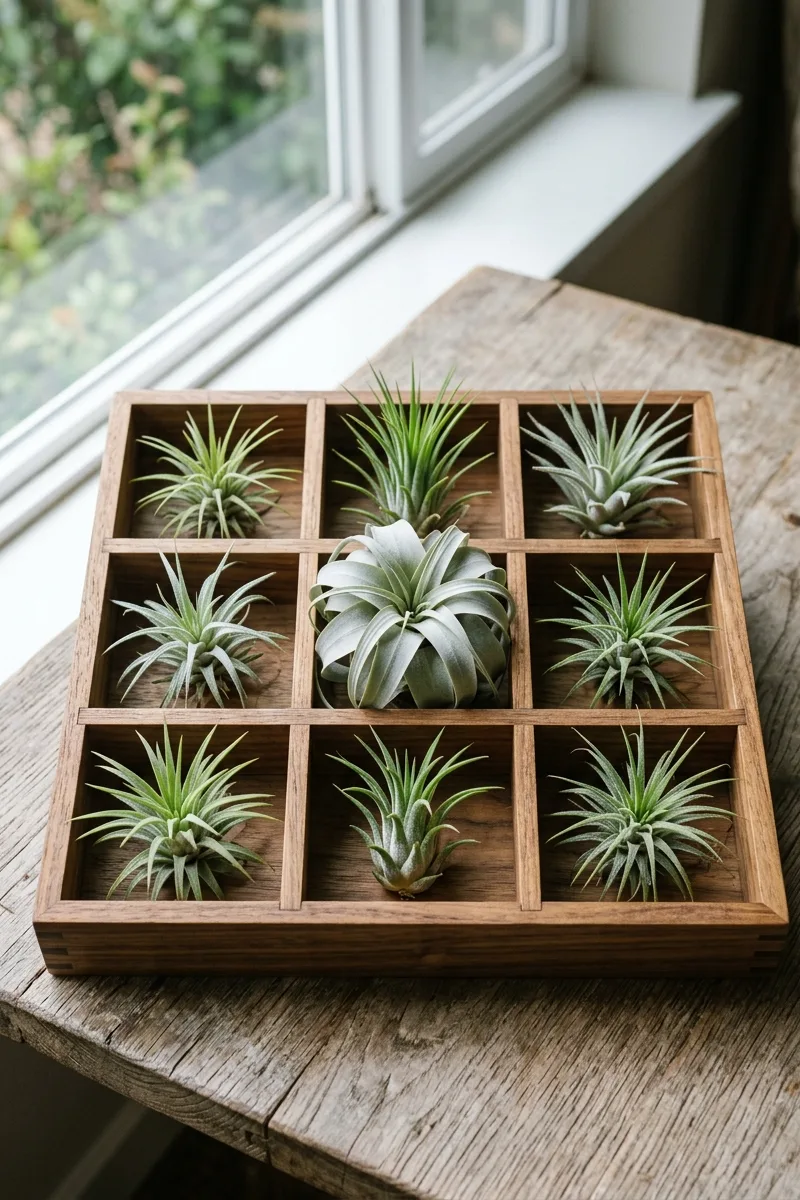
Eliminating soil completely creates the absolute cleanest most low-maintenance botanical bento possible. Simply resting a different sculptural air plant inside each empty wooden compartment produces a stunning modern display. This approach focuses entirely on the bizarre alien shapes of the plants against the sharp wooden lines. Maintenance involves simply lifting the plants out for a quick weekly soak and returning them to the grid dry. It is a brilliant mess-free solution for adding structured greenery to a pristine desk or bookshelf.
Lighting the Display
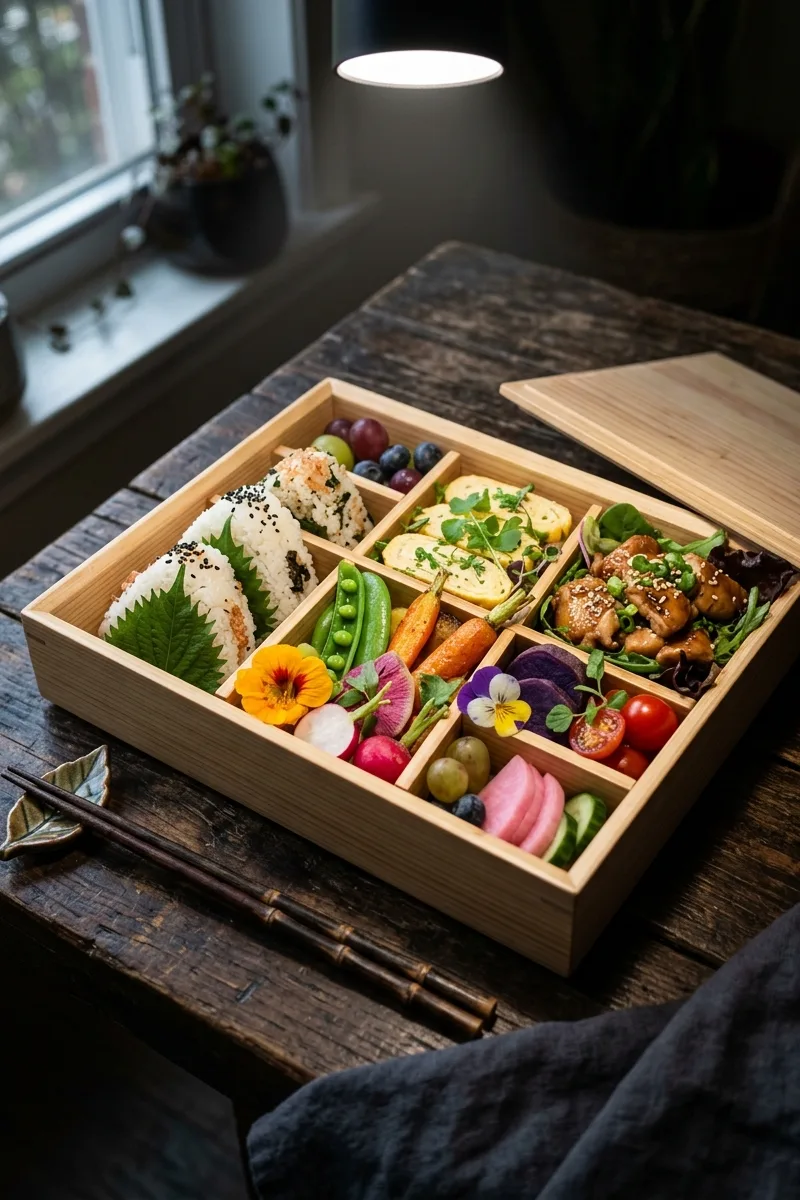
Properly lighting your finished creation transforms it from a simple planter into a dramatic glowing centerpiece. Positioning a small targeted LED spotlight directly above the box highlights the intricate textures and vibrant colors brilliantly. The strict wooden dividers cast sharp shadows across the soil enhancing the geometric depth of the arrangement at night. This focused illumination ensures the tiny plants remain the absolute star of the room even in low light. It is the final crucial step in presenting your botanical bento professionally.
Inspiration gallery recap
Tap any image to open the slideshow — use arrows or swipe to browse.