15 Minimalist Spa Bathroom Inspirations with Warm Neutrals
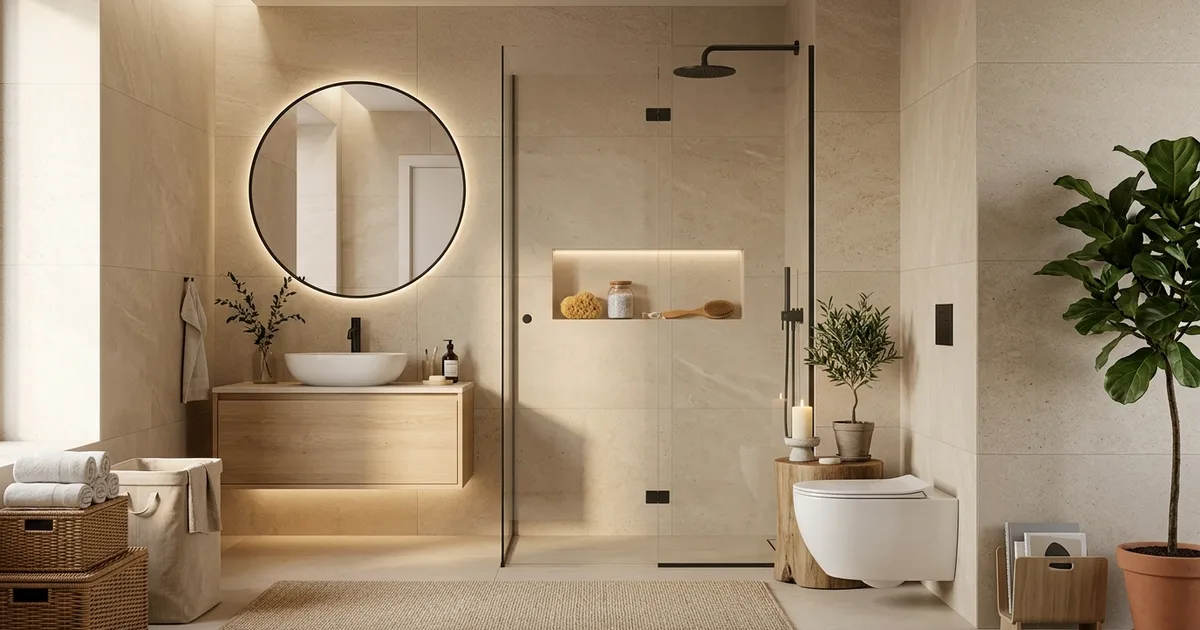
Creating a personal sanctuary at home is the ultimate luxury, and it begins in the bathroom. If you are drawn to uncluttered spaces that feel warm rather than cold, the minimalist spa aesthetic with Japanese and Scandinavian influences is your perfect match. This look combines the clean lines of modern design with raw, organic textures like warm stone and light wood, transforming a purely functional room into a peaceful, slow-living retreat.
From the grounding presence of a floating wood vanity to the sculptural simplicity of a round backlit mirror, every element works together to dial down the noise of the day. Soft ambient lighting and a tightly curated palette of warm neutrals make the space feel like a cozy cocoon. Below, we share 15 stunning minimalist spa bathroom ideas that prove you do not need clutter to create character—just the right balance of texture, light, and form.
What’s inside this article
- Warm Limestone Feature Walls
- Floating Oak Vanity Design
- Backlit Round Mirror Magic
- Soft Recessed Cove Lighting
- Freestanding Stone Resin Tub
- Neutral Textured Linen Curtains
- Organic Wood Accent Shelving
- Seamless Walk-In Shower
- Tactile Wooden Floor Mats
- Apothecary Amber Dispensers
- Dried Eucalyptus Bundles
- Underfloor Radiant Heating
- Monochromatic Towel Stacks
- Wabi-Sabi Ceramic Vessels
- Subdued Earthy Paint Palette
Warm Limestone Feature Walls
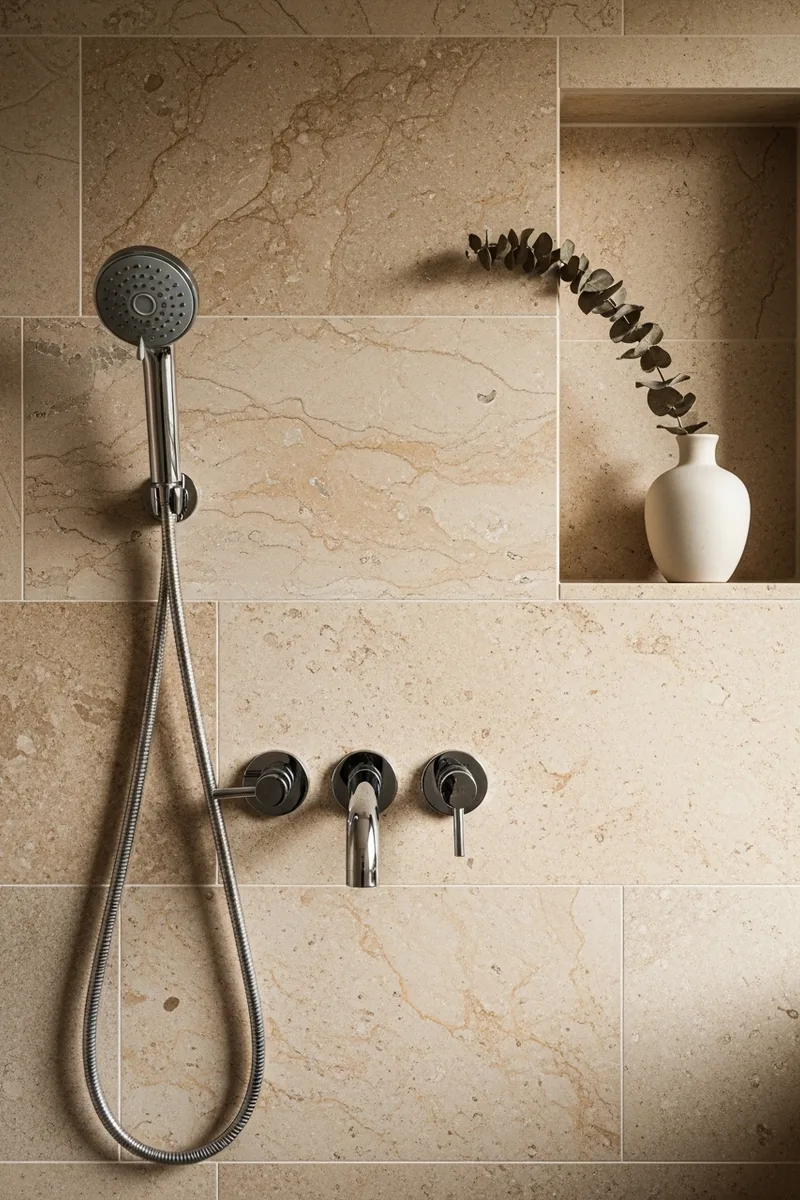
Texture is the secret to making a neutral bathroom feel layered and inviting. By cladding one wall in warm limestone tiles, you introduce a natural, earthy backdrop that immediately softens the hard surfaces. Unlike stark white subway tile, limestone carries subtle veins and tonal shifts in beige and sand, catching the light beautifully throughout the day. This feature wall grounds the entire room and provides an organic focal point that draws the eye into the shower or behind the soaking tub.
To enhance the spa aesthetic, pair this stone with matte black or brushed nickel fixtures that contrast gently against the light surface. The visual weight of the stone feels protective and cave-like, perfect for long, meditative showers. A small built-in niche in the limestone wall offers a spot for amber glass bottles, keeping the room visually serene while adding a warm, apothecary-inspired detail.
Floating Oak Vanity Design
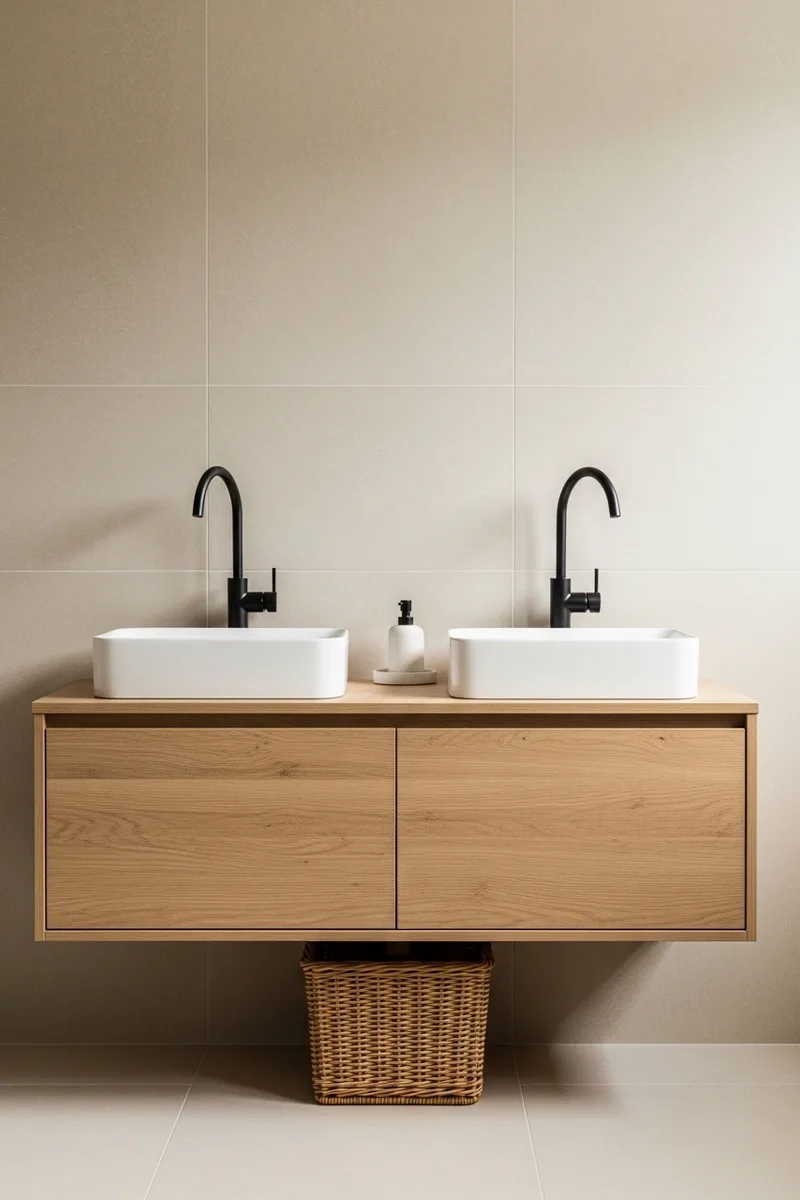
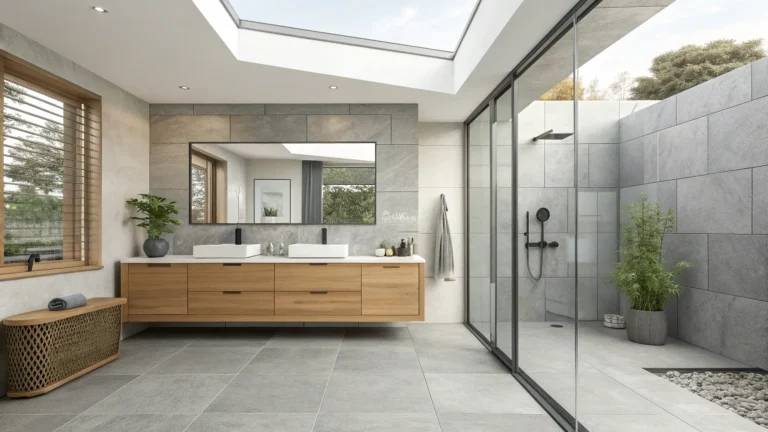
A floating vanity is the cornerstone of the minimalist spa bathroom. Mounting a light oak wood cabinet directly to the wall frees up visual floor space and creates an airy, almost weightless look that is essential for a calm mind. The pale, warm wood grain brings a slice of nature indoors, contrasting beautifully with cool stone floors while maintaining a strictly neutral palette. This cantilevered design also makes cleaning the floor effortless, reinforcing the minimalist principle of functional simplicity.
Keep the countertop clear except for a sculptural soap dispenser or a small ceramic tray. The open space beneath the vanity is perfect for placing neatly rolled towels in a woven seagrass basket, adding a functional yet decorative layer. This style of vanity proves that storage can be beautiful; the clean horizontal line anchors the room without dominating it, letting the stone and light play the starring role.
Backlit Round Mirror Magic
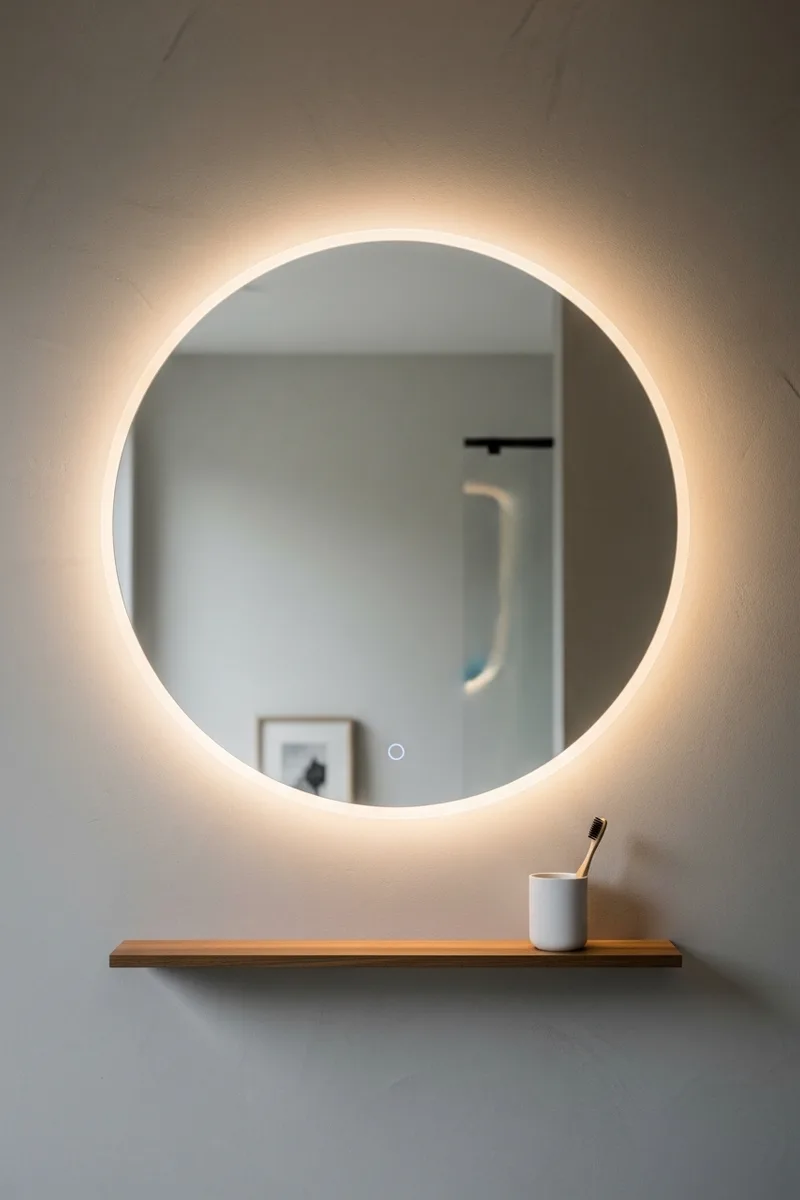
A simple round mirror is a sculptural moment of soft geometry in a world of hard rectangular lines. When you mount it on a warm neutral wall, the circle acts as a visual pause, mimicking the sun or moon and contributing to the serene spa mood. Backlighting the mirror takes it to the next level of luxury, casting a soft, diffused halo of light onto the wall that removes harsh shadows from your face and creates a gentle, atmospheric glow in the bathroom.
This floating effect eliminates the need for bulky vanity light bars, keeping the walls clean and minimalist. The warm LED glow is perfect for early mornings and late-night routines, acting as a gentle nightlight. Choosing a mirror without a metal frame, just a simple beveled or polished edge, maintains the uncluttered look and ensures the shape itself is the main event.
Soft Recessed Cove Lighting
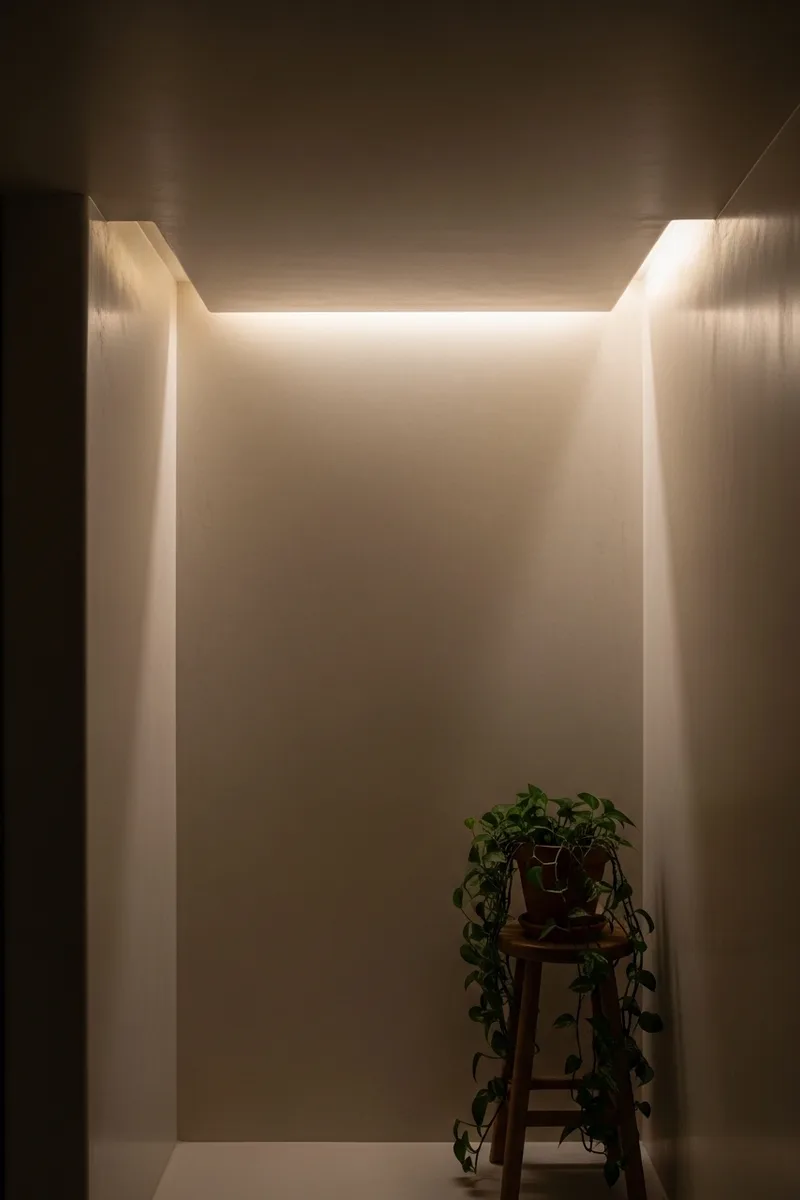
Lighting is the unsung hero of a spa bathroom, and recessed cove lighting is the ultimate tool for tranquility. By hiding LED strips in a perimeter soffit or a ceiling cove, you wash the walls and ceiling in an indirect, diffuse glow. This technique mimics the softness of natural daylight without any harsh bulbs glaring directly into your eyes. The result is a cocooning effect that makes the warm neutral tones of the stone and wood feel three-dimensional and rich.
Cove lighting works best on matte surfaces like plaster or limestone, which absorb the light and scatter it softly. Install this on a dimmer switch to instantly change the mood from bright and functional to a peaceful, candlelit spa experience. It is a subtle architectural trick that makes a standard ceiling height feel loftier and turns a simple bath into a sensory deprivation retreat.
Freestanding Stone Resin Tub
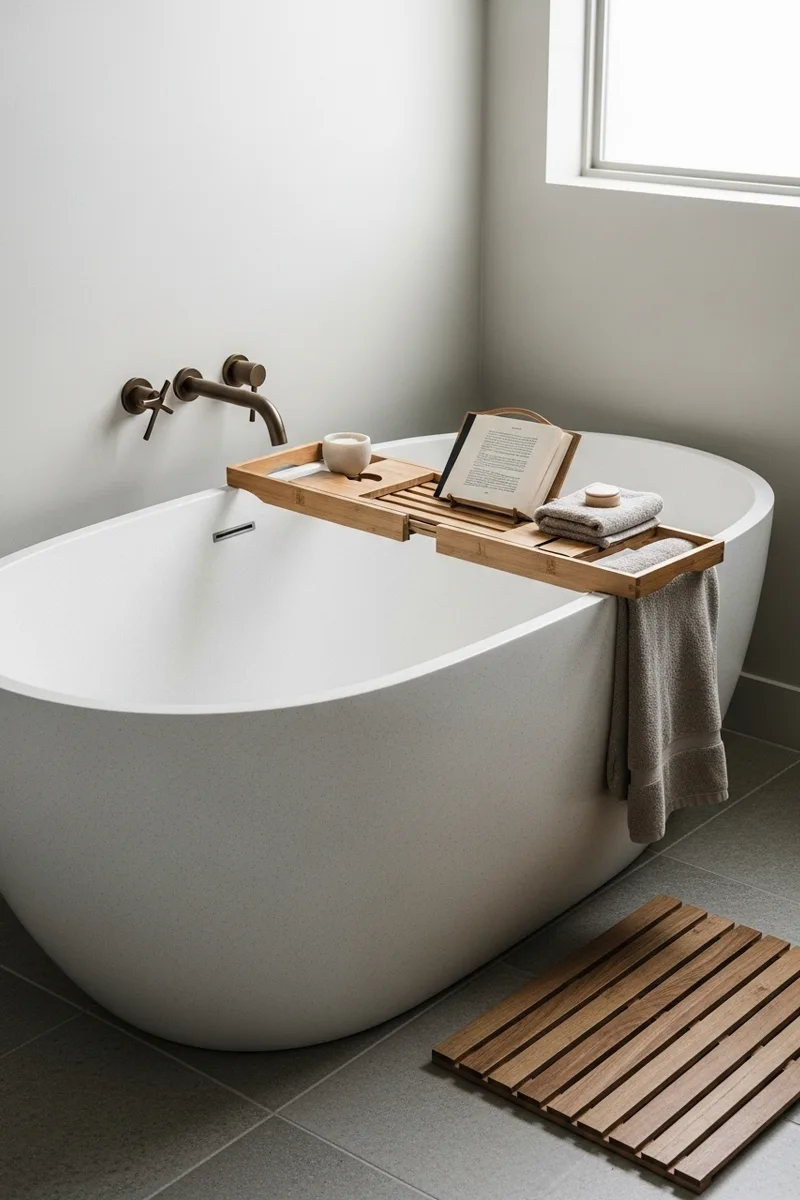
A freestanding tub is a statement of self-care, and in a minimalist space, a solid stone resin model is the perfect choice. These matte white tubs retain heat exceptionally well, so your bath stays warm for longer, and their smooth, sculptural silhouette feels modern and artisanal. Unlike a standard acrylic tub, a stone resin basin has a substantial weight and density that grounds the room and adds a palpable sense of luxury and permanence.
Place the tub near a window to connect bathing with the outside world, using sheer linen curtains for privacy. The simple, organic shape of the tub pairs beautifully with the hard geometry of stone tiles and the straight lines of a wooden vanity. A teak bath tray bridging the rim invites you to rest a book or a cup of tea, transforming the bath from a quick rinse into an intentional ritual of rest.
Neutral Textured Linen Curtains
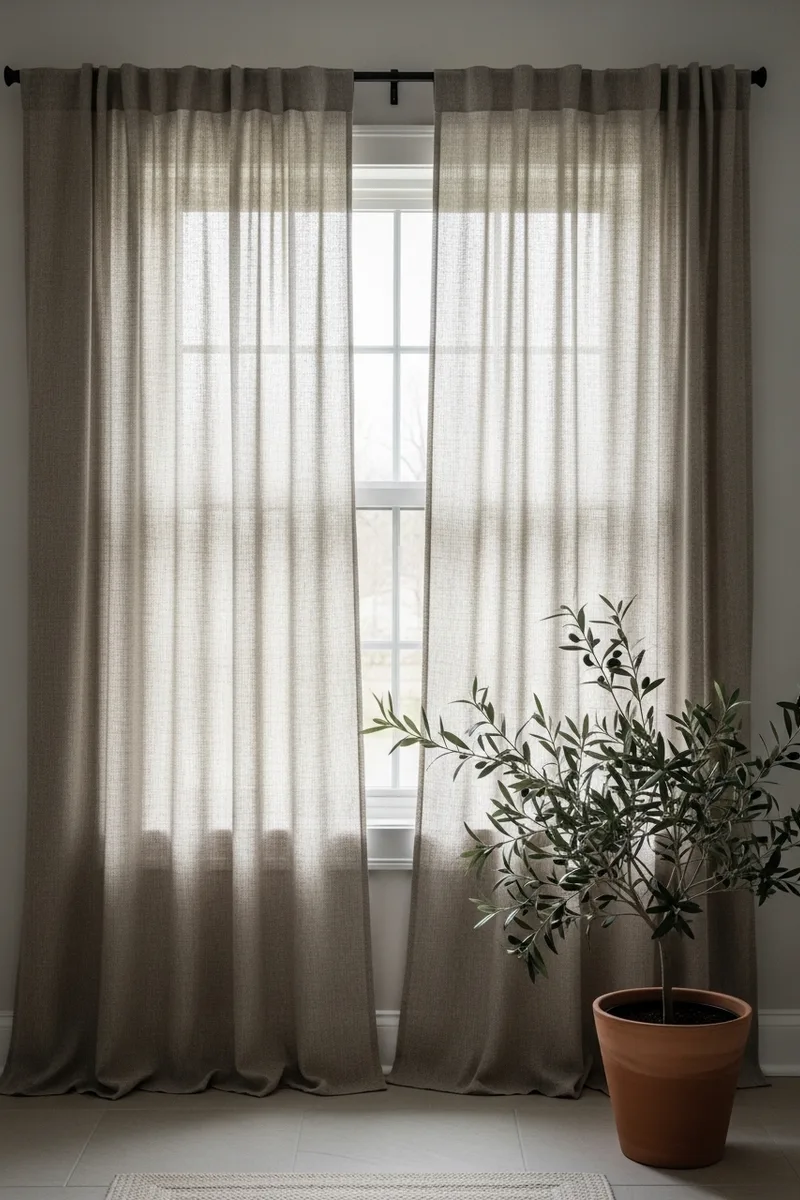
Hard surfaces like tile and stone dominate bathrooms, making soft textiles a vital element for balance. Hanging natural beige linen curtains on the window instantly softens the acoustic and visual sharpness of the room. Linen has a beautiful, slubby texture that diffuses light into a golden, warm haze, ensuring privacy without blocking the sun entirely. The gentle drape of the fabric introduces a sense of movement and airiness that rigid blinds simply cannot replicate.
Pull the curtains back with a simple leather strap to frame the window and add an organic touch. The neutral beige color blends seamlessly with a warm stone palette, never distracting the eye. This fabric choice reinforces the Japandi principle of ‘wabi-sabi’—finding beauty in imperfection and natural materials—and makes the bathroom feel less like a wet room and more like a living space.
Organic Wood Accent Shelving
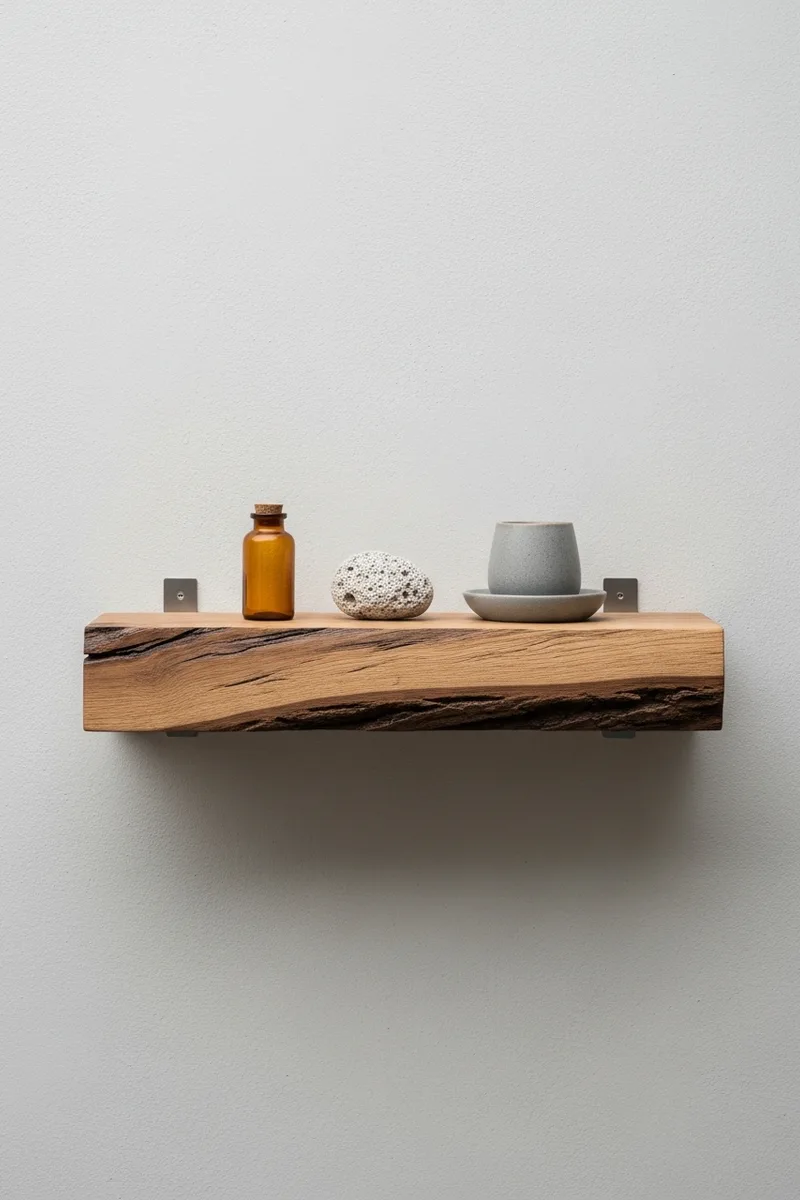
In a minimalist bathroom, open shelving should be treated as a gallery display. Floating shelves crafted from live-edge or solid light oak bring an organic sculptural element to the walls without adding visual weight. These shelves break up the monotony of a large tiled wall and offer a dedicated spot for the few curated items you want to see daily. The wood’s visible grain and raw edges echo the floating vanity, creating a cohesive design language across the room.
Resist the urge to fill the shelf with plastic bottles. Stick to a monochromatic arrangement of amber glass bottles, a small pile of natural pumice stones, or a single ceramic bud vase with a stem of greenery. This curated display turns everyday toiletries into decorative objects. The wood warms the cool stone surroundings, proving that storage can be both practical and artful.
Seamless Walk-In Shower
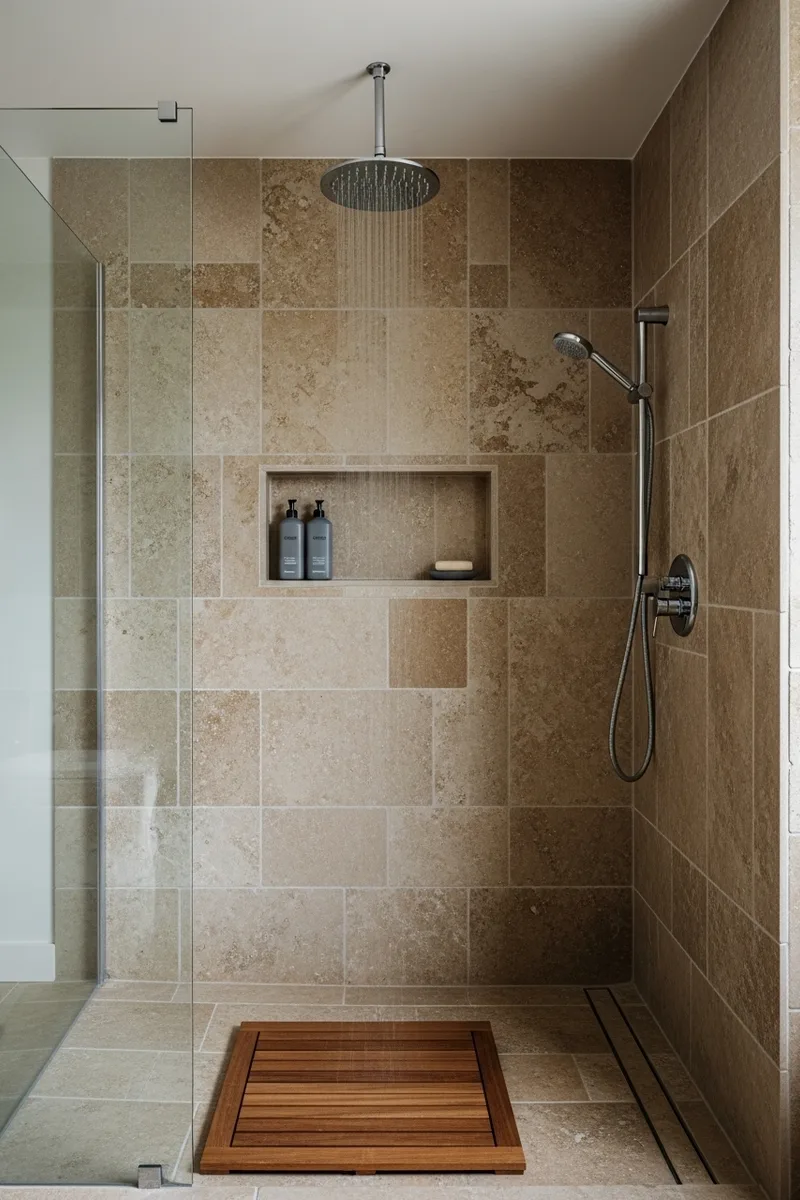
Physical barriers disrupt the flow of a small or medium-sized room, which is why a seamless walk-in shower is a game changer for the minimalist spa look. Using a single, frameless glass panel instead of a swinging door keeps the sightlines completely open, making the floor area feel expansive and uninterrupted. A linear drain set flush into the stone floor allows the tile to run continuously from the main floor into the shower, erasing the usual visual boundary.
This wet-room style approach functions beautifully with the warm neutral palette, as the glass almost disappears and lets the limestone texture become the star. A ceiling-mounted rainfall showerhead enhances the sense of standing in a gentle summer rain. Add a built-in recessed shelf inside the wall for soaps, keeping the shower floor perfectly clear and safe from trip hazards.
Tactile Wooden Floor Mats
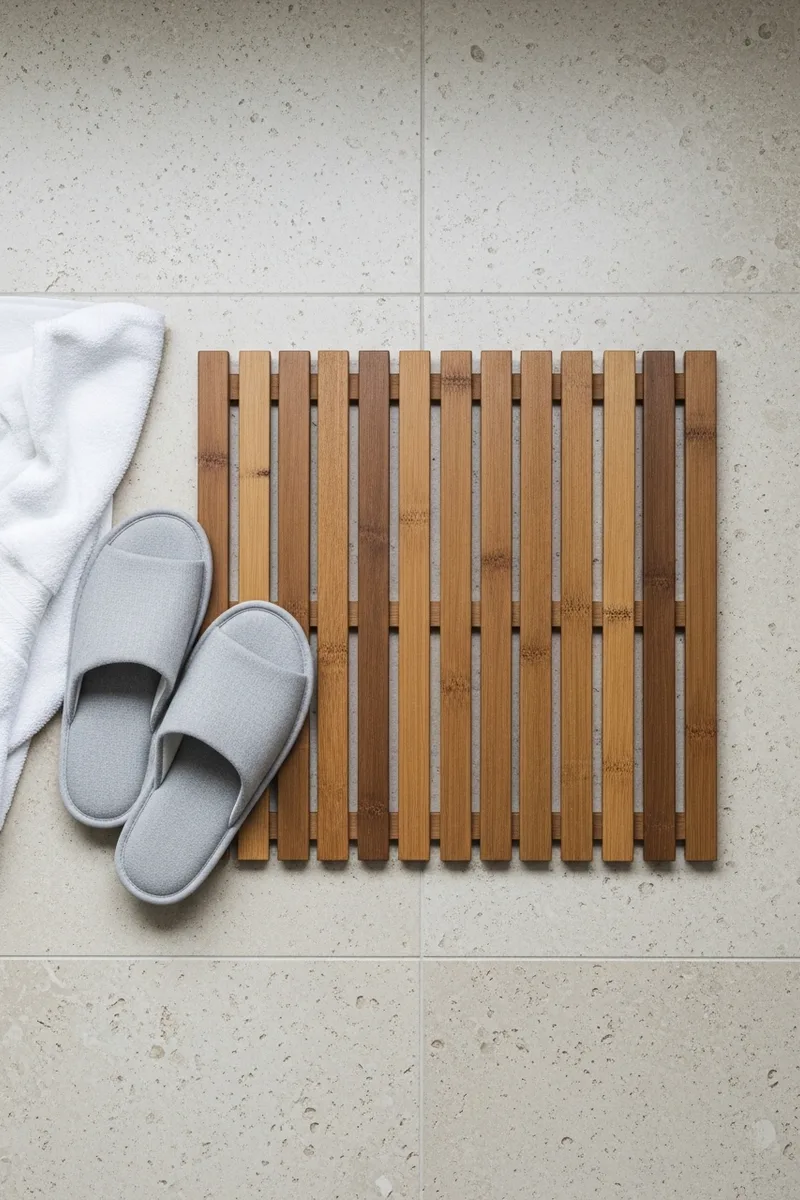
Exchanging a plush cotton bath mat for a slatted wooden or bamboo mat instantly elevates the spa aesthetic. Wooden mats provide a dry, warm surface to step onto that looks crisp, clean, and deeply organic. The slatted design allows water to drain directly through to the stone floor below, which means the mat dries quickly and never becomes a damp, musty laundry item that clutters the visual plane.
The warm honey or teak tones of the wood break up the expanse of a stone or tile floor with a precise, geometric texture. It feels wonderful underfoot, offering a gentle acupressure-like sensation. Placing a wooden mat by the shower and the tub defines the wet zones in an open-plan bathroom. It is a small, functional detail that brings the high-end resort look home, merging Japanese bathing rituals with modern convenience.
Apothecary Amber Dispensers
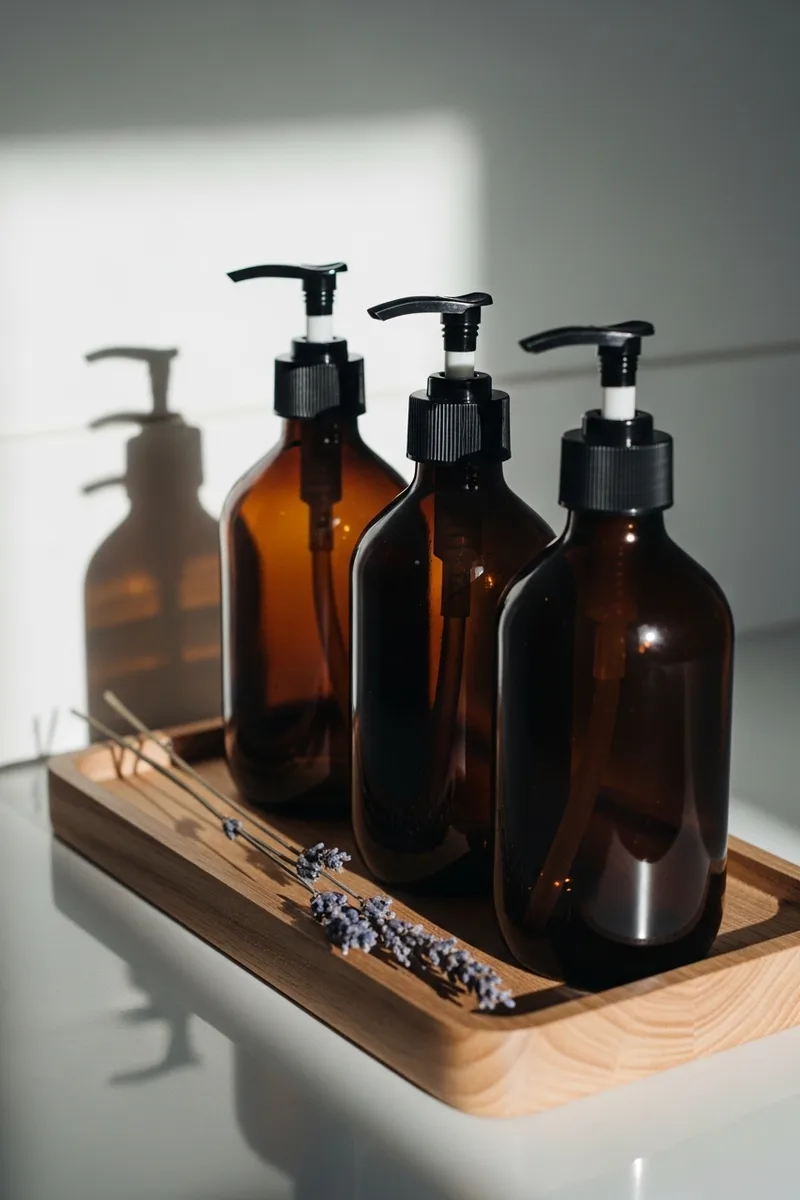
Nothing ruins a minimalist aesthetic faster than a row of brightly colored plastic shampoo labels screaming for attention. Decanting soaps and lotions into matching amber glass dispensers is an instant visual upgrade that costs very little. The rich, warm honey color of the glass catches the light and coordinates perfectly with natural wood tones and warm stone, while the opaque bottles hide unappealing product labels. This small switch unifies the countertop and looks undeniably expensive.
Amber glass also protects essential oils and natural soaps from UV light degradation, making it a functional choice for a spa setting. Arrange the bottles on a simple wood or marble tray to create a defined zone for your daily products. This ritual of decanting makes your routine feel deliberate, turning soap into a ritual and cleaning into a form of aesthetic meditation.
Dried Eucalyptus Bundles
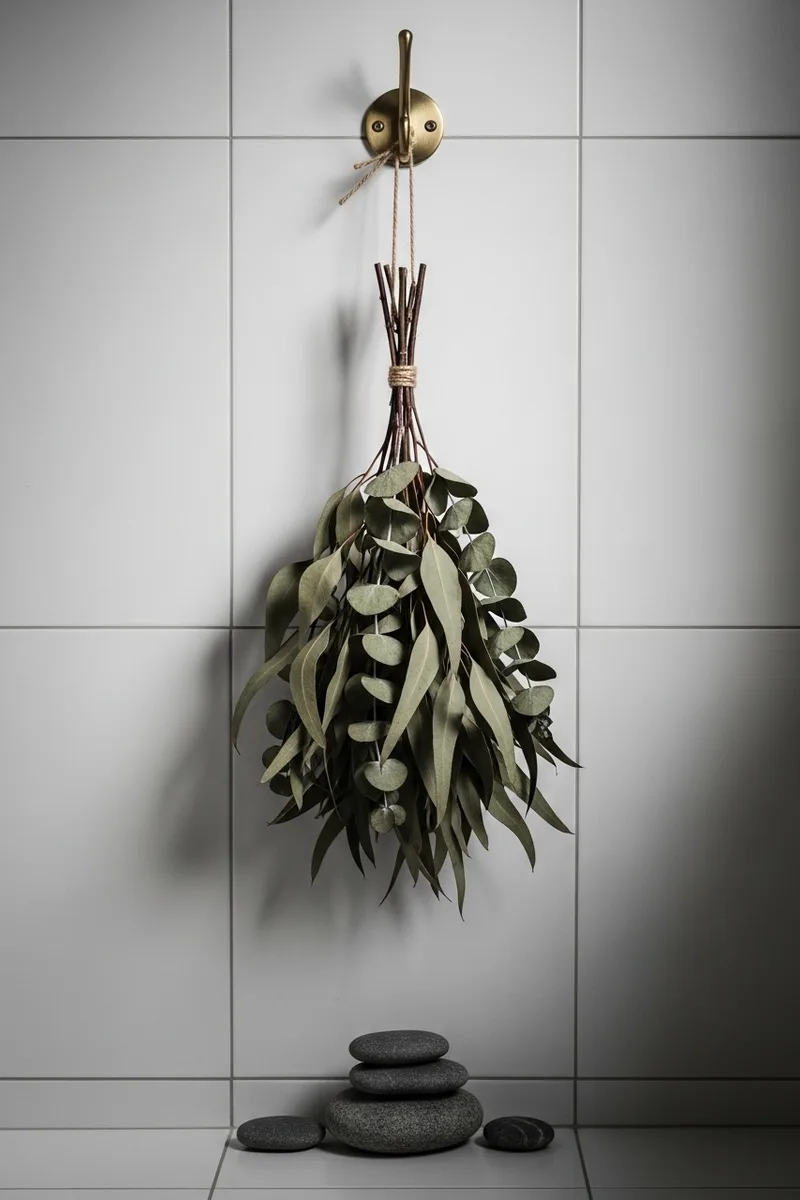
Greenery brings life to a neutral space, but live plants in a dark bathroom often struggle to survive. The elegant solution is a bundle of dried eucalyptus. It requires zero light, zero water, and zero maintenance, yet it delivers a powerful organic impact. The muted sage-green and silvery-blue leaves contrast softly against warm beige tiles and light wood, acting as a natural air freshener that retains a light, menthol scent for weeks.
Hang a bunch from the shower head with twine, or place stems in a heavy ceramic vase on the vanity. As the steam activates the residual oils, your shower becomes an aromatherapy steam room. The wabi-sabi nature of the dried leaves—slightly brittle and faded—fits the Japandi love of transient beauty perfectly, offering a graceful, budget-friendly alternative to fresh floral arrangements.
Underfloor Radiant Heating
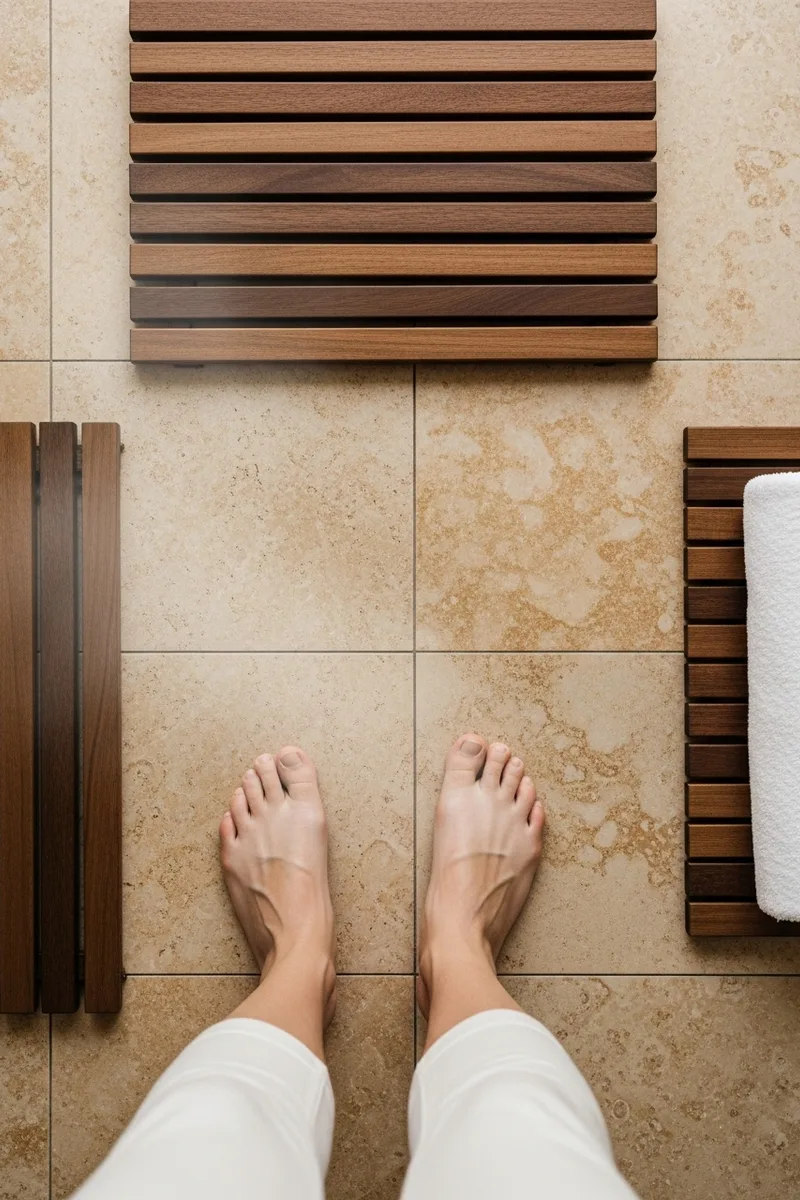
True luxury in a bathroom is a warm floor on a cold morning. Installing underfloor radiant heating beneath your limestone or large-format tiles ensures the room feels physically cozy, not just visually warm. This system eliminates the need for visible radiators or noisy fan heaters, which frees up wall space and maintains the pristine, uncluttered look of the minimalist design. The heat radiates evenly, warming the entire room from the ground up.
Since the minimalist spa look relies on expansive areas of stone, a heated floor prevents the material from feeling icy and unwelcoming. It also helps dry the floor quickly after a shower, reducing slips and humidity buildup. This invisible feature lets you walk barefoot in total comfort, reinforcing the feeling of a high-end wellness retreat where every sensory detail has been considered.
Monochromatic Towel Stacks
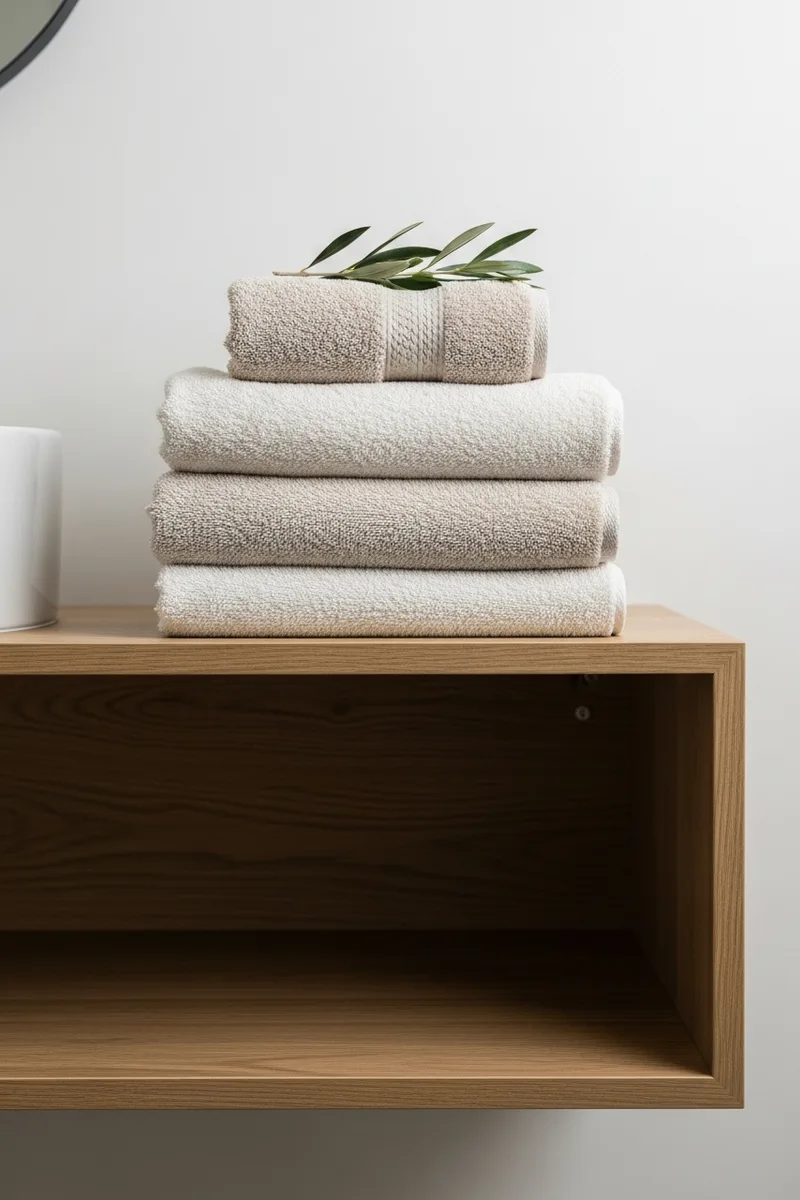
Towels are the largest textile in the room, so their color has an outsized impact on the overall palette. Swapping multi-colored towels for a monochromatic stack of plush off-white, cream, or light greige towels keeps the visual field calm. Rolling or folding them neatly and placing them on an open lower shelf of your floating vanity turns a practical necessity into a spa-style display that invites you to unwind.
Invest in high-GSM cotton with a subtle ribbed or waffle texture to add depth without pattern. The consistent neutral tones blend into the architecture rather than shouting for attention, letting the stone and wood textures remain the focal points. This simple restriction makes laundry day easier—no sorting mismatched colors—and ensures that even the most functional corner of the bathroom looks curated and serene.
Wabi-Sabi Ceramic Vessels
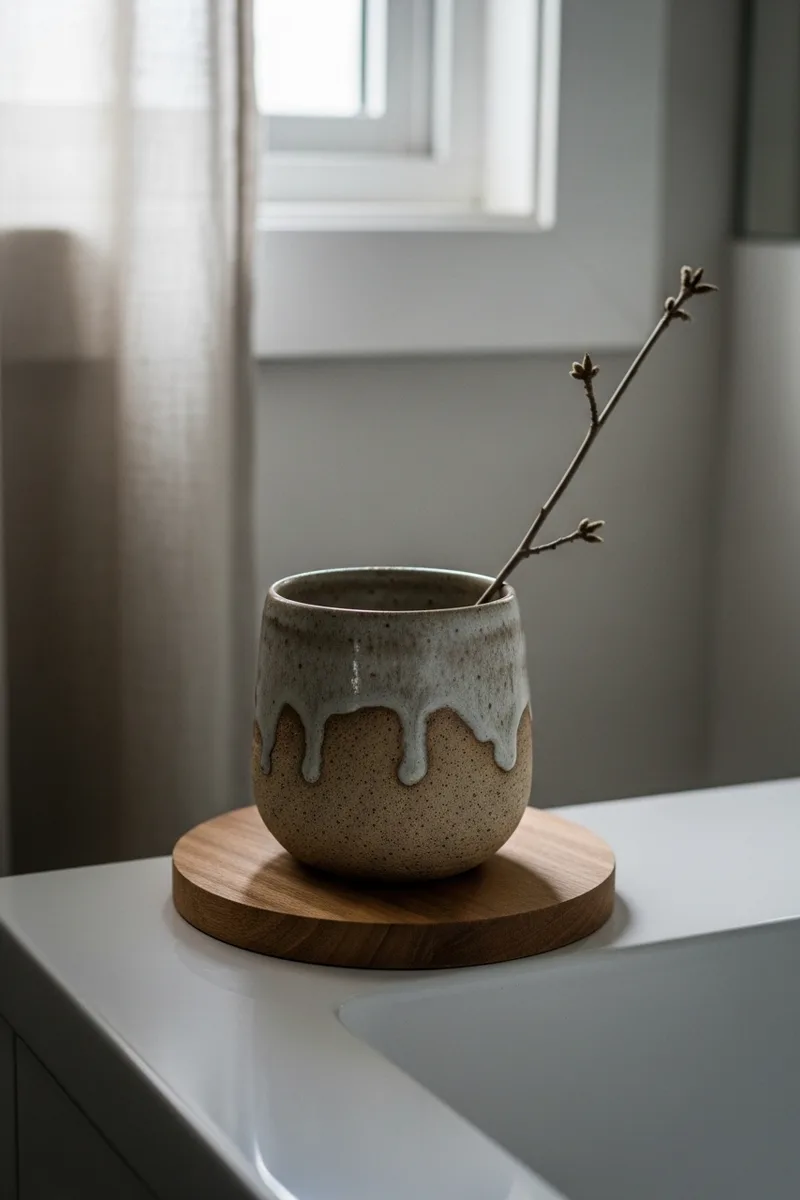
Perfection can feel sterile, which is why handcrafted ceramic accessories are essential to a cozy minimalist bathroom. Look for vessels with a tactile, organic glaze in beige, bone, or sand—pieces that are slightly asymmetrical and bear the maker’s thumbprint. A small ceramic cup for toothbrushes or a textured soap dish celebrates the Japanese concept of wabi-sabi: the beauty of the imperfect, impermanent, and incomplete.
These earthy, heavy objects contrast beautifully with sleek glass and shiny chrome. Use them to hold dry botanicals, cotton swabs, or even a single eyeliner pencil—limiting the contents keeps the look intentional. The matte pottery absorbs light softly, creating pools of shadow that give the vanity a museum-quality stillness, making your morning routine feel like a grounding ritual.
Subdued Earthy Paint Palette
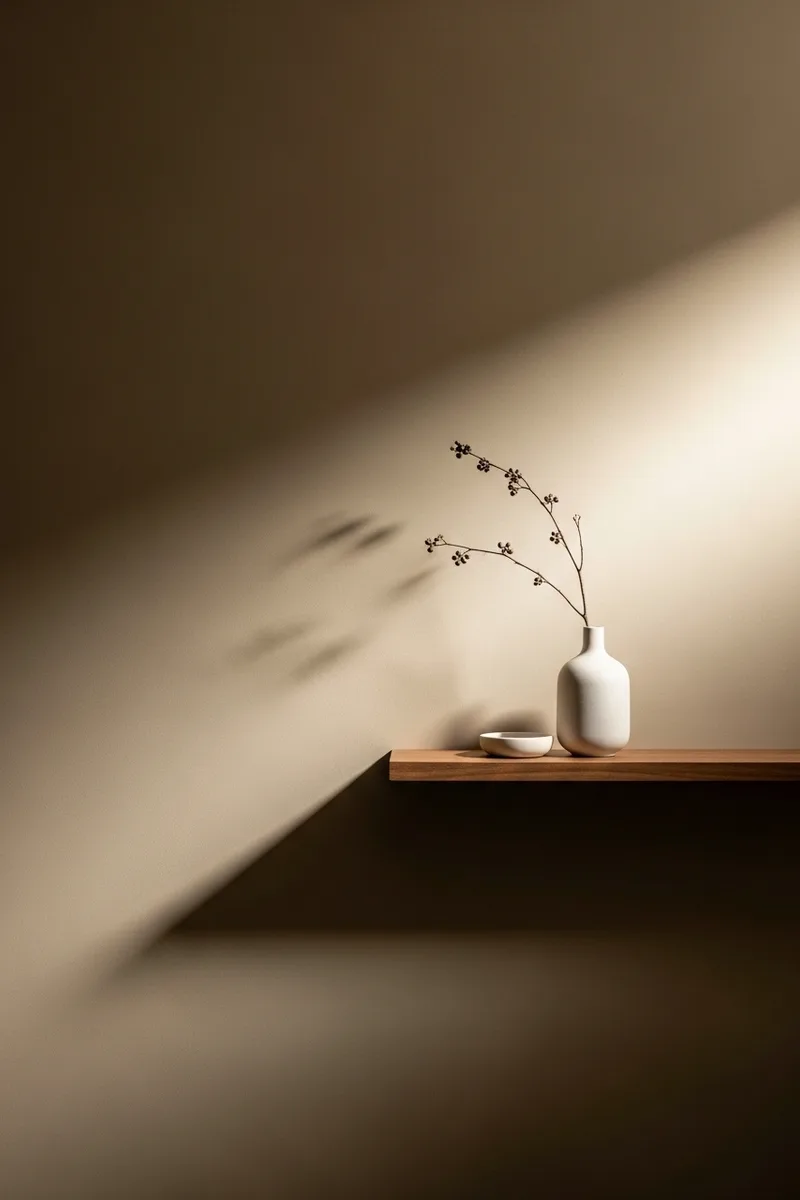
To tie all the elements together, the walls need to breathe. Opting for a muted, earthy paint color like warm clay, mushroom, or desert sand instead of stark white creates a softer backdrop for the bathroom. These pigments, often found in natural lime or clay-based paints, add a subtle, cloudy depth that changes with the ambient light. The slightly textured matte finish absorbs light rather than reflecting it, making the room feel like a warm, quiet haven.
This darker neutral wall color allows a white freestanding tub or a light wood vanity to pop dramatically without using bright colors. It evokes the feeling of a desert spa, grounded and calming. Paint the ceiling the same shade to blur the boundaries and create a seamless cocoon effect, which visually enlarges the room by eliminating harsh cutting-in lines at the corners.
Inspiration gallery recap
Swipe through every idea — tap an image to see it full-size.