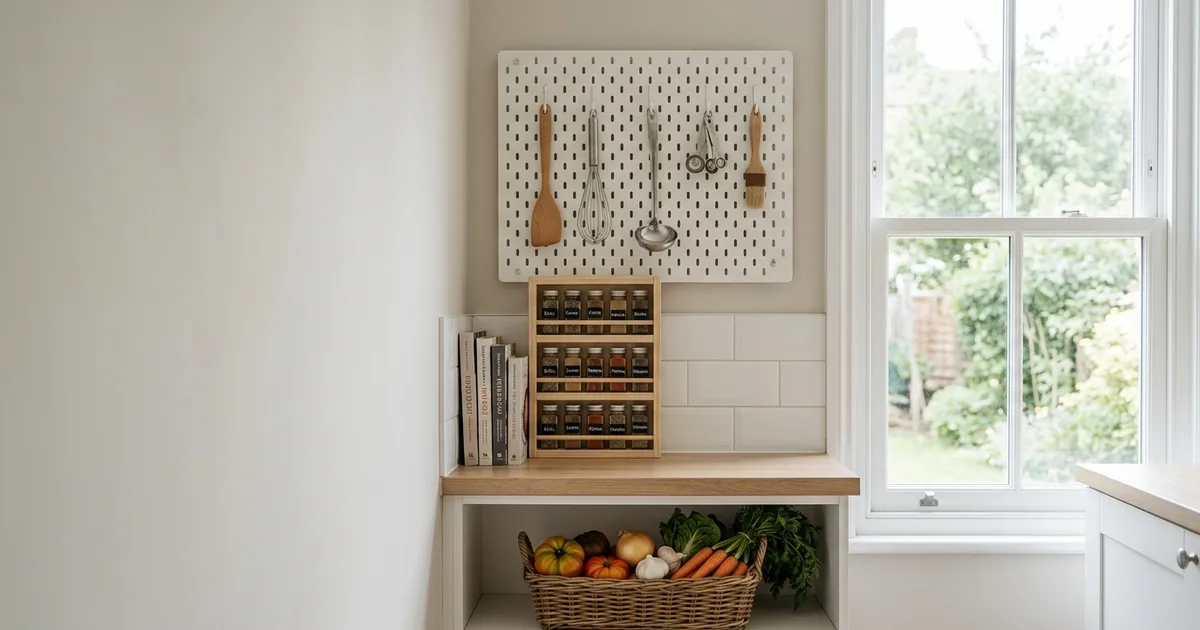
18 Genius Small Kitchen Storage Ideas for a Clutter-Free Space
A small kitchen doesn’t have to mean a cramped, chaotic one. In fact, with a little ingenuity and the right storage strategies, a tiny culinary space can feel just as functional and far more charming than a sprawling one. The secret lies in treating every square inch as an opportunity, looking up at blank walls, peering into deep cabinet corners, and rethinking what can double as storage.
Whether you are navigating a true apartment galley or simply looking to declutter a cozy family kitchen, the goal is the same: create a clutter-free zone where cooking feels effortless. We have gathered 18 genius small kitchen storage ideas that blend clever organization with high-impact style. Get ready to transform your compact kitchen into the efficient, beautiful heart of your home.
Vertical Wall Real Estate
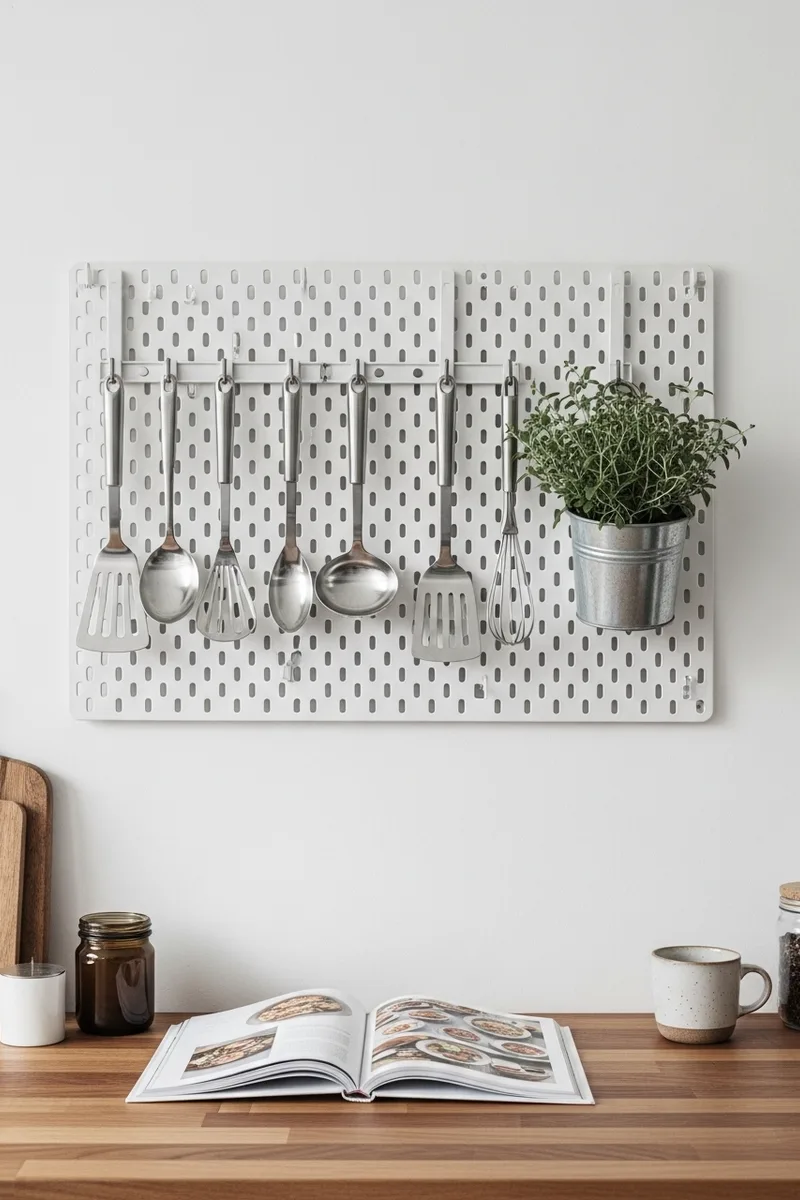
When floor space is scarce, your walls become your greatest asset. Installing a pegboard system is a flexible solution that lets you hang spatulas, ladles, and even small pots right where you need them. It creates an artful, ever-changeable display that reflects your cooking style while freeing up precious drawer space. The visual rhythm of neatly hung tools transforms a blank wall into a functional focal point.
Consider a stainless steel magnetic knife strip mounted on the backsplash to keep sharp tools safely out of drawers but instantly accessible. For a softer touch, mount a slim floating shelf to hold mason jars of dry goods or a row of your favorite cookbooks. By directing your eye upward, vertical storage makes the entire room feel taller and more open, completely distracting from the limited square footage underfoot.
Deep Drawer Dividers
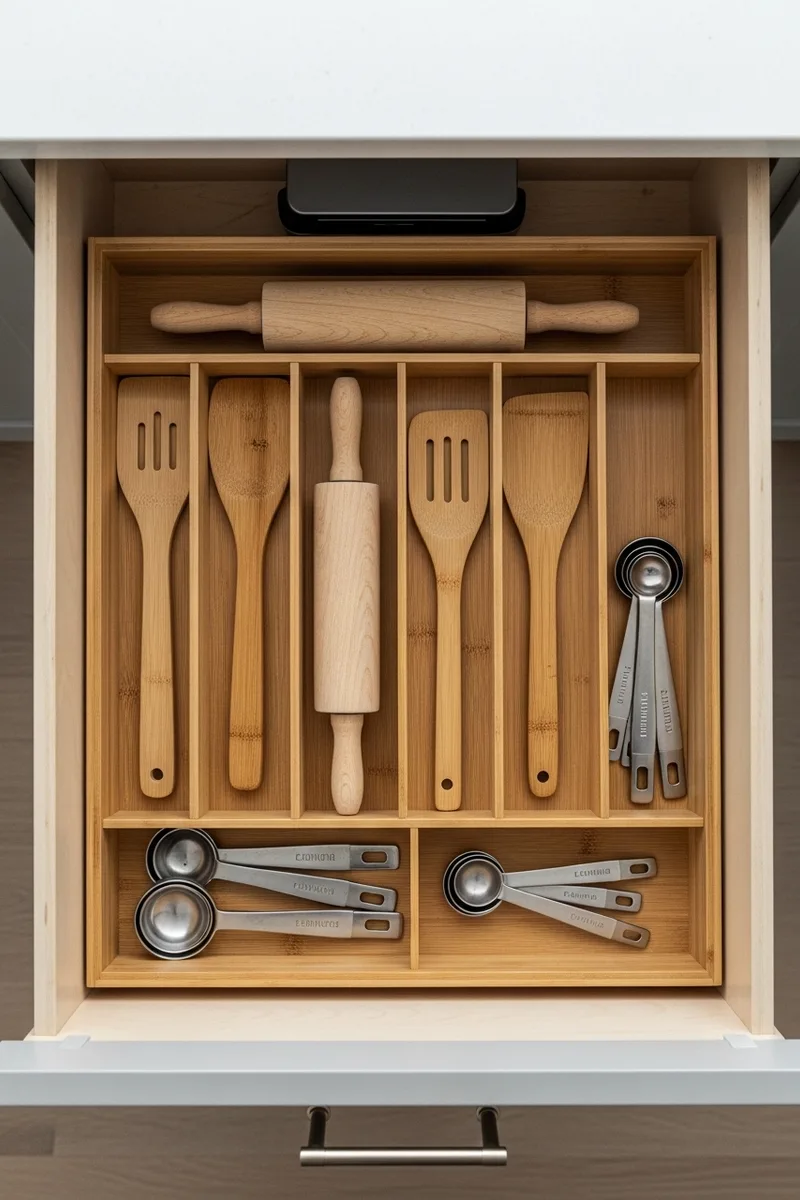
Deep drawers can easily become a jumbled mess of tangled gadgets if not properly corralled. Customizable bamboo or clear acrylic dividers are essential for creating designated zones for every utensil. This system ensures you aren’t stacking heavy items on delicate ones and that you can instantly locate a whisk during a busy cooking session. The clean lines of divided sections also deliver a calming sense of order the moment you open the drawer.
Think beyond standard utensil trays and look for adjustable expandable dividers that can fit unusually wide drawers. You can dedicate one section to baking tools, another to food storage clips, and a deep rear slot for bulky hand mixers. By maximizing the vertical depth of the drawer, you are effectively utilizing storage that is often wasted. This method turns a chaotic catch-all into a precisely engineered cockpit for your cooking prep.
Toe-Kick Drawers
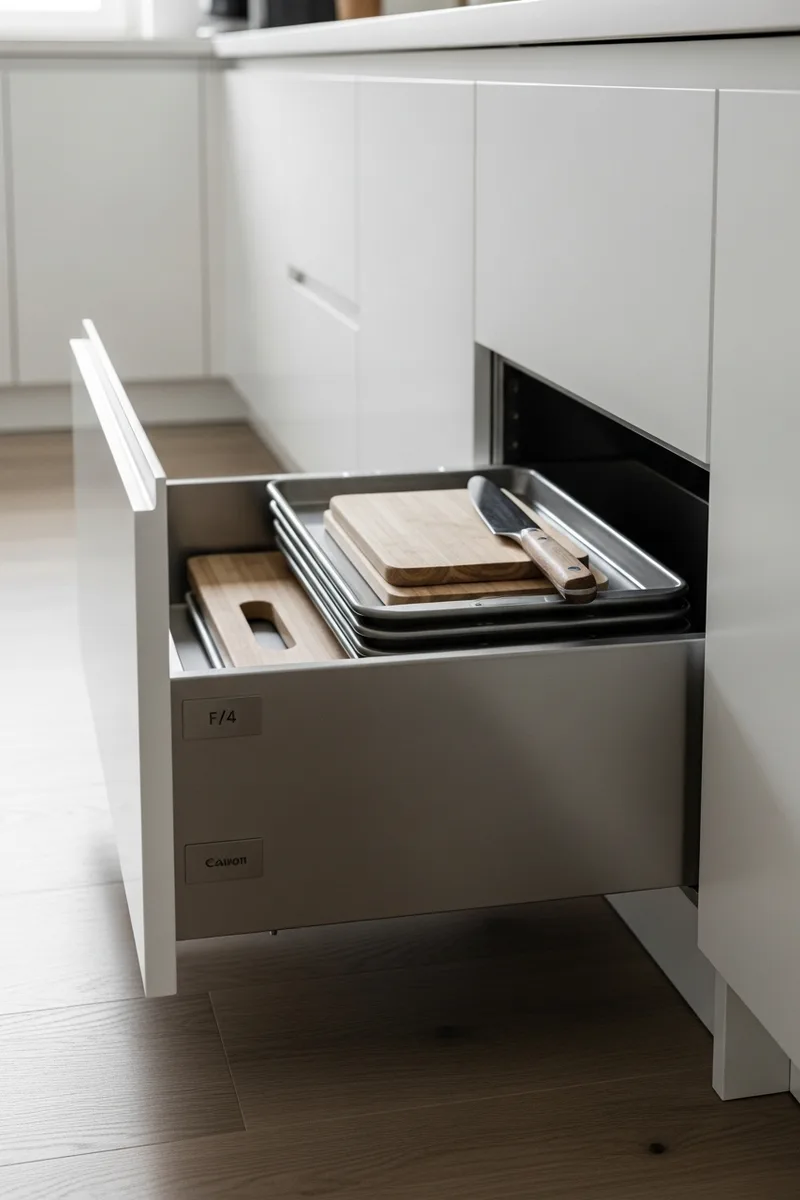
The empty void at the bottom of your base cabinets, often called the toe-kick, is valuable hidden real estate. Installing shallow pull-out drawers in this space is a brilliant way to store flat items that usually clutter main cabinets. It is the perfect spot for baking sheets, cooling racks, pizza stones, or even shallow serving platters that only see use a few times a year. The drawer mechanics keep these awkward items out of sight but remarkably easy to slide out.
This solution is ideal for small kitchens where every inch of vertical volume must work hard for you. Because you don’t need to squat down and rummage through a deep pile, retrieving a heavy cast-iron griddle requires no heavy lifting. It transforms the architectural dead space of the cabinet kick into a secret weapon. Guests will be amazed to see a drawer emerge from what looks like a simple baseboard trim.
Ceiling-Mounted Pot Rack
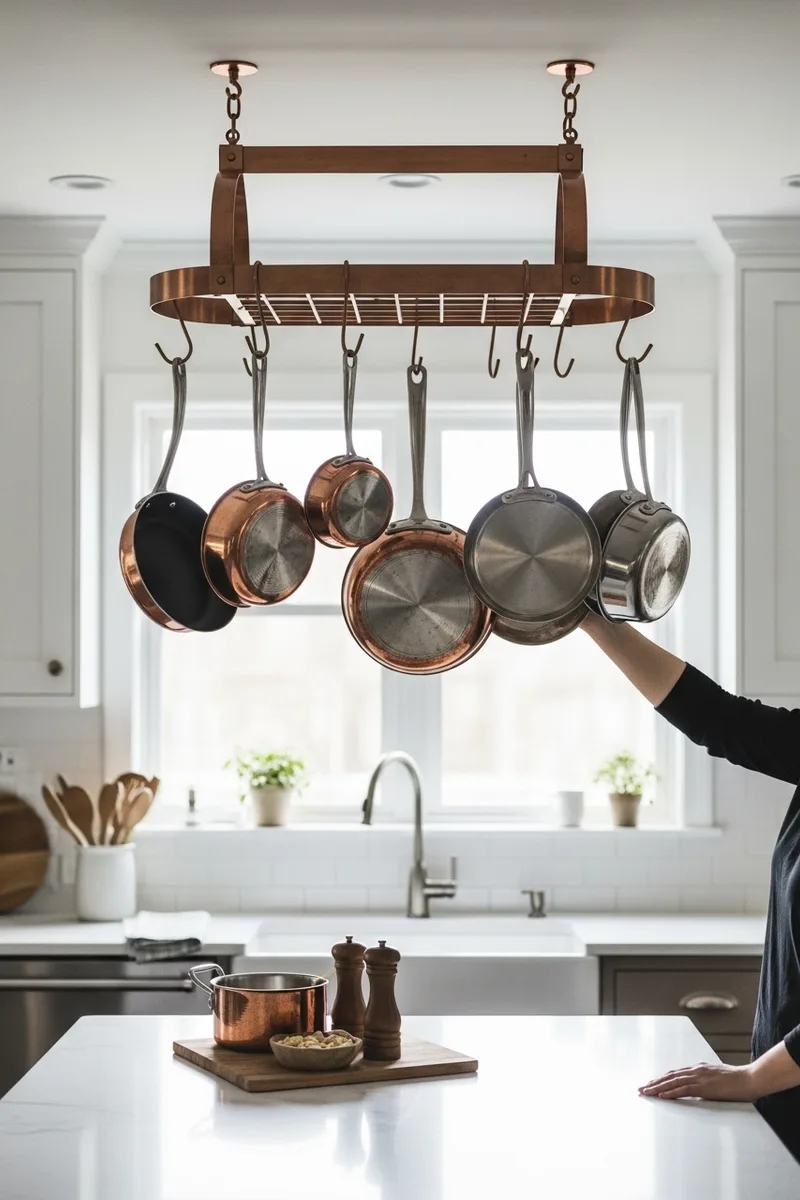
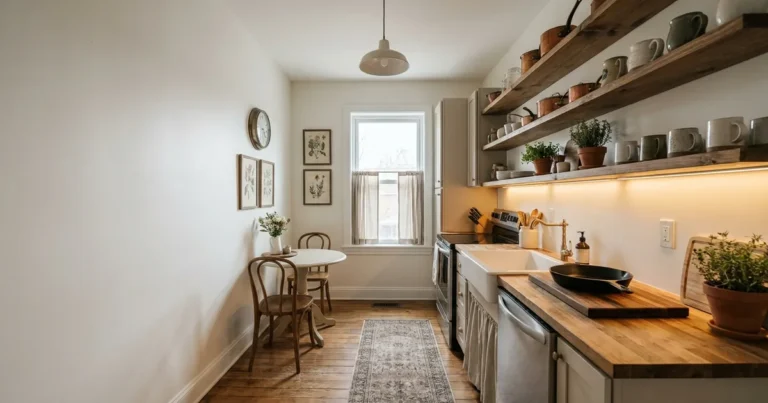
Hanging a sturdy rack from the ceiling above an island or a clear floor area frees up massive cabinet capacity. This classic chef-inspired move allows you to store heavy stockpots, skillets, and colanders in the open air, creating a functional and visually warm aesthetic. No more clanging piles of cookware in your lower cabinets, everything is at arm’s reach with a simple lifting motion. The overhead display also adds a professional culinary vibe to even the smallest of galley kitchens.
Ensure your installation is anchored into ceiling joists to support the significant weight of cast iron and copper. Arrange the cookware symmetrically, perhaps nesting smaller pots on the outer edges and larger ones in the center. If a ceiling mount isn’t an option, a wall-mounted bar with an S-hook rail can serve a similar purpose. The key is to convert your cookware into an artistic installation that celebrates the beauty of the materials.
Corner Lazy Susan Hacks
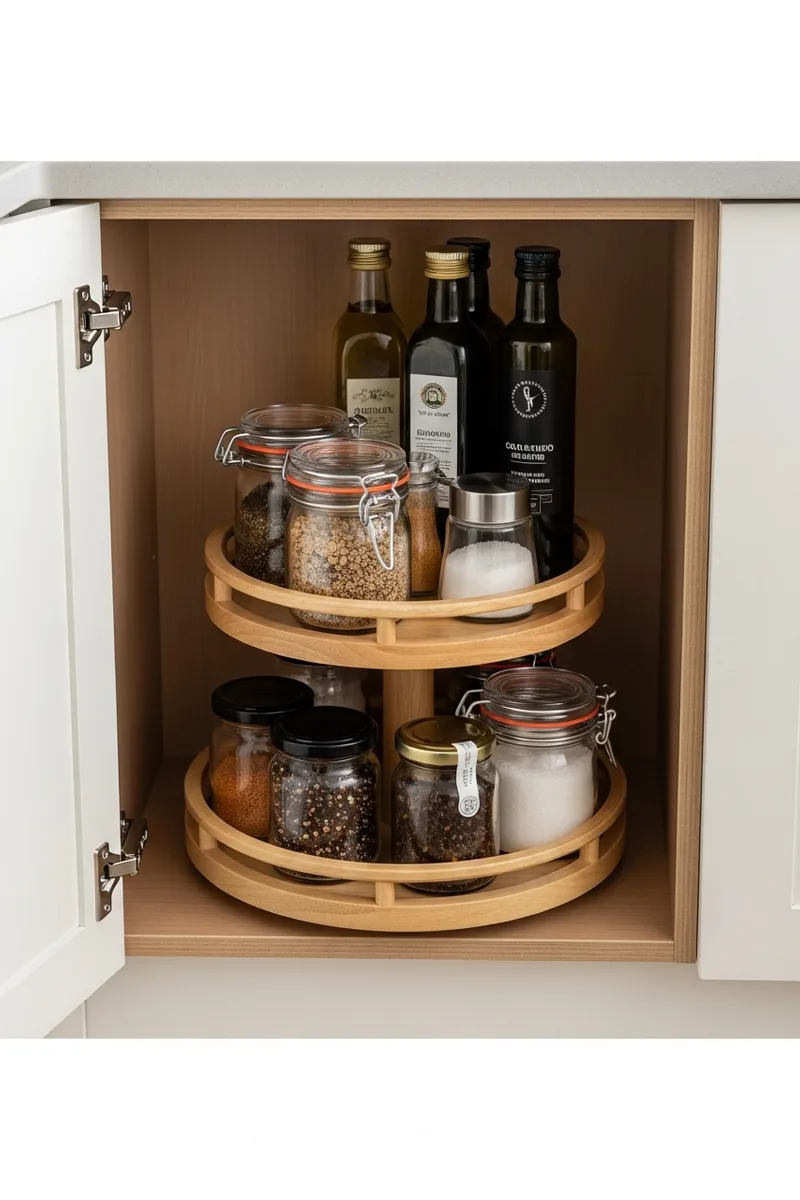
Blind corner cabinets are notorious black holes where food goes to die. Installing a multi-tier lazy Susan carousel allows you to spin the shelf to access items pushed to the very back. It maximizes the cylindrical volume of the corner rather than forcing you to contort your body to reach a single deep, dark shelf. The spinning motion makes inventory easy to see, preventing duplicate purchases of forgotten ingredients.
You can optimize this further by using uniform clear containers for dry goods on the lower tier and grouping oils and vinegars on the top. For base corner cabinets, a kidney-shaped swing-out shelf mechanism can pull the contents entirely out of the cabinet. Even a simple, inexpensive freestanding turntable dropped into a standard corner cabinet can revolutionize the space. The goal is to convert the awkward angle from a burden into a high-efficiency storage cylinder.
Sink-Over Chopping Board
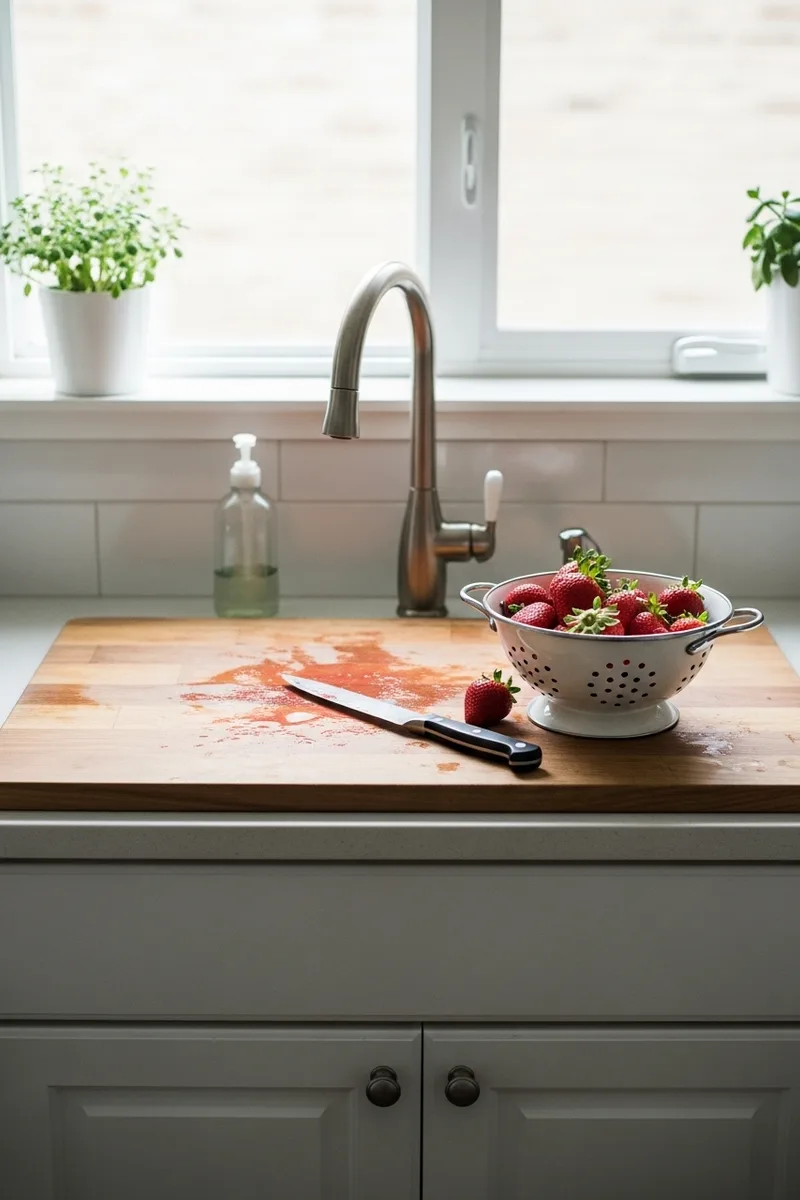
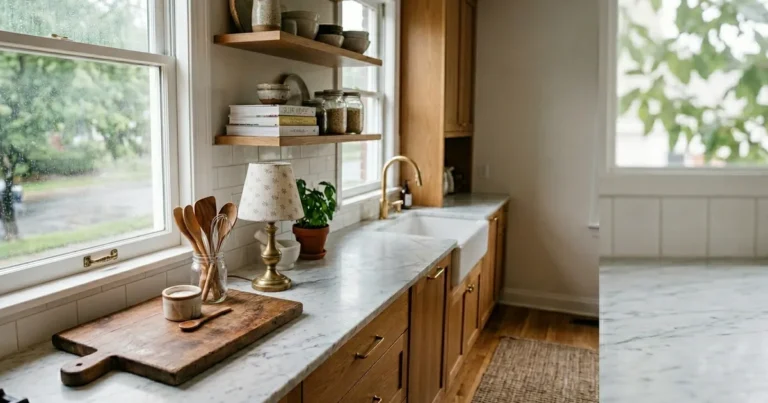
Counter space in a small kitchen is arguably the most contested real estate. A custom cutting board designed to span the width of your sink basin instantly creates a landing pad for meal prep that didn’t previously exist. You can chop vegetables directly over the sink, then simply slide the waste into a composting bin without messing up the main counters. When you need the faucet, just lift the board and lean it against the backsplash.
Look for a board with slotted compartments or a built-in colander insert that allows you to wash and trim produce in one fluid motion. This eliminates the awkward juggling of bowls and strainers that clutter precious drying racks. By treating the sink as a convertible workspace rather than just a wet zone, you effectively double your prep surface area. It is a transformative trick for tiny apartment kitchens with almost no usable flat ground.
Magnetic Spice Wall Tins
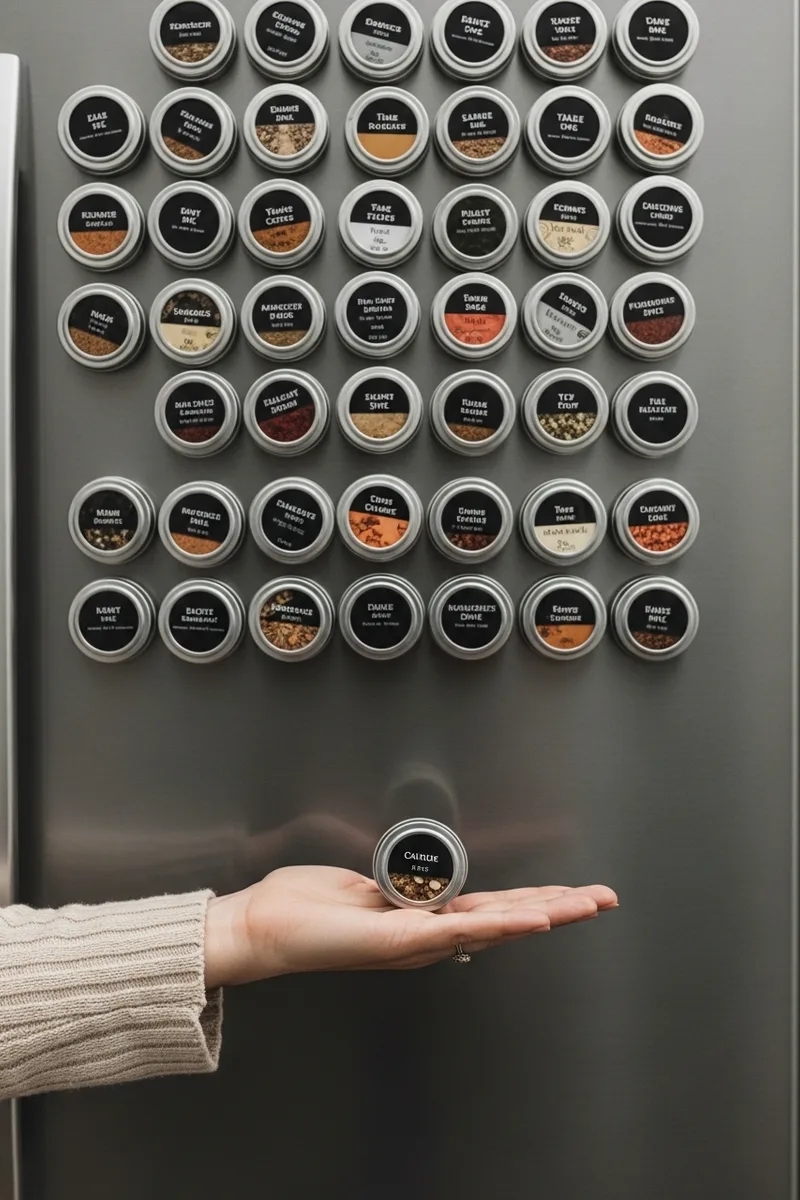
If your cabinet space is completely maxed out, turn your refrigerator side into a functional spice library. Small metal tins with clear lids and strong magnetic backs adhere securely to the appliance, keeping dozens of spices visible without taking up a single shelf inch. This system utilizes an often-ignored vertical plane that typically only gathers dust and fingerprints. It places your seasoning arsenal right in the cooking action zone, making it incredibly efficient.
Organize the tins alphabetically or by cuisine type to speed up your cooking flow. Because they are not hidden behind a cabinet door, you see exactly what you have at a glance, which encourages spontaneous seasoning and reduces food waste. Ensure the magnets are strong enough to hold a full tin of peppercorns or sea salt. This approach turns the bulky refrigerator into a dual-purpose storage monument rather than a space-stealing obstacle.
Open Shelving for Daily Ware
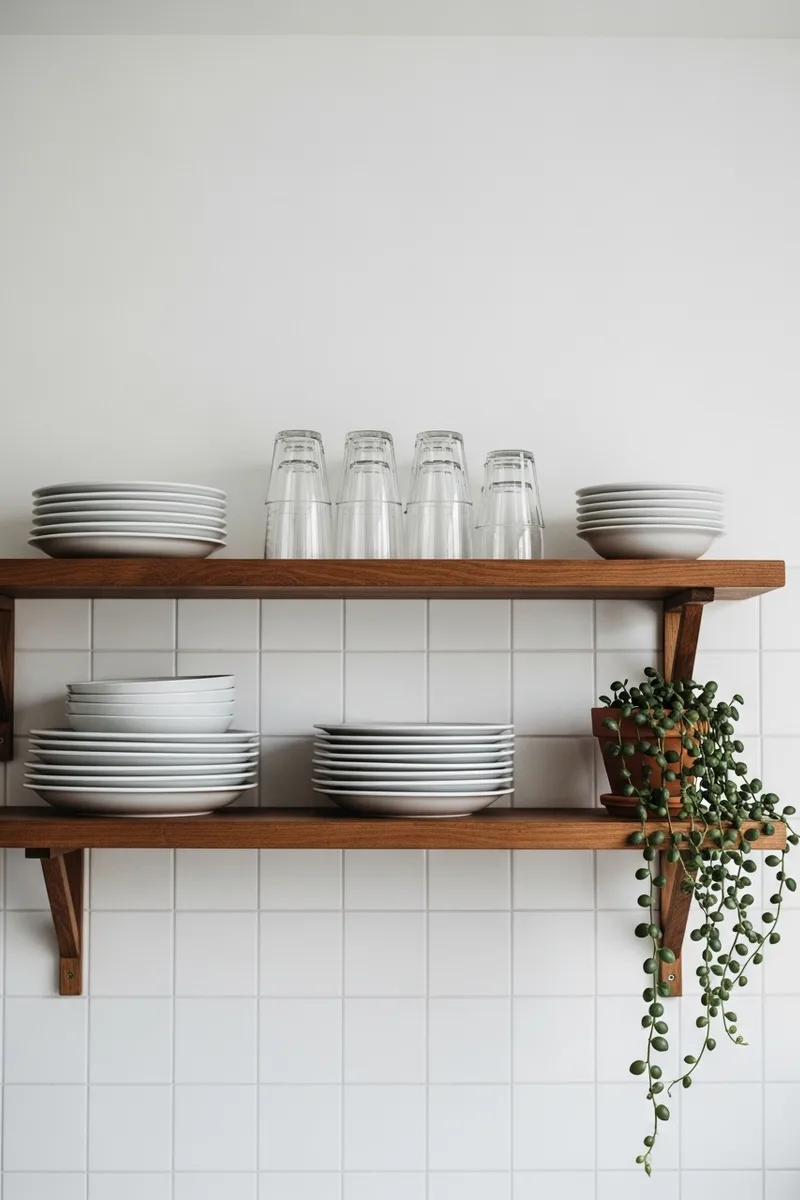
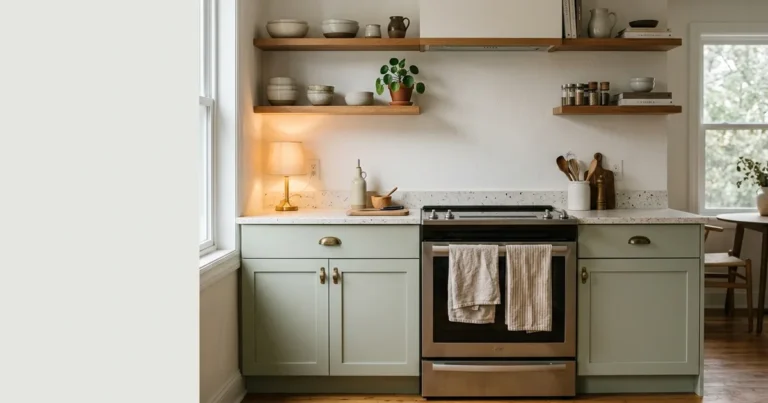
Replacing upper cabinets with open shelving can dramatically lighten the visual weight of a small kitchen. When you store your everyday plates, bowls, and glasses in the open air, they become part of the decor, forcing you to curate rather than hoard. It creates a breezy, accessible dining hub that encourages you to keep things tidy and intentional. The air circulation also speeds up drying when you put away just-washed dishes.
Stick to a cohesive color palette for your daily dishware, such as all-white ceramics or neutral stoneware, to maintain a clutter-free look. Use the bottom shelf for heavier items like stacks of plates and the top shelf for lighter mugs and small decorative accents. This method reclaims deep cabinet space for less visually appealing essentials like plastic storage lids. Open shelving makes a narrow galley kitchen feel significantly wider and brighter.
Slim Sliding Pantry Tower
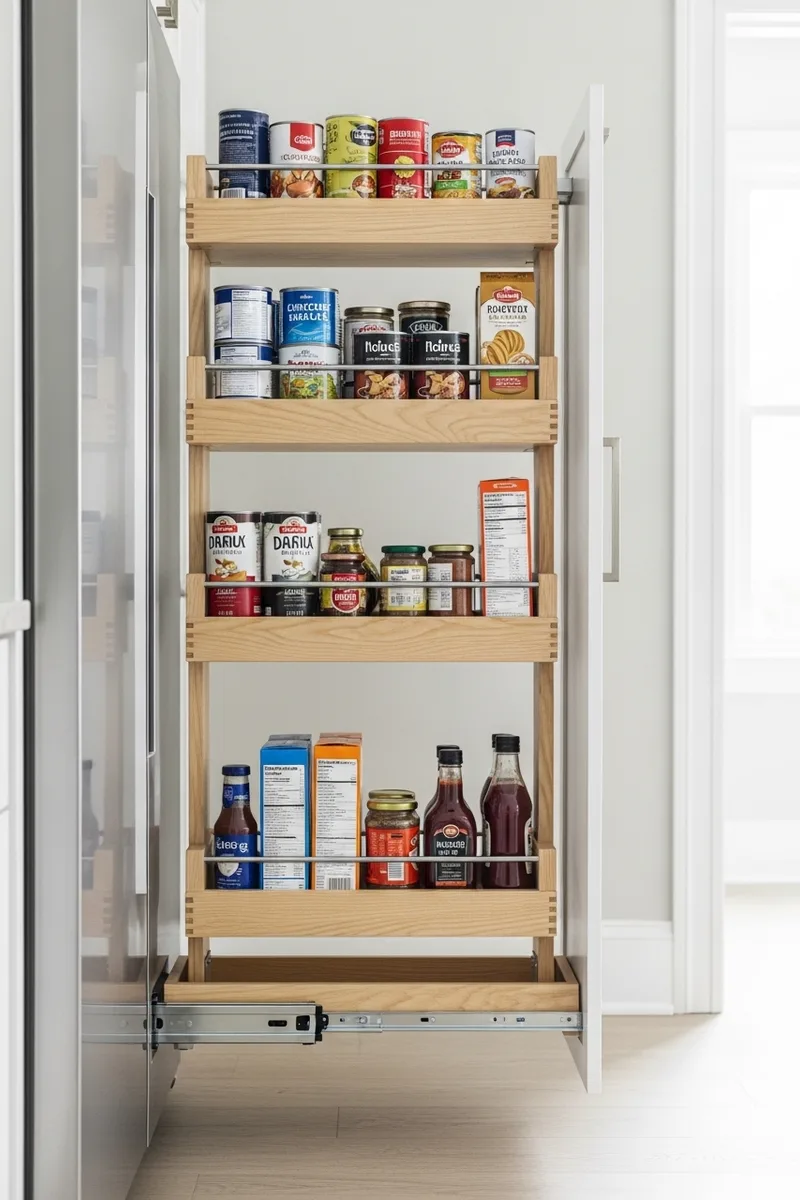
The sliver of space between a refrigerator and a wall is often completely wasted. A slim, floor-to-ceiling pull-out filler cabinet with ball-bearing slides can transform a six-inch gap into a massive dry goods pantry. When you pull the tower out, you gain easy access to canned tomatoes, boxes of pasta, and jars of sauce from both sides. It slides silently back into the recess, hiding the visual noise of mixed packaging behind a sleek panel.
This system is exponentially more efficient than a static shelf where items get lost in the dark abyss. You can customize the tower with angled racks for spice bottles or a holder for aluminum foil and plastic wrap. It turns a frustrating architectural gap into one of the hardest working storage assets in the room. For renters, a freestanding cart on casters in a similar gap can achieve much of the same utility.
Drawer-in-Drawer Inserts
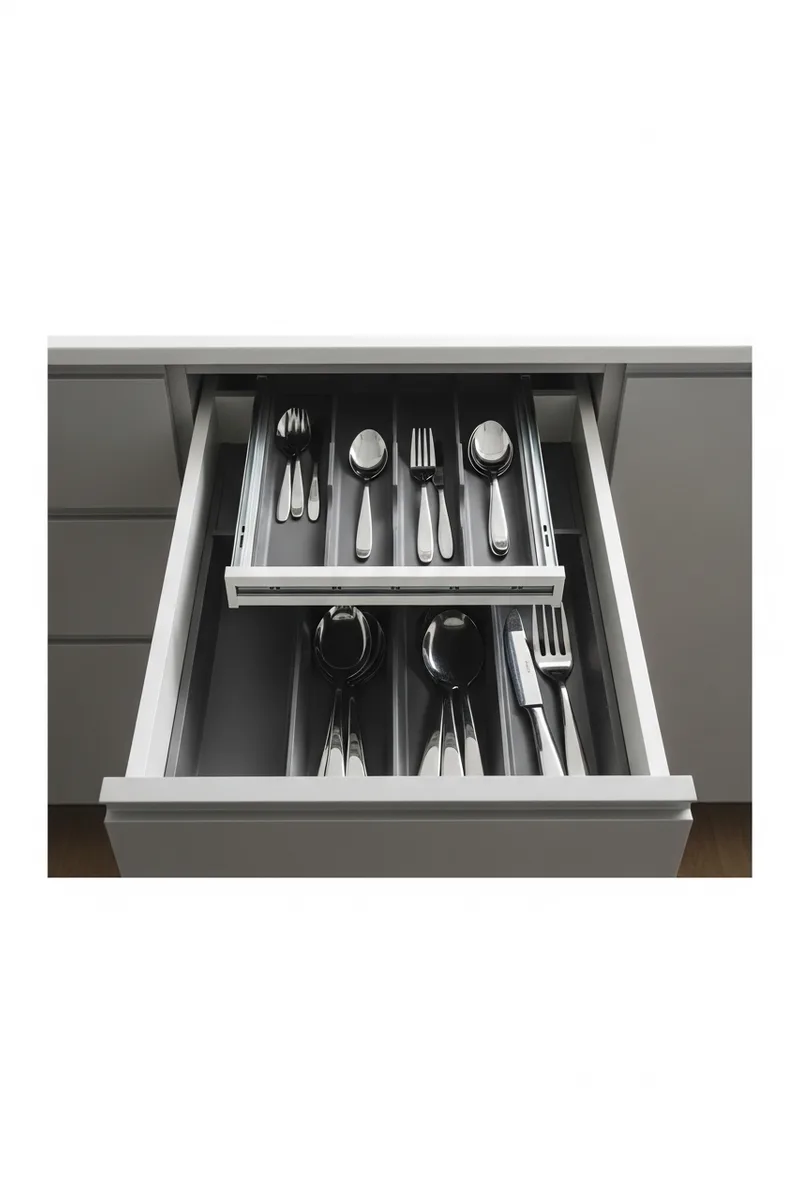
Standard kitchen drawers often waste the vertical space above the items you store there. A half-height inner sliding tray creates two distinct layers of storage without having to install a second drawer. You can stash flat silverware, knives, or napkin rings in the top tray, and keep large spatulas, tongs, and mixing spoons in the deep compartment below. This double-stacking technique essentially doubles the utility of a single drawer bank.
You can buy ready-made clear acrylic inserts or build your own custom plywood rim that rides on the top edges of the existing drawer box. The smooth sliding action allows you to reach the lower level without lifting out the entire upper tray. It is a game-changer for older kitchens with only a few drawers to spare. The concept of a hidden second floor keeps the visible workspace looking minimal and uncluttered.
Under-Shelf Baskets
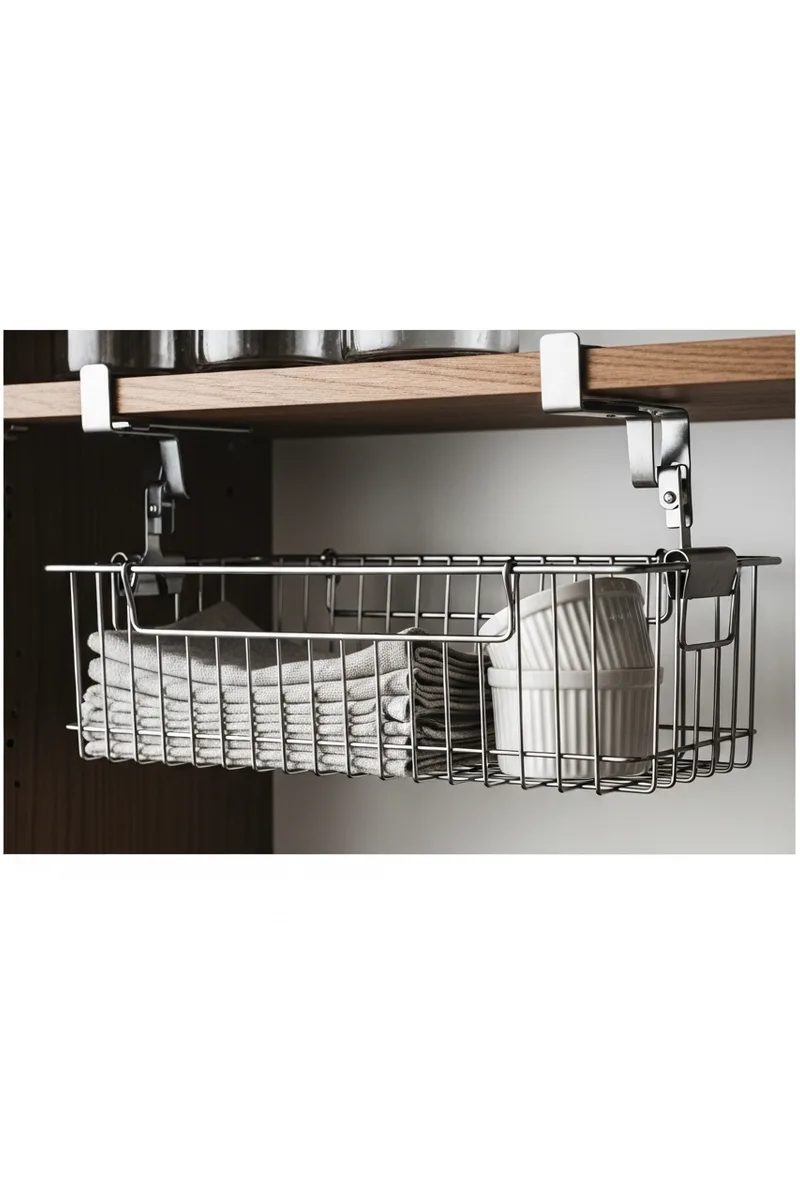
If your shelves are tall but sparsely filled, you are ignoring a massive amount of wasted headroom. Clip-on wire baskets that hang from a shelf above instantly create a second surface beneath the main one. These are perfect for lightweight items like tea towels, parchment paper rolls, zip-lock bag boxes, or even small stacks of recipe cards. They require no drilling, making them a perfect landlord-friendly hack for renters.
The open wire construction keeps everything breathable and visible, so you never forget about items hidden in the back. You can install them in a pantry cabinet or directly on open shelving for a modern industrial look. By suspending storage from the ceiling of a shelf, you capitalize on the volume of the cube. It ensures that every cubic inch inside your closed cabinets is accounted for and functional.
Tension Rod Dividers
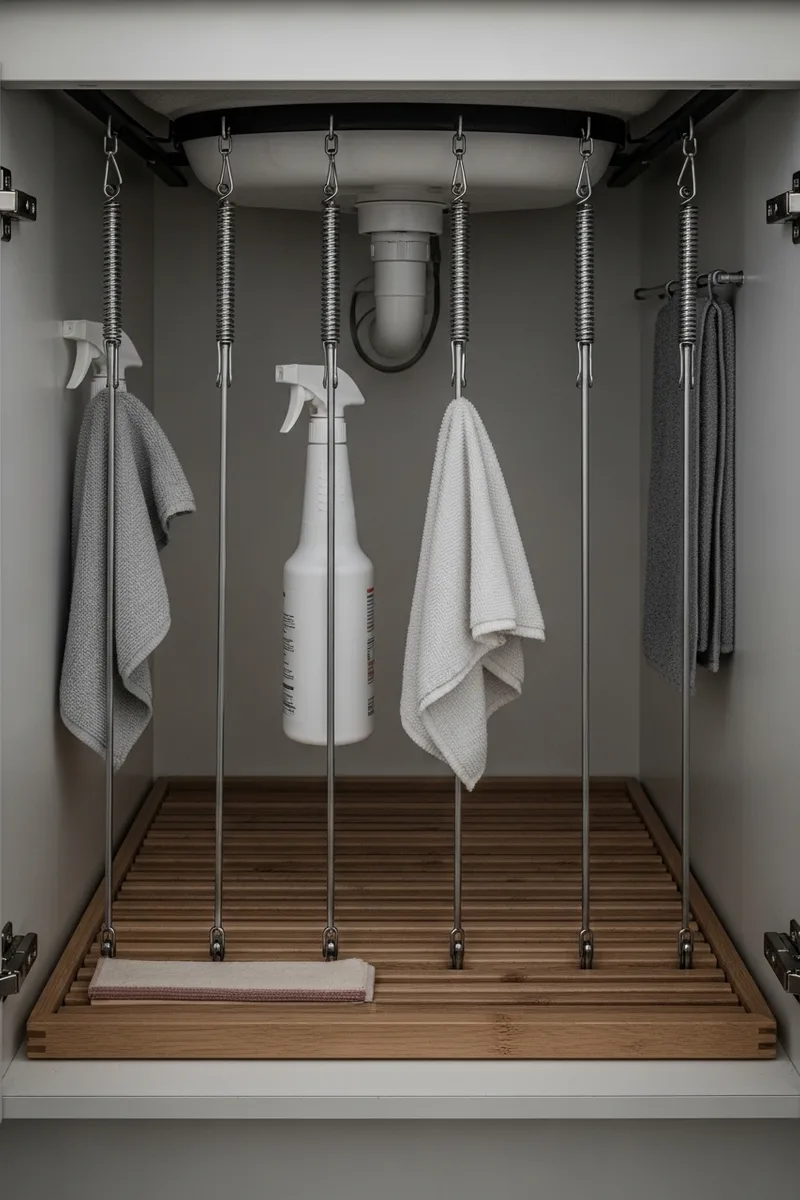
The cabinet under the kitchen sink is often a chaotic territory of pipes and chemical bottles. However, small spring-loaded tension rods can create instant vertical dividers. By positioning two rods front to back, you can sandwich cutting boards, baking sheets, or flat pot lids upright, preventing them from sliding into a disorganized heap. It uses the vertical height of the cabinet door opening rather than just the flat floor.
You can also place a rod horizontally across the width of the cabinet to hook spray bottles by their triggers, suspending them elegantly off the floor. This keeps the base clear for a small drip tray or a bucket. The beauty of tension rods is that they leave no drill holes and can be readjusted in seconds as your storage needs evolve. This simple hack transforms a nuisance cupboard into a highly structured cleaning headquarters.
Fold-Down Table Extension
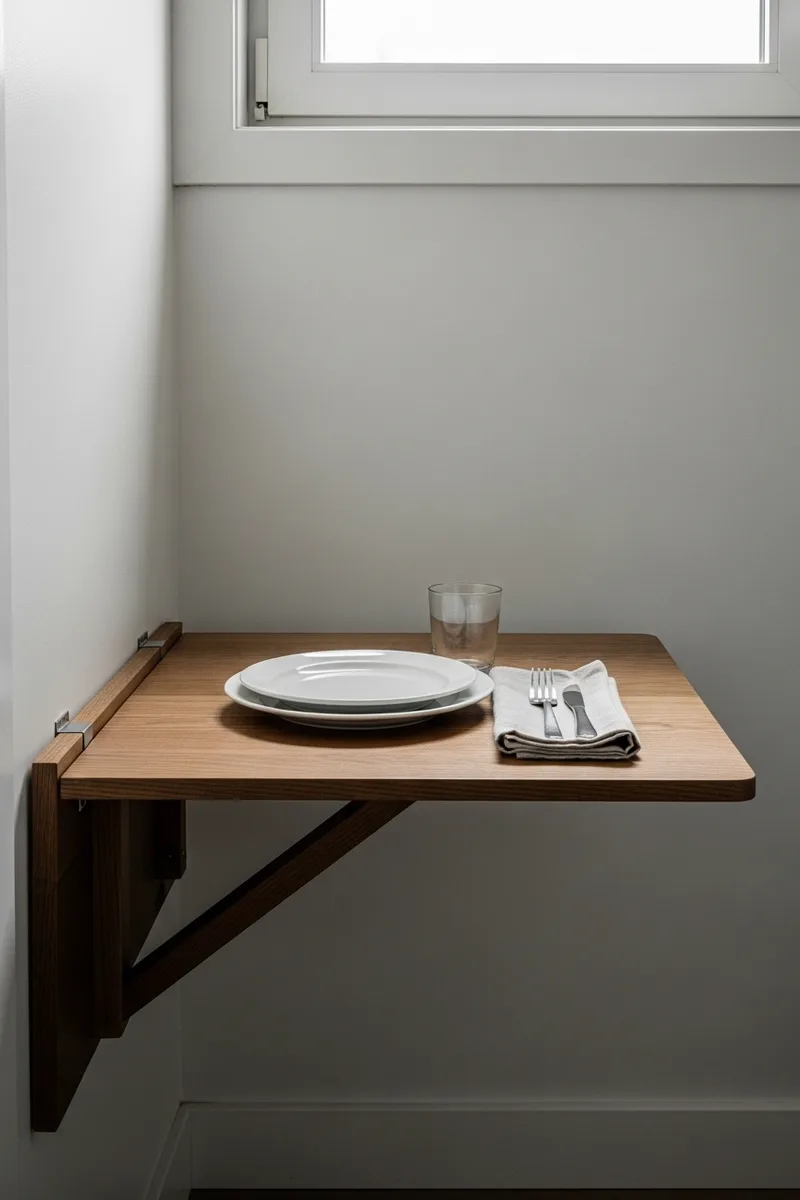
When floor space is too tight for a permanent dining table, a wall-mounted fold-down shelf is the ultimate solution. When not in use, it lies completely flat against the wall, taking up zero visual or physical space. For mealtimes, you simply lift the strut and secure the tabletop, creating an instant breakfast bar for two. It is a transformative feature for studio apartments where a kitchen island is simply impossible.
You can customize the depth of the shelf to be wide enough for a dinner plate but shallow enough not to block the walking path. Adding a sleek set of floating brackets ensures the structure can bear the weight of heavy stoneware and hot coffee. When folded down, the wooden surface adds a textural accent to the wall rather than reading as a bulky piece of furniture. It’s dining-on-demand that respects the tightest floorplans.
Cabinet Door Lids Rack
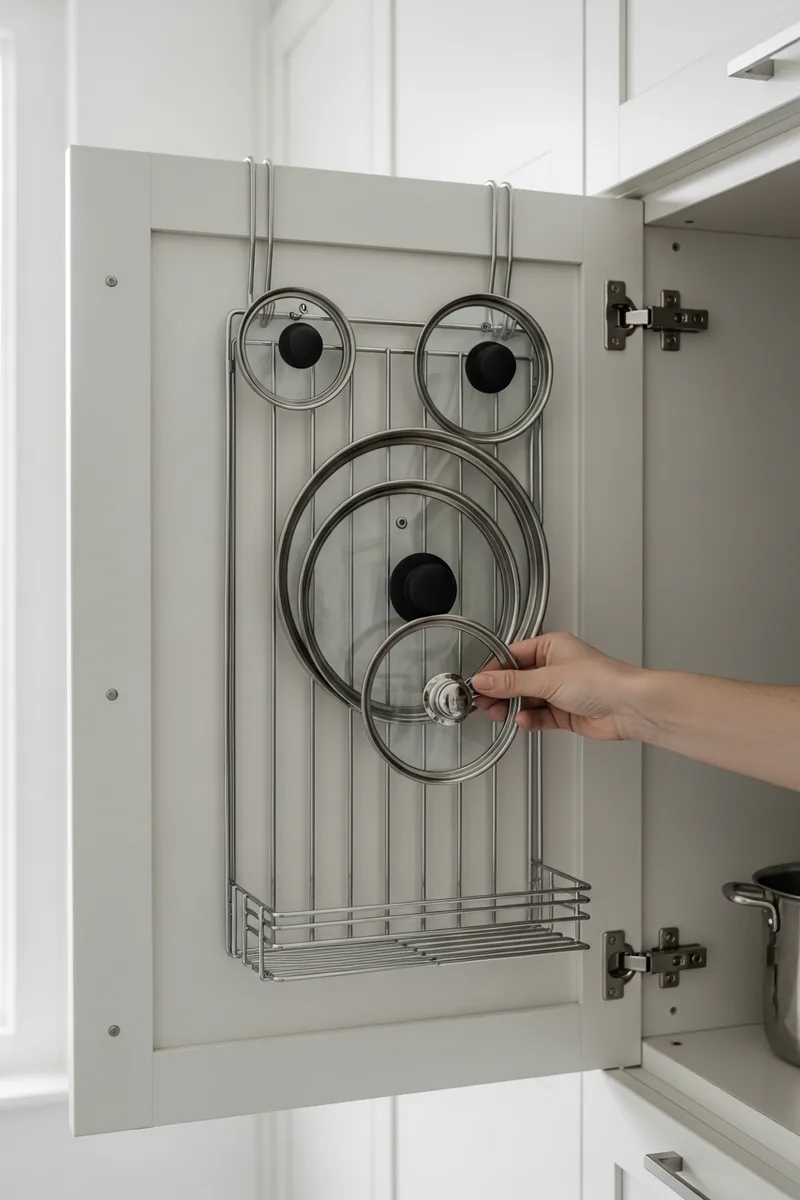
Don’t underestimate the storage potential of the back of a cabinet door. A slim wire rack mounted on the interior side is the perfect cradle for messy pot lids that otherwise tumble out of deep drawers. You can sort them by size, with the largest lids nearest the hinge and the smaller ones toward the handle. This keeps the pot itself free and clean inside the cabinet, ready to be grabbed without a noisy lid search.
You can also use adhesive hooks on the door interior to hang measuring cups or oven mitts. The key is ensuring the rack is shallow enough that it doesn’t hit the shelves when you close the door. This turns the door from a passive barrier into an active organizer. It is particularly useful for storing flat items that are difficult to stack stably without them sliding into a dangerous jumble.
Clear Canister Decanting
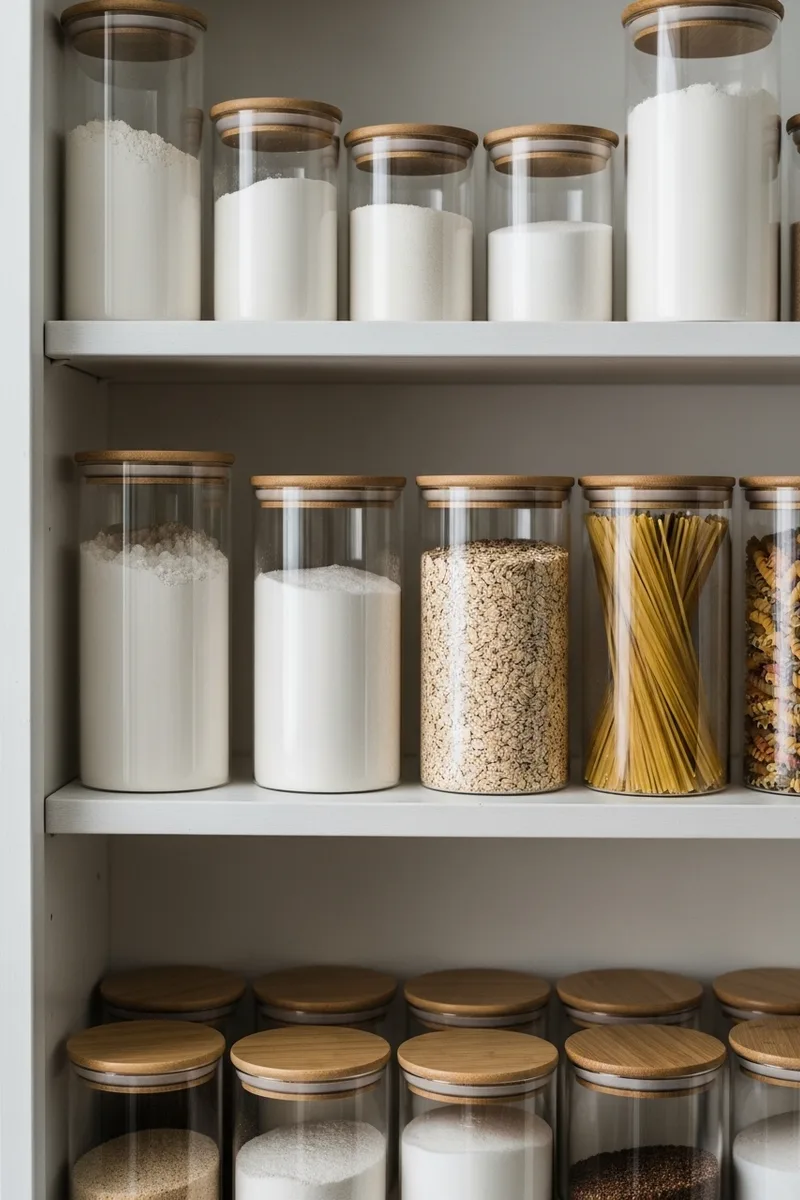
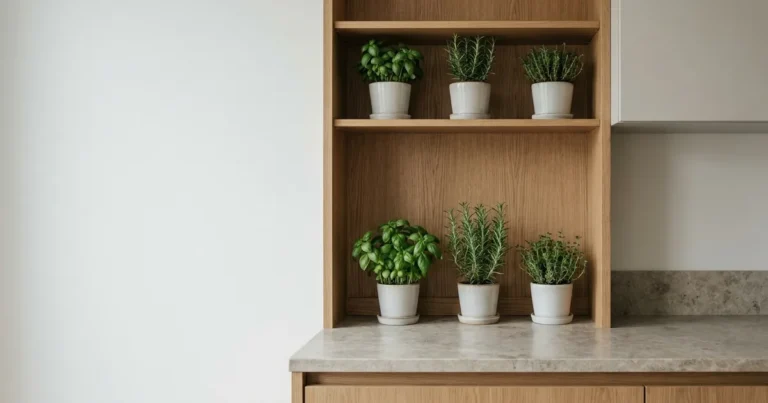
Bulky cardboard boxes and half-empty plastic bags destroy the visual calm of a small kitchen. Decanting dry ingredients into sleek, uniform clear canisters instantly makes a pantry look high-end and organized. Square or rectangular canisters are far superior to round ones because they stack flush without wasting the precious dead space of rounded corners. The transparent walls also serve as a visual inventory, so you know immediately when you need to restock flour or lentils.
Using a chalkboard label or a vinyl decal on the front keeps the aesthetic clean and prevents confusion between confectioners sugar and cornstarch. The psychological effect of this transfer is profound; a messy shelf becomes a curated grocery store aisle. It adds a layer of airtight protection against pantry moths and humidity, preserving freshness longer. This small effort pays off every morning when making breakfast feels calm instead of chaotic.
Rolling Utility Cart
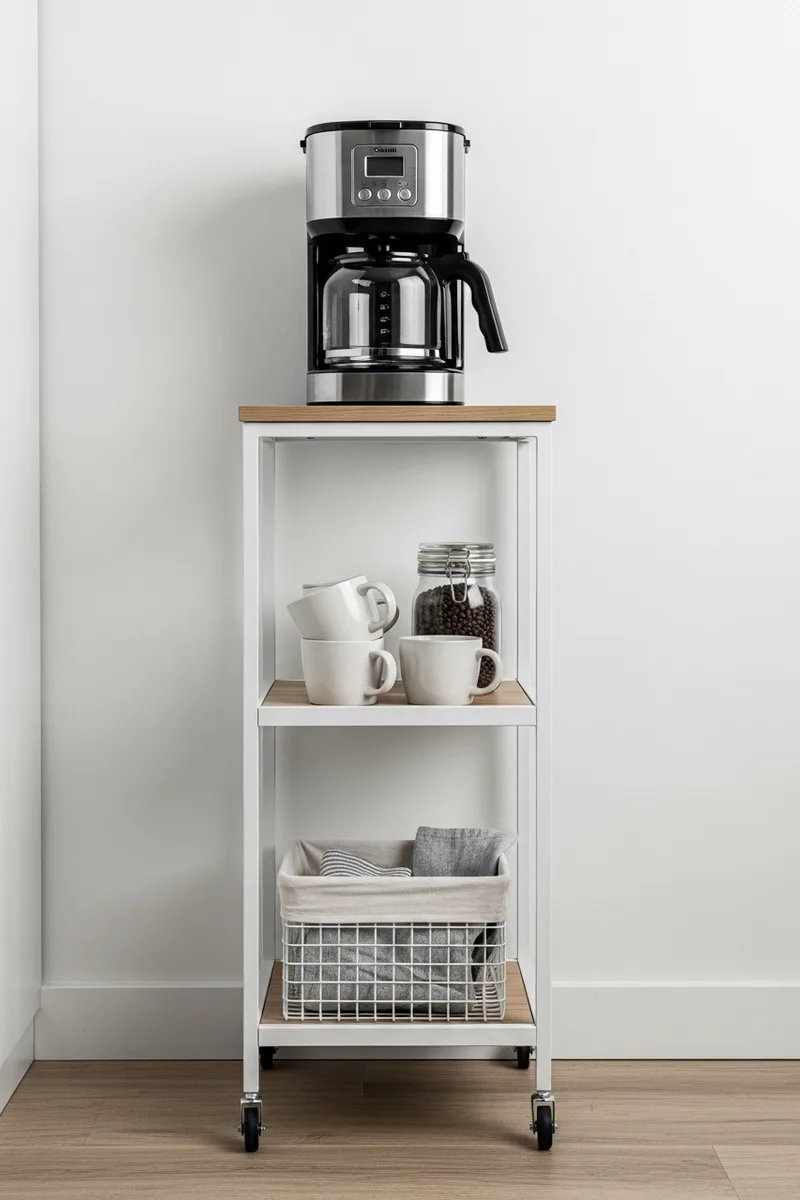
A narrow rolling cart fills the awkward sliver of space at the end of a counter run beautifully. It provides mobile storage that can be wheeled to the center of the action for heavy prep work and then tucked away neatly against the wall. The open tiers keep everything breathable and discourage the kind of deep clutter that forms behind closed doors. It can serve as a coffee station by morning and a bar cart by evening.
Look for a cart with locking casters so it stays firmly in place when you are unloading heavy appliances. The vertical layers allow you to segregate zones, such as baking essentials on one shelf and breakfast goods on another. Because the sides are open, it won’t block sightlines or light, helping the small footprint feel airy. It is a fantastic rental solution that moves with you to the next home.
Hanging Fruit Baskets
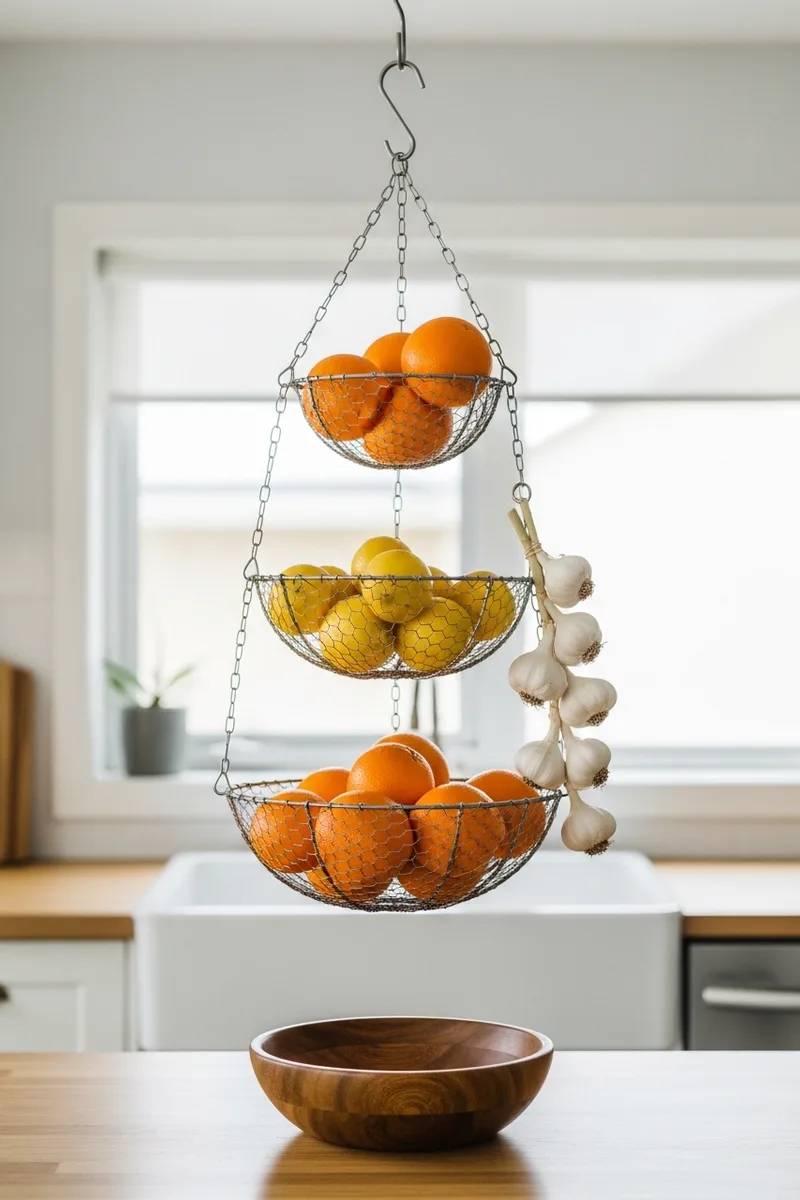
Fresh produce often takes up the entire surface of a valuable countertop corner. By suspending a tiered wire basket from the ceiling or a sturdy wall bracket, you lift fruit and root vegetables into the air. This not only keeps them from bruising each other on a flat surface but also allows for superior air circulation, preventing onions and potatoes from sprouting prematurely. It transforms a necessity into a rustic, farmhouse-style focal point.
The tiered arrangement lets you store bananas away from apples to slow down the ethylene ripening process. Ensure the baskets are positioned within easy reach but not low enough to bump your head while working at the counter. This frees up the countertop below for a small knife block or a jar of wooden spoons. It leverages the vertical volume of the kitchen for groceries that are visually beautiful to display.
Stacking Stool Storage
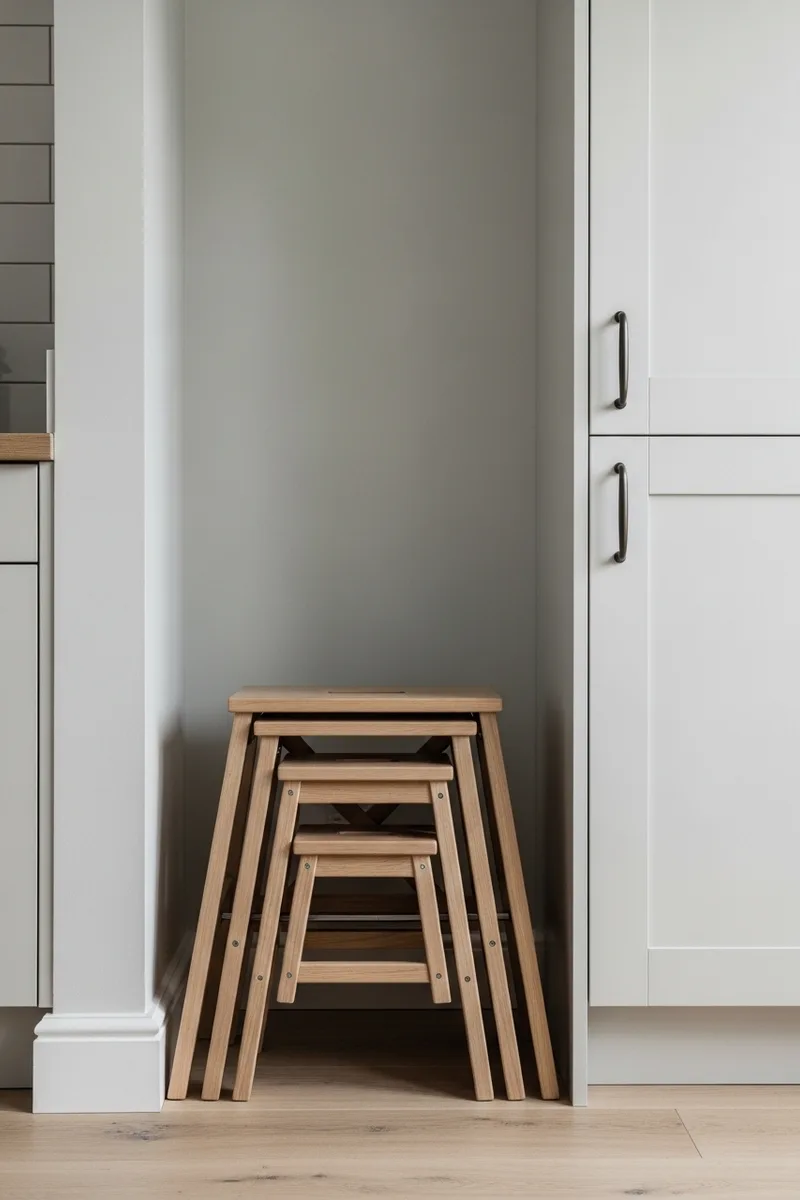
Short stature often means the highest shelves of a small kitchen remain a forgotten no-man’s land. Keeping a stylish, sturdy step stool handy is essential, but storing it can be clunky. Opt for a beautiful wooden design that can be folded flat and hung on a wall hook, or an artistically designed stool that doubles as a display surface. It ensures you can safely utilize every inch of vertical storage without keeping an ugly plastic tool visible.
Nesting stools are particularly smart because they save floor footprint while looking like a sculptural object. You can place a small plant or a stack of cookbooks on the top stool when it’s not in use. The ability to quickly reach the top shelf means you can store seasonal appliances there without anxiety. It turns the entire height of the room, right up to the ceiling, into a safely accessible storage zone.