16 Organic Japandi Elements for a Grounded Sanctuary
In a world that often feels loud and digitally overwhelming, the home has become our last true sanctuary, and no style honors this need for quiet better than Japandi. This hybrid aesthetic fuses the clean, functional warmth of Scandinavian design with the ancient, soulful minimalism of Japanese wabi-sabi, creating spaces that feel both grounded and deeply peaceful. It is a look defined not by stark emptiness, but by a thoughtful curation of organic materials and handcrafted objects that carry the weight of nature and time.
Japandi is a philosophy as much as a style—a daily practice of stripping away the non-essential to make room for true calm. It prioritizes low-profile furniture, earthy clays, raw woods, and a palette pulled straight from the forest floor. If you crave a home that feels like a slow, meditative exhale, here are 16 organic elements to craft your own grounded, harmonious sanctuary.
Low-Profile Wooden Framing
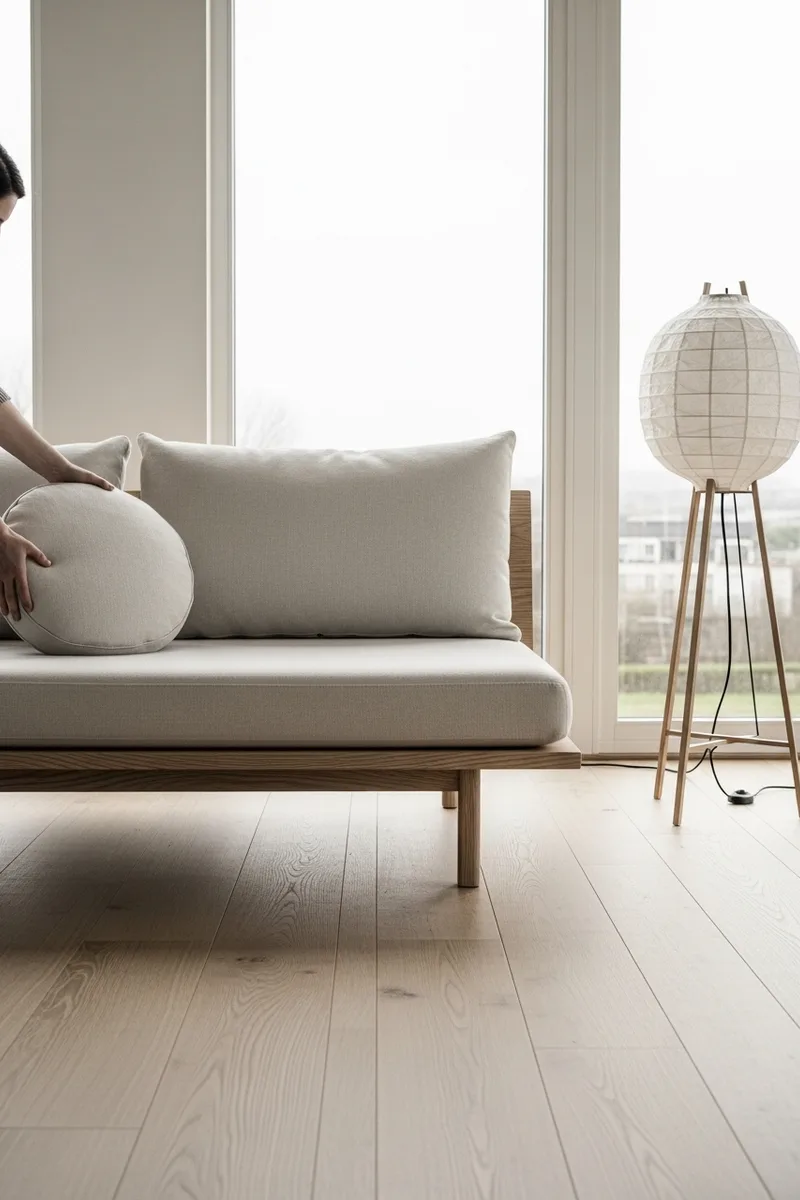
The foundation of Japandi is a closeness to the ground, which naturally anchors the body and lowers the center of gravity in a room. Choose furniture with low, horizontal lines — a sofa that sits on chunky wooden plinths, a platform bed made of pale ash, or a coffee table that hovers just above a textured rug. This proximity to the floor mimics the Japanese practice of sitting and sleeping close to the earth, creating an immediate sensation of stability and calm. In Scandinavian fashion, the wood should remain light and airy, like untreated oak or birch, keeping the silhouette clean and preventing the low height from visually weighing down the living space or feeling heavy.
The Imperfect Beauty of Wabi-Sabi Ceramics
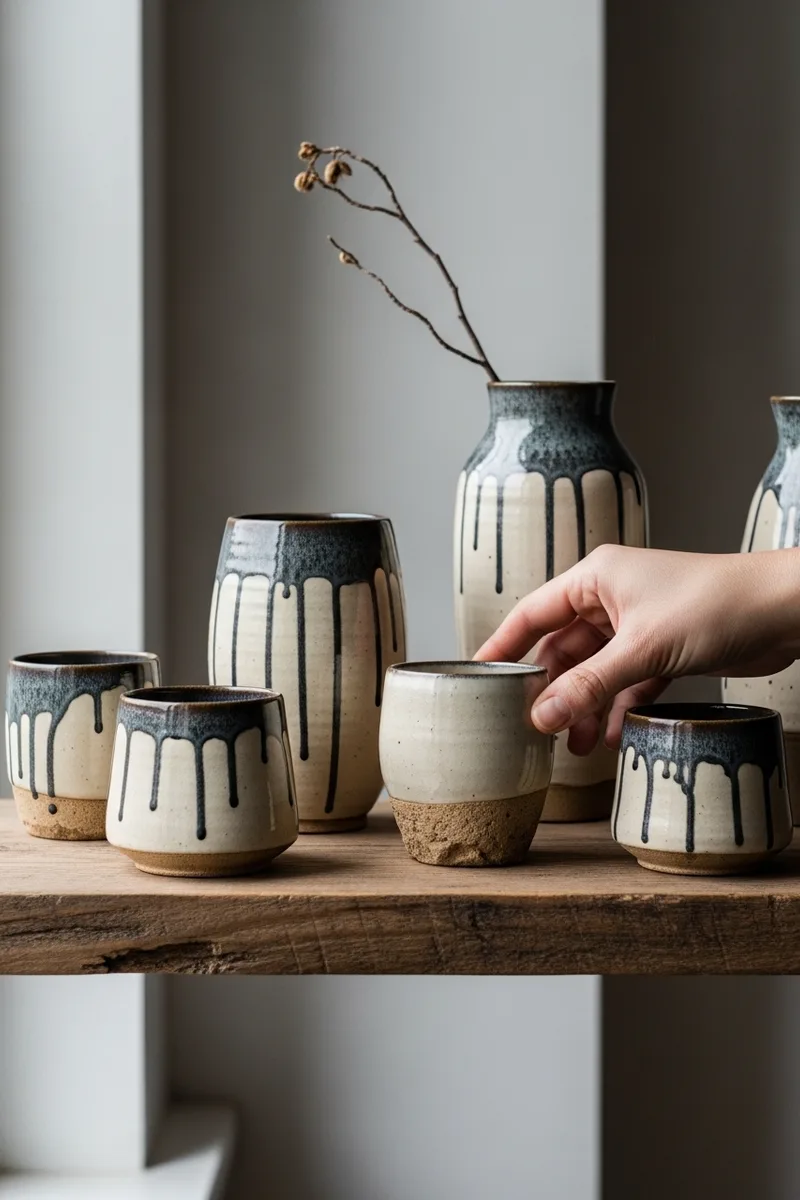
Mass-produced, perfect dinnerware has no place in a Japandi sanctuary. Embrace wabi-sabi by collecting hand-thrown ceramic mugs, bowls, and vases that celebrate visible throwing rings, uneven rims, and reactive drip glazes in earthy, matte tones. The tactile experience of holding a rough, pitted clay cup grounds you in the present, celebrating the beauty of natural imperfection and the touch of the artisan’s hand over machine precision. Display these pieces openly on open shelving as sculptural objects, not hidden behind closed doors. Their organic, asymmetrical silhouettes against a clean white wall create a moment of quiet, meditative artistic tension that enriches the daily rituals of tea and dining.
Linen and Slub Cotton Textiles

Japandi textiles are all about breathable, textural honesty, prioritizing natural fibers like heavy stonewashed linen, raw silk, and nubby slub cotton. Drape these across your bed, sofas, and windows in a strictly neutral palette of warm sand, chalky grey, and ecru, avoiding busy patterns entirely. The deep wrinkles and natural slubs in the fabric catch the light softly, adding visual depth without disrupting the serene, monastic atmosphere. These materials feel sublime against the skin, regulating temperature beautifully. The soft, gentle movement of a heavy linen curtain billowing in a breeze brings a dynamic, living quality to the stark minimalism, bridging the gap between a still-life perfection and a lived-in, breathing home.
Sculptural Bonsai and Ikebana
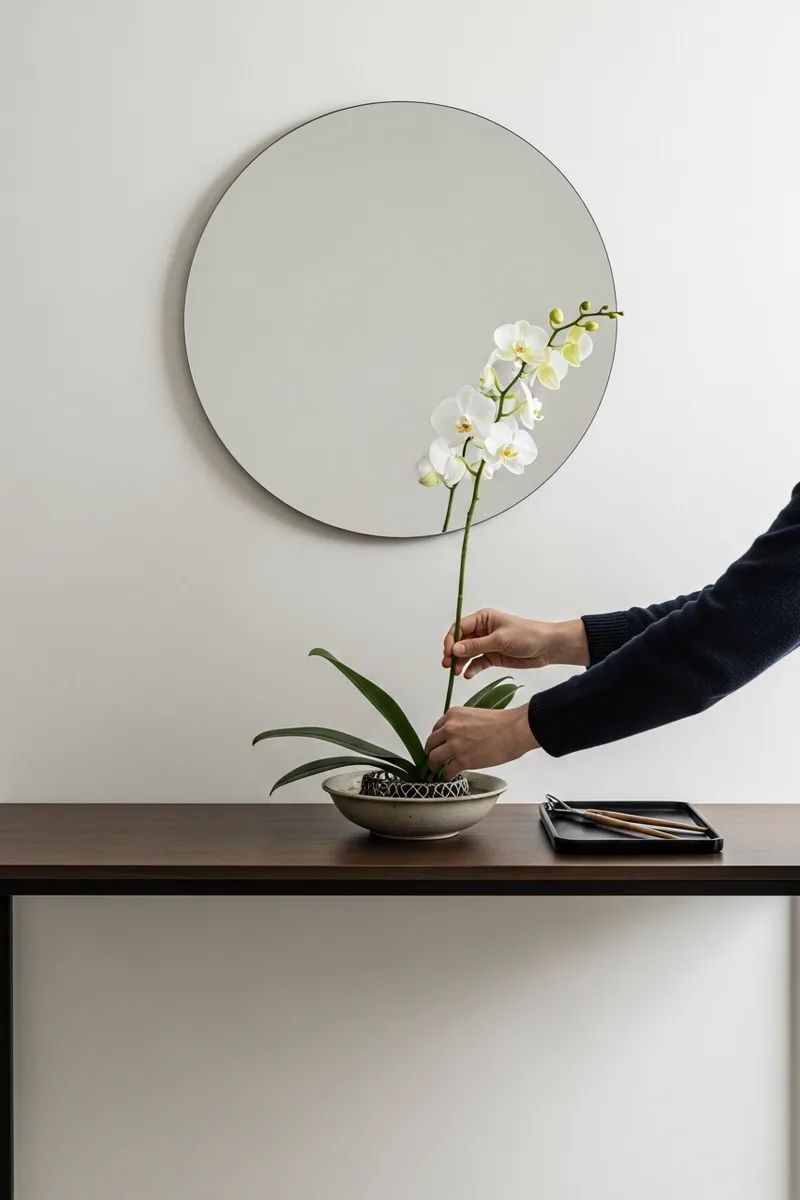
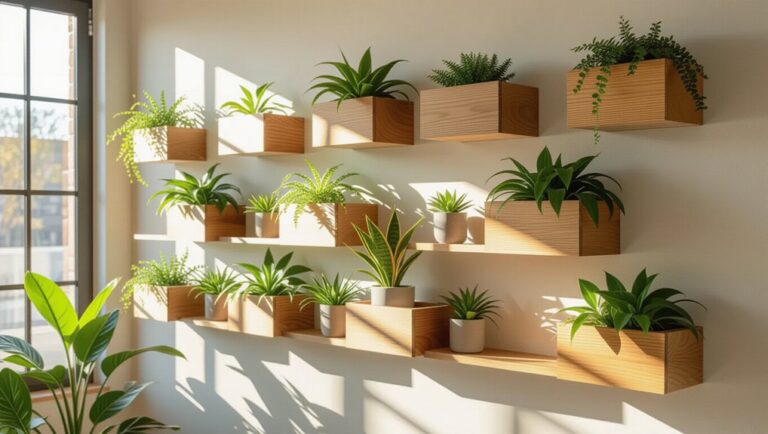
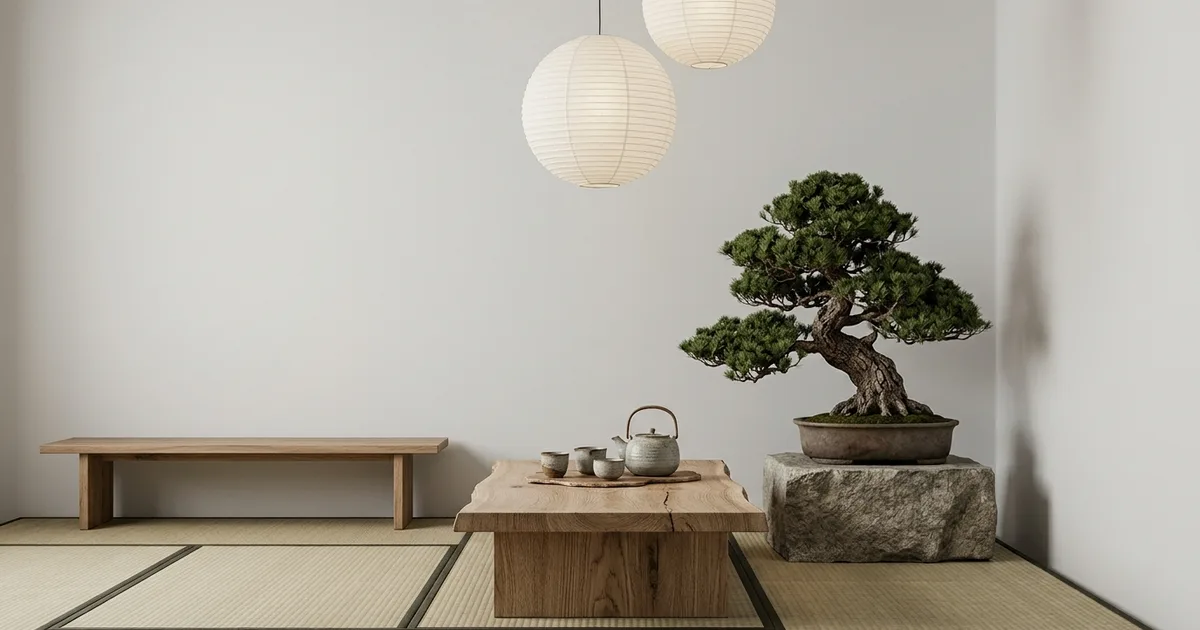
In Japandi, greenery is treated as high art through the disciplined, spiritual practices of bonsai and ikebana flower arranging. Rather than a sprawling jungle of random pots, feature a single, meticulously pruned bonsai tree in a shallow, unglazed stoneware pot as a focal point of meditation. For florals, practice the minimalist ikebana technique of placing just one or two sculptural branches or blooms in a heavy, wide-mouthed vessel. This disciplined, asymmetrical composition celebrates the essential character of the plant and the empty space around it. It brings the profound, seasonal beauty of a Japanese temple garden into your home in a refined, deeply respectful way.
Slatted Wood Paneling and Screens
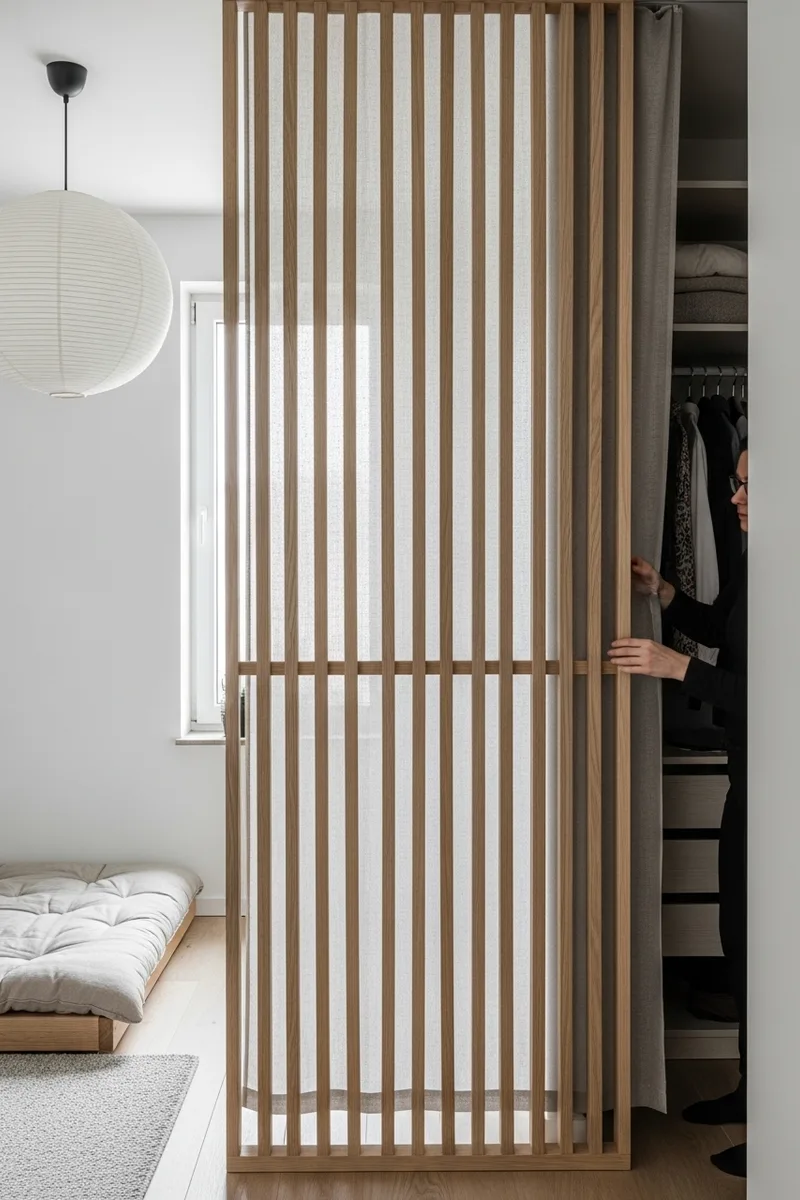
Borrow from traditional Japanese architecture by incorporating vertical wooden slats into your partitions, headboards, or ceiling details. A slatted screen wall made of pale oak or ash functions as an airy room divider that zones a space without blocking precious natural light. The rhythmic repetition of the thin vertical lines creates a soothing, zen-like pattern and a sense of ordered tranquility, while allowing breezes and soft dappled shadows to pass through. This technique adds a layer of architectural craftsmanship that feels both handcrafted and modern. The warm wood tones filter light beautifully at sunrise and sunset, casting an ever-shifting linear mural across the floor during the day.
Tatami Mats and Natural Fiber Rugs
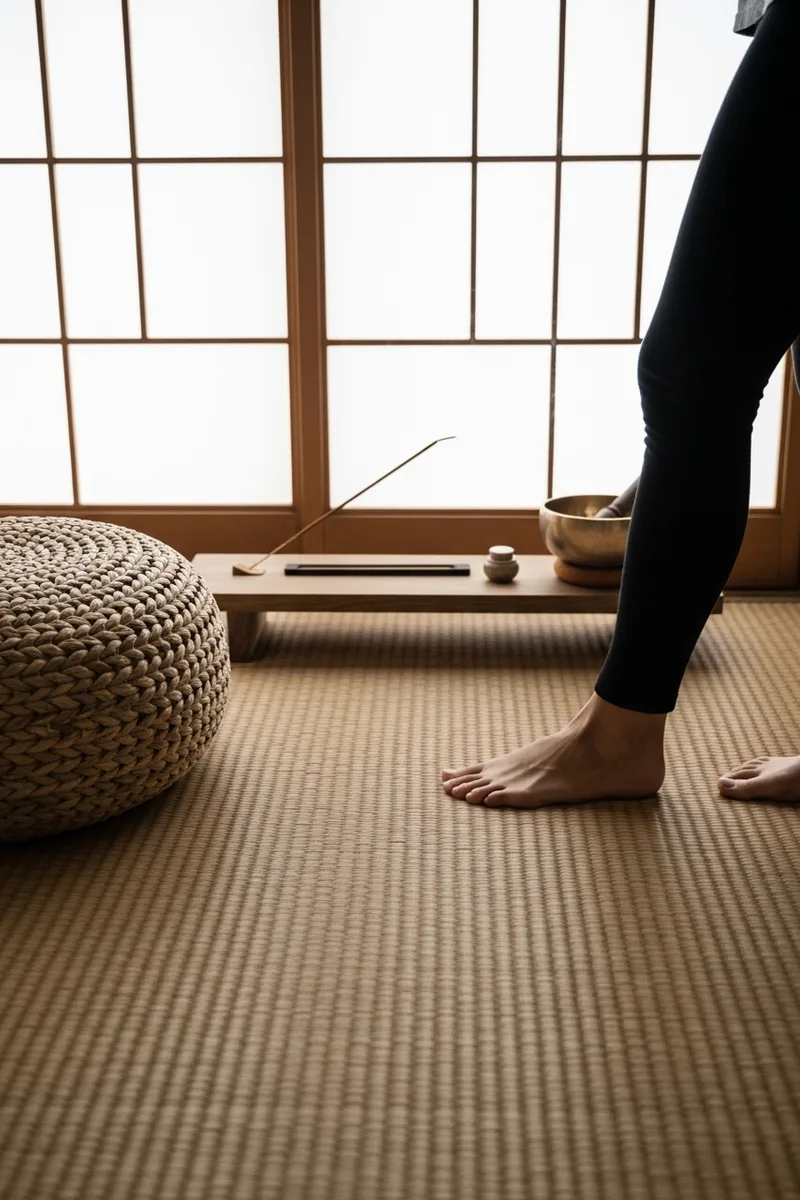
Ground your sanctuary from the feet up by introducing the woven texture and earthy scent of a traditional Japanese tatami mat or a chunky, undyed jute rug. Tatami mats, made of compressed rice straw, provide a firm yet forgiving cushion underfoot and instantly define an area as a zone for relaxation, yoga, or tea ceremony. The natural grassy green-brown hue and the distinct, calming scent of dried straw offer a powerful sensory trigger that tells the brain to slow down. Paired with a light, airy Scandi aesthetic, these natural fiber floor coverings add the necessary raw, rustic counterpoint to smooth plaster walls and sleek, minimalist furniture designs.
Shoji-Inspired Translucent Light
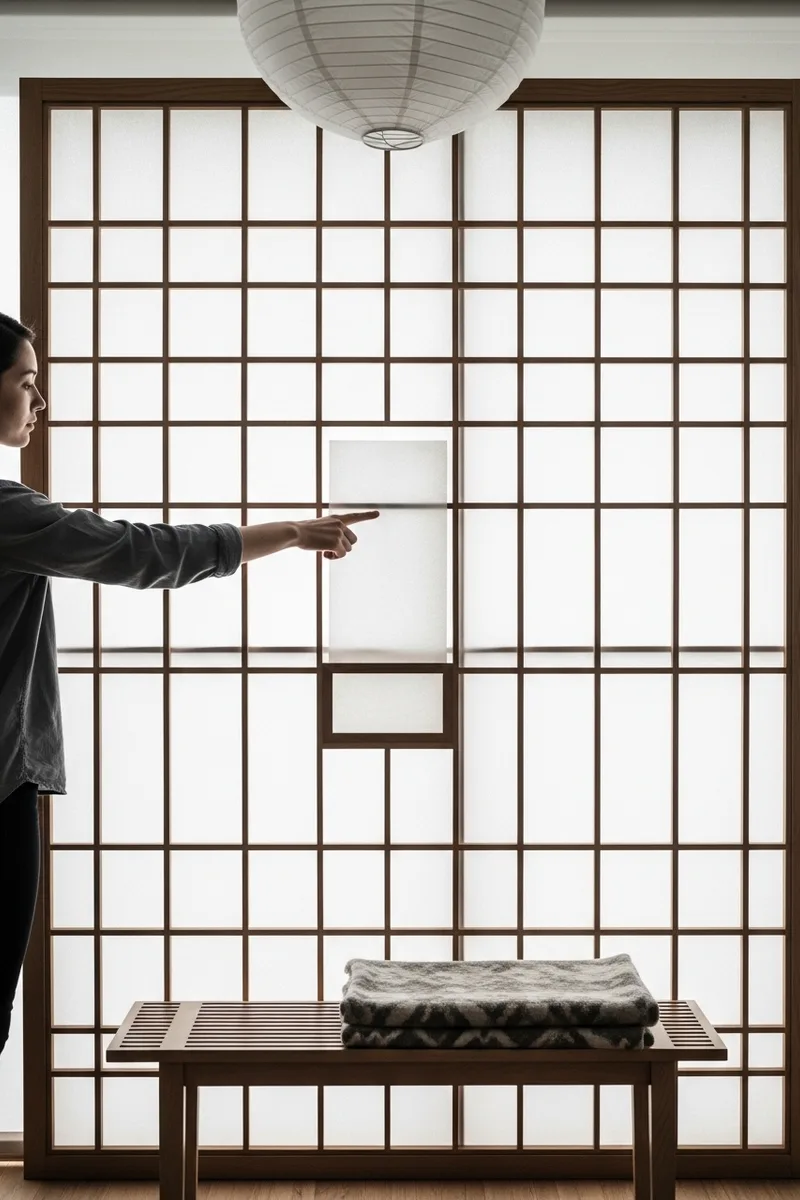
Japandi lighting seeks to mimic the soft, diffused, and shadowless quality of a cloud-covered sun, and shoji paper screens are the ultimate tool for this. Replace heavy drapes or stark roller blinds with sliding panels or fixed screens made of a simple wood lattice and translucent washi or rice paper. The material acts as a softbox, filtering harsh direct sun into a gentle, ethereal glow that eliminates dark corners and harsh glare. This soft, ambient radiance makes the skin look beautiful and creates a psychological environment of serenity and privacy. The warm wood grid of the screen also adds an architectural, craftsman-like detail to what might otherwise be a bland window wall.
Dark Wood and Black Iron Accents
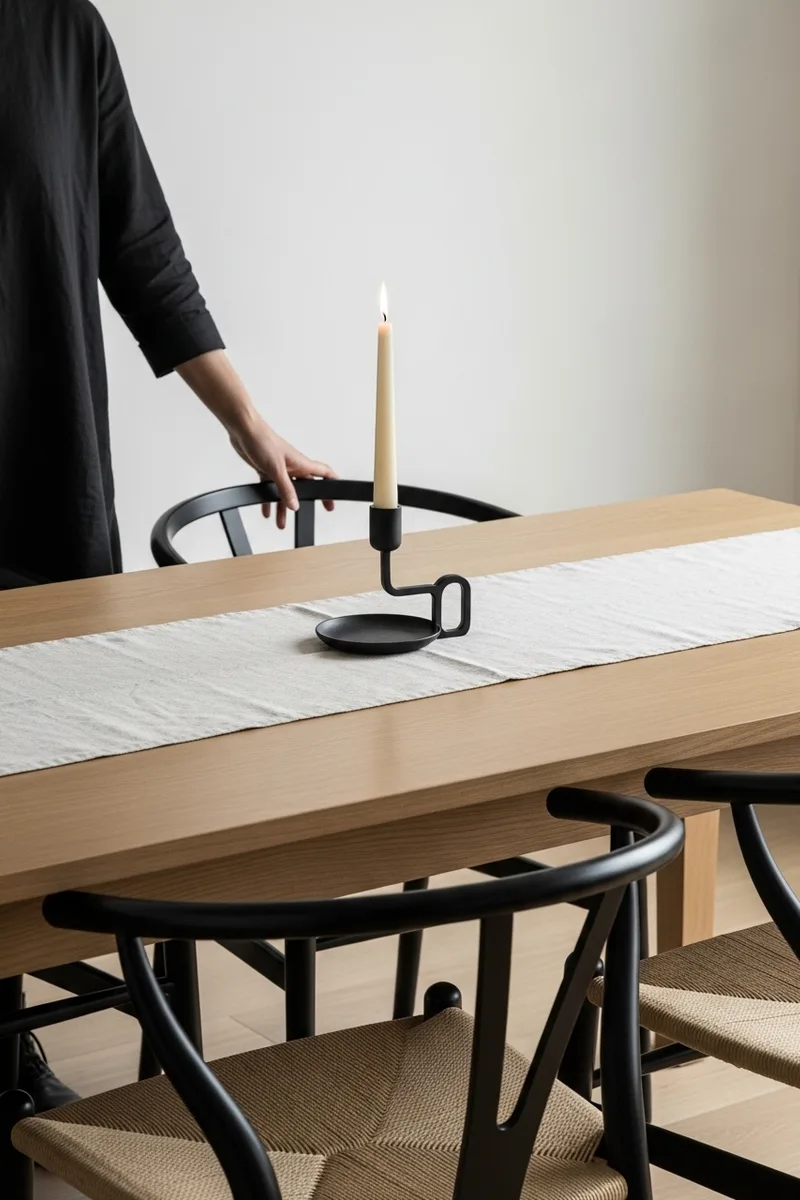
While the base of Japandi is light wood, it is the deliberate, restrained contrast of dark, scorched wood and matte black iron that gives the style its graphic depth. This is the Scandinavian hygge injecting shadow into the Japanese ma. Use these dark accents sparingly but purposefully — a blackened wooden chair frame, a sleek cast iron tea kettle, or thin black metal tapered candleholders. The sharp, dark lines cut through the sea of pale oak and beige textiles, defining the space and drawing the eye like a calligraphy brush stroke. It provides a necessary visual weight and edge, preventing the room from feeling washed out or overly neutral.
The Stone and Clay Sink Basin
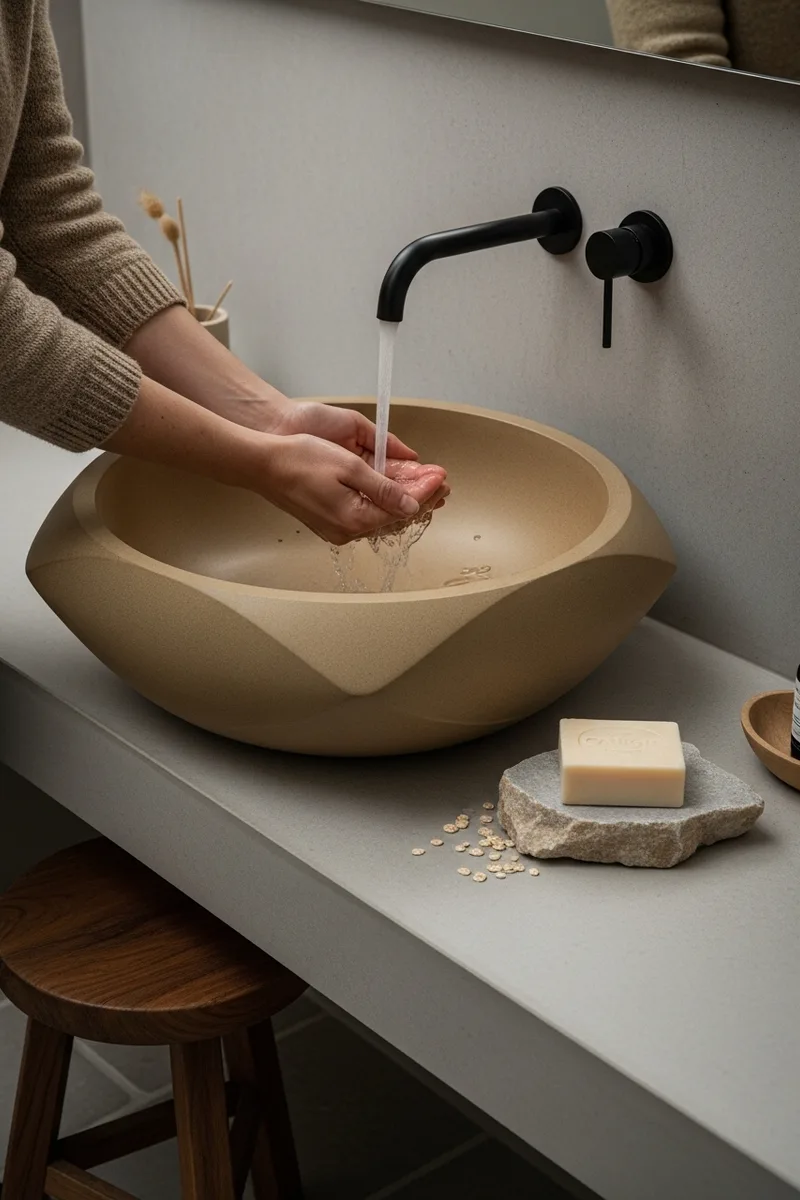
Turn a daily ritual like washing your hands into a grounding, spa-like experience by installing a solid stone or tactile clay vessel sink. The heavy, cool, matte texture of a carved river rock or a honed concrete basin engages your fingertips, immediately pulling you into the physical present. The organic, slightly irregular shape of a natural stone basin reflects the wabi-sabi appreciation for the unrefined, while a sleek black minimalist tap keeps the look clean and Nordic. Placed on a simple slab of reclaimed wood, this combination of elements transforms a purely functional bathroom corner into an immersive, zen-inspired wet room that feels connected to a natural spring.
Furoshiki Cloth Wrapping Storage

Incorporate the beautiful, sustainable Japanese art of furoshiki fabric wrapping into your storage and organization. Use large squares of linen or textured cotton in muted, natural indigo dyes to wrap up folded blankets on a shelf, bundle your yoga mat, or even cover a simple glass vase for a textural display. This method conceals visual clutter in a breathable, organic material that adds a soft, sculptural element to open shelving. It embodies the Japandi principle of hiding away the messy necessities of life behind a beautiful, natural, and reusable art form, turning your tidying-up routine into a conscious and creative daily practice of folding and knotting.
A Meditation Corner with Zabuton
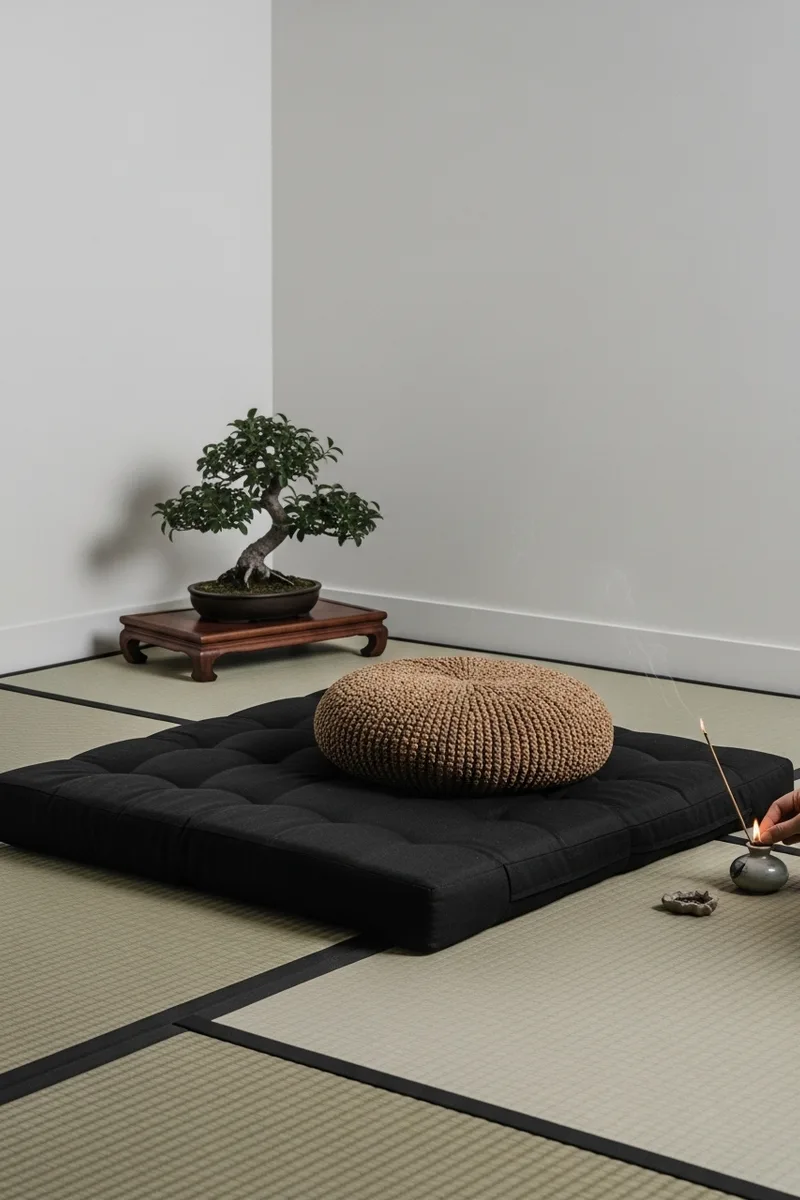
A true Japandi sanctuary needs a dedicated, screen-free space for stillness, anchored by traditional Japanese meditation cushions. Place a thick, rectangular zabuton mat on the floor and top it with a supportive round zafu pillow filled with buckwheat hulls. This simple, minimalist setup invites you to sit, breathe, and do nothing for a few minutes each day. The corner needs no other decoration; the beauty lies in its purposeful emptiness and readiness. Facing a single piece of wall art or a view of a plant, this nook becomes the spiritual heartbeat of the home, a physical commitment to mental clarity and the essential practice of sitting with quiet, uncluttered space.
Handmade Paper Pendant Lights
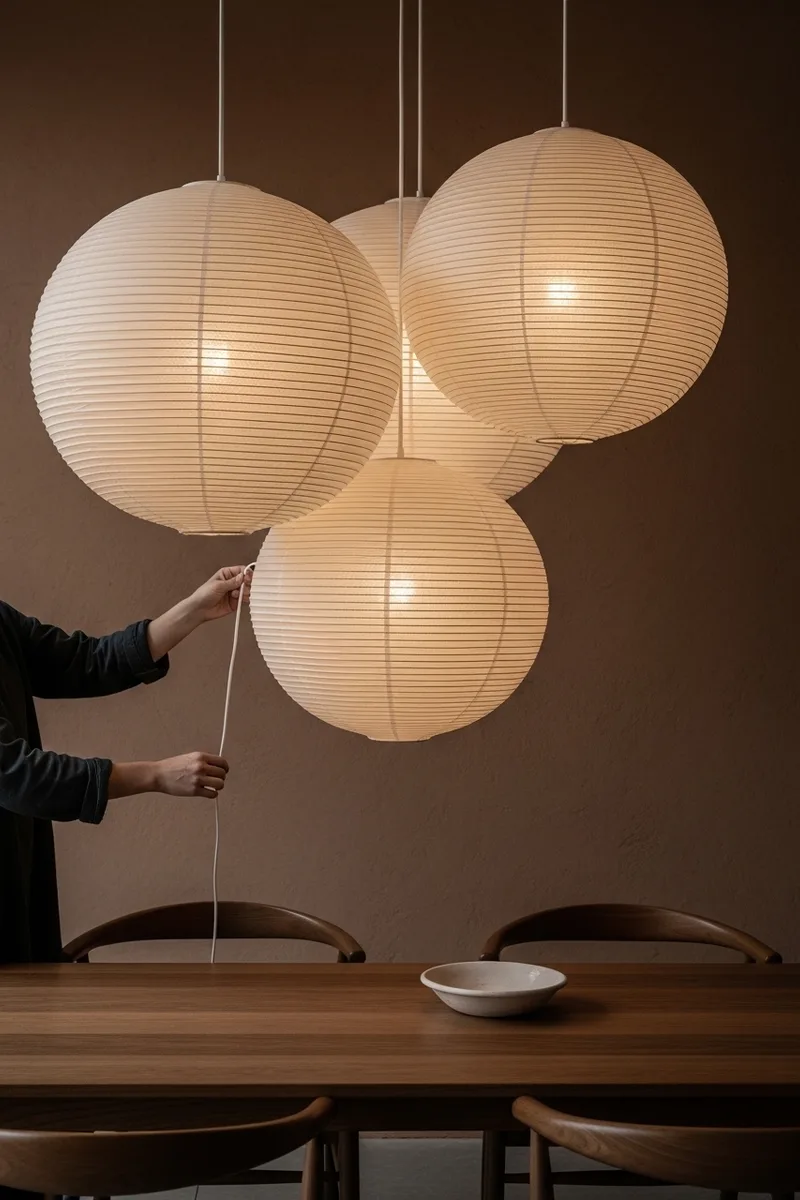
Swap out harsh metal or glass chandeliers for the iconic, cloud-like softness of oversized handmade paper lanterns. These sculptural rice paper or washi orbs, popularized by Scandinavian designers like Isamu Noguchi, hang like serene moons, diffusing electric light into the same gentle, even warmth as a shoji screen. The organic, slightly irregular shape of a hand-pulled paper globe adds a layer of artisanal texture without any visual weight. Hung low over a low-profile bed or a minimalist dining table, the lantern creates an intimate, glowing focal point that draws the eye upward and cocoons the room in a sphere of soft, safe illumination perfect for deep, restorative sleep or long, lingering dinners.
Raw Edge and Burnt Wood Finishes
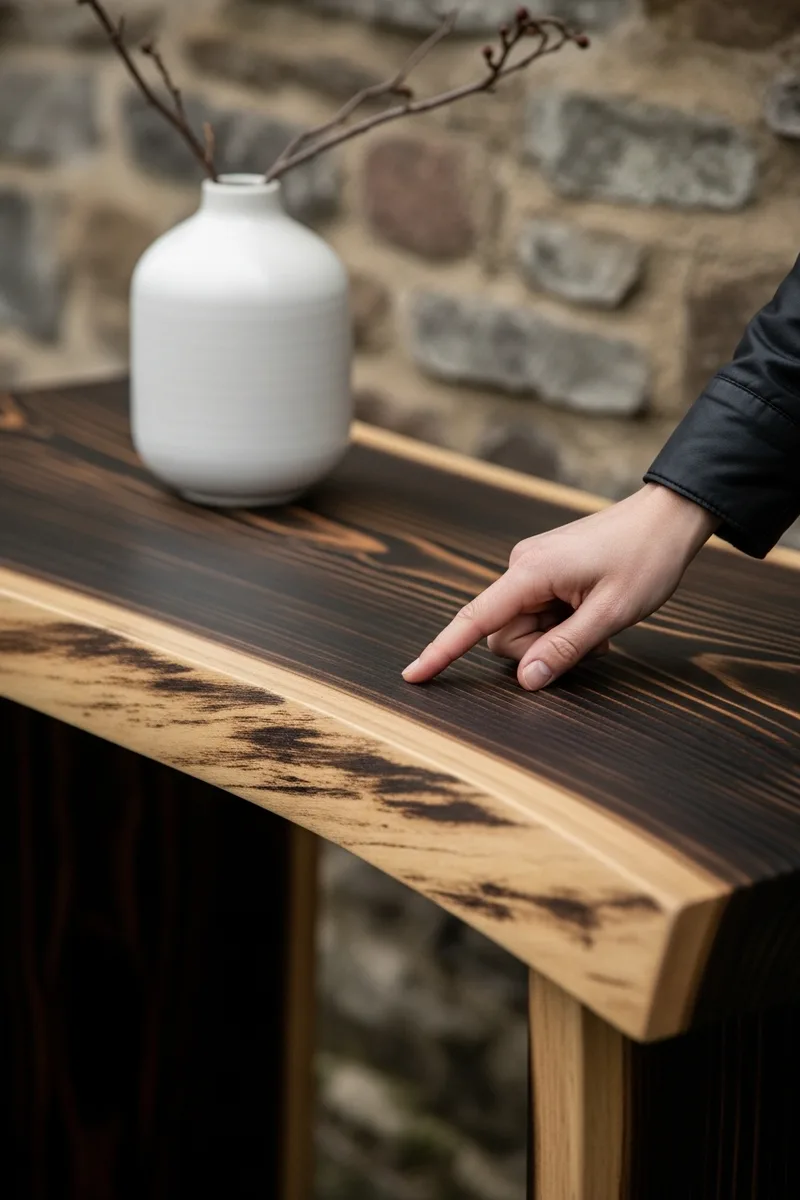
Inject a powerful dose of texture and ancient Japanese craftsmanship with the technique of shou sugi ban — the art of charring wood to preserve it. A single accent piece like a coffee table, a headboard, or a sculptural wall panel in this deep, alligator-scaled, carbon-black finish brings dramatic, grounding depth to the room. The burnt texture is unexpectedly velvety to the touch and catches the light with a subtle, silvery shimmer. Paired with pale linen and light oak, the preserved charcoal wood feels both primitive and deeply luxurious, connecting the minimal Scandinavian interior to the dramatic, volcanic landscapes and traditional folk architecture of rural Japan.
Clutter-Hiding Woven Baskets
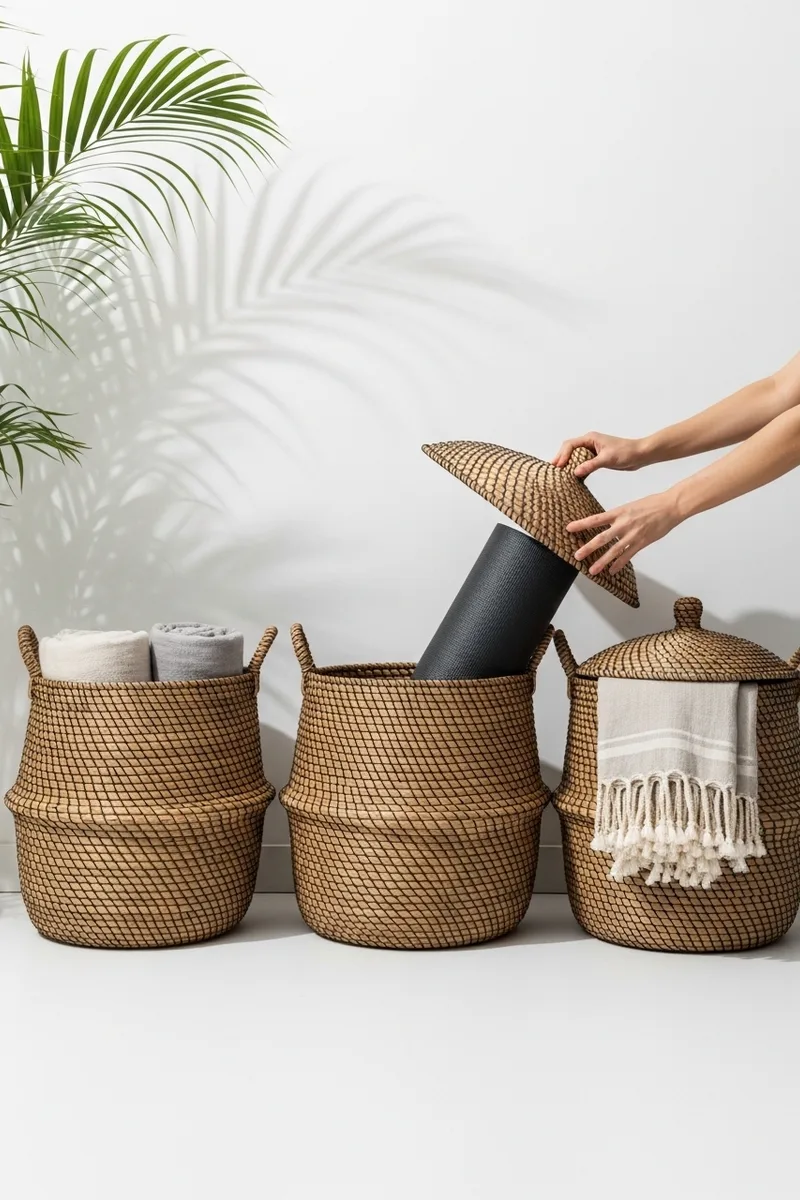
The minimalist heart of Japandi cannot beat if surrounded by visual chaos, so beautiful, organic storage is sacred. Invest in large, lidded baskets woven from seagrass, water hyacinth, or split bamboo to hide away tech cables, children’s toys, and spare pillows. The uniform, natural texture of the baskets aligns with the earthy material palette while their chunky, rounded silhouettes add a soft, sculptural element to the floor or shelves. Placed in a row, they create a rhythmic, functional display that breathes with the humidity of the room. They ensure that every practical necessity has a beautiful, breathable home, keeping the sanctuary visually serene and psychologically calming.
Monochromatic Earthy Gallery Wall
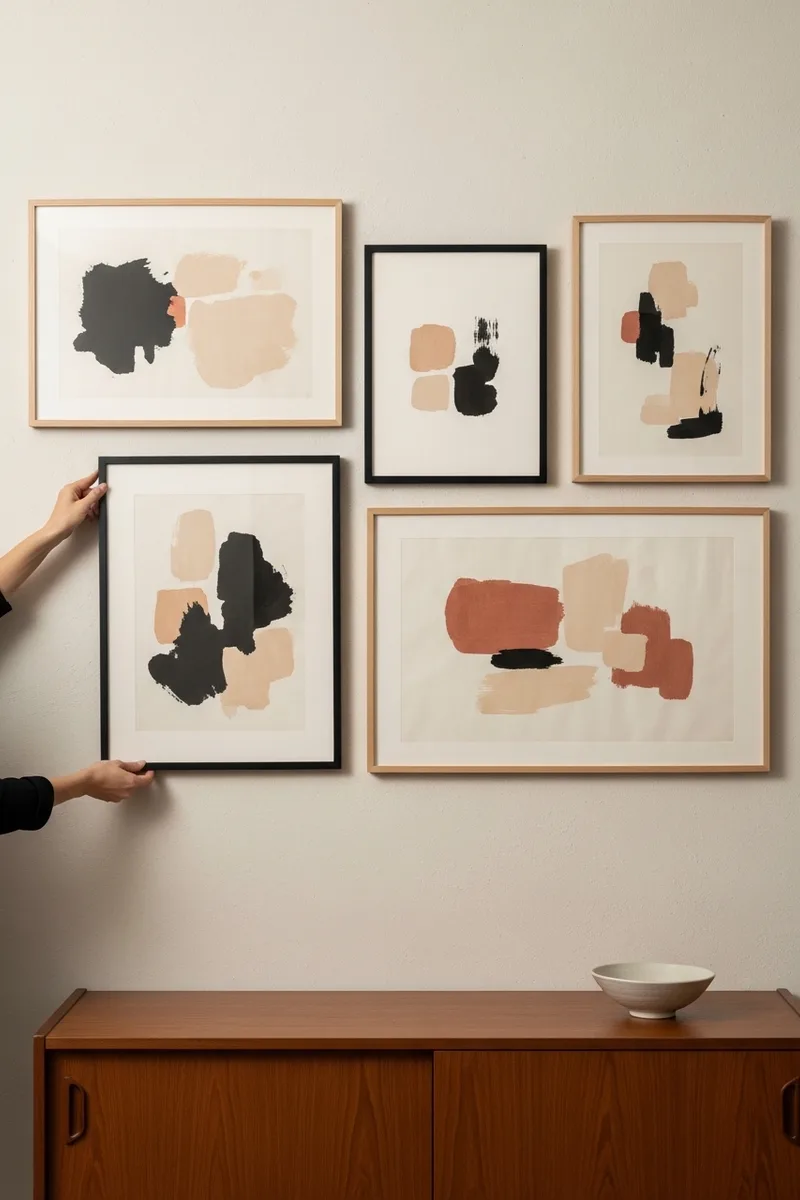
Curate your wall art with the same restraint as the rest of the space by assembling a monochromatic, tonal gallery of abstract ink sketches and textured handmade paper prints. Stick strictly to earthy pigments — sumi black ink, terracotta clay washes, and oatmeal handmade papers — and frame them simply in thin, light oak or matte black frames. The art should evoke the feeling of Japanese calligraphy or eroded rock strata, not loud pop graphics. Hang the pieces in an organic, asymmetrical cluster with plenty of breathing ma space around them. This creates a focal point that is meditative and cerebral, encouraging quiet contemplation rather than over-stimulation of the senses.
A Japandi Tea Ceremony Tray
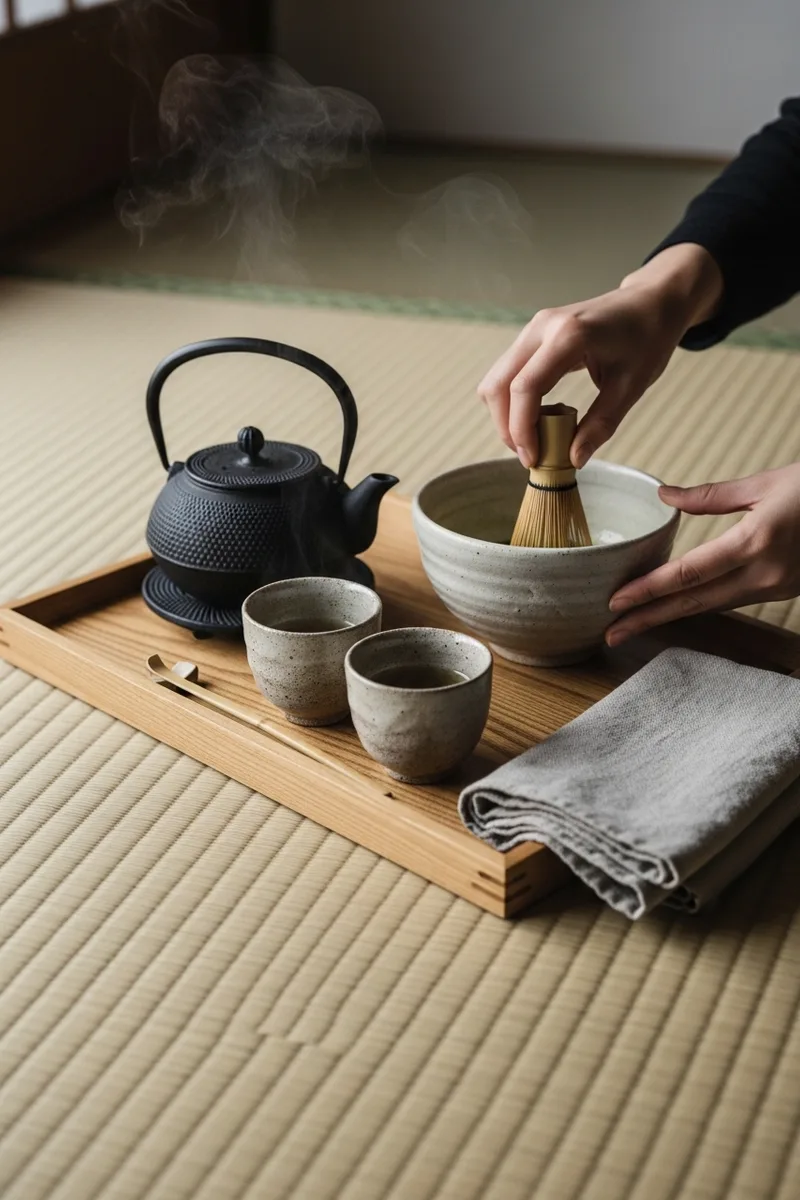
Dedicate a portable, beautiful tray to the mindful ritual of tea preparation, whether it is a frothy matcha ceremony or a simple loose-leaf sencha brew. Arrange a matte black cast iron teapot, a hand-thrown kyusu clay pot, a bamboo whisk, and a couple of textured ceramic cups on a simple wooden slab tray. Keep this tray on a low table or a sideboard as a permanent still-life installation of beautiful, functional objects. The ritual of lifting the tray and preparing the tea becomes a moving meditation, a tactile experience involving hot water, earthy clay, and the frothy green of the matcha that awakens all the senses and marks a peaceful pause in the day.