20 Vintage Tile Revival Ideas for a Nostalgic Modern Bathroom
In an era of sleek microcement and seamless slabs, the design world is experiencing a passionate counter-movement: the Vintage Tile Revival. For 2026, nostalgic patterns and retro geometries are being dusted off and thrust into the spotlight, not as themed novelties, but as the sophisticated backbone of the modern bathroom. We are witnessing a joyful return to character, color, and crafted imperfection, proving that old-school charm can be a bolder canvas for contemporary living than any pristine minimalism.
This revival is not about creating a period-accurate museum piece; it is about the mash-up. It is a glossy, hand-glazed zellige wall paired with a stark, modern vanity, or a classic checkerboard floor grounding a futuristic sculptural tub. The goal is to harness the soul and geometry of the past to warm up the cold edges of the present. Join us as we explore 20 ways to revive vintage tile with a modern lens, creating bathrooms that feel instantly collected, deeply personal, and richly layered with the best of then and now.
The Bold Return of Checkerboard Floors
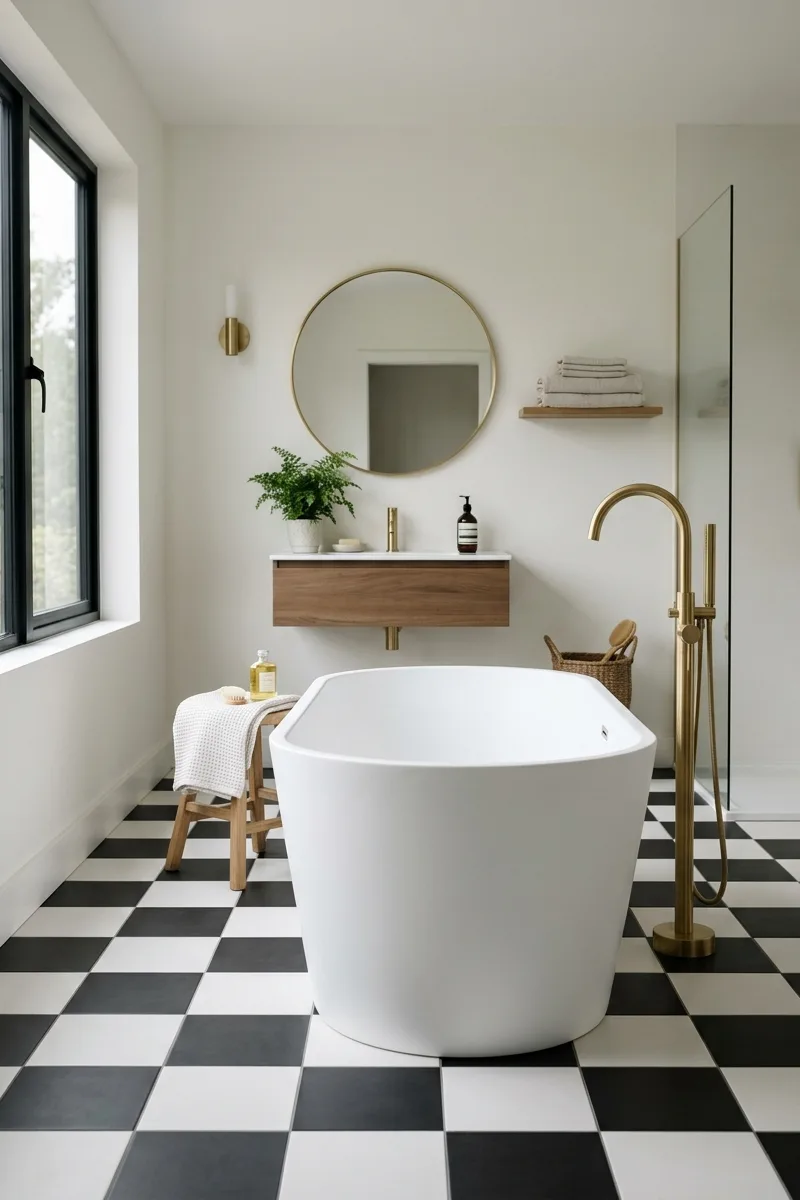
The checkerboard floor is the undisputed sovereign of the vintage revival, and its 2026 comeback is louder than ever. This bold, graphic pattern instantly anchors any bathroom with a sense of timeless rhythm, injecting a high-contrast energy that feels both nostalgic and fiercely modern. The key to preventing it from looking like a 1950s diner is in the styling. Pair a classic black and white grid with ultra-modern matte black fixtures and warm oak cabinetry to strike a perfect balance. For a softer approach, swap the stark black for a deep burgundy or sage green against a creamy stone tile. The geometric repetition visually expands the floor space, making it an excellent trick for small powder rooms. This floor is a commitment to personality, serving as the art piece of the bathroom. It provides a dynamic, graphic foundation that allows the rest of the space to remain calm and minimalist.
Zellige Tiles for an Artisanal Glow
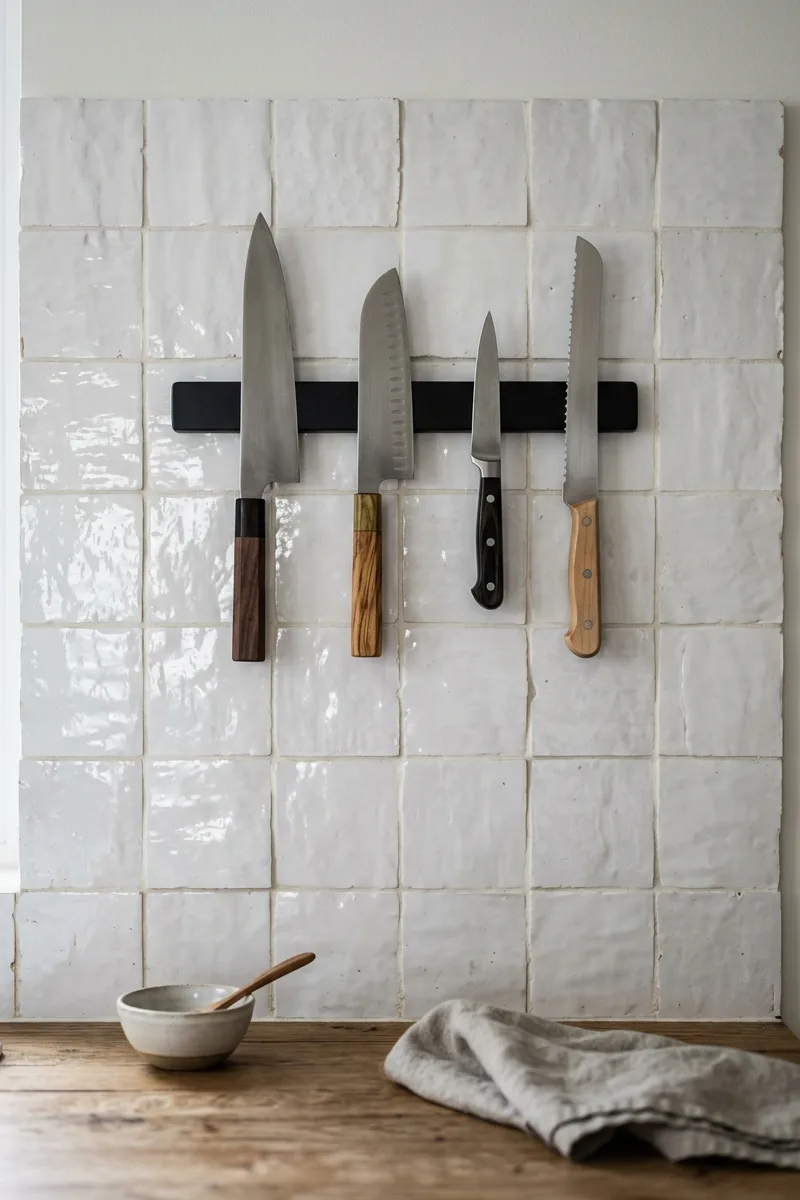
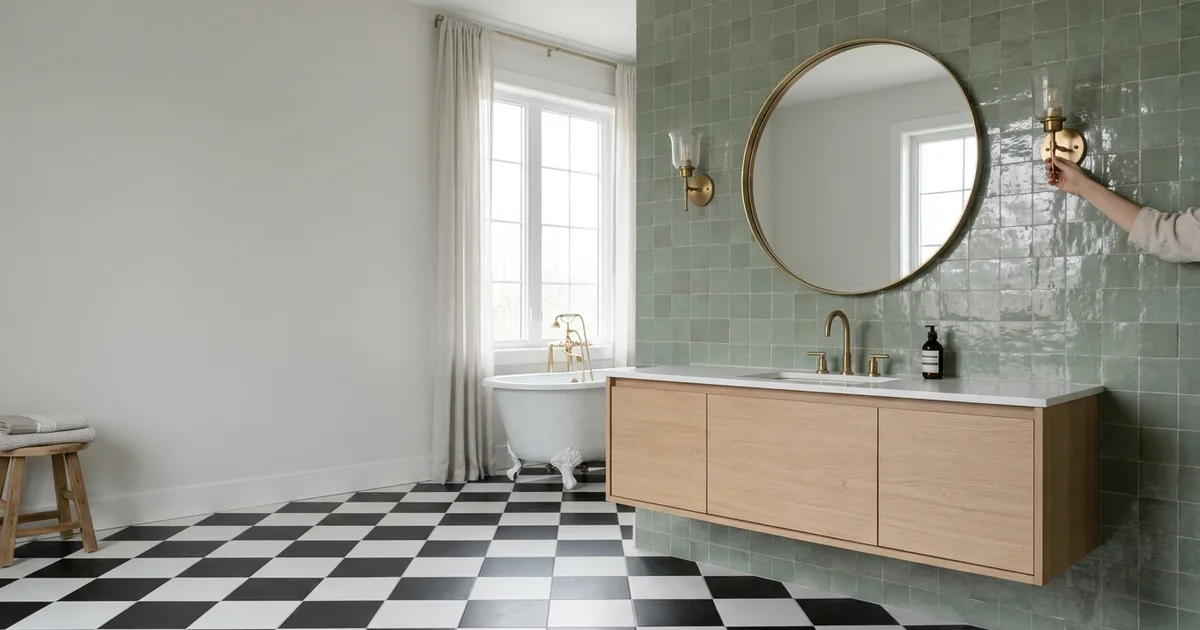
Zellige tiles, those hand-crafted, imperfectly perfect squares from Morocco, are the darlings of the vintage revival for their unmatched, liquid-like luminosity. No two zellige tiles are alike; their hand-cut edges, glossy glazes, and undulating surfaces create a wall that shimmers with movement and depth. The highly reflective glaze bounces candlelight and natural sun around the room in a way that machine-made ceramic never can. In 2026, we are moving beyond just white into deep, transparent jewel tones like emerald, cobalt blue, and terracotta. A full wall of zellige behind a minimalist vanity becomes a work of textural art. The vintage charm lies in their ancient technique, but their application is deeply modern when grouted tightly with a matching color for a seamless look. They bring a rich, soulful warmth that makes a new build feel instantly collected, grounding the bathroom in a tradition of craftsmanship that mass-produced slabs simply cannot replicate.
Penny Tile’s Playful Textural Comeback
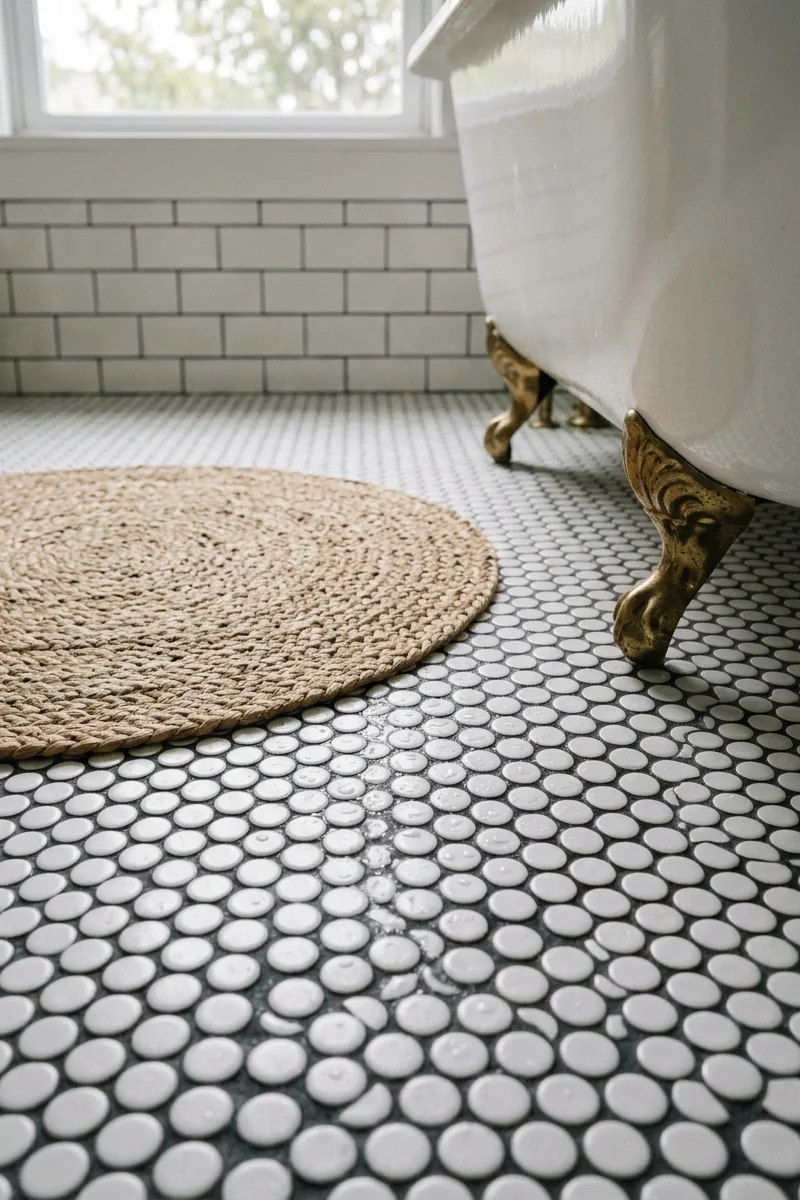
The humble penny tile, a staple of early 20th-century bathrooms, has re-emerged as a surprisingly modern textural weapon. Its strength lies in its modular smallness, which allows it to curve effortlessly across shower floors and up walls without the need for complex cuts. The vintage aesthetic comes from the dense grid of tiny dots, which creates a tactile, almost sandy texture underfoot that is naturally non-slip, perfect for wet areas. In 2026, designers are refreshing the look by playing with grout contrast. A bright white penny tile with jet-black grout creates a daringly graphic, polka-dot effect, while a monochromatic look in soft blush pink or pale moss green keeps it sweet and serene. The circular shape softens the angularity of a modern bathroom, adding an organic, feminine curve. It is a small-scale mosaic that delivers enormous nostalgic charm while solving modern problems of waterproofing and slip resistance flawlessly.
Bisected Subway: Stacked and Vertical
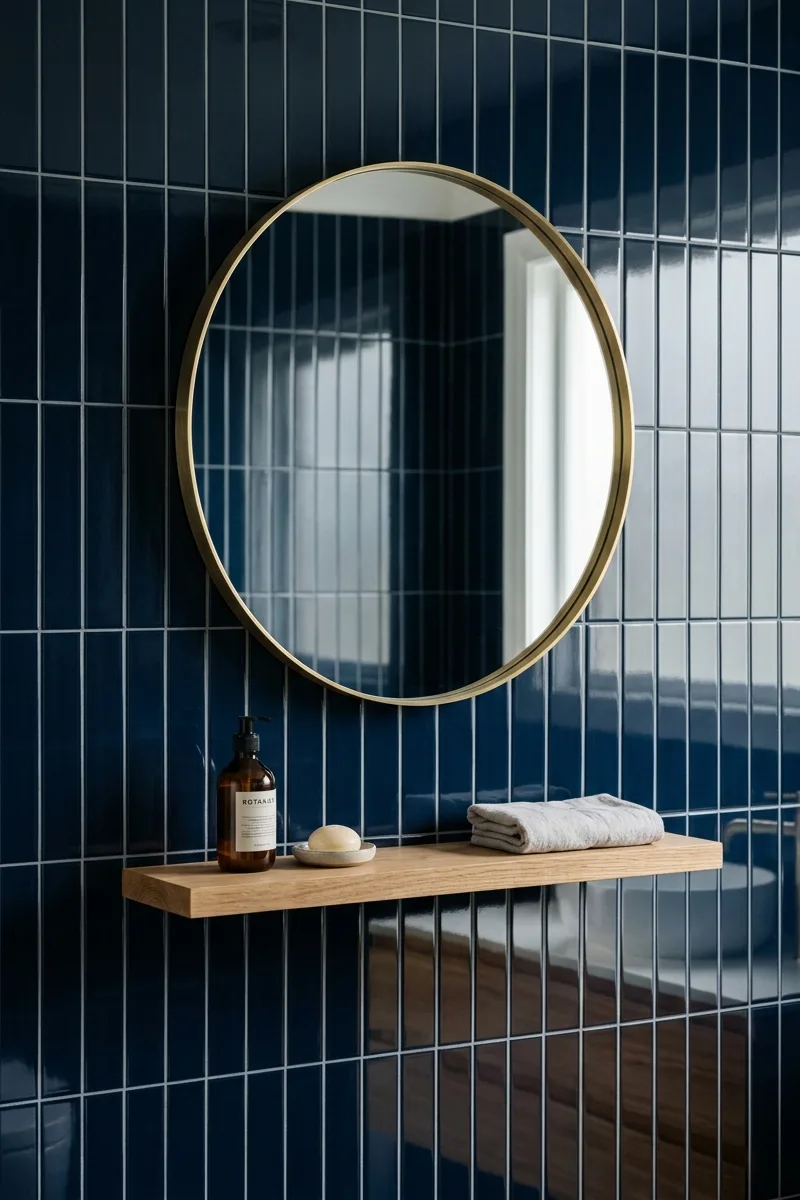
The classic 3×6 subway tile is timeless, but the vintage revival demands we shake off the boring, running-bond pattern. The 2026 update uses the exact same tile but installs it in a vertical stack bond or a grid layout. This simple shift takes a farmhouse-era staple and transforms it into a crisp, architectural statement that feels distinctly now. A vertical stack of glossy teal or spinach-green tiles draws the eye upward, making a standard eight-foot ceiling feel loftier and more grand. The clean, straight grout lines appeal to a modernist’s love of grid, while the glossy finish and beveled edges of traditional subway tile provide the nostalgic, handcrafted shimmer. It is the perfect bridge between eras, familiar material used in a jarringly contemporary way. This treatment works beautifully paired with unlacquered brass and a concrete sink, creating a tension between the soft, colored glass and industrial-hard fixtures.
Hexagon Floors: The New Classic
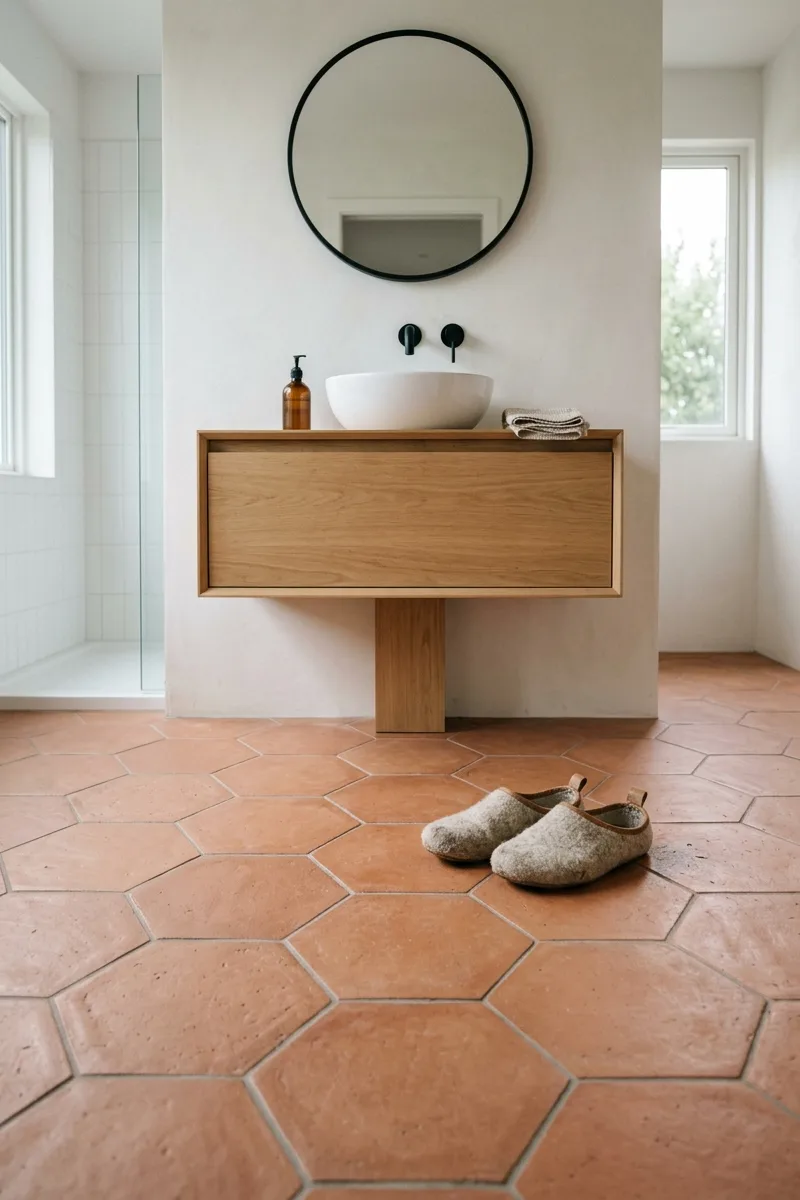
While the checkerboard floor is flashy, the hexagon floor is the quieter, more geometric inheritor of the vintage crown. Originating in Victorian entryways, the honeycomb mosaic has been scaled up dramatically for 2026. Large-format porcelain hexagons in earthy, matte tones like terracotta, dusty sage, or unglazed terracotta provide all the geometric interest without any of the fussy grout cleaning of a 1-inch mosaic. The six-sided shape creates a beautiful, interlocking rhythm that feels orderly yet organic, reminiscent of natural honeycomb. Using a matching grout color creates the illusion of a solid, textured mat, while a contrasting grout turns the floor into a bold, optical grid. The hexagon pattern plays beautifully with round mirrors and oval tubs, creating a gentle geometry lesson in the room. It is a highly sophisticated nod to history, offering a floor that feels permanently anchored and architecturally significant, not just a surface to walk on.
Bold Color Drenching with Retro Squares
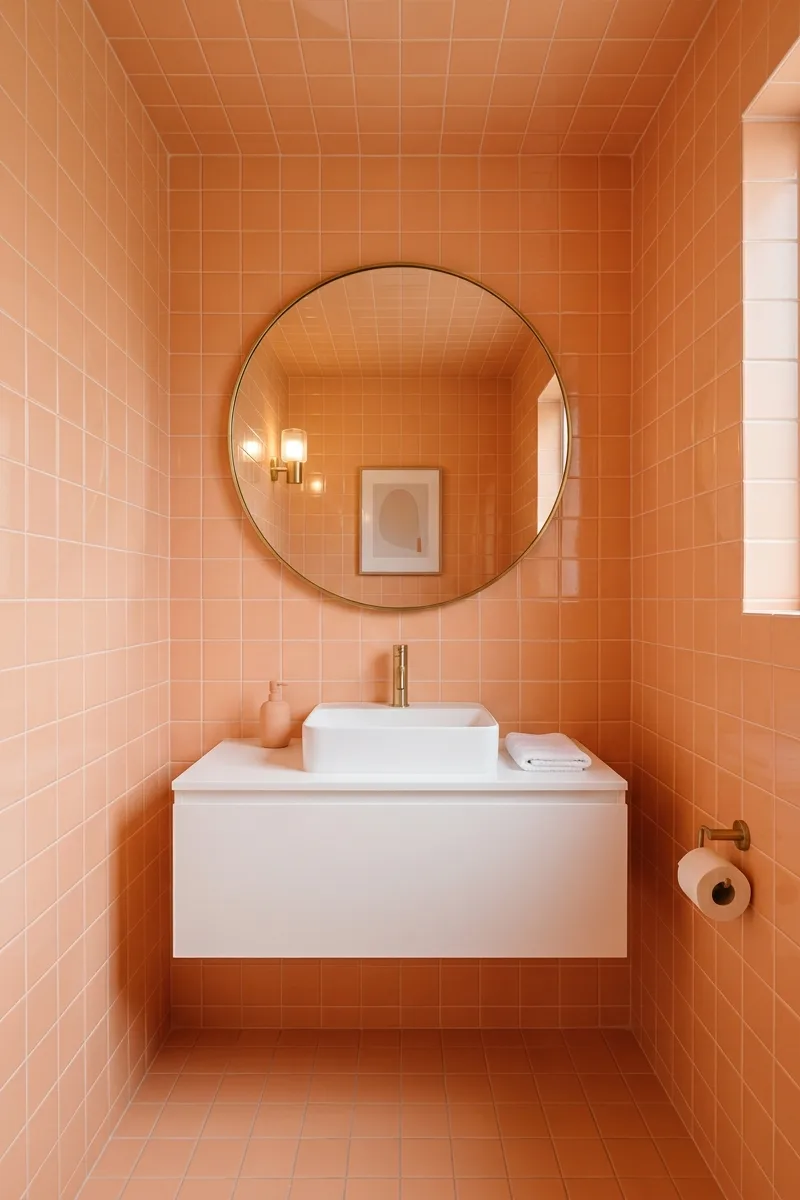
Perhaps the most joyful expression of the vintage revival is ‘color drenching’ a bathroom in glossy, small-format square tiles from the dado rail to the ceiling. The classic 1960s 4×4 square tile is the perfect vehicle for this, its tight grid providing a gleaming, wet-look envelope that feels like stepping into a jewelry box. Choosing a single, bold retro color like peachy coral, butter yellow, or powder blue and covering every available surface creates a fully immersive, fantastical escape. The high-gloss surface reflects light endlessly, enlarging the room, while the period-authentic square shape delivers a heavy dose of Mid-Century nostalgia. The key to keeping it modern is the trim: a crisp, minimalist white vanity and simple, unadorned round mirror keep the heavily-tiled room from feeling like a time capsule. This look is an unapologetic celebration of color and shine, proving that vintage charm can be the most daring and refreshing move in contemporary design.
The Graphic Punch of Geometric Encaustic
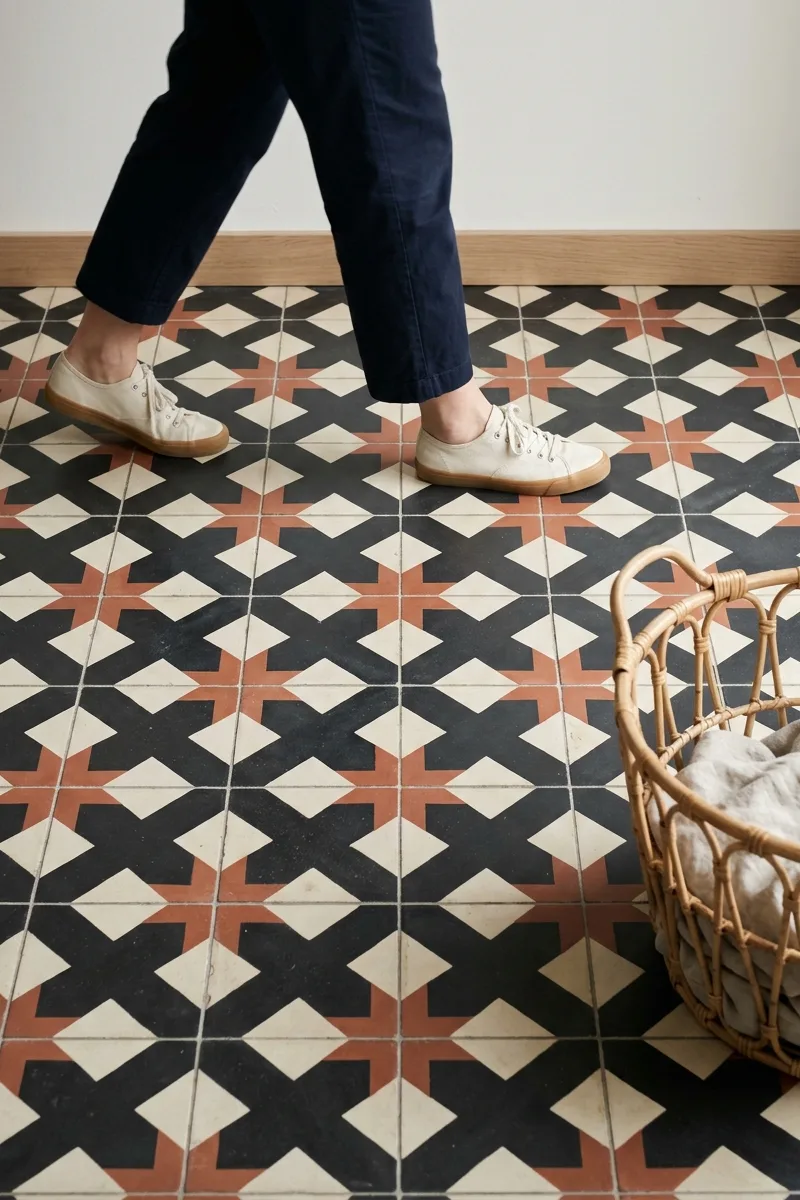
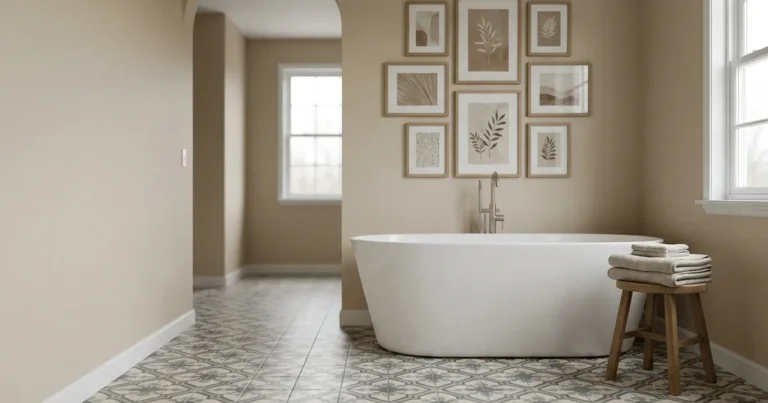
Encaustic-look tiles, with their bold, intricate patterns that are baked right through the body of the tile, are the showstoppers of the vintage revival floor. Originating from medieval Europe, these decorative cement tiles offer a maximalist, pattern-heavy punch that no inkjet print can replicate. The 2026 approach uses them strategically, often as a ‘rug’ pattern inset into a field of solid, simpler tile to define the floor plan. The intricate, Moorish or Victorian geometric motifs add an immediate sense of heritage and artisanal soul to a stark, modern space. Pairing a wildly patterned floor with entirely plain white walls and simple fixtures prevents visual overload. The matte, porous nature of authentic cement encaustic requires sealing, but it ages with a patina that tells a story. This is the tile choice for the true maximalist, a floor that is a conversation piece, an heirloom, and a piece of functional art all in one.
Herringbone and Chevron Brickwork
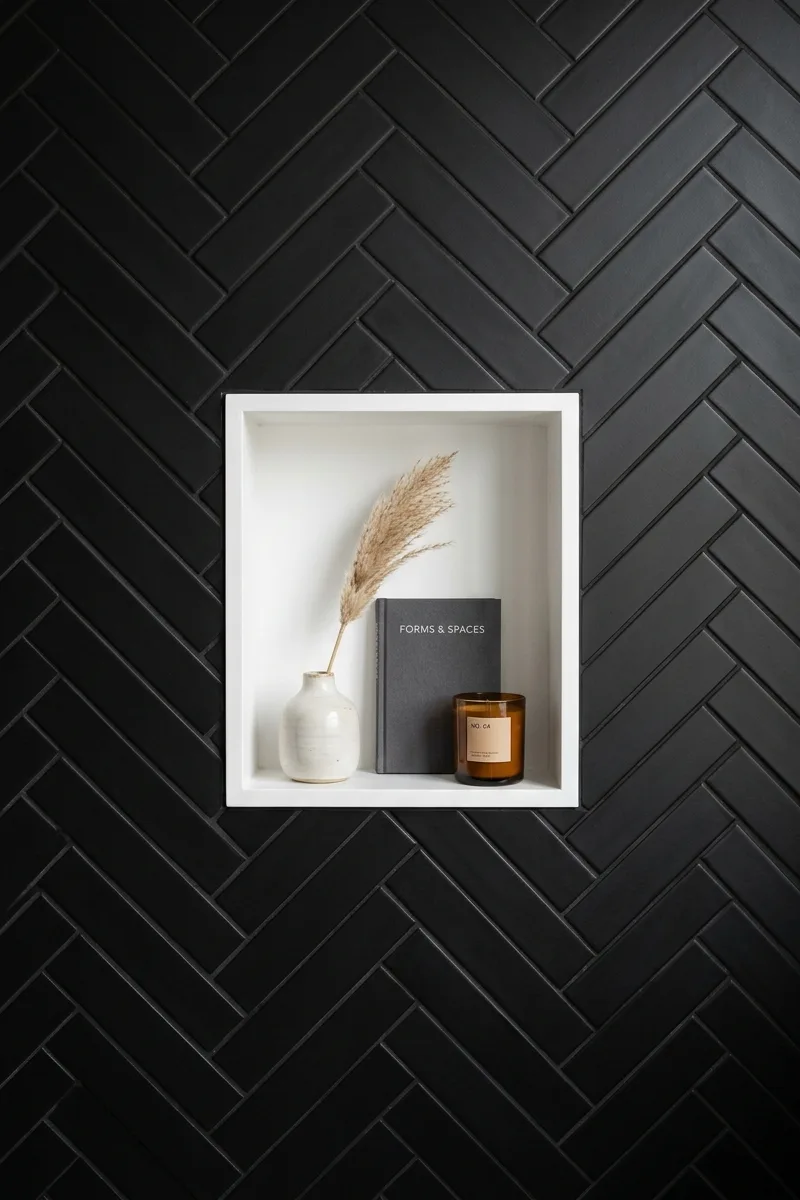
Taking the standard subway brick and laying it in a dynamic herringbone or chevron pattern is a masterstroke of vintage revival styling. This zigzagging layout introduces a powerful sense of movement and craftsmanship that a straight stack simply cannot achieve. The pattern dates back to ancient Roman roadways and parquet floors, bringing a sense of architectural permanence to the shower wall or sink splashback. In 2026, this look is trending in moody, sultry hues like deep burgundy or charcoal, where the points of the chevron catch the light and cast tiny shadows. It is a labor-intensive install that signals a commitment to detail and a love for the artistry of tiling. The herringbone wall feels like a bespoke suit for the bathroom, tailored and sharp. Pair it with a single, sculptural brass sconce, and the wall becomes a backdrop of pure, vibrating energy that feels both deeply historic and cutting-edge cool.
The Revival of Glossy Crackle Glaze
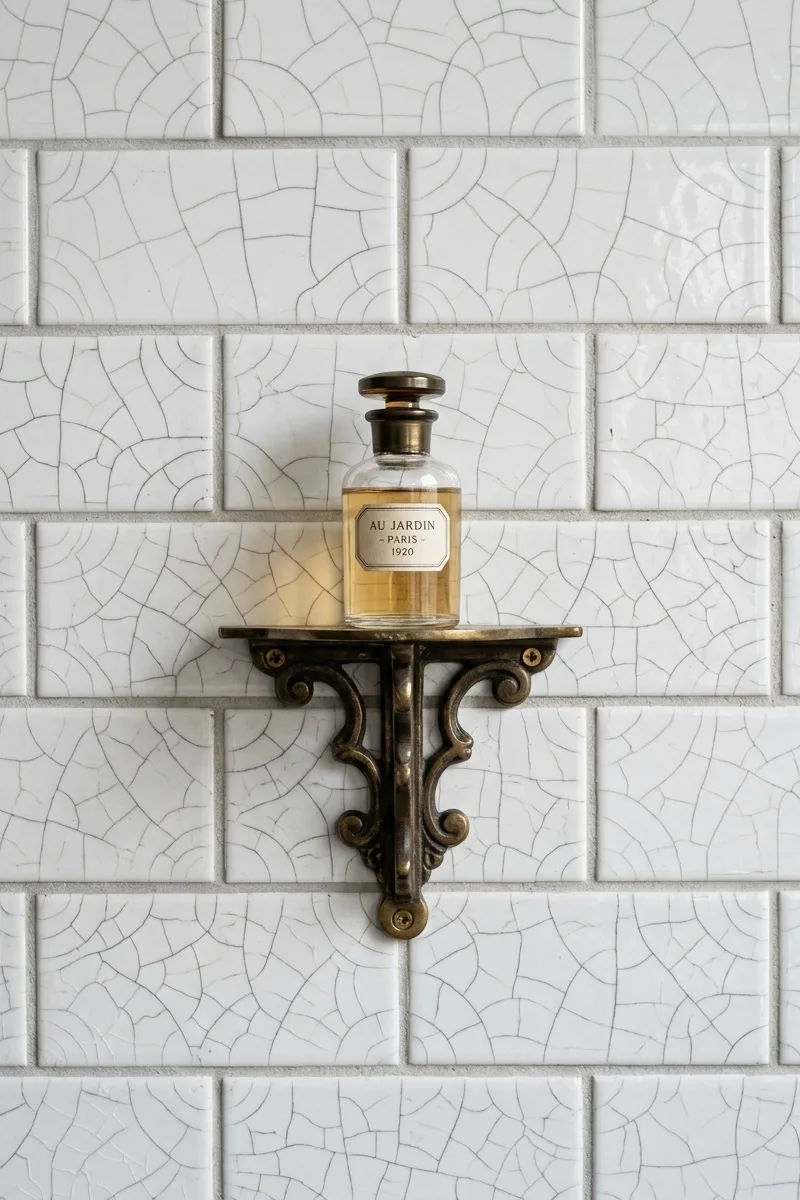
For a genuine dose of antique charm, the crackle-glaze ceramic tile is the secret weapon of the vintage revival. This finish, achieved by a deliberate mismatch in the cooling rate of the glaze and the clay body, creates a beautiful, fine spiderweb of lines across the glossy surface. It mimics the effect of centuries-old porcelain and instantly adds a sense of collected history to a brand new bathroom. The crackle pattern is unique to every single tile, making the wall feel like a curated art installation. In 2026, we are seeing this used in deep, saturated jewel tones—an emerald green crackle backsplash or a midnight blue shower wall. The tiny fissures catch the light and add a layer of texture that feels incredibly precious and handcrafted. It is a finish that celebrates the beauty of ‘flawed’ materiality, pairing perfectly with raw brass or unlacquered copper to create a patina-rich sanctuary that feels as if it has been there for a century.
Mixing Eras with Modern Fixtures
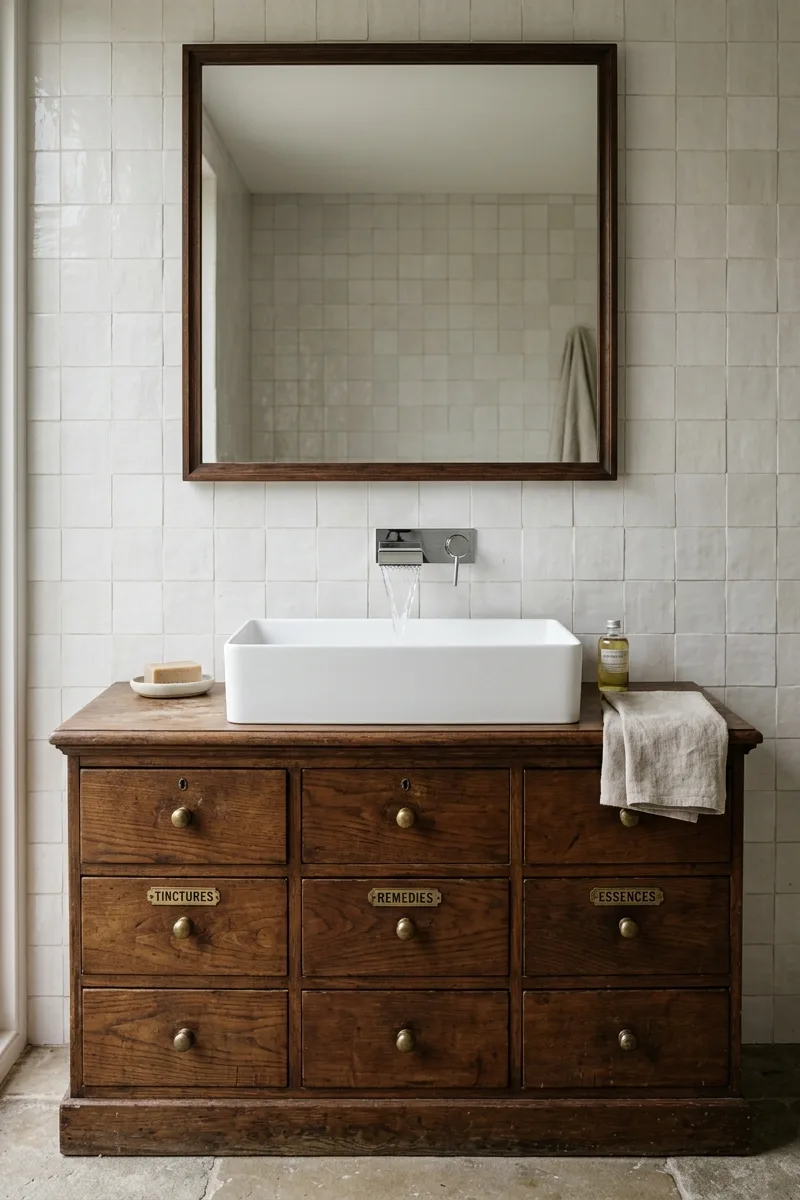
The true genius of the vintage tile revival lies in the juxtaposition of old and hyper-new. The rule is simple: the busier and more historic your tile, the sleeker and more minimalist your sanitaryware should be. A wildly patterned encaustic floor screams for a stark, sculptural matte white bathtub floating above it. A wall of shimmering, flawed zellige tile looks best with a razor-thin, backlit LED mirror and a spout that is a simple geometric cylinder. This contrast prevents the room from becoming a themed period piece and instead creates a dynamic design dialogue. The tension between the handcrafted, imperfect tile and the machine-perfect fixture elevates both. It signals a confident, curated eye that respects history without being trapped by it. This mixing of eras is the defining strategy of the 2026 vintage bathroom, proving that a 100-year-old tile pattern can look devastatingly futuristic when paired with the clean lines of contemporary design.
Wainscoting Height with a Retro Cap
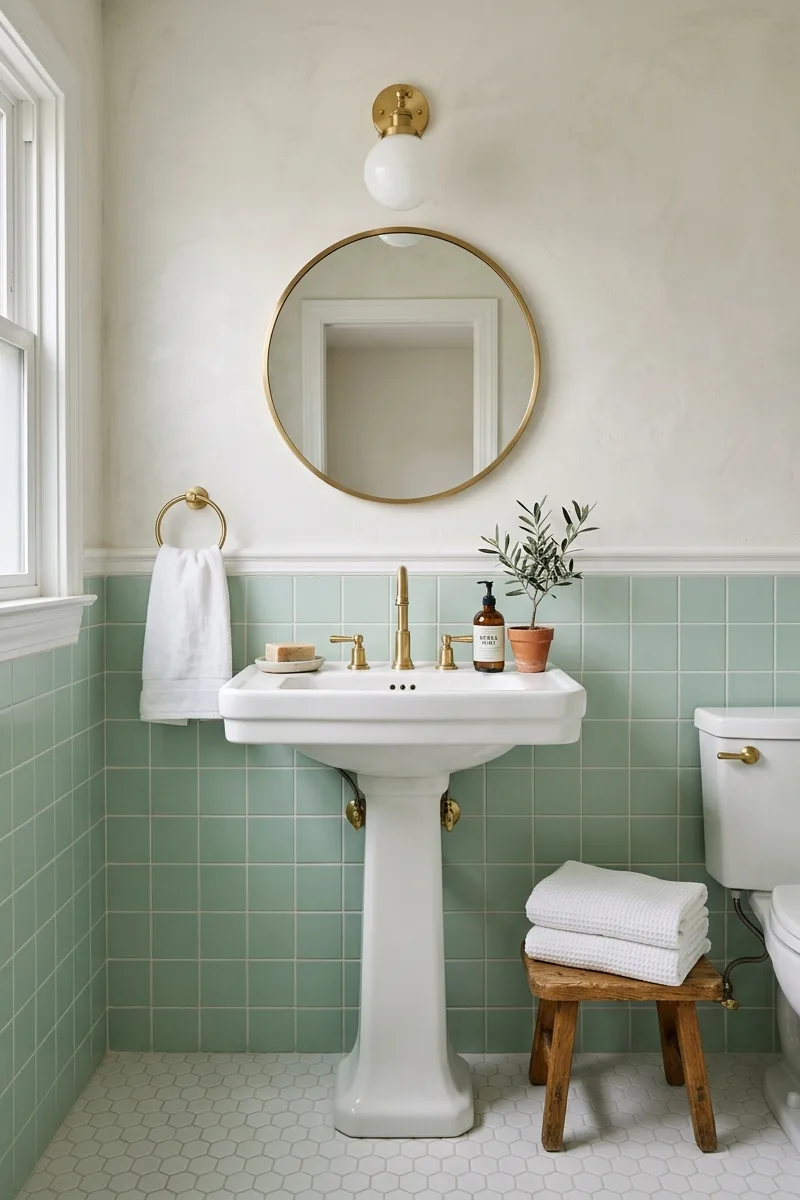
The vintage concept of wainscoting, tiling the lower third or half of the wall, is a brilliant practical and aesthetic revival. This classic technique uses tile to protect walls from moisture at the splash zone while creating a strong, grounding horizontal line that gives the room architectural bones. Use a retro square tile in a soft sage or pale peach on the lower half and finish the top edge with a period-appropriate rounded bullnose or a slim black pencil liner as a ‘cap.’ For the upper wall, skip the tile altogether and use a moisture-resistant limewash paint or a charming vintage wallpaper behind a glass panel. This delineation breaks up the wall plane and allows you to introduce a second pattern without overwhelming the room. It is a very European, bistro-style look that feels eternally chic. The wainscoting visually expands the space, grounding the heaviness of the tile to the floor and leaving the upper half light and airy.
The Moody Monochromatic Vintage Bath
Who says vintage tile has to be bright white and cheery? The 2026 revival embraces the dark side with moody, monochromatic rooms wrapped entirely in deep, historic tile patterns. Imagine a tiny powder room clad floor-to-ceiling in matte black penny tiles or a shower cocooned in dark burgundy square tiles. The high-contrast, high-texture effect created by the dense grid of a vintage tile format but in a deeply saturated, dark hue is nothing short of breathtaking. It creates a cave-like, intimate sanctuary that feels like a classic apothecary or a hidden speakeasy. The key to pulling this off is high-quality, warm vanity lighting that glints off the glossy or textured tile surfaces. A brass mirror and warm wood accents keep the darkness feeling warm and inviting, not gothic. This brooding, daring take on retro tile proves that vintage geometry is the perfect vehicle for deep, bold, modern color palettes that wrap the bather in a decadent, sensory embrace.
Faux-Bois and Nature-Inspired Motifs
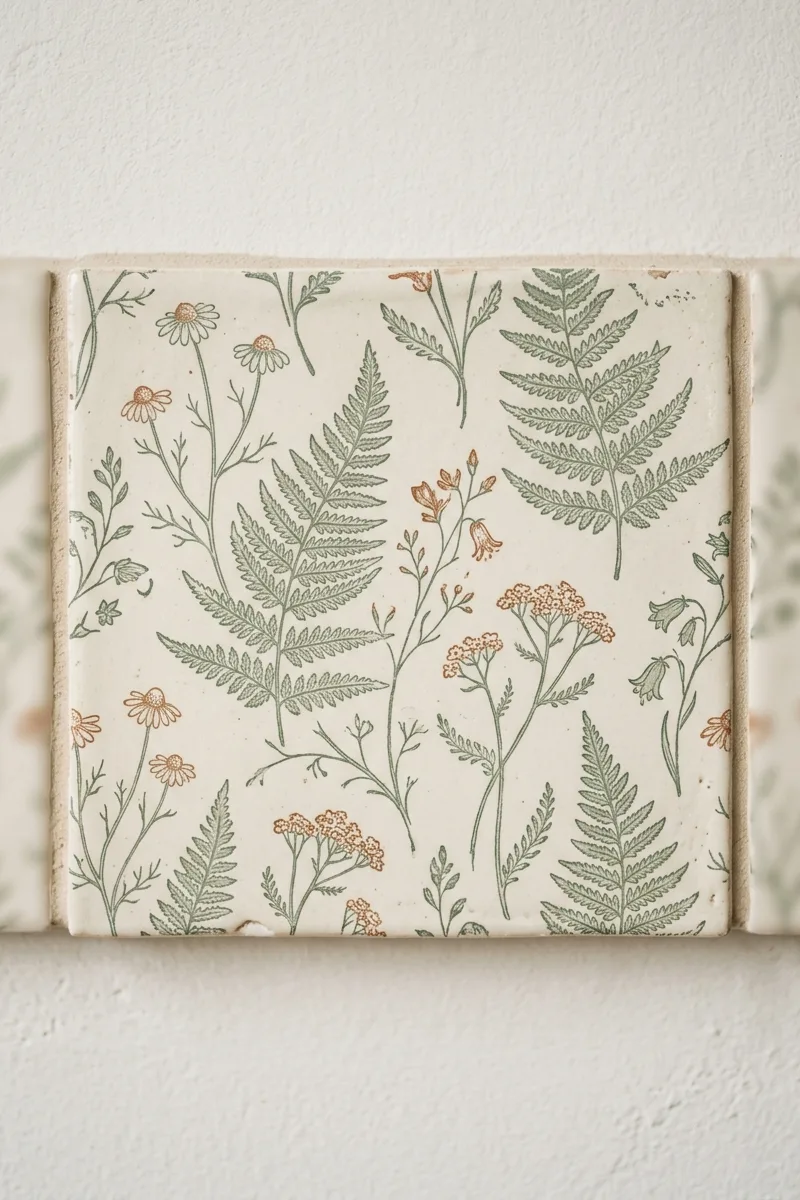
Beyond geometry, the vintage revival also welcomes back the delicate charm of nature-inspired motif tiles. Faux-bois tiles mimicking wood grain, or delicately screen-printed floral and fern patterns from the Arts and Crafts movement, are finding their way into modern bathrooms. These tiles are used as a decorative accent, perhaps in a single vertical stripe behind a mirror or as a ‘rug’ insert in a shower floor. The delicate botanical line drawings in soft sage, faded terracotta, or dusty blue add a romantic, whimsical layer that balances out hard, modern steel fixtures. They bring a gentle, storybook quality that makes a bathroom feel like a secret garden. The modern twist is to frame these highly decorative tiles in a field of large-format, muted, solid-colored porcelain or a quiet microcement. This prevents the room from feeling like a Victorian tearoom and instead allows the decorative motif to sing out as a curated piece of artwork, celebrating nature’s form in a truly elegant way.
The Sprawl of Basketweave Marble
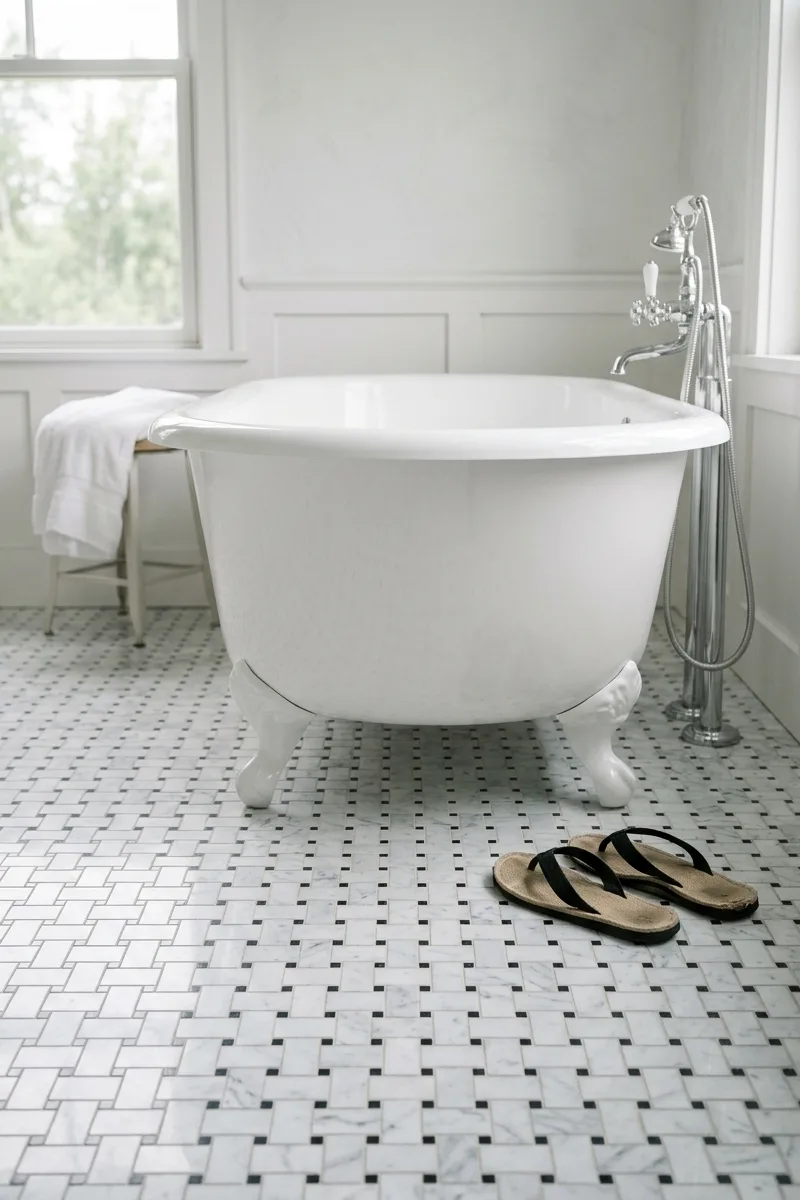
The carrara marble basketweave mosaic is a vintage classic that exudes an innate, pre-war Manhattan elegance. The interlocking pattern, usually composed of small oblong and square dots, creates a richly textured, tonal surface that feels both soft and incredibly expensive. Unlike a loud encaustic tile, the basketweave offers a quiet, sophisticated pattern that reads almost as a solid texture from a distance. This makes it the perfect floor for a spa-like sanctuary where you want character without visual shouting. In 2026, this classic is being used wall-to-wall in high-end wet rooms, often paired with a frameless glass enclosure and nothing else. The natural grey veining of the marble adds an organic counterpoint to the geometric rigor of the pattern. It is a truly timeless, stealth-wealth vintage choice. It whispers old-world quality and pairs beautifully with both a traditional clawfoot tub or a starkly modern concrete trough, bridging the gap between eras with effortless grace.
Border Trims and Pencil Liners
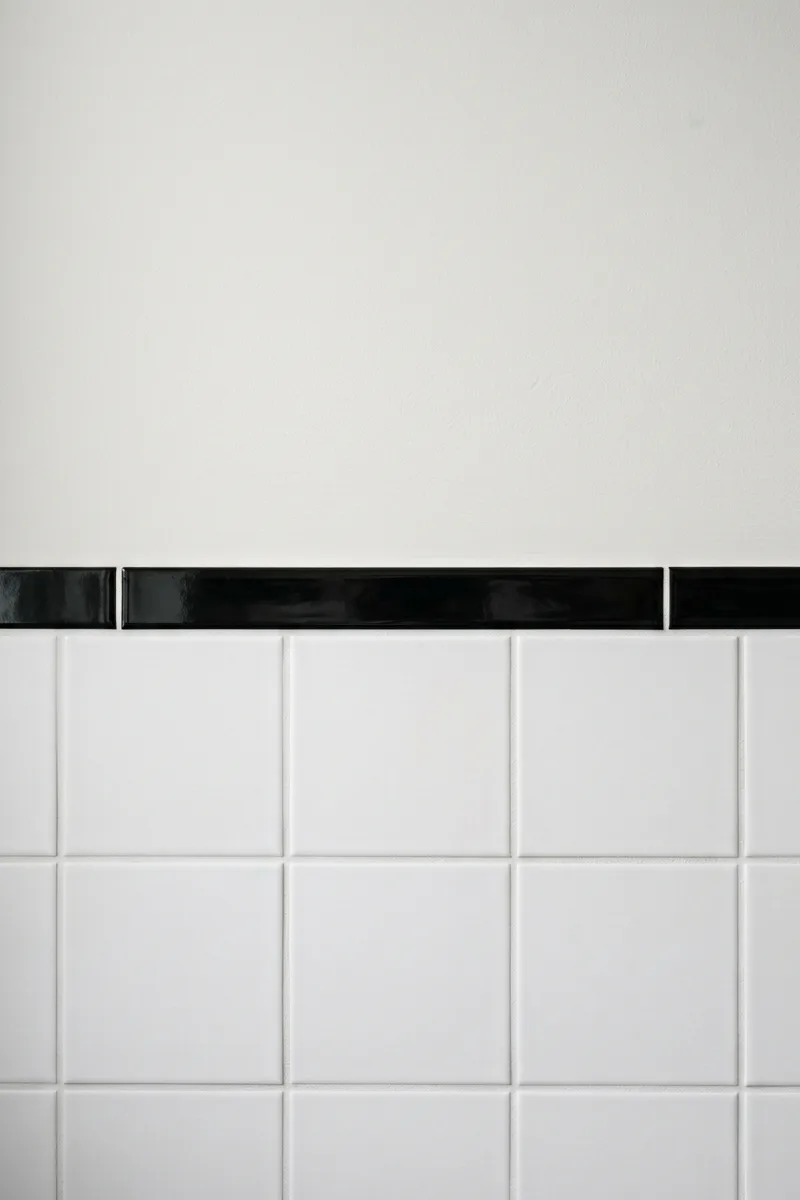
Do not underestimate the transformative power of a simple vintage-style border trim. Pencil liners, chair rails, and decorative listellos are the architectural jewelry of a tiled wall, providing a crisp, finished edge that modern, rectified tiles often lack. A single, slim line of glossy jet-black or brushed brass tile running horizontally through a field of white ceramic creates an instant, period-perfect datum line that tricks the eye into seeing the space as wider and more bespoke. Using a decorative border as the splashback behind a vanity mirror frames the reflection beautifully. These trims are a minor investment in material that yield a massive uptick in perceived craftsmanship. They are the detailing that separates a basic tile job from a professionally designed space. In an era of seamless slabs, a deliberate, tactile trim is a celebration of the art of tiling itself, honoring the joints, profiles, and transitions as part of the room’s decorative vocabulary.
Chunky Bullnose and Art Deco Edges
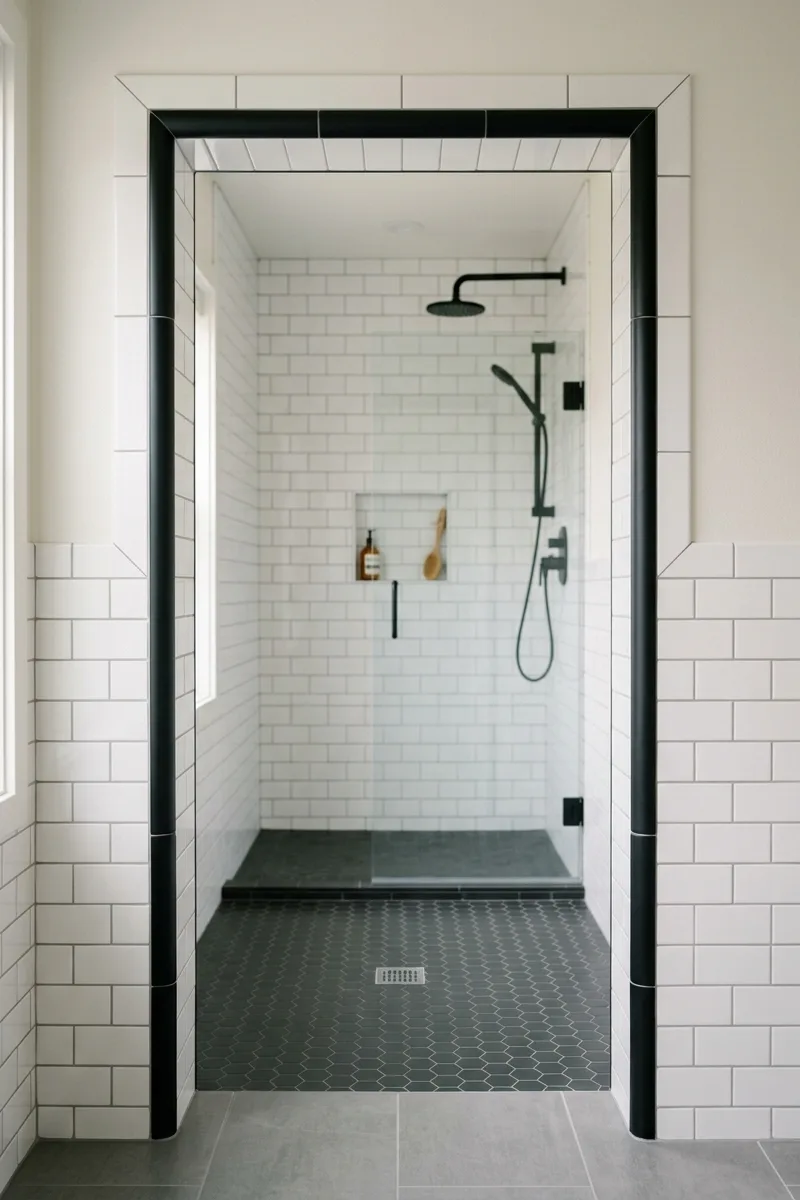
The silhouette of the tile’s edge is just as important as its face, and the Art Deco era gave us the chunky, rounded bullnose profile that is making a huge comeback. These thick, curved pieces cap the end of a tiled wall with a satisfying, pillowy curve that feels both retro and incredibly solid. In 2026, we are seeing these profiles highlighted in a contrasting color, perhaps a matte black bullnose framing a white subway wall, to create a strong, graphic outline. This is a detail pulled straight from 1920s Parisian apartments and Miami Art Deco hotels, and it brings an immediate sense of streamlined, machine-age luxury. The rounded edge softens the room and is incredibly pleasant to touch. Using a bullnose to frame a wall niche or the entry to a shower adds a level of bespoke carpentry-like finish to the tile, achieving a streamlined, vintage-futuristic look that feels glamorous and tailored.
Oversized Vintage Scales on Floors
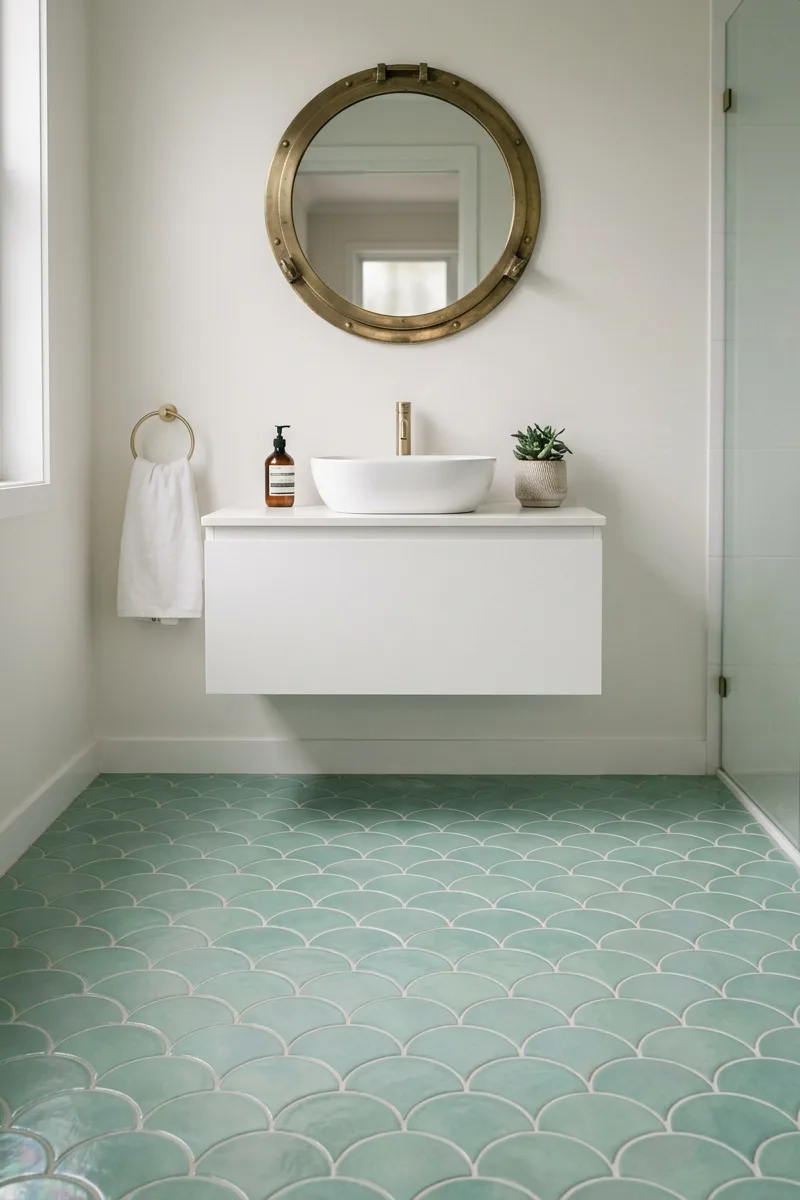
Taking a classic vintage shape and inflating it to modern proportions is a key trend for the 2026 floor. The fan or fish-scale shape, a staple of 1920s Art Deco, is being produced in dramatically oversized formats. These large, graphic scales create a sweeping, undulating wave pattern across the floor that feels whimsical, oceanic, and deeply glamorous. The shape is unmistakably vintage mermaid-core, but in a large size and a contemporary matte finish, it becomes a bold, graphic geometry statement. A pearlescent seafoam green or a soft blush pink enhances the underwater, mystical vibe. Grouting them with a matching color keeps the look seamless and sophisticated, allowing the silhouette, not the grid, to take center stage. It is a rebellious, sculptural alternative to the right angle. This floor shape injects a heavy dose of personality and rhythmic movement into the room, proving that vintage inspiration can yield the most avant-garde and playful results in a modern home.
The Unexpected Pop of a Retro Accent Tile
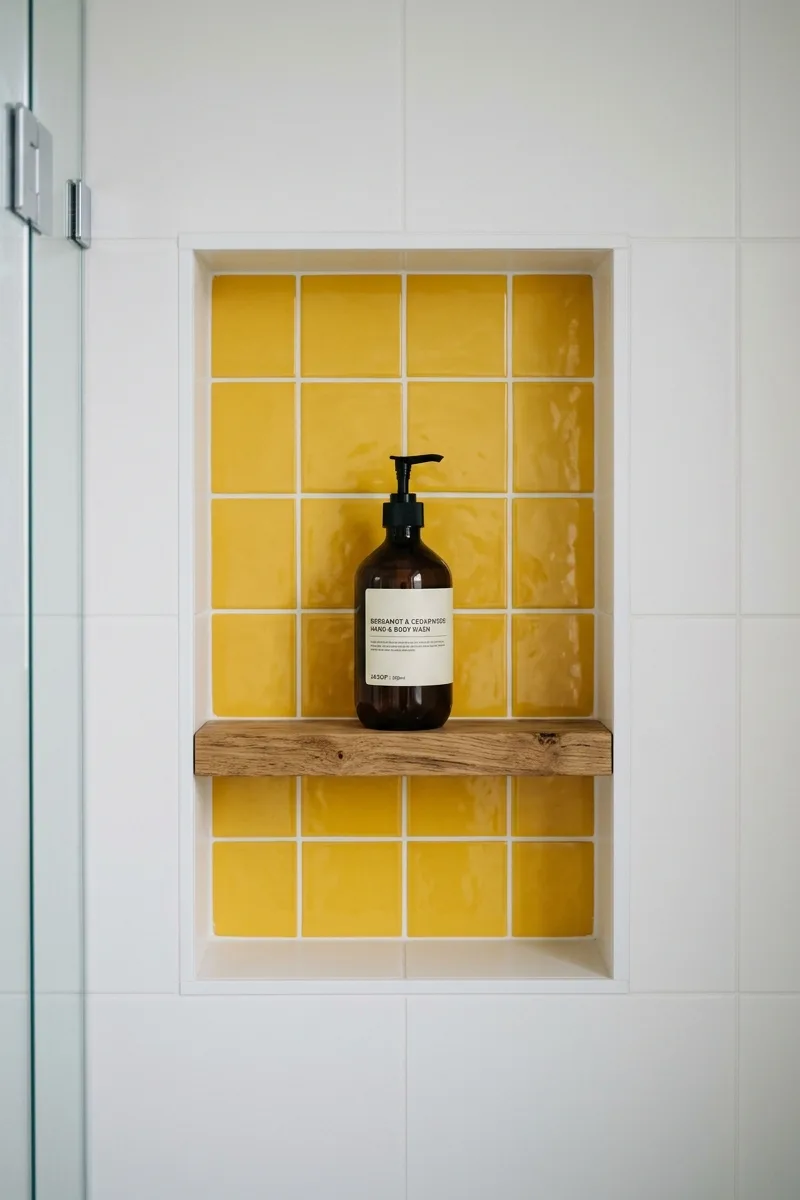
Not ready to commit to a full floor-to-ceiling vintage tile takeover? The strategic ‘pop’ of a single retro accent tile is the perfect low-risk, high-reward entry point into the trend. Use a shock of glossy, fiery red 4×4 tile as the backdrop for your shower niche, or clad the entire facade of a floating vanity in a graphic, black-and-white geometric encaustic. This tactic concentrates the dose of nostalgia into one powerful, architectural focal point. The rest of the room can remain starkly modern, creating a striking collage effect. An accent wall behind a freestanding tub in a bold, vintage floral pattern acts as a piece of permanent art. This approach is budget-friendly and allows for seasonal updates—re-tiling a single niche is a weekend project. It captures the spirit of the vintage revival, the joy of pattern and color, without overwhelming the senses, proving that a little bit of old-school charm goes a very long way in livening up a minimalist box.
Grout Color as a Design Statement
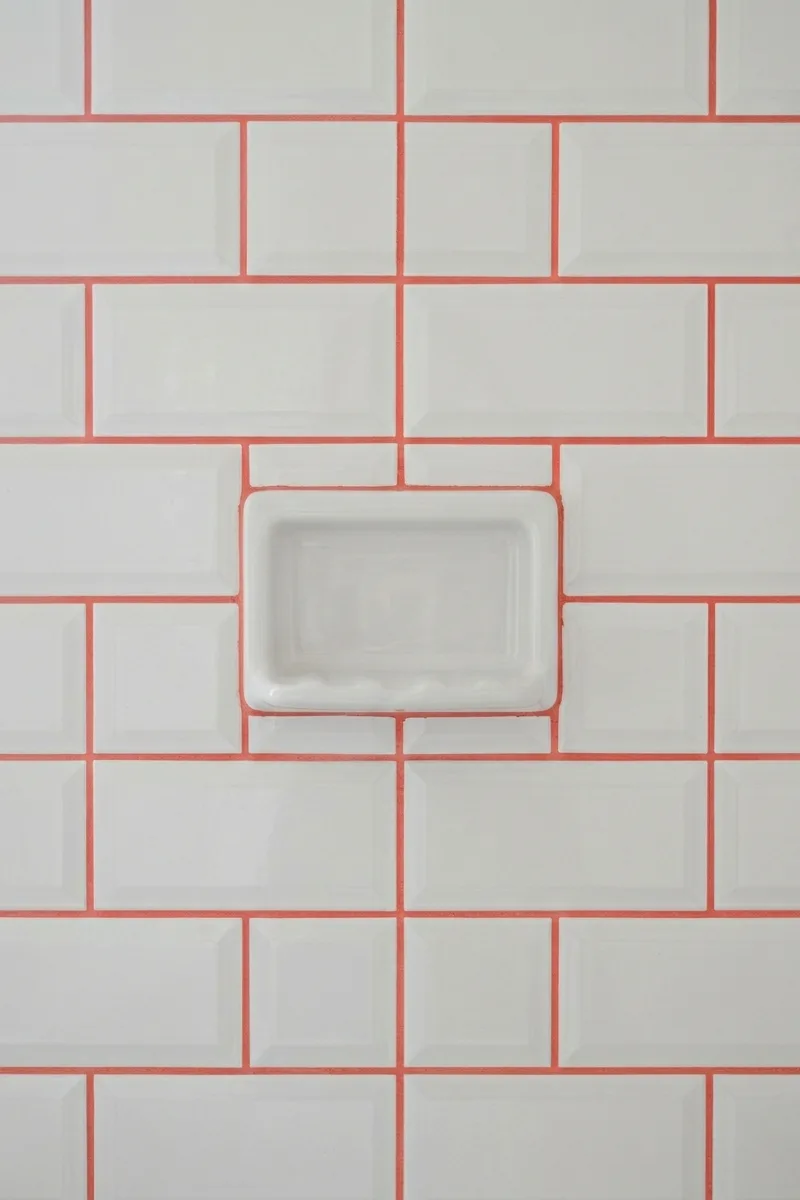
The most impactful element of the vintage tile revival might be the cheapest material on the list: the grout. Historically, colored grout was common, but decades of white-grout-white-tile minimalism made us forget its power. In 2026, designers are using grout as a graphic pen to completely redraw the lines of a classic tile. Pairing a classic white 3×6 subway tile with a shocking coral pink, deep forest green, or jet-black grout instantly transforms it from a bland spec home finish into a bold, retro statement. The contrasting grid highlights the brick pattern, making the architecture of the wall pop. It also has a practical, vintage charm; darker grouts in historically busy patterns hide dirt far better than white. This technique honors the craft of the tiler, celebrating the grid as a decorative pattern in its own right. It is a fearless, punchy trick that adds a massive dose of personality to a simple tile without any demolition, proving the vintage revival is about seeing old materials through a new, color-saturated lens.
Salvaged and Reclaimed Vintage Inserts
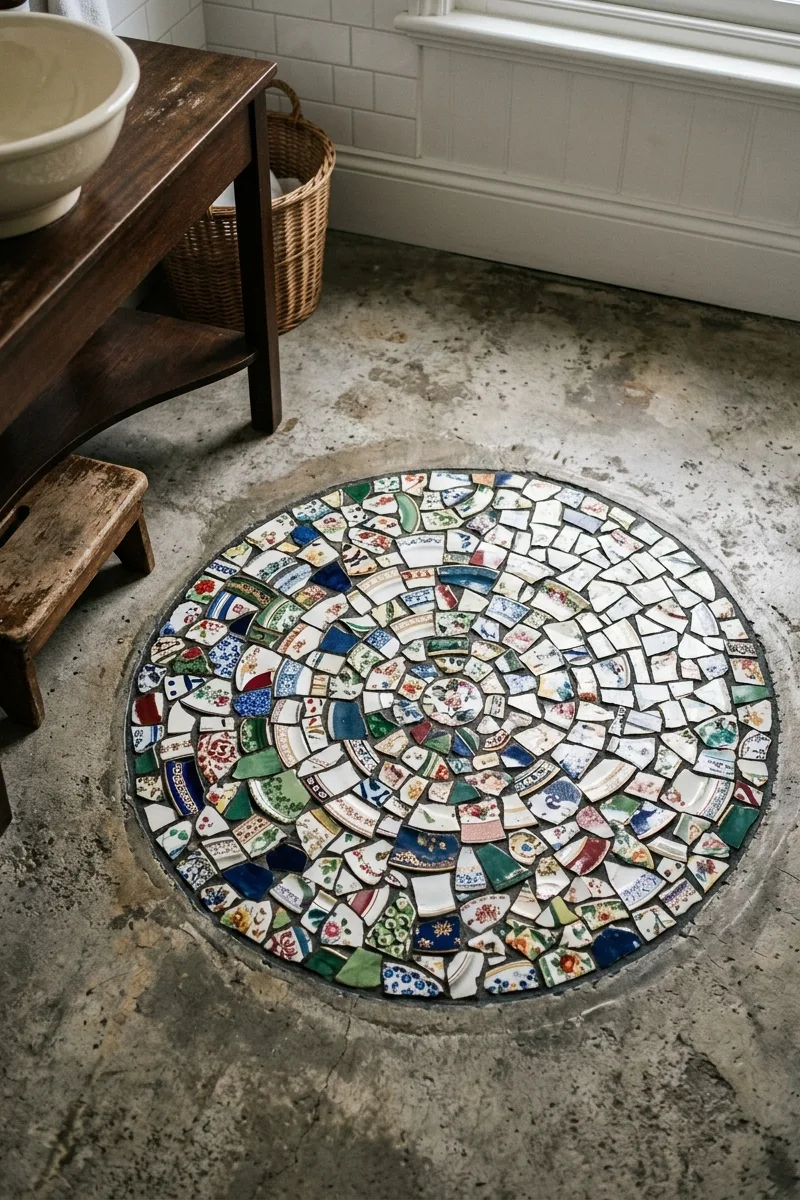
For the ultimate sustainable and soulful approach, the vintage tile revival champions the use of genuinely salvaged materials. Incorporating reclaimed tiles from architectural salvage yards or broken pieces of heirloom china into a new design creates a one-of-a-kind mosaic that carries stories in its cracks. A vanity backsplash created from a mix of vintage patterned porcelain shards, or a floor border using reclaimed 1920s penny tiles, offers an unmatched authenticity and patina. The variations in color, crazing, and wear from a century of footsteps add a spiritual depth that no manufactured ‘reproduction’ tile can fake. This practice is the definition of modern nostalgia, literally embedding the past into the walls of a new home. The slight irregularities in thickness and size are not flaws but proof of life. It is a slow, artistic, and deeply eco-conscious approach to renovation that creates a bathroom rich with narrative, memory, and a truly unique, irreplaceable texture.