17 Brilliant Closet Organization Ideas for a Tidy Home
Unlock the potential of your personal style sanctuary with these brilliant closet organization ideas, designed to bring order and elegance to even the most chaotic spaces. Whether you’re contending with a compact reach-in or a sprawling walk-in, mastering the art of wardrobe management is crucial for a serene home and effortless daily routine. We’re diving deep into 17 expert strategies, from clever storage solutions to smart decluttering techniques, ensuring every garment and accessory has its rightful place. Prepare to transform your closet from a mere storage spot into a highly functional, visually appealing haven that simplifies your life and inspires your fashion choices every single day. Let’s get started on creating the organized closet you’ve always dreamed of.
- Maximize Vertical Space with Tiered Rods
- Implement Drawer Dividers for Small Items
- Utilize Clear Bins and Containers
- Install Custom Shelving for Versatility
- Adopt the One-In, One-Out Rule
- Color-Code Your Wardrobe
- Invest in Slimline Hangers
- Smart Closet Organization Ideas for Every Wardrobe
- Create a Dedicated Accessory Zone
- Incorporate Adjustable Shoe Racks
- Add Strategic Lighting for Visibility
- Label Everything Clearly
- Seasonal Closet Organization Ideas
- Install Pull-Out Laundry Hampers
- Consider a Closet Island
- Utilize Wall Space for Hooks and Pegboards
- Maintain a Regular Decluttering Schedule
Maximize Vertical Space with Tiered Rods
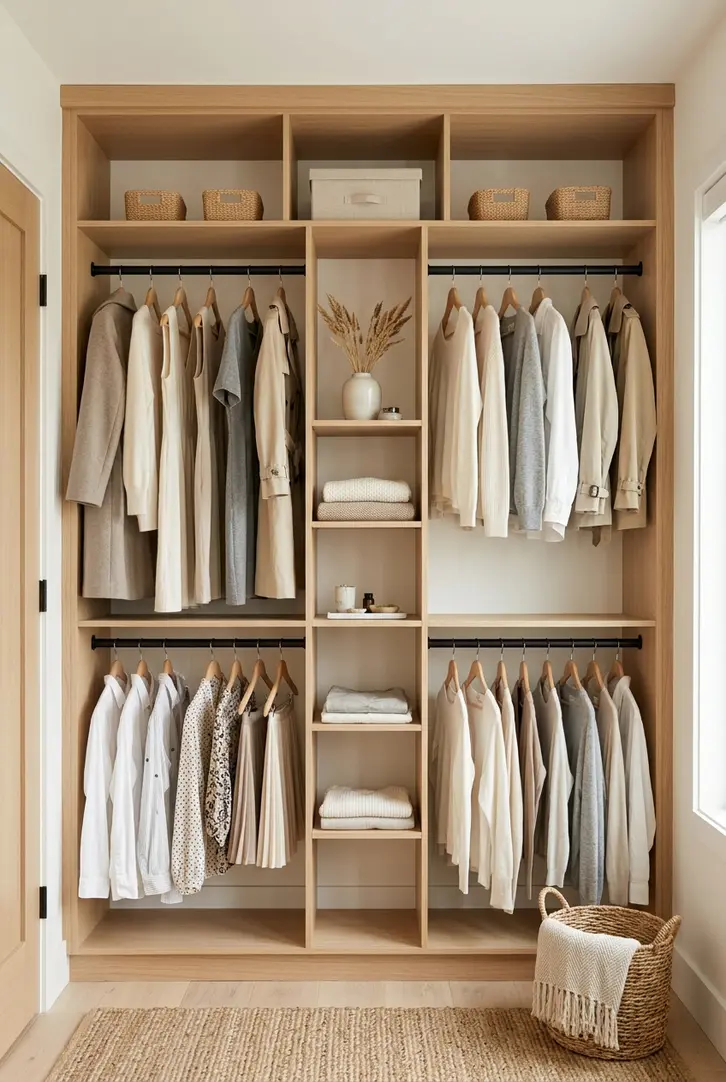
One of the most effective closet organization ideas for maximizing storage involves employing tiered hanging rods. Install a second rod beneath existing ones for items like blouses, skirts, and folded pants, immediately doubling your hanging capacity without requiring more floor space. Ensure adequate clearance between the two rods, typically 36-40 inches for longer items on top and 30-34 inches for shorter items on the bottom, using sturdy chrome or brushed nickel rods for durability. This strategy makes the most of every inch from floor to ceiling, making it a cornerstone of efficient wardrobe planning and excellent for any closet organization ideas you implement.
Implement Drawer Dividers for Small Items
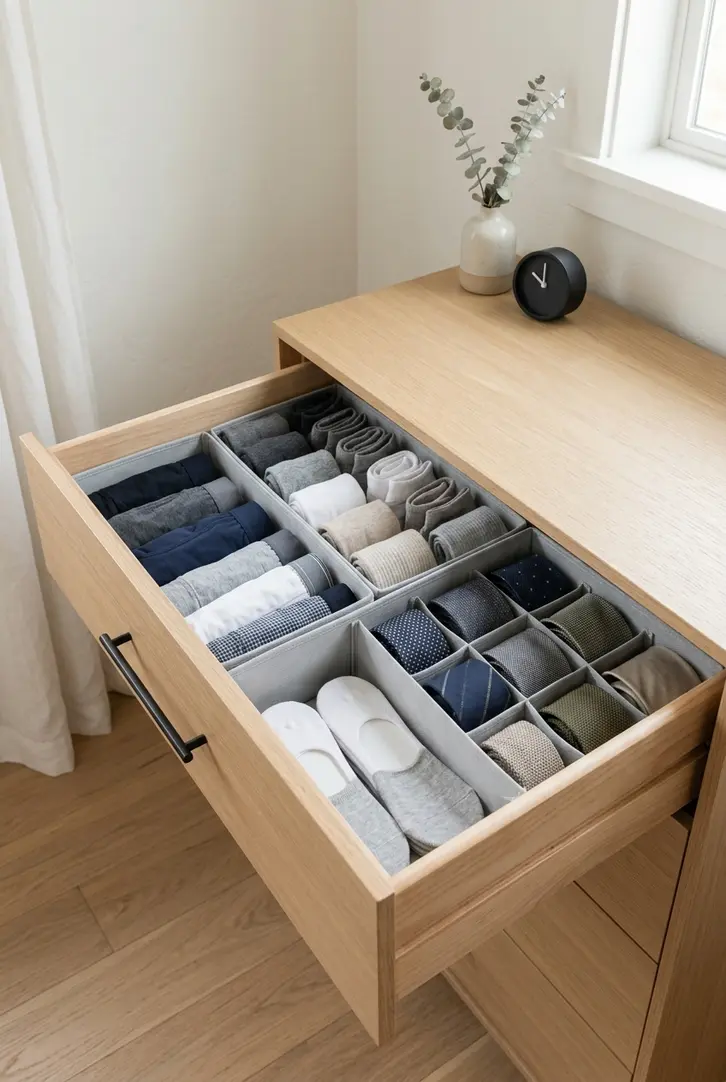
Drawer dividers are essential for preventing small items like socks, underwear, ties, and scarves from becoming a jumbled mess. Opt for adjustable bamboo or clear acrylic dividers that can be customized to fit your specific drawer dimensions and item sizes. Fabric-covered dividers offer a softer aesthetic, while plastic versions are easily wipeable for maintenance. By creating dedicated compartments for each category, you not only keep items tidy but also make finding what you need a swift and frustration-free process, preserving the longevity of your garments and accessories.
Utilize Clear Bins and Containers
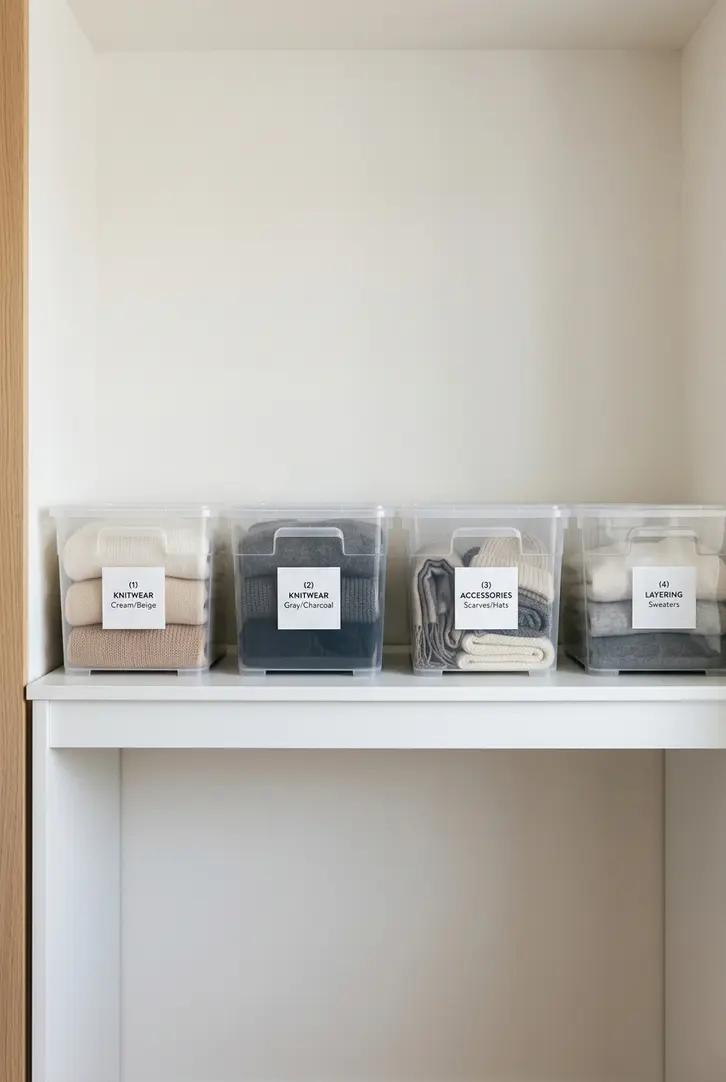
Clear bins and containers are a game-changer for visibility and dust protection, allowing you to quickly identify contents without opening each one. Choose stackable, transparent acrylic or sturdy plastic bins for storing out-of-season clothes, linens, handbags, or bulky sweaters on high shelves. For items like scarves or smaller accessories, smaller clear containers keep them neatly contained. Ensure bins are uniform in size and style for a cohesive, streamlined look, transforming cluttered shelves into a display of thoughtful organization.
Install Custom Shelving for Versatility
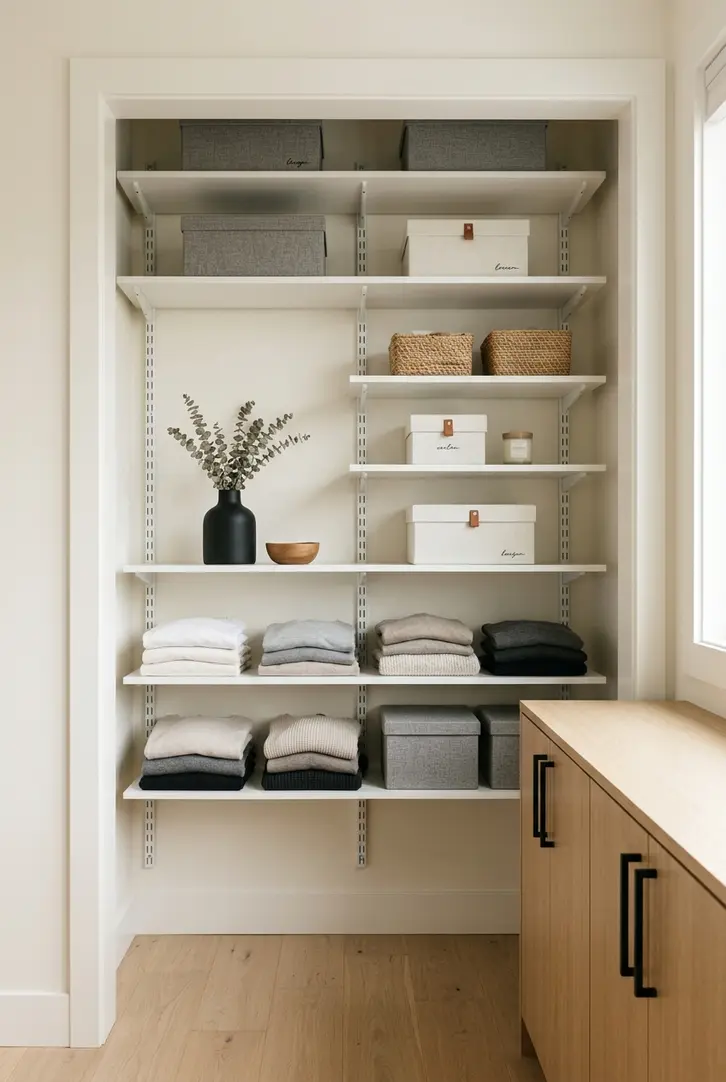
Custom shelving provides unparalleled flexibility and is one of the foundational closet organization ideas. Instead of fixed shelves, consider a modular system with adjustable heights, allowing you to reconfigure spaces for different clothing types or as your wardrobe evolves. Utilize materials like laminated particleboard for cost-effectiveness or solid wood for a premium feel. Shallow shelves, around 12 inches deep, are ideal for folded garments, while deeper sections can accommodate larger bins or luggage. This adaptability ensures that every inch of your closet space serves a precise purpose, making it easier to keep organized.
Adopt the One-In, One-Out Rule

To prevent your closet from overflowing, consistently apply the ‘one-in, one-out’ rule. Every time you acquire a new piece of clothing or an accessory, commit to donating, selling, or discarding an existing item. This simple principle maintains a consistent volume in your wardrobe, forcing you to regularly assess your possessions and ensure everything you own is truly loved and utilized. It’s a proactive measure against clutter, simplifying future decluttering efforts and keeping your curated collection perfectly manageable without needing constant closet organization ideas.
Color-Code Your Wardrobe
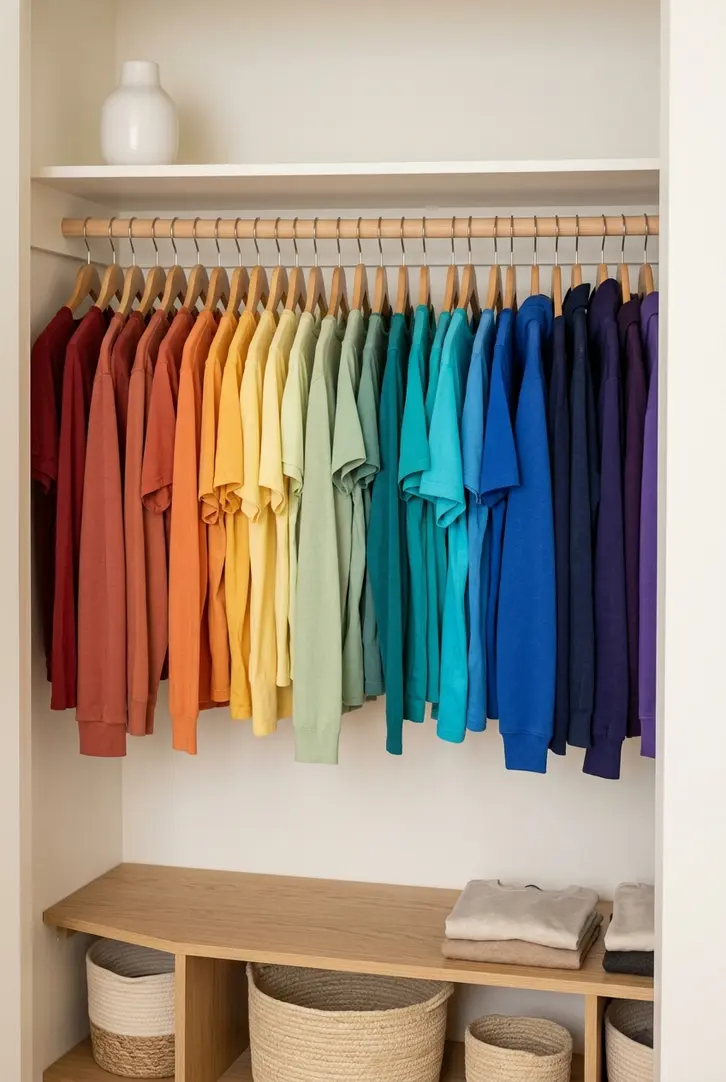
Organizing your clothes by color is not just aesthetically pleasing; it significantly speeds up your morning routine. Arrange items from lightest to darkest within each category (e.g., all white shirts, then creams, grays, black). This visual system allows you to quickly locate specific garments, identify gaps in your wardrobe, and easily assemble cohesive outfits. Implement this method across all hanging items, folded clothes on shelves, and even accessories for a truly harmonious and efficient closet experience, making your closet organization ideas much more intuitive.
Invest in Slimline Hangers
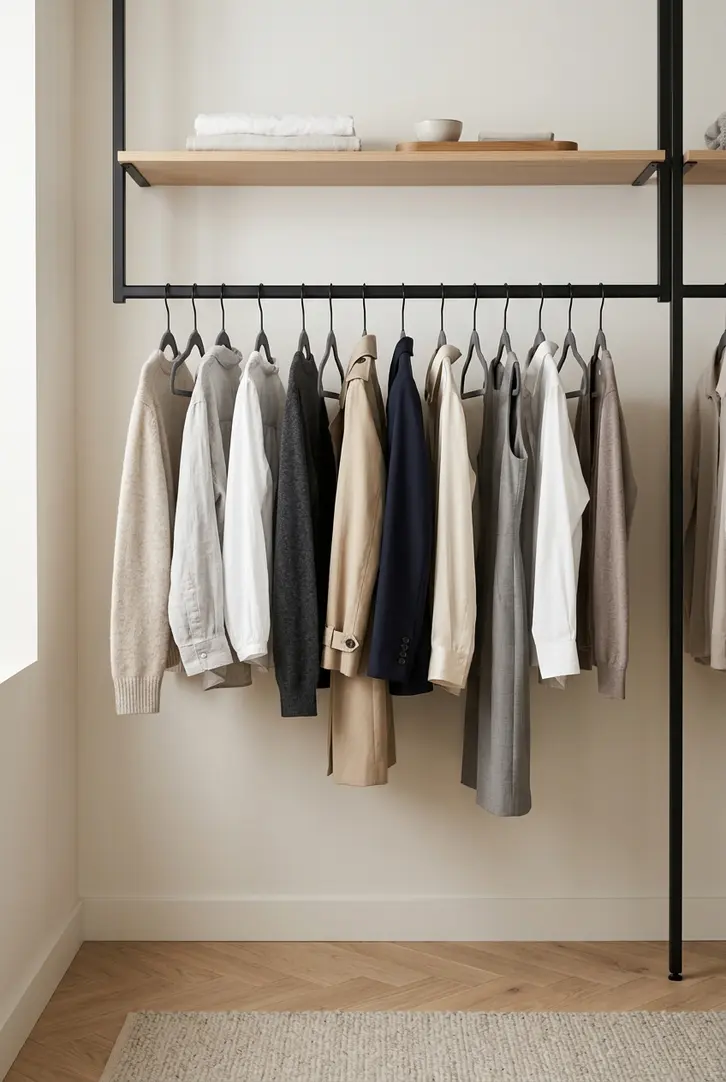
Upgrade from bulky plastic or wire hangers to slimline velvet or flocked hangers. These hangers have a minimal profile, instantly freeing up precious hanging space in your closet, sometimes by as much as 50%. The soft, non-slip texture also prevents clothes from slipping off, maintaining garment shape and preventing creases. Standardize your hangers to a single color and style for a clean, cohesive appearance that visually expands your wardrobe and contributes to a sophisticated, organized environment.
Smart Closet Organization Ideas for Every Wardrobe
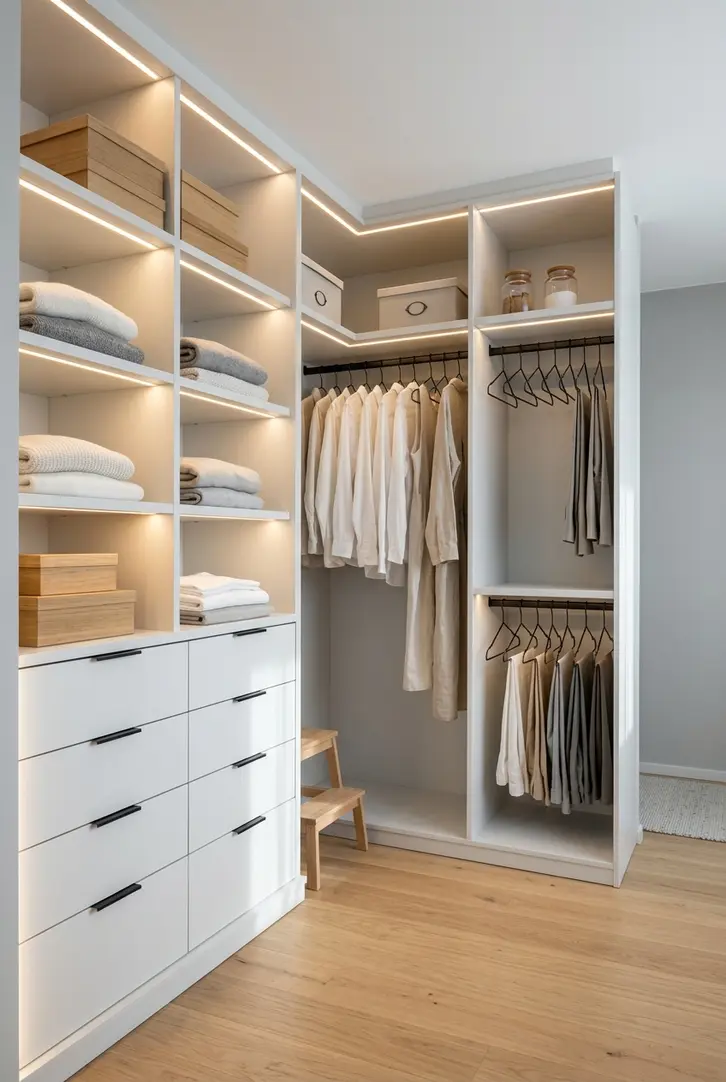
Implementing smart closet organization ideas means thinking beyond just storage and considering functionality and flow. Consider installing pull-out drawers for folded items like t-shirts and jeans, which prevent stacks from toppling over and make items accessible. For frequently worn accessories, shallow drawers with built-in dividers are ideal. These integrated solutions make daily dressing much smoother, transforming your closet into a highly efficient system that responds to your lifestyle. This approach creates an environment where every item has a clear home, reducing decision fatigue and enhancing daily efficiency.
Create a Dedicated Accessory Zone
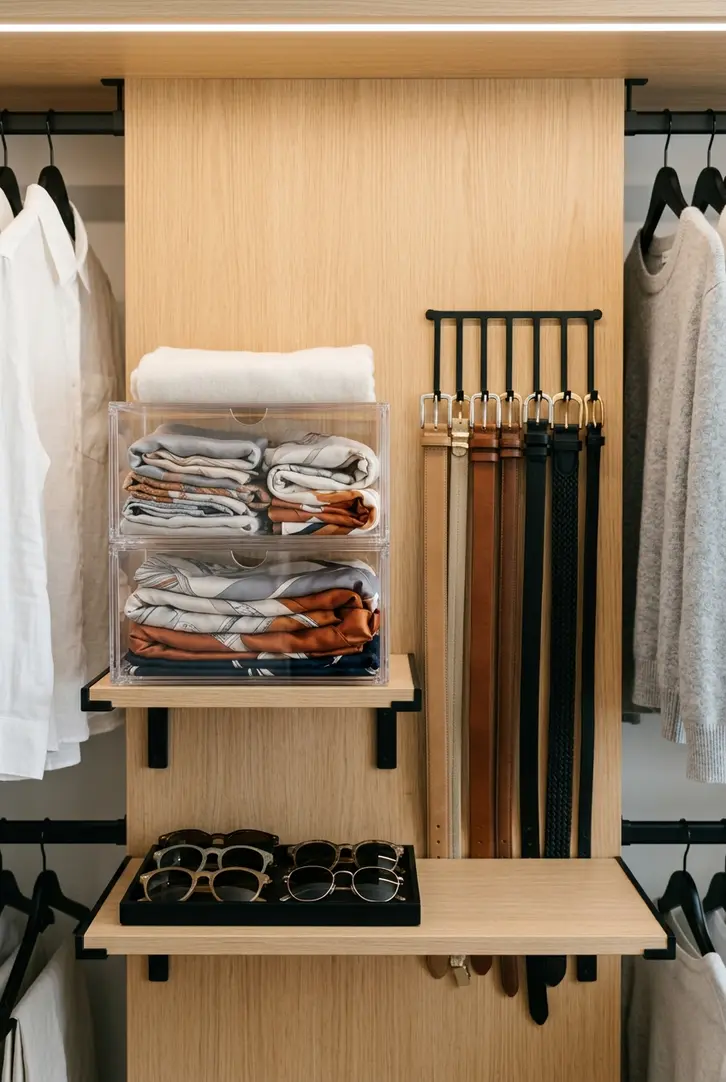
Designating a specific area for your accessories ensures they are protected and easily accessible. Use shallow drawers with velvet inserts for jewelry, or clear acrylic trays for sunglasses and watches. Belt racks that hang over a rod, multi-loop scarf hangers, and wall-mounted hooks for hats are all excellent additions. This dedicated zone keeps delicate items from getting tangled or damaged, making it simple to complete an outfit. Consistency in where you store items minimizes search time and prevents misplaced treasures.
Incorporate Adjustable Shoe Racks
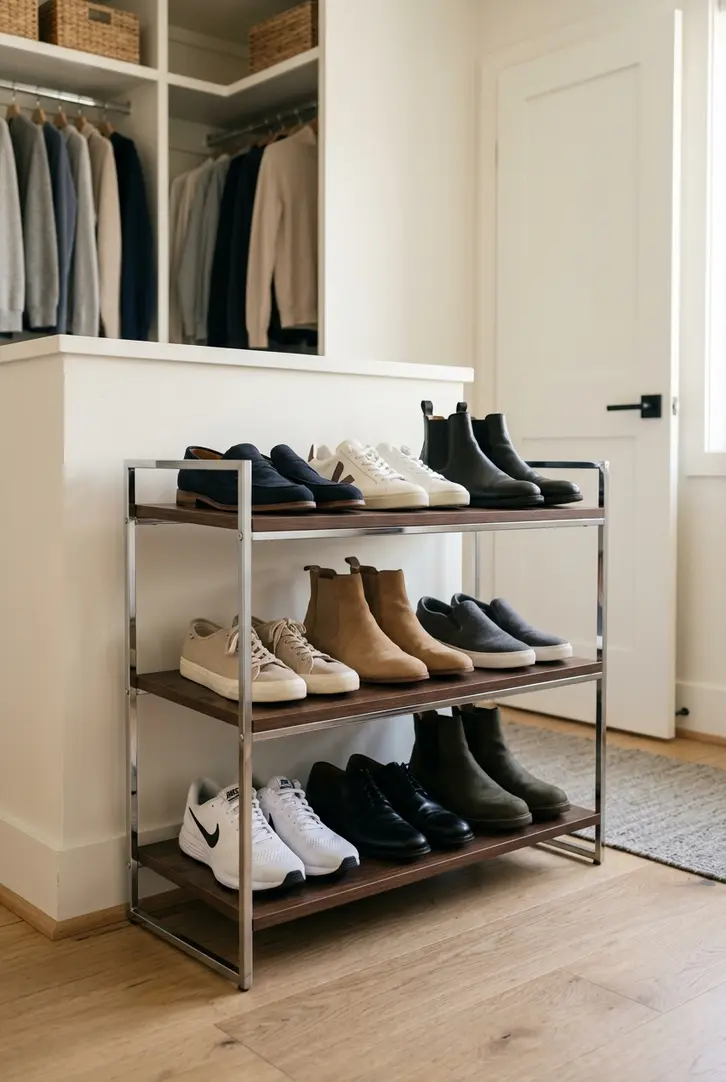
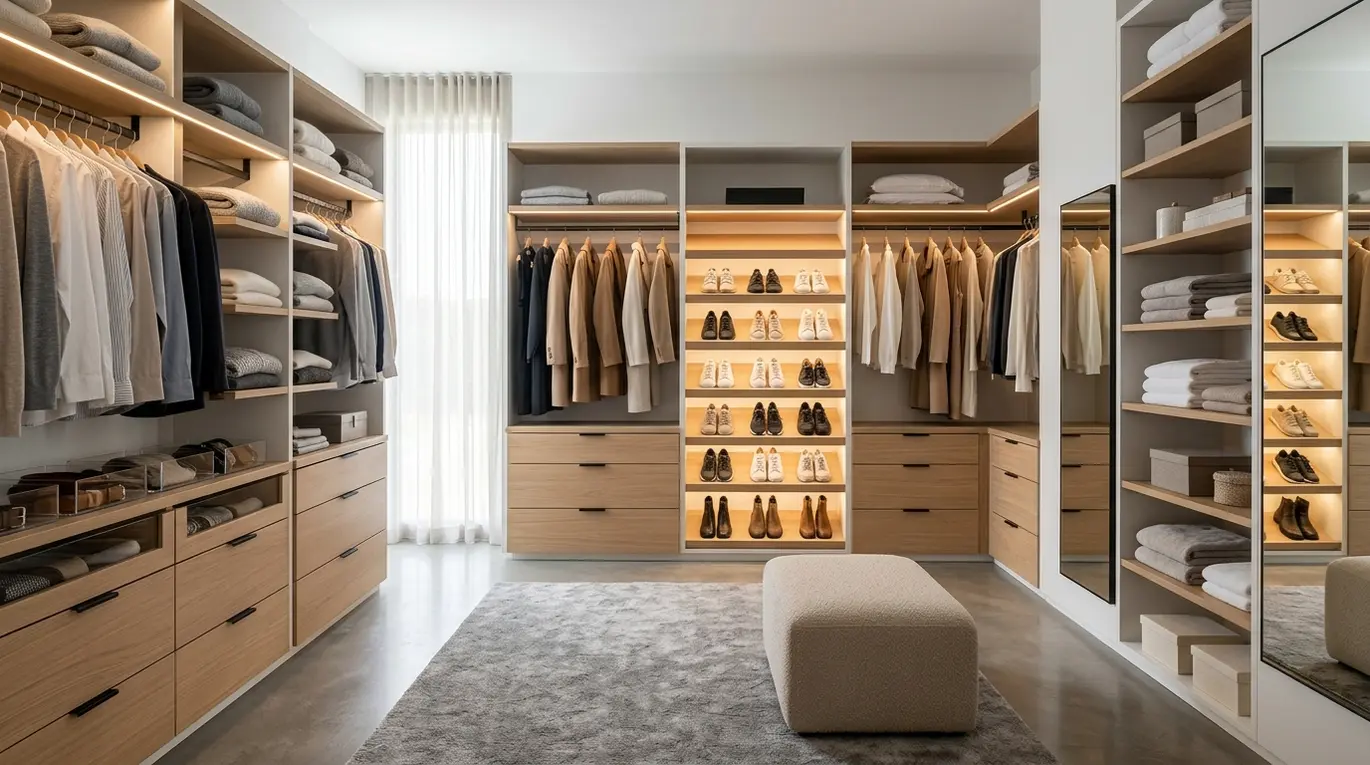
Shoes can quickly clutter the bottom of a closet, so investing in adjustable shoe racks is crucial. Choose tiered racks made of sturdy metal or wood that can be configured to accommodate different shoe heights, from flats to boots. Alternatively, clear shoe boxes protect footwear from dust and allow for easy identification. For high-heels, consider angled shelves that display them beautifully while keeping them organized. Keep shoes off the floor to maintain cleanliness and prevent damage, extending their lifespan and maintaining a tidy appearance.
Add Strategic Lighting for Visibility
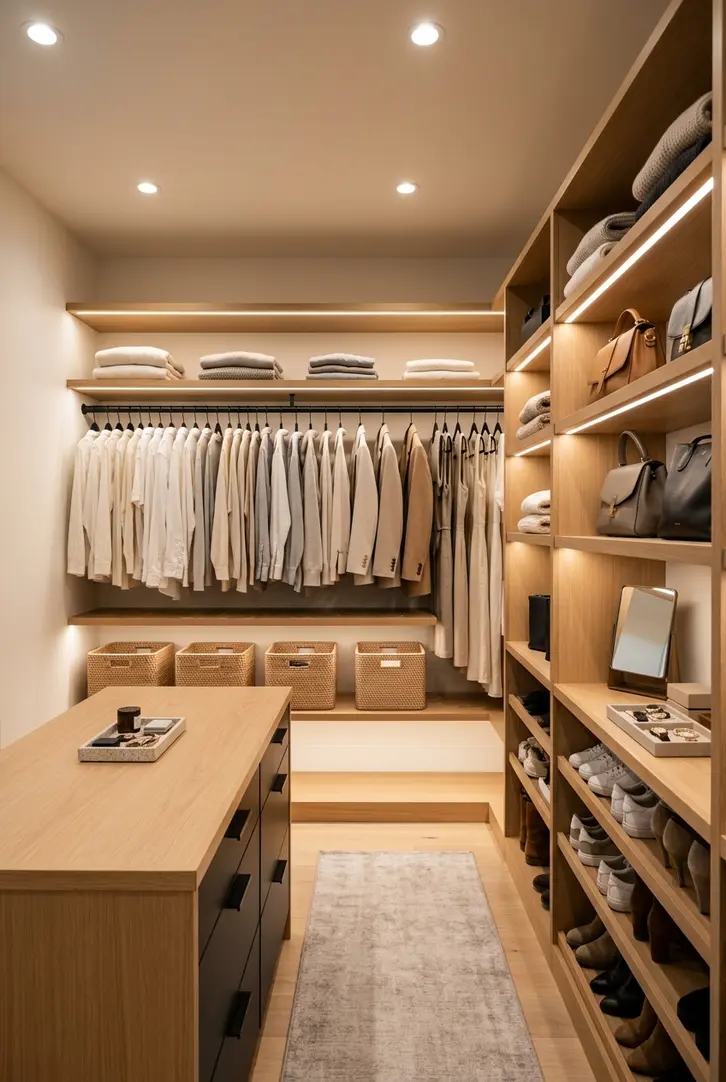
Proper lighting is an often-overlooked yet critical component of effective closet organization ideas, enhancing both functionality and aesthetics. Install recessed LED lighting in the ceiling, motion-sensor strip lights under shelves, or battery-operated puck lights in dark corners. Warm white light (2700K-3000K) is generally preferred as it accurately renders clothing colors. Good illumination helps you see all your items clearly, preventing you from overlooking pieces and making getting dressed a more pleasant experience. It transforms a dark, utilitarian space into an inviting personal boutique.
Label Everything Clearly
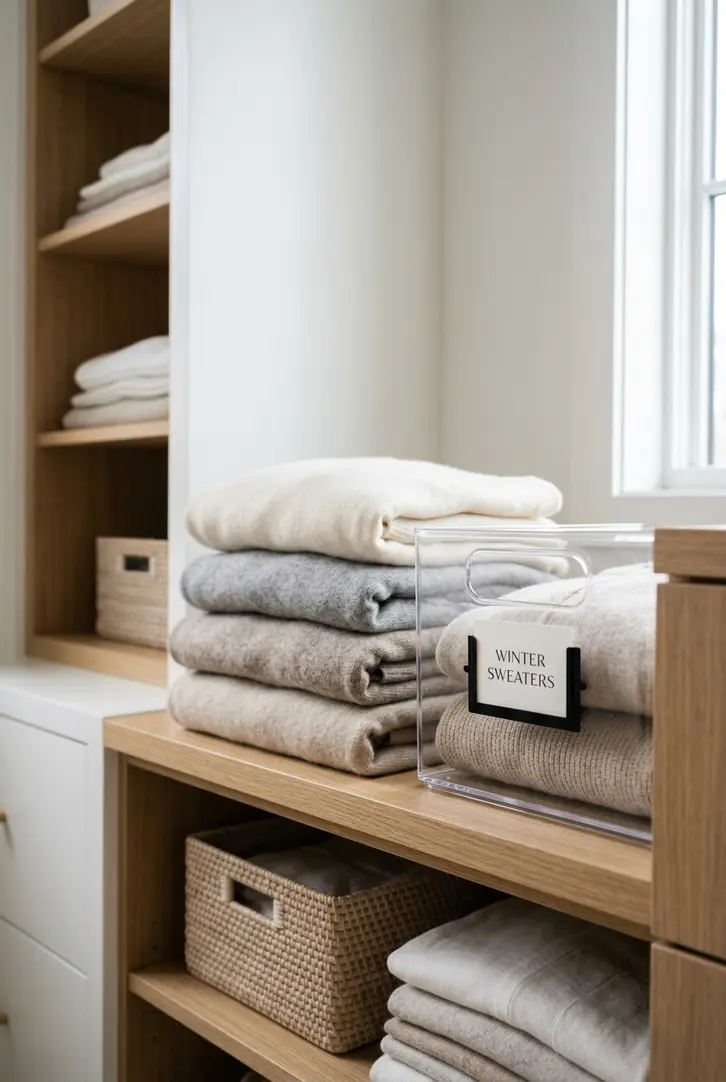
Once you’ve sorted and categorized your items, labeling them clearly is the next logical step to maintain organization. Use a label maker for a crisp, uniform look on bins, baskets, and drawer fronts, identifying contents like ‘Athletic Wear,’ ‘Seasonal Scarves,’ or ‘Winter Sweaters.’ For a more rustic touch, chalkboard labels or small tags with handwritten descriptions can be charming. Consistent labeling ensures that everyone in the household knows where items belong, simplifying tidying up and making it easy to find exactly what you need without rummaging.
Seasonal Closet Organization Ideas
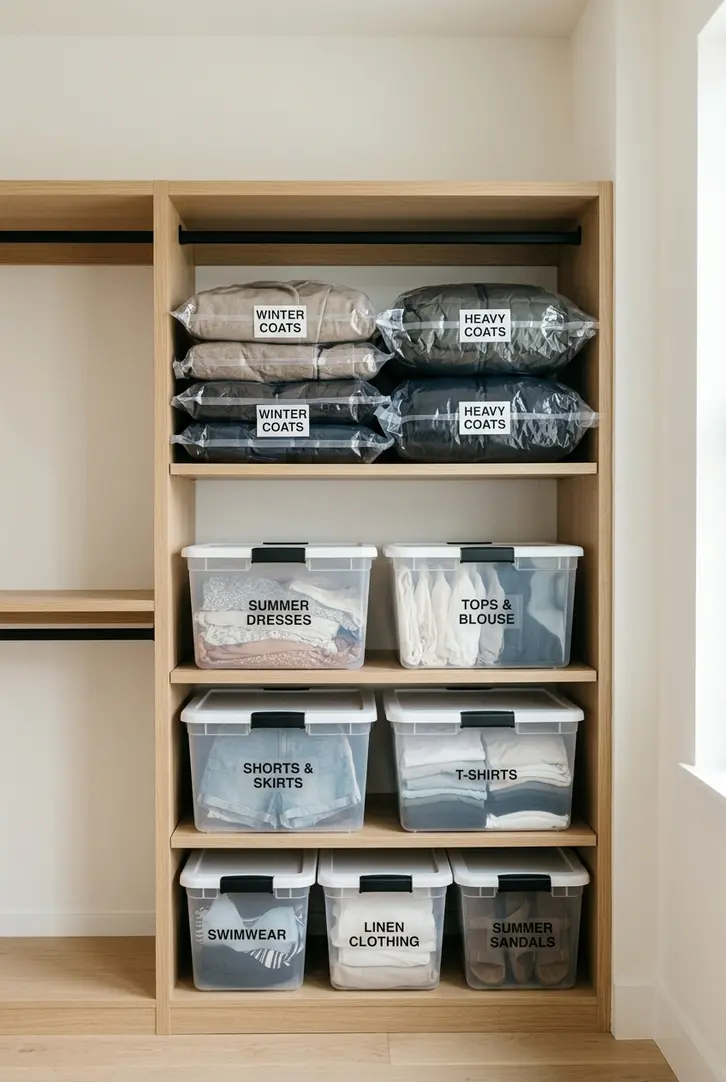
Rotating your wardrobe seasonally is a highly effective way to manage space and keep your current clothing accessible. Use vacuum-sealed bags or sturdy zippered garment bags for bulky off-season items like winter coats or heavy knitwear, storing them on high shelves or under the bed. For delicate seasonal items, archival storage boxes can protect against dust and pests. When the season changes, swap out the items, giving your closet a fresh look and making daily dressing much more efficient. This is one of the most practical closet organization ideas for long-term tidiness.
Install Pull-Out Laundry Hampers
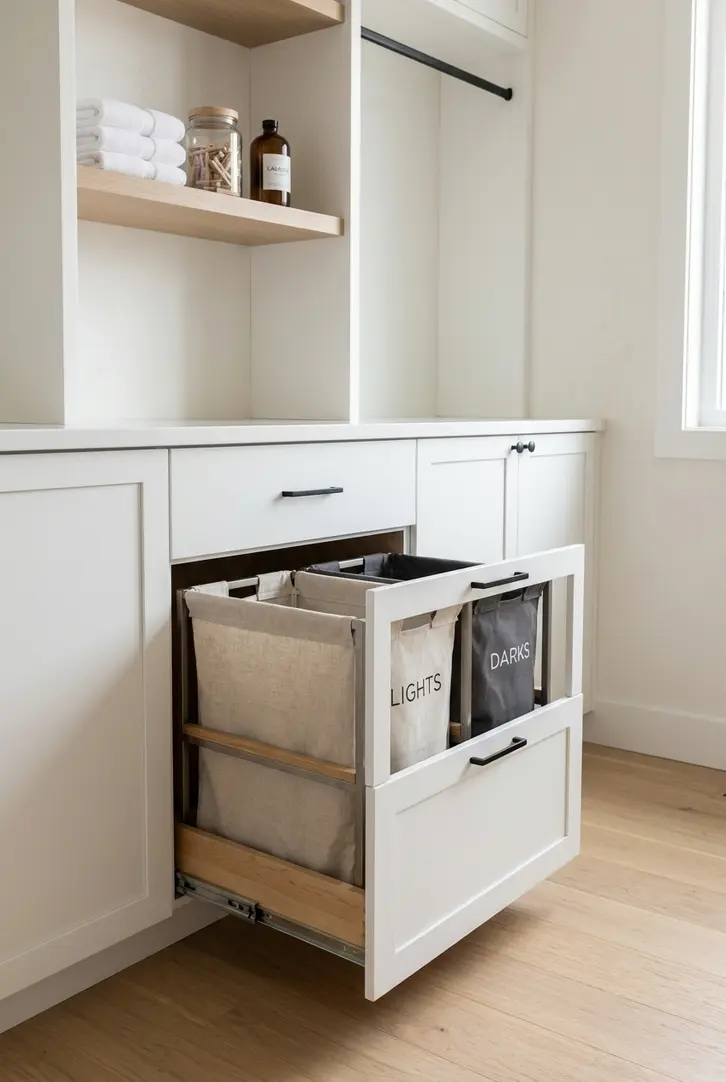
Keep dirty clothes out of sight and off the floor by integrating pull-out laundry hampers directly into your closet system. Choose hampers with two compartments to separate lights and darks, streamlining laundry day. These can be custom-built into lower cabinetry or purchased as standalone units that slide neatly into a designated cubby. This solution maintains the clean lines of your closet and prevents laundry piles from accumulating, contributing significantly to a more organized and stress-free environment, making it a clever addition to any set of closet organization ideas.
Consider a Closet Island
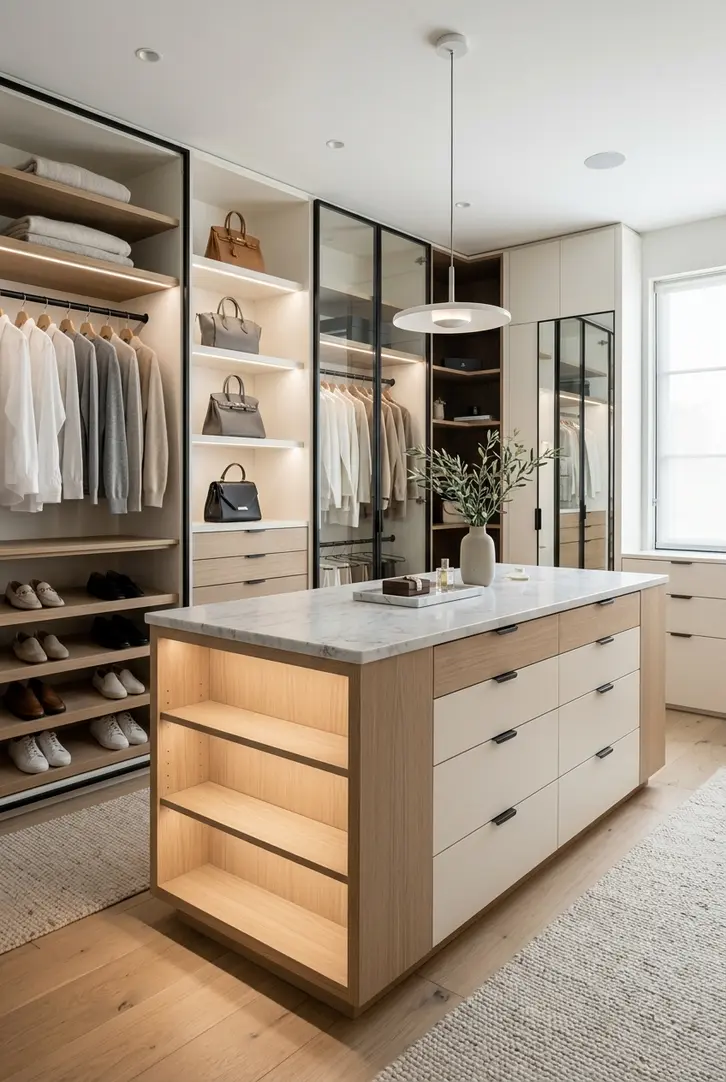
For larger walk-in closets, a central island can serve as both a functional workspace and additional storage. A closet island can feature a beautiful stone or wood top for folding clothes, ample drawers for accessories like jewelry or scarves, and even open shelving for displaying handbags or decorative items. Ensure there is at least 36 inches of clear space around all sides for comfortable movement. This addition transforms the closet into a true dressing room, providing a dedicated area for prep and sophisticated storage, enhancing overall appeal.
Utilize Wall Space for Hooks and Pegboards
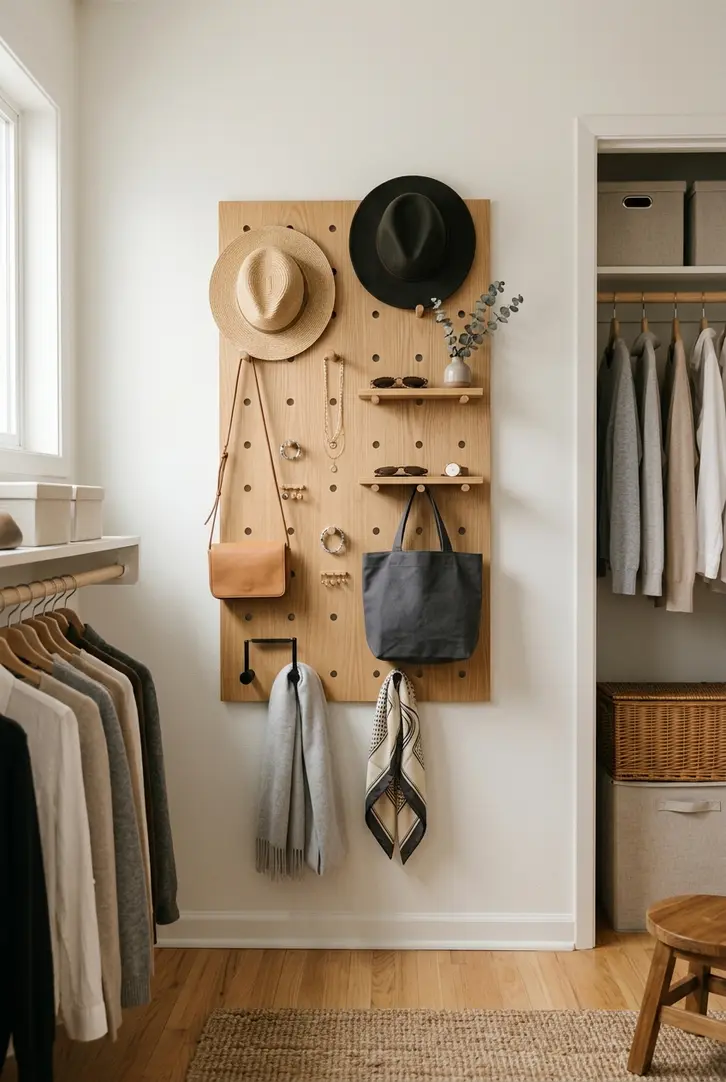
Don’t overlook the potential of unused wall space for additional storage and display. Install decorative hooks for frequently used bags, robes, or scarves. A pegboard system, available in various finishes like natural wood or painted white, offers customizable storage for hats, belts, or even small baskets containing miscellaneous items. This vertical organization frees up drawer and shelf space, keeps items within easy reach, and adds a personalized touch to your closet’s design. For more inspiration, explore organizational concepts on Wikipedia’s page about home organization.
Maintain a Regular Decluttering Schedule
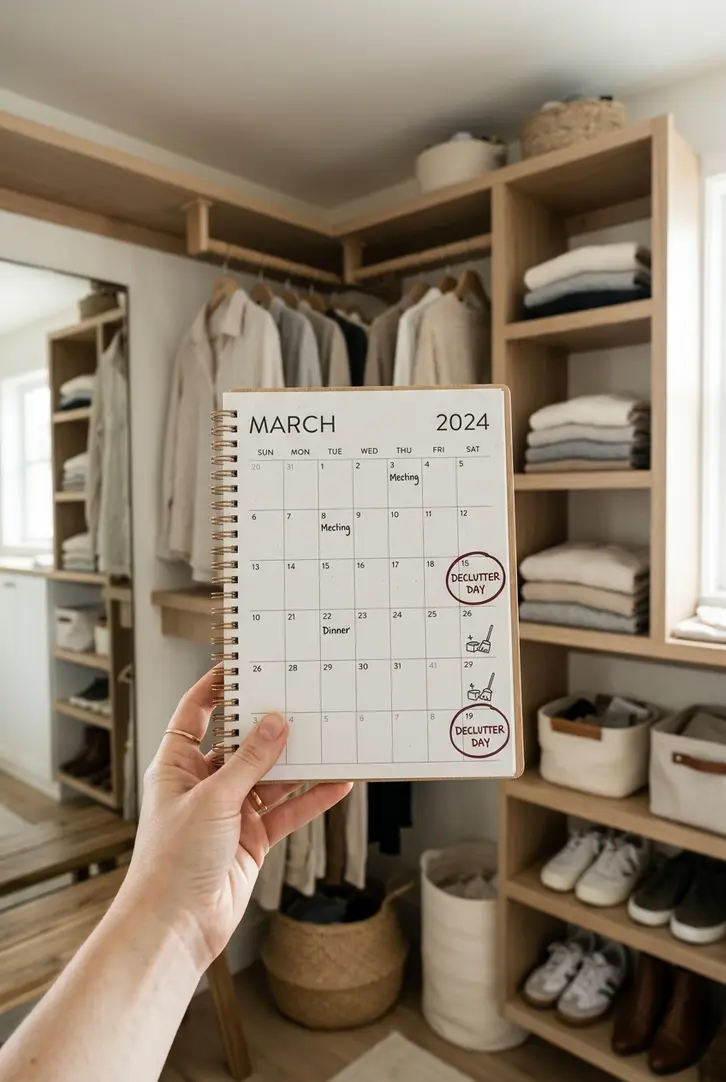
The most sustainable of all closet organization ideas is not a one-time project, but an ongoing commitment. Implement a quarterly or bi-annual decluttering schedule to review your wardrobe. Set aside dedicated time to go through every item, asking yourself if you’ve worn it in the past year, if it fits, and if it still sparks joy. Create three piles: keep, donate/sell, and discard. This regular habit prevents clutter from building up again, ensures your closet remains a functional and inspiring space, and reduces stress associated with too many options. Consistency is truly the secret to a perpetually organized wardrobe.
Inspiration Gallery Recap
Swipe through all the ideas below to find your perfect match.