18 Brilliant Minimalist Landscaping Front Yard Ideas
Crafting a serene and striking entryway begins with smart design choices. Achieving a beautiful minimalist landscaping front yard is entirely possible with thoughtful planning and strategic plant selection. This guide provides 18 actionable ideas to transform your outdoor space into a modern, low-maintenance haven that exudes sophistication and calm. Embrace clean lines, purposeful elements, and a restrained plant palette to create curb appeal that truly lasts. For deeper insights into the philosophy behind this aesthetic, consider exploring the principles of minimalism itself.
- Structured Geometric Planters
- Clean Gravel Pathways
- Drought-Tolerant Plant Palettes
- Integrated Built-In Seating
- Defined Edges and Borders
- Statement Specimen Plants
- Sleek Outdoor Lighting Design
- Modern Water Features
- Monochromatic Color Schemes
- Strategic Boulders and Rocks
- Large Format Pavers
- Privacy Screens and Fencing
- Vertical Green Walls
- Dry Creek Beds for Drainage
- Minimalist Front Yard Art
- Layered Groundcovers
- Asymmetrical Design Balance
- The Ideal Minimalist Landscaping Front Yard
Structured Geometric Planters
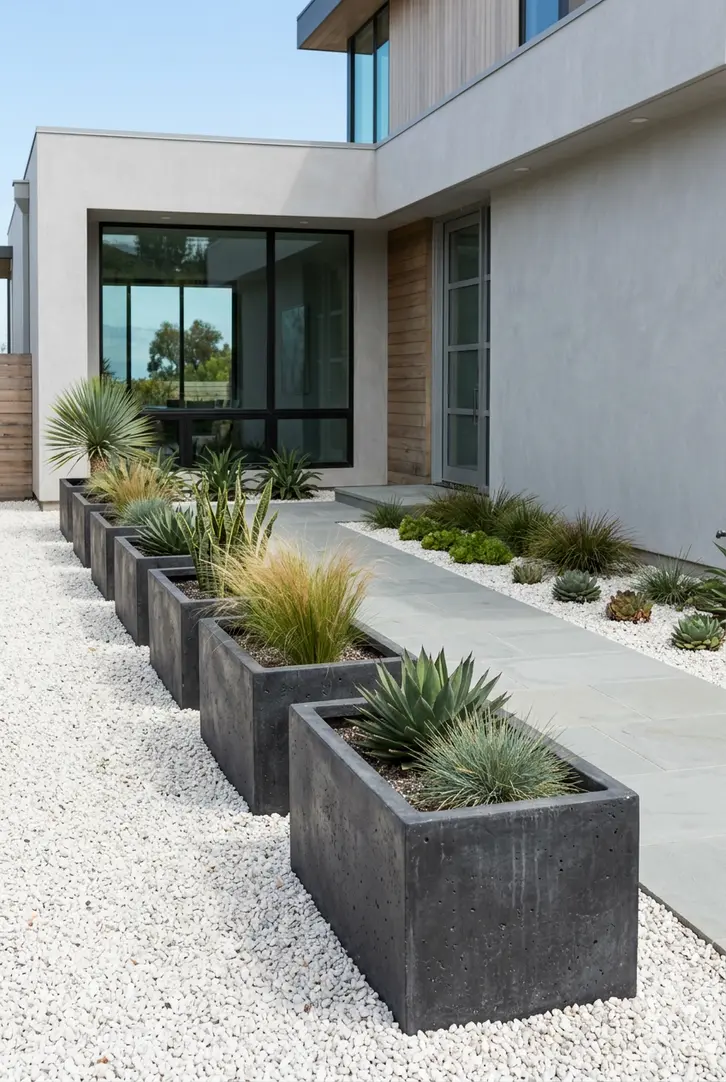
Incorporate strong, geometric planters made from materials like polished concrete, Corten steel, or dark composite to establish immediate structure. Opt for low, wide rectangles or cubes rather than overly ornate designs, placing them strategically to frame an entrance or define a pathway. Fill each planter with a single type of architectural plant, such as a sculptural agave or a cluster of Sansevieria, ensuring a clean, uncluttered visual that aligns with the minimalist aesthetic.
Clean Gravel Pathways
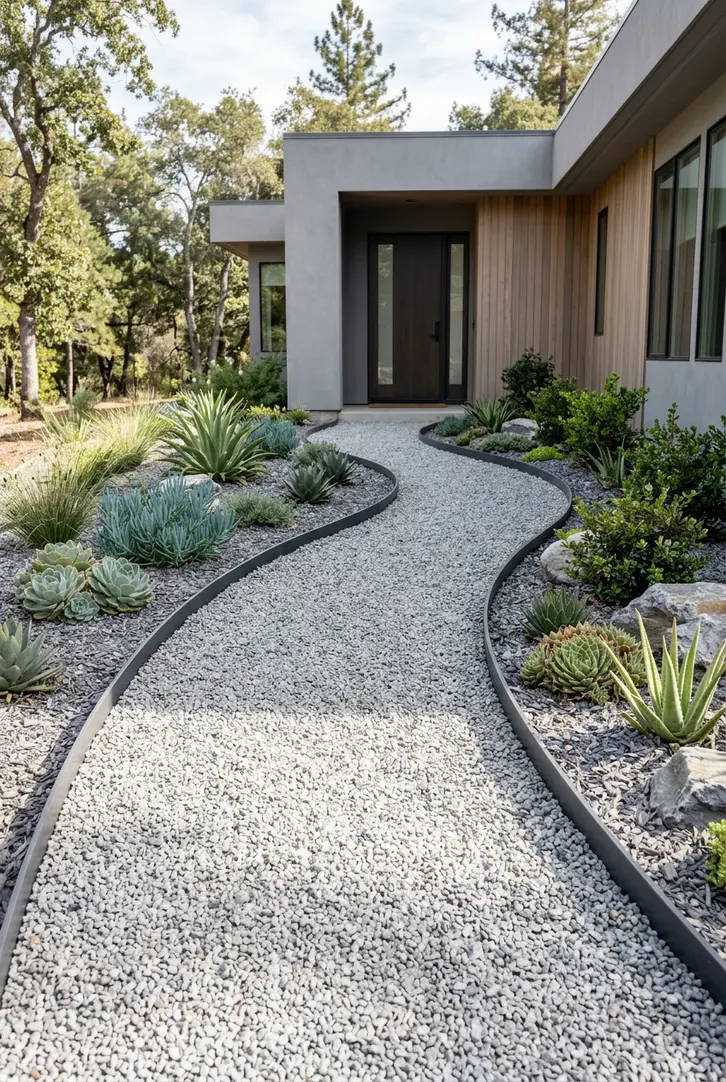
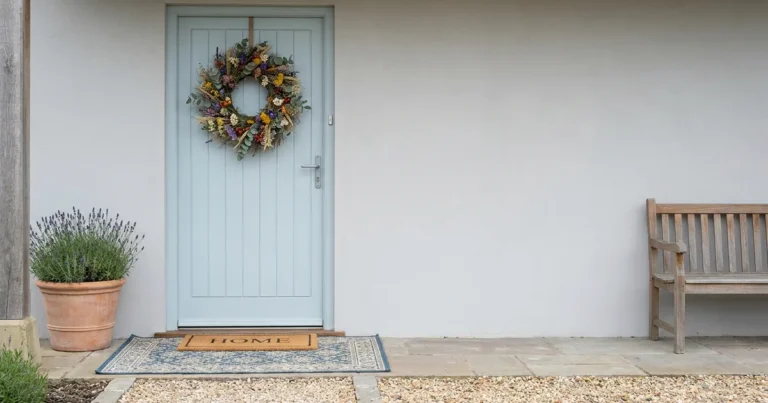
Gravel pathways offer a soft yet defined texture while providing excellent drainage and requiring minimal upkeep. Select a uniform aggregate, such as pea gravel or crushed granite, in a neutral tone like light grey or tan, ensuring consistency for a serene look. Border the path with sleek metal edging or integrated concrete strips to maintain sharp lines and prevent scatter, which contributes to the precise, clean aesthetic characteristic of minimalist design.
Drought-Tolerant Plant Palettes
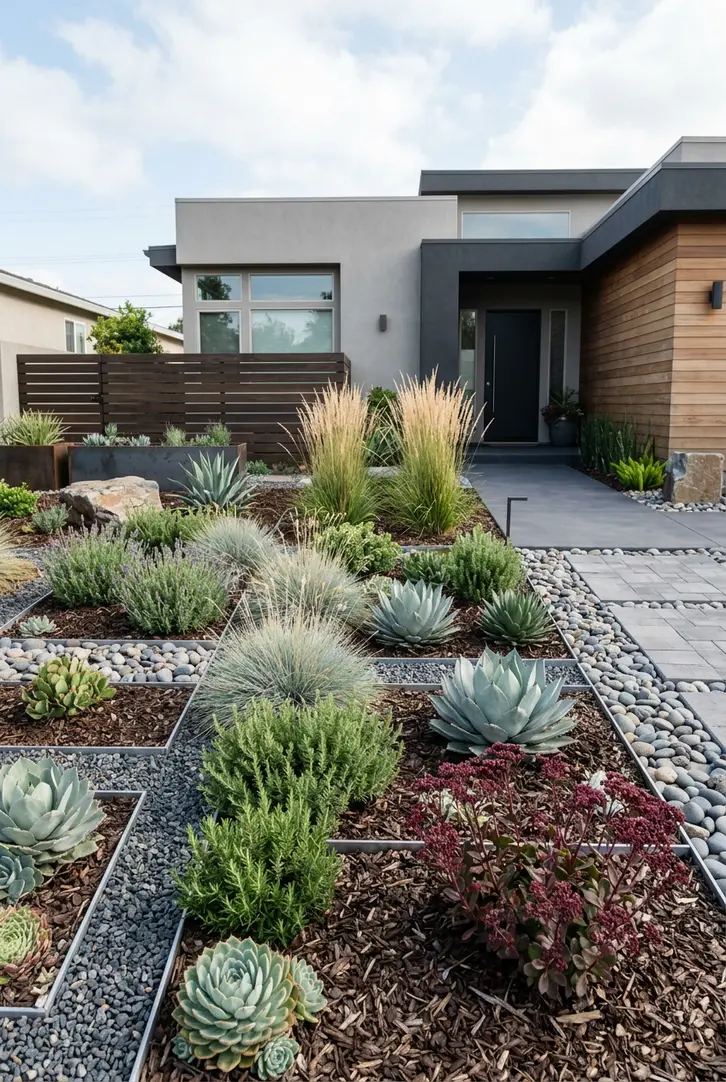
Choose a limited palette of drought-tolerant plants that require minimal water and upkeep, focusing on interesting forms and textures over excessive color. Succulents like agave, aloe, and various Sedums, along with ornamental grasses such as Festuca glauca or Muhlenbergia capillaris, provide structural beauty. Group plants in odd numbers for natural balance and ensure ample spacing between them to emphasize individual plant shapes and reduce visual clutter, promoting a calm and expansive feel.
Integrated Built-In Seating
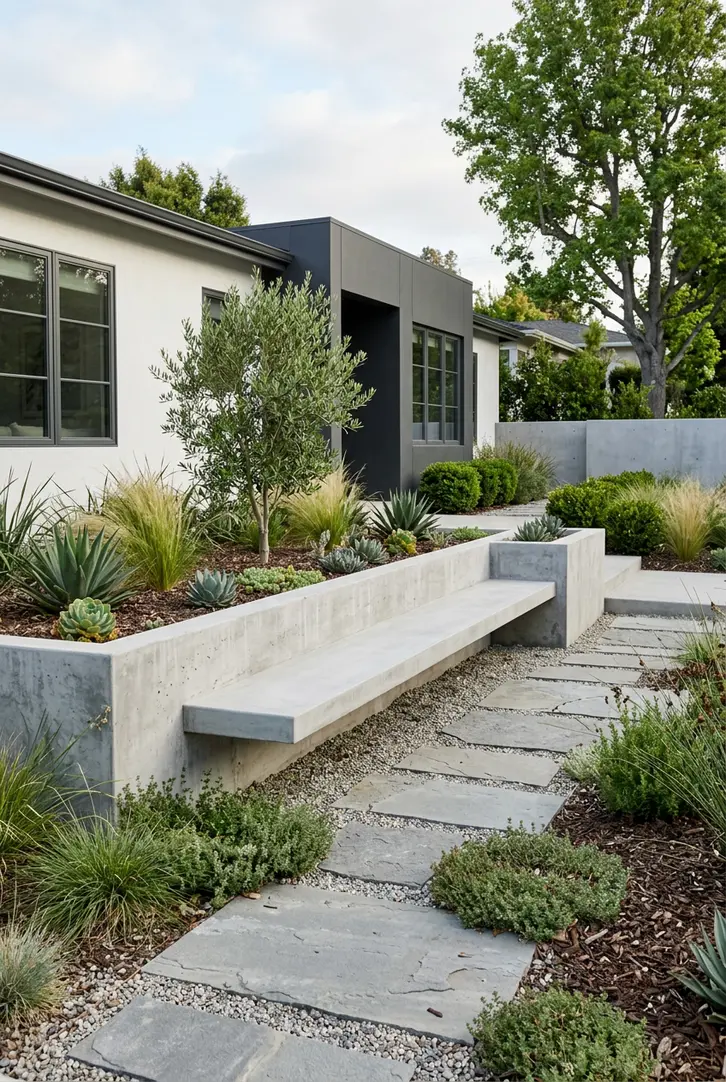
Incorporate built-in seating that seamlessly blends into the hardscaping, such as a low concrete bench extending from a retaining wall or a wooden slat bench integrated into a planter. This design element provides a functional resting spot without introducing separate, visually disruptive furniture. Ensure the materials and finishes match the surrounding elements, like smooth concrete or dark stained wood, to maintain a cohesive and understated elegance within the minimalist landscape.
Defined Edges and Borders
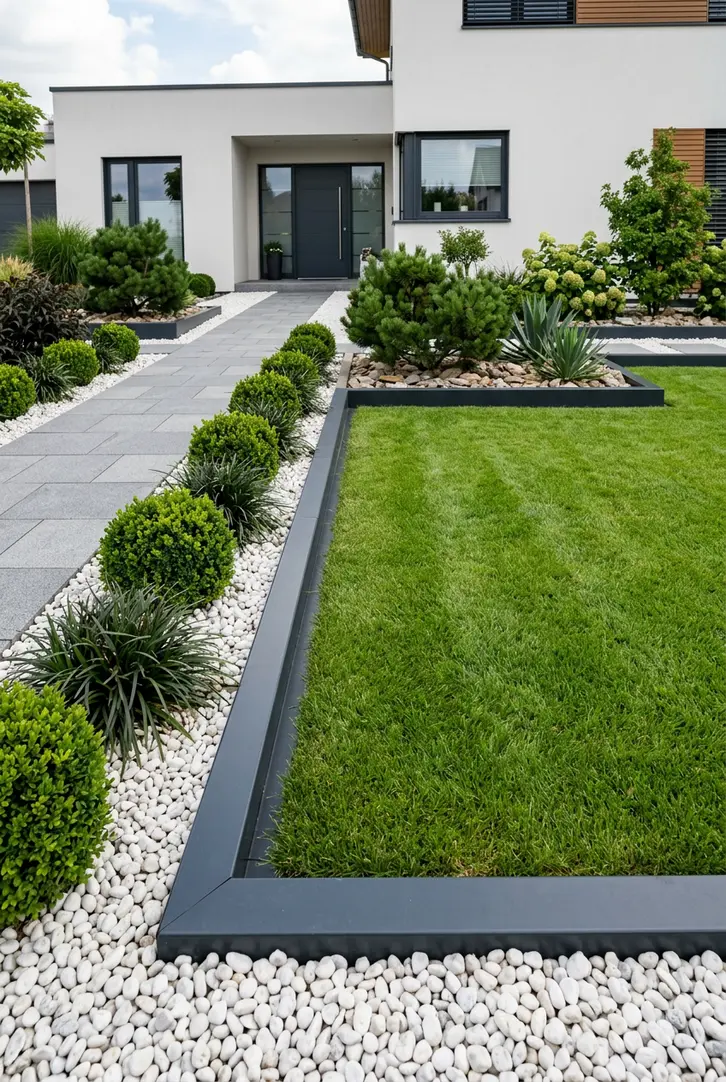
Sharp, clean edges are fundamental to minimalist design, creating a sense of order and precision. Use steel edging, concrete curbs, or neatly cut natural stone to clearly delineate different areas, such as planting beds, lawn spaces, and pathways. This crisp separation prevents plants from encroaching on hardscapes and maintains a tidy, intentional appearance, emphasizing the deliberate placement of every element in your front yard.
Statement Specimen Plants
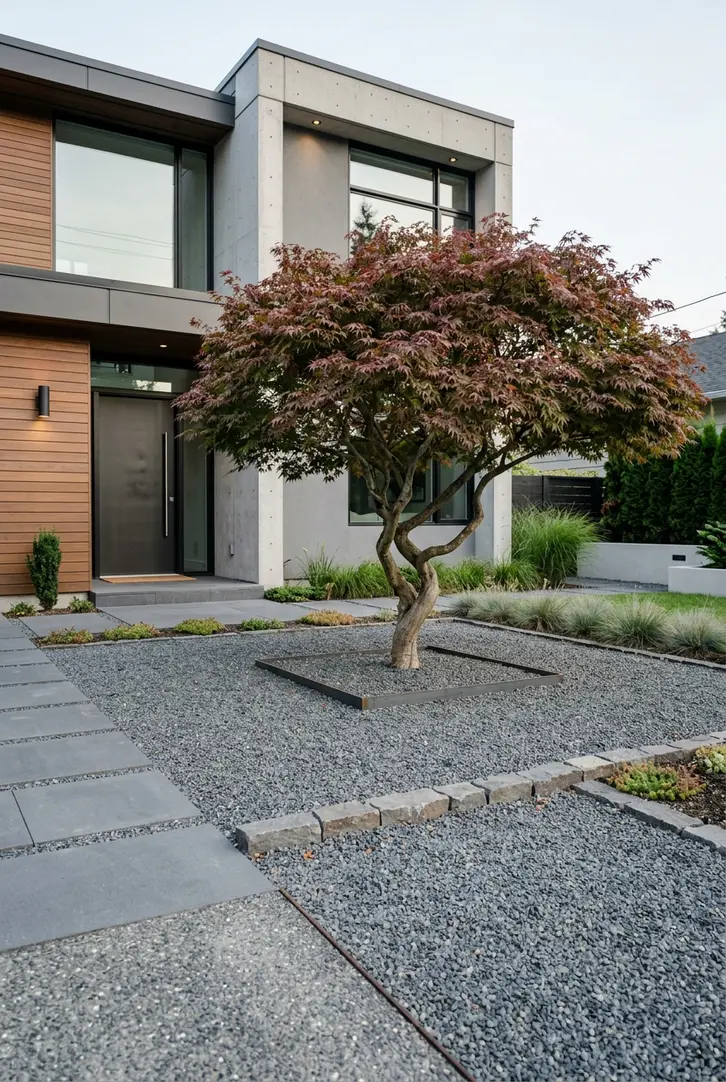
Introduce a single, impactful specimen plant to serve as a focal point without overwhelming the space. Choose a plant with a distinct architectural form, such as a multi-stemmed Japanese maple with graceful branches, a mature olive tree, or a large, sculptural Agave. Position it thoughtfully against a simple backdrop, allowing its unique shape and texture to command attention and provide a natural, living sculpture in your minimalist front yard.
Sleek Outdoor Lighting Design
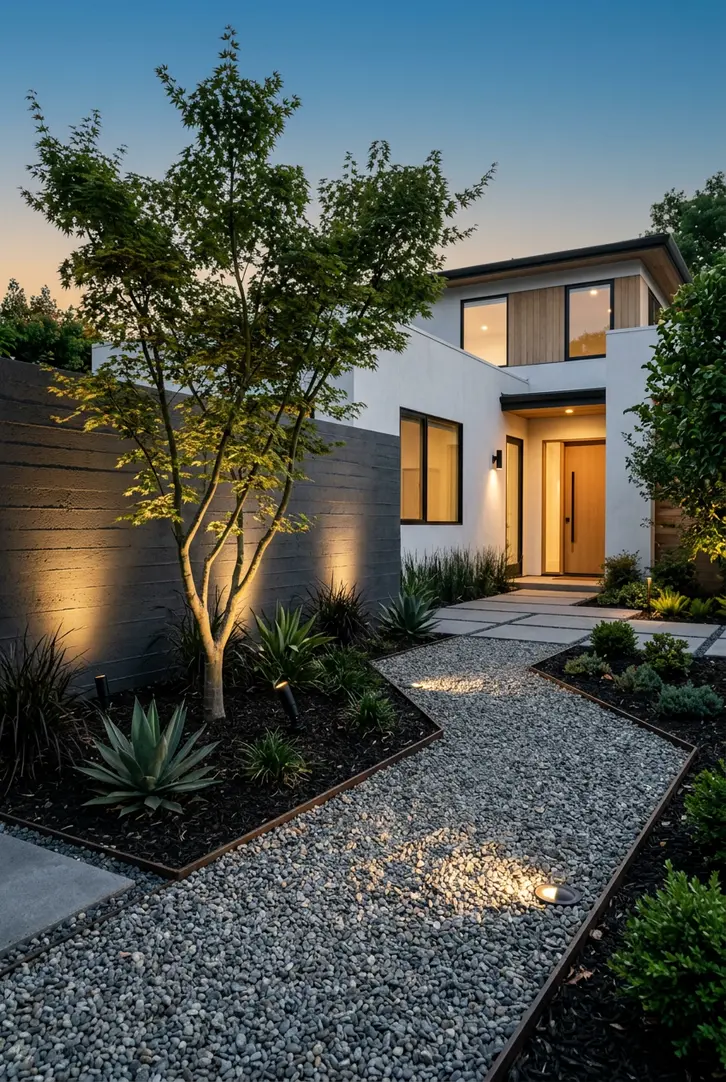
Implement subtle, low-voltage outdoor lighting that enhances the landscape’s features without being visually intrusive during the day. Use recessed path lights to safely illuminate walkways, and strategically placed uplights to highlight architectural plants or textured walls. Choose fixtures with a modern, simple design, often in black or dark bronze finishes, ensuring they blend seamlessly into the environment while providing essential ambient and accent lighting.
Modern Water Features
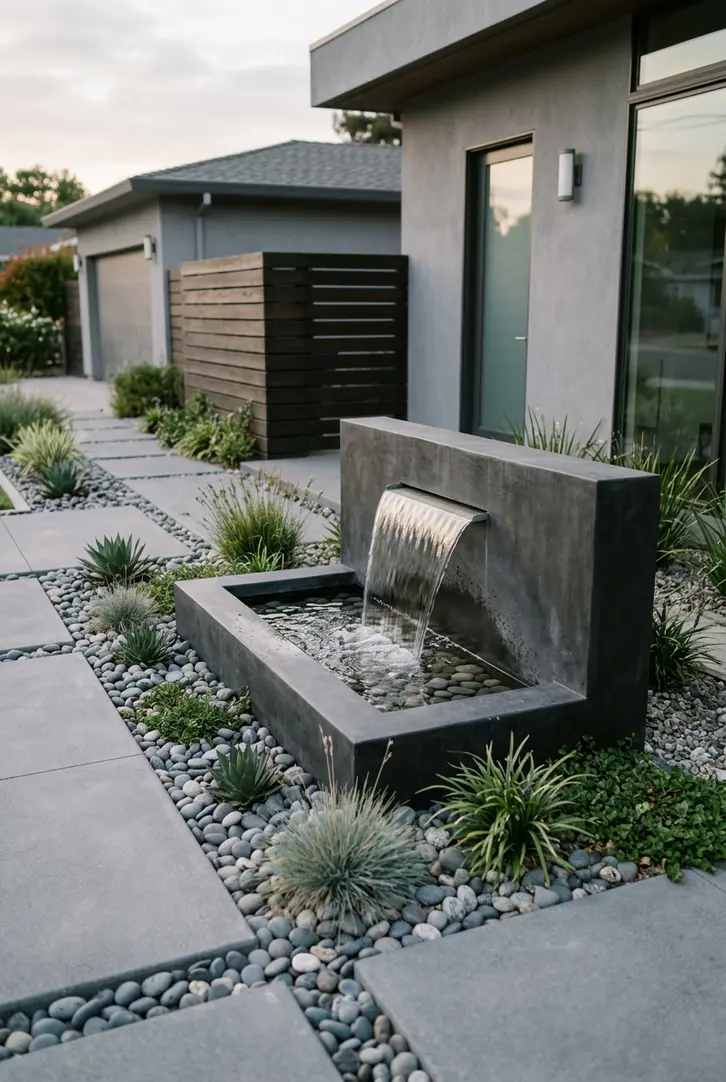
Introduce a modern, understated water feature for a touch of tranquility and sensory appeal. Opt for a simple, geometric design, such as a concrete basin with a sheer descent waterfall or a low-profile bubbler fountain made from polished stone or dark metal. The sound of trickling water adds a calming element without demanding excessive visual attention, reinforcing the peaceful ambiance of a minimalist front yard.
Monochromatic Color Schemes
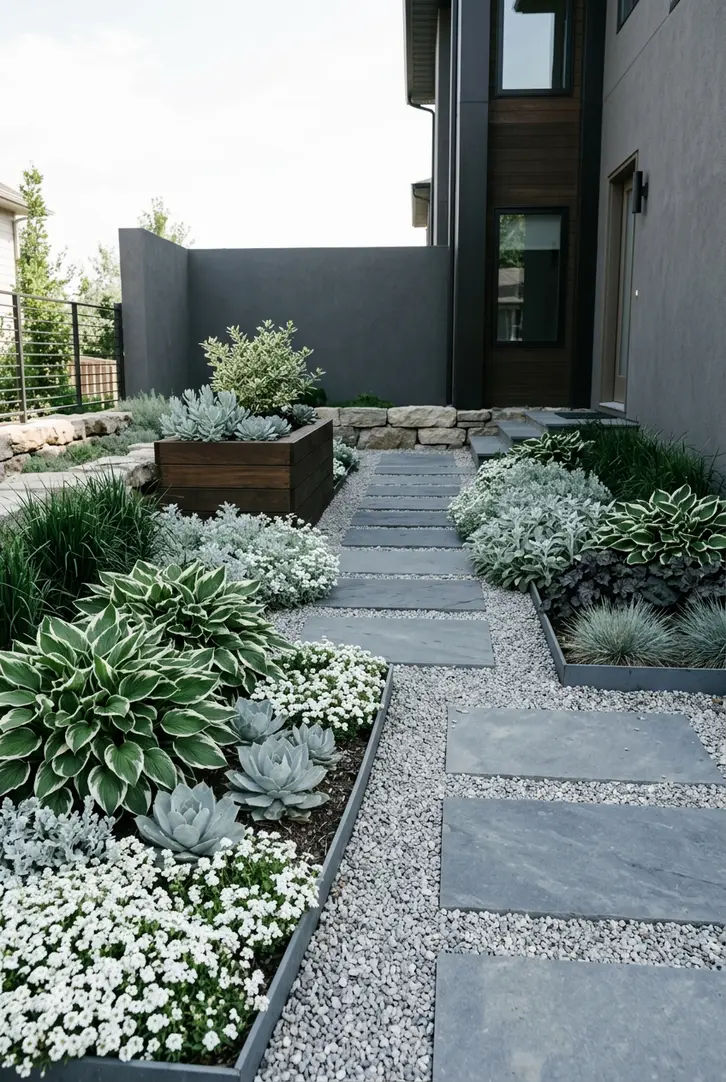
Embrace a monochromatic or limited color palette, focusing on variations in green, silver, and white to create sophisticated depth through texture and form. Utilize plants with different foliage shades and leaf structures, such as a dark green agave next to silvery lavender or a light green ornamental grass. This approach prevents visual chaos and encourages the eye to appreciate the subtle nuances of each plant, aligning perfectly with minimalist principles.
Strategic Boulders and Rocks
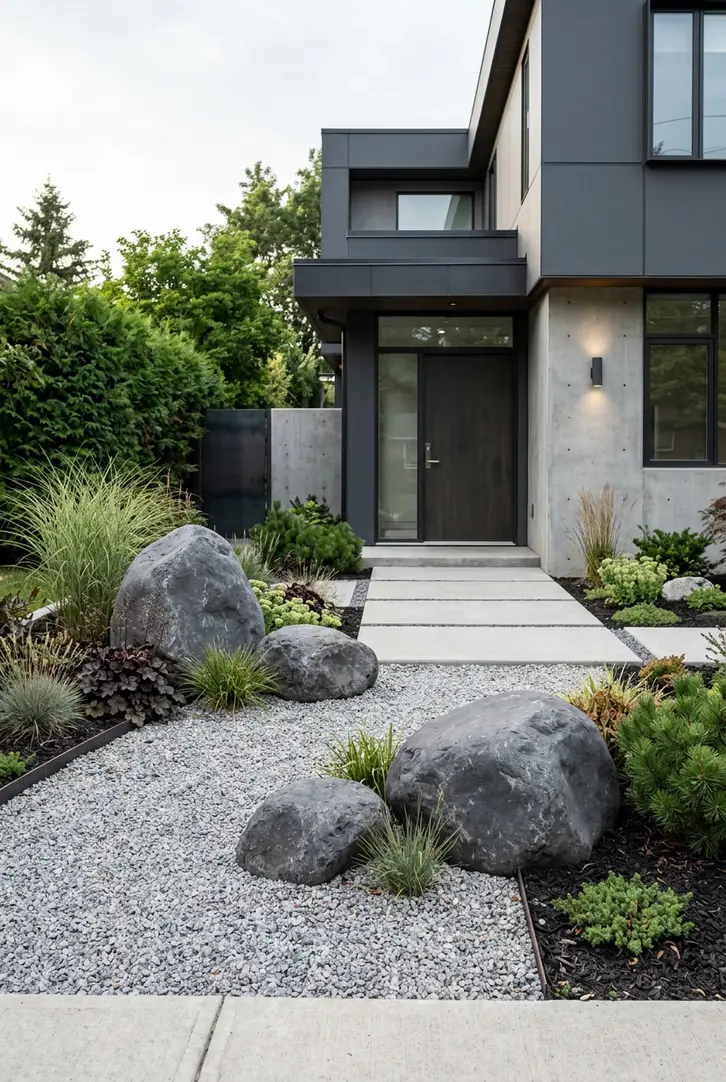
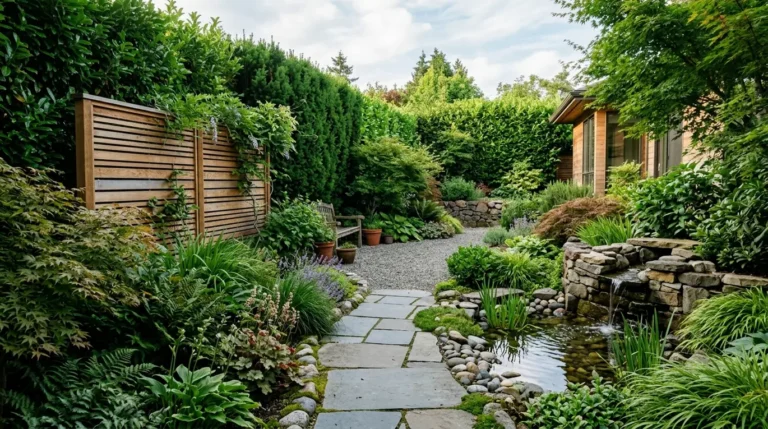
Integrate a few carefully selected large boulders or smooth river rocks as natural sculptural elements. Choose stones with interesting shapes and muted colors, ensuring they complement the existing hardscaping and plant palette. Place them intentionally to anchor a planting bed, define a transition, or simply add an organic counterpoint to the clean lines of the design, contributing to the quiet strength of your minimalist landscaping.
Large Format Pavers
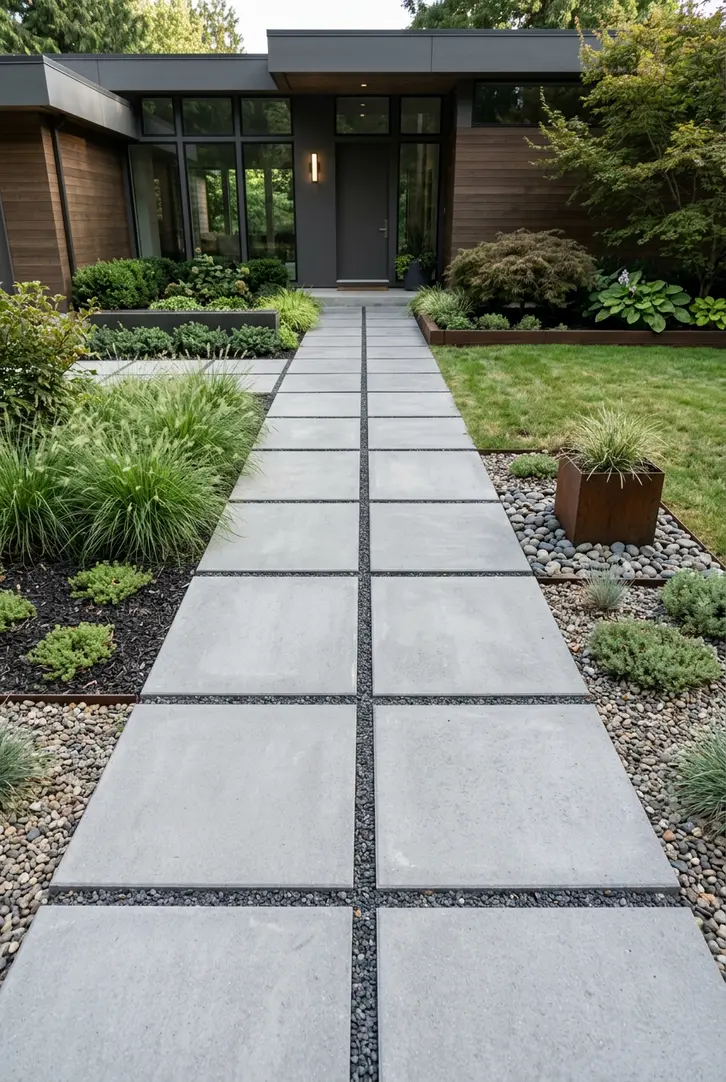
Opt for large format pavers, typically 2×2 feet or larger, in concrete, porcelain, or natural stone, laid with minimal grout lines or small gaps filled with gravel. This creates a sense of spaciousness and reduces visual fragmentation compared to smaller, more numerous paving stones. A uniform color, such as a light grey or charcoal, will enhance the contemporary, streamlined aesthetic, perfect for a striking minimalist front yard.
Privacy Screens and Fencing
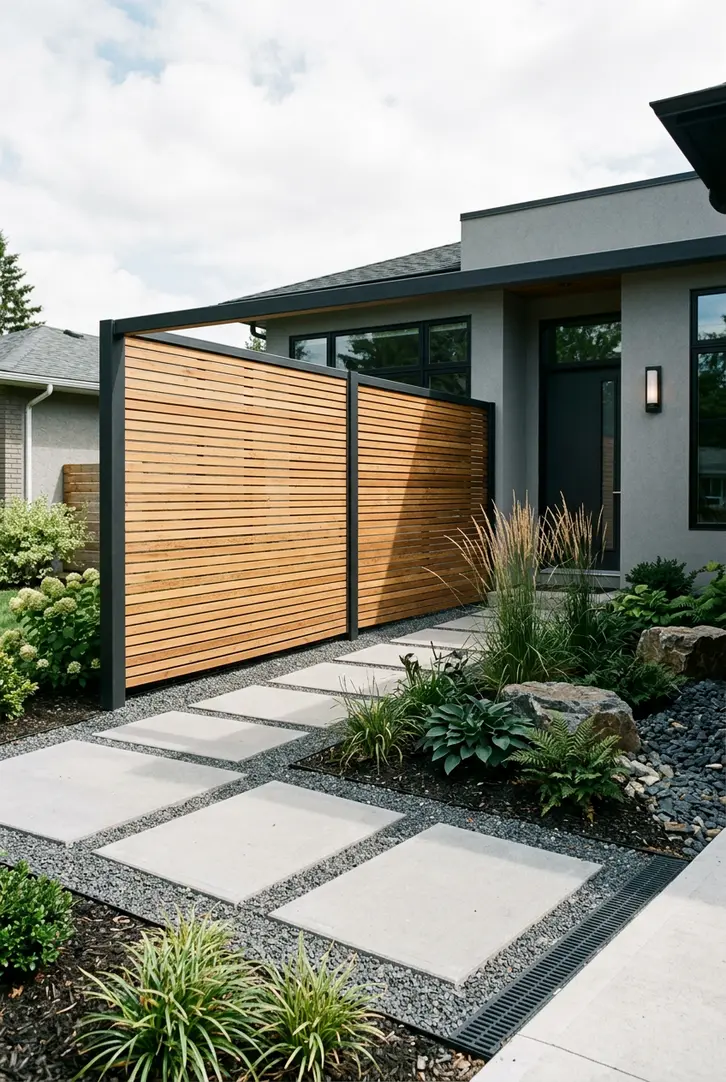
Install a modern privacy screen or low-profile fencing that offers seclusion without dominating the landscape. Materials like horizontal cedar slats with dark metal frames, or a simple stucco wall with a clean finish, can define boundaries elegantly. Ensure the design is streamlined and lacks excessive ornamentation, maintaining the sleek, uncluttered aesthetic desired for a sophisticated minimalist front yard.
Vertical Green Walls
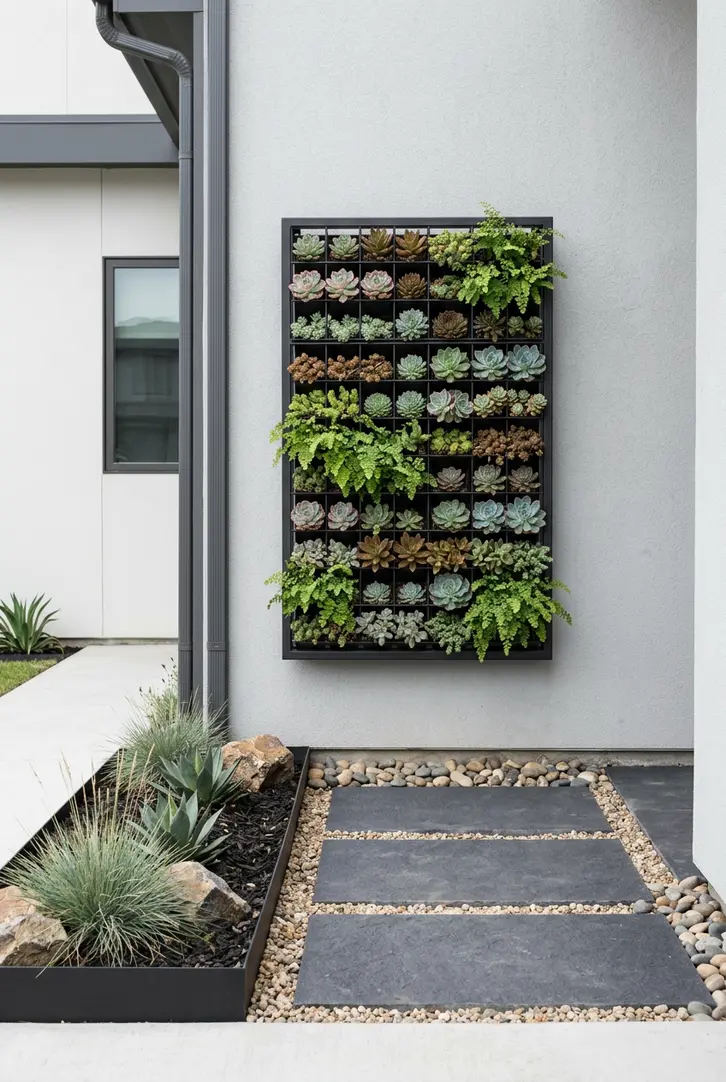
Consider a small-scale vertical green wall to introduce lushness in a contained, sculptural manner, especially useful in compact areas. Use a modular system with pockets for succulents, ferns, or herbs, ensuring the frame is a discreet black or metal. This adds an unexpected vertical element and a burst of controlled greenery without sprawling, maintaining the minimalist principle of careful placement and maximum impact.
Dry Creek Beds for Drainage
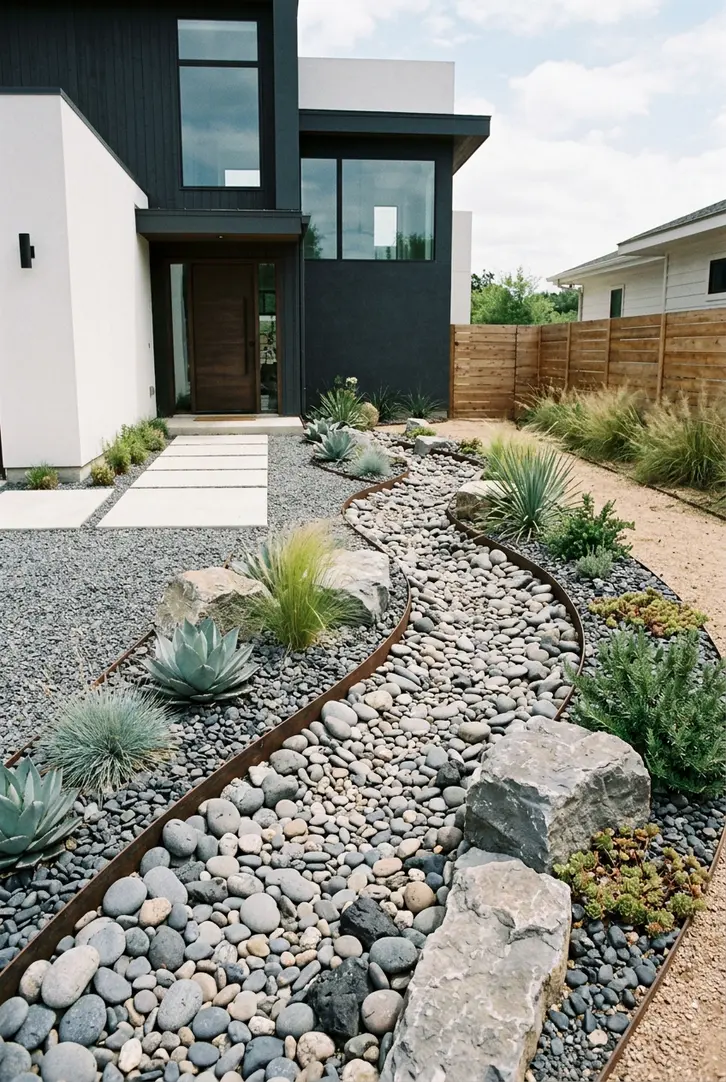
Incorporate a dry creek bed as both an aesthetic feature and a functional drainage solution. Use smooth, naturally rounded river stones of varying sizes, arranged to mimic a natural flow path through the landscape. This element can guide rainwater away from your home while adding visual interest and texture, particularly effective when flanked by simple grasses or groundcovers, contributing to a thoughtful minimalist front yard design.
Minimalist Front Yard Art
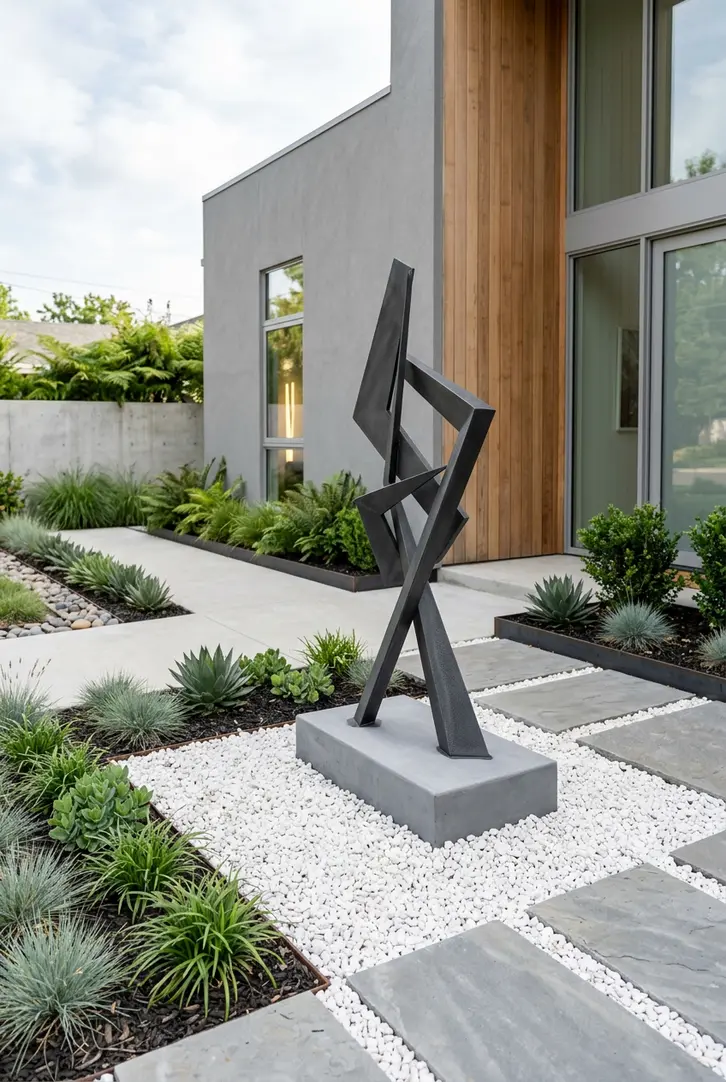
Select one impactful piece of outdoor art that features clean lines and a sculptural form, rather than multiple small ornaments. An abstract metal sculpture, a large weathered ceramic pot, or a polished stone sphere can act as a striking focal point. Place it strategically to draw the eye, ensuring its scale and material complement the surrounding landscape without introducing clutter, embodying the ‘less is more’ approach.
Layered Groundcovers
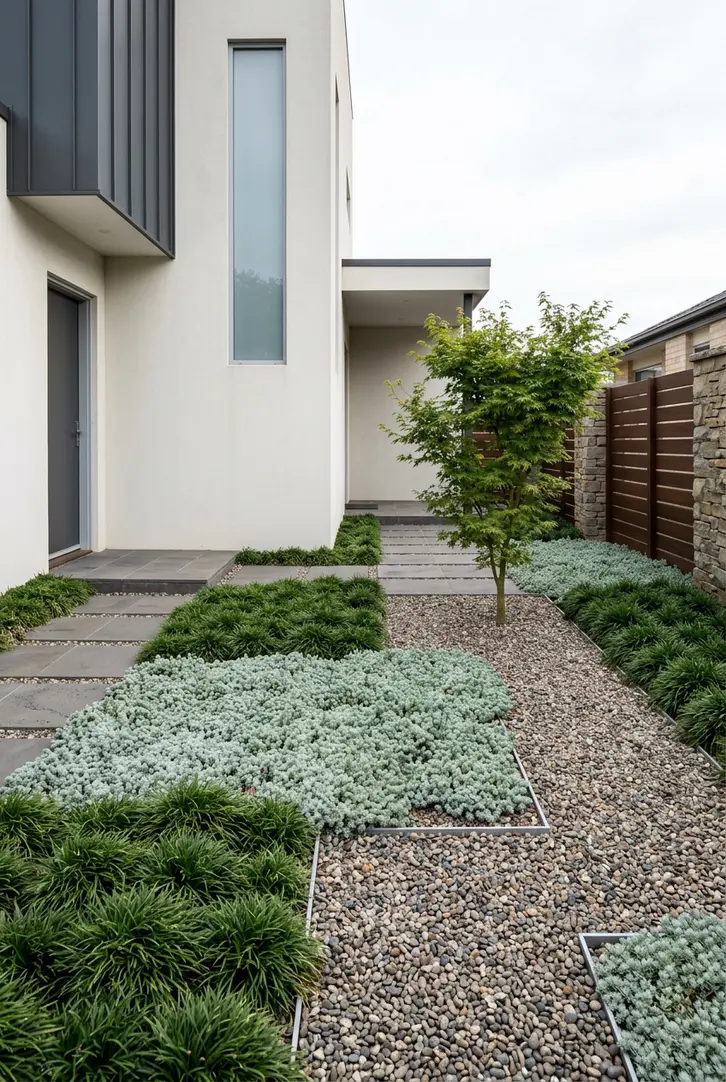
Utilize low-growing groundcovers to provide continuous greenery and texture without overwhelming the space. Consider varieties like Mondo grass, creeping thyme, Sedum ‘Dragon’s Blood,’ or a uniform layer of fine gravel to define areas. Layer different textures in adjacent zones, for example, a smooth pebble area next to a patch of fluffy moss, to create subtle visual depth while maintaining the clean, expansive feel. This strategy provides excellent, low-maintenance coverage.
Asymmetrical Design Balance
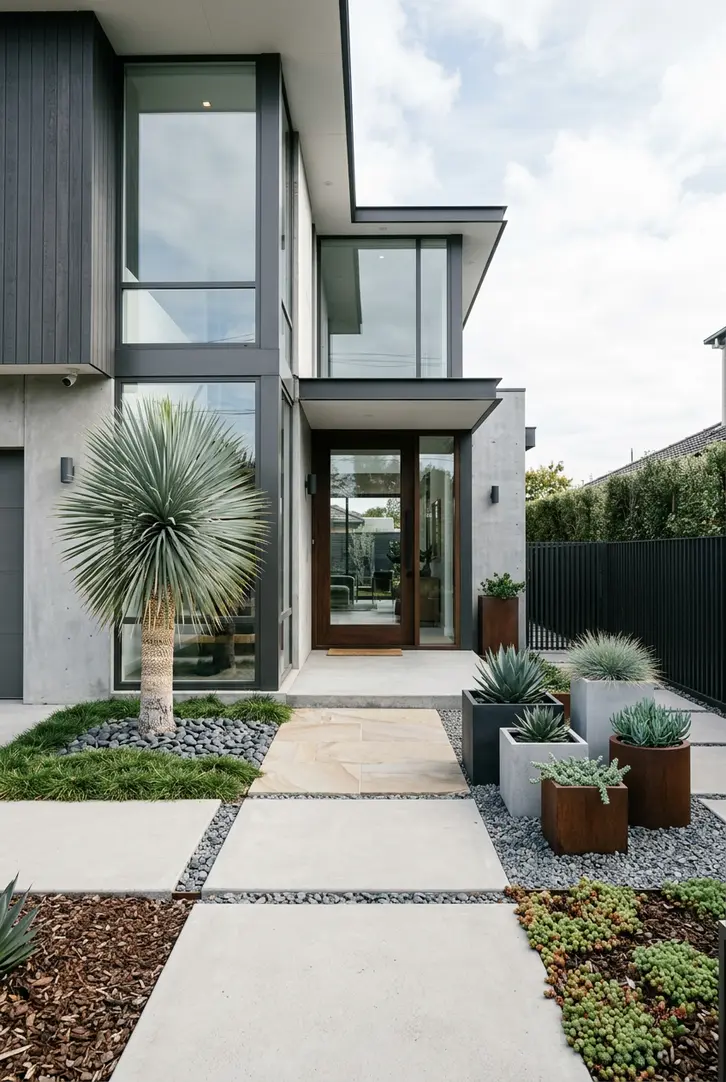
Embrace asymmetrical balance to create visual interest and a dynamic flow in your minimalist design, rather than strict symmetry. Place a single large specimen plant on one side of an entryway, counterbalanced by a group of three smaller, identical planters on the other. This approach creates a harmonious yet engaging composition, making the landscape feel thoughtful and less rigid while still maintaining order and simplicity.
The Ideal Minimalist Landscaping Front Yard
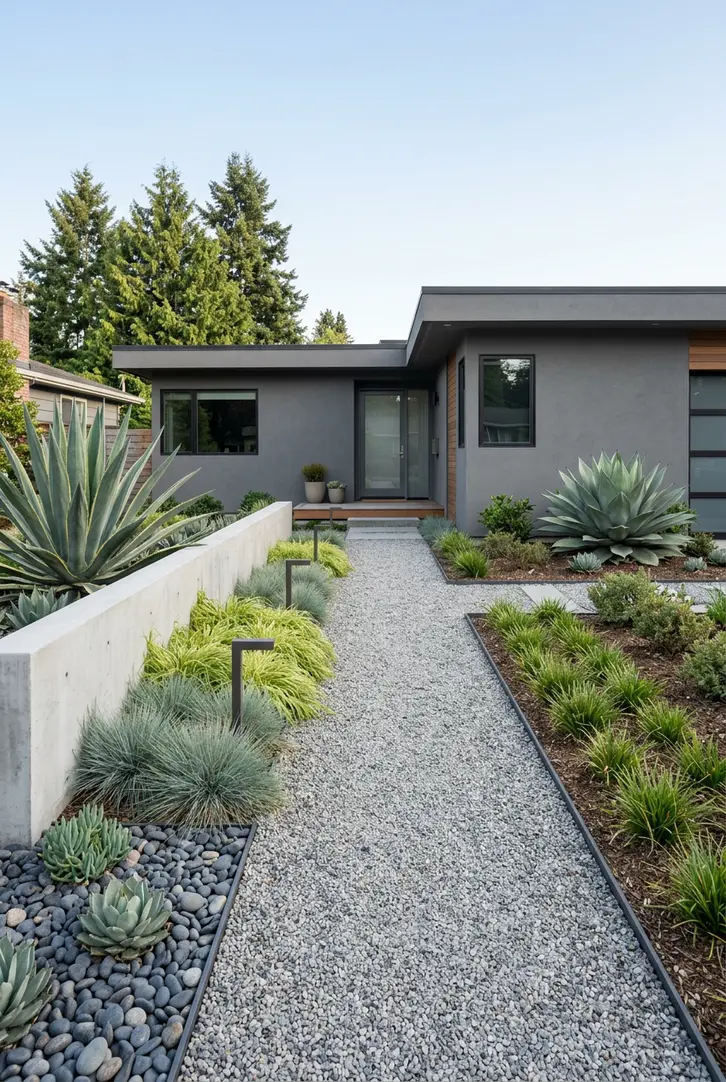
Achieving the ideal minimalist landscaping front yard means prioritizing clean lines, a limited plant palette, and high-quality hardscaping materials. Focus on creating distinct zones with well-defined edges using steel or concrete. Incorporate architectural plants such as succulents or sculptural grasses for visual interest, grouped sparsely to emphasize individual forms. A smooth gravel or large-format paver pathway should lead to the entrance, complemented by integrated, low-voltage lighting. This thoughtful combination results in a sophisticated, serene, and exceptionally low-maintenance outdoor space.
Inspiration Gallery Recap
Swipe through all the ideas below to find your perfect match.