16 Japandi Kitchen Styling Ideas for a Calm, Functional and Quietly Luxurious Space
Introductoin
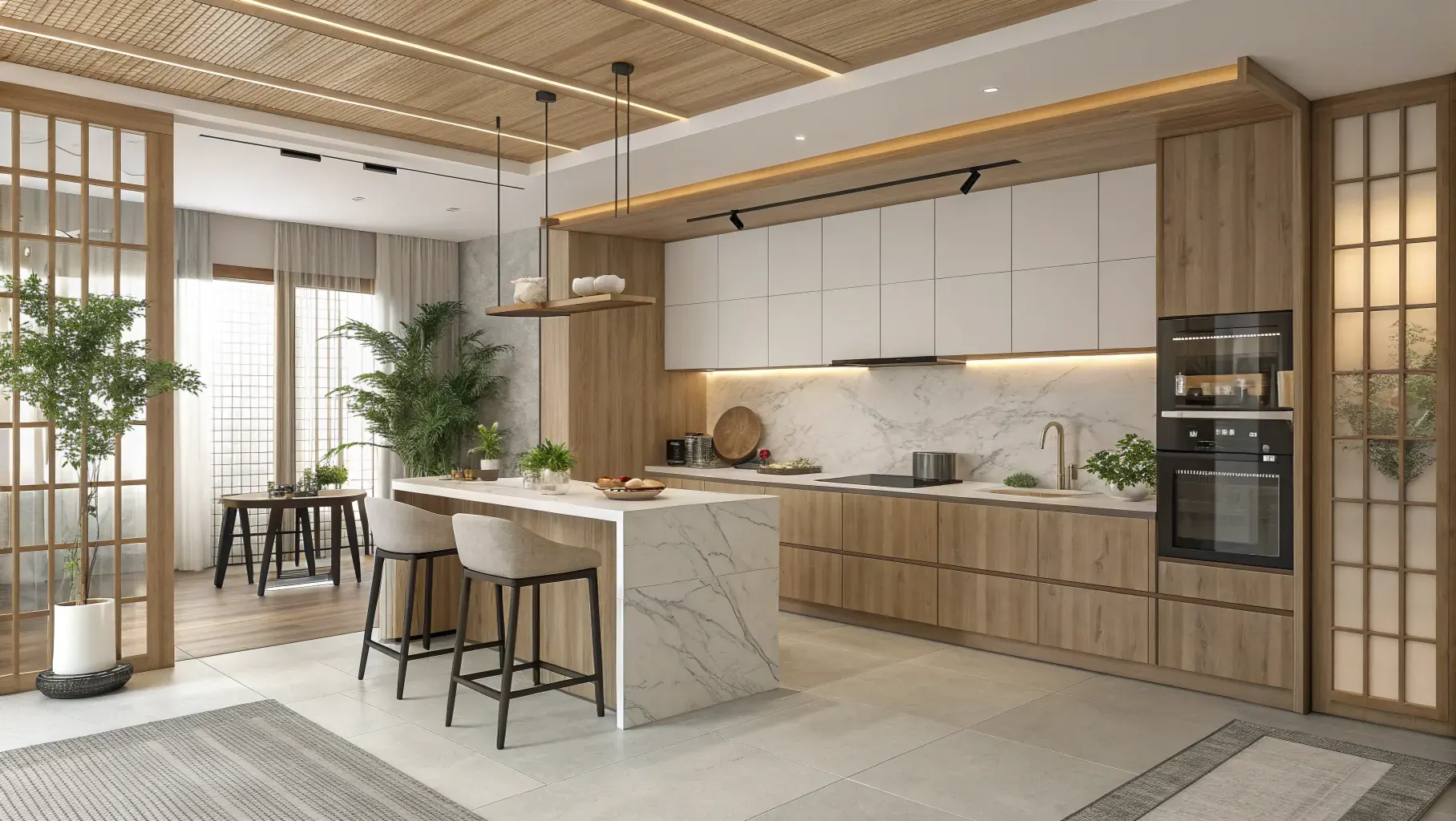
Japandi marries minimalist Japanese aesthetics and Scandinavian comfort to create kitchens that feel serene, functional, and quietly luxurious. These 16 ideas cover materials, layout touches, and styling cues to help you create a kitchen that is both efficient and nourishing to the senses.
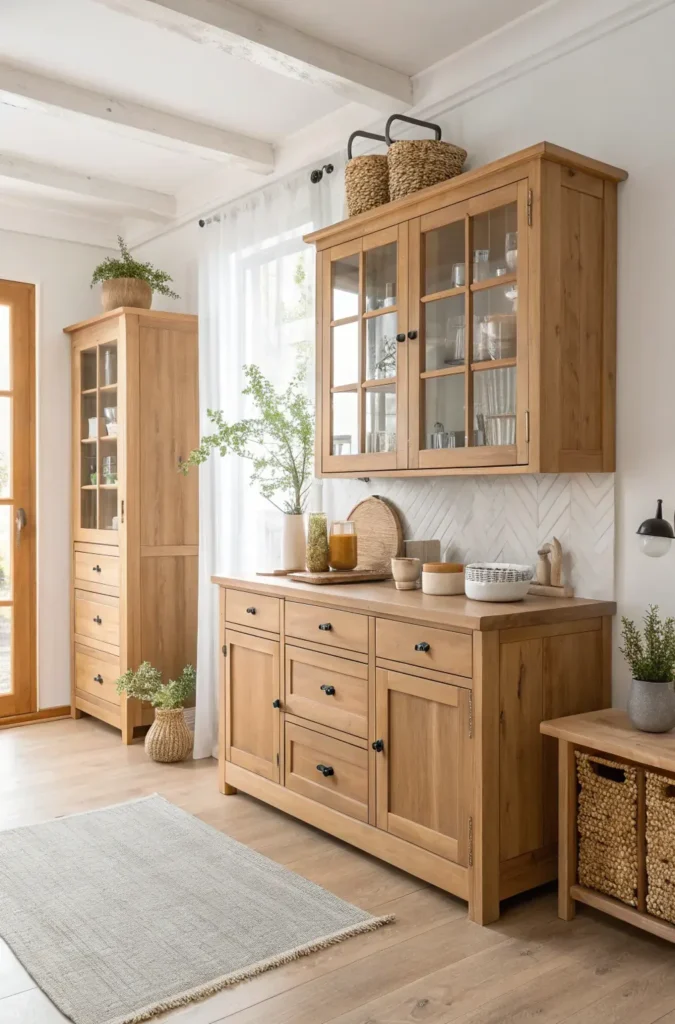
1. Natural Wood Cabinets with Matte Finish
Choose light to medium wood cabinets with a matte finish to balance warmth and restraint. Practical tip: use simple, recessed handles to keep lines clean.
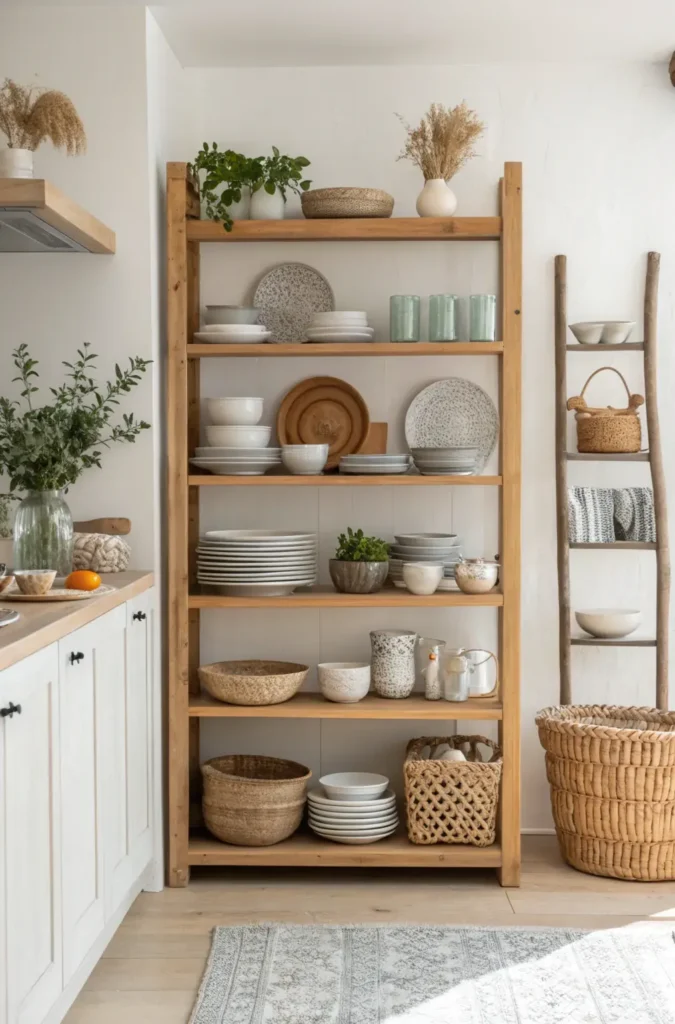
2. Open Shelving with Curated Dishware
Display a small collection of neutral ceramics on open shelves for practicality and calm. Practical tip: limit shelf depth to avoid clutter and keep items accessible.
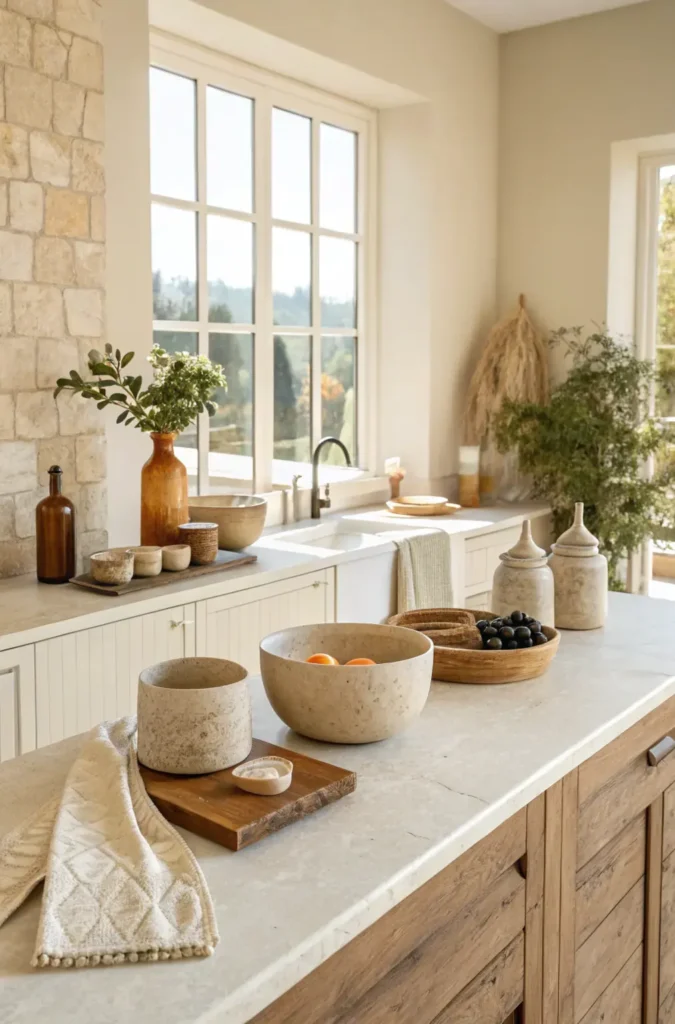
3. Stone or Porcelain Worktops in Warm Tones
Select a durable worktop with subtle veining for a refined base that feels natural. Practical tip: choose honed or matte finishes to reduce glare.
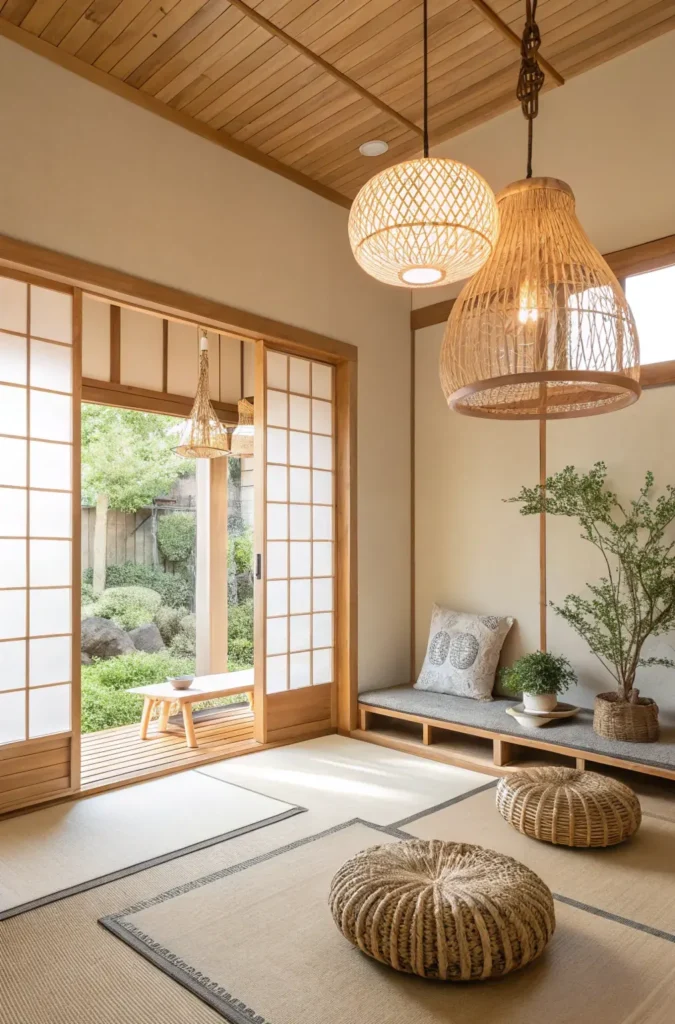
4. Simple Pendant Lighting in Natural Materials
Use pendant lights in rattan, paper, or wood to add soft texture and warm light over islands. Practical tip: layer with under-cabinet lighting for task clarity.
5. Minimal Hardware in Black or Brushed Brass
Choose unobtrusive hardware finishes that complement wood and stone. Practical tip: keep finishes consistent for cohesion.
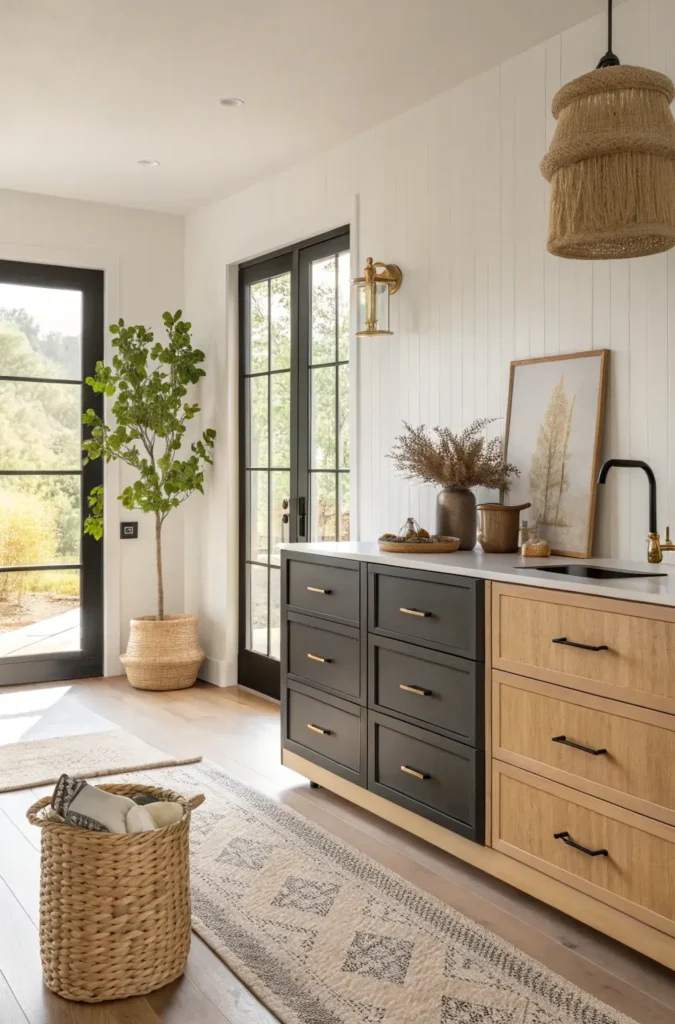
6. Neutral Backsplash with Subtle Pattern
Opt for a subway tile or a soft geometric pattern in neutral tones to add interest without noise. Practical tip: choose a grout that blends for a calm surface.
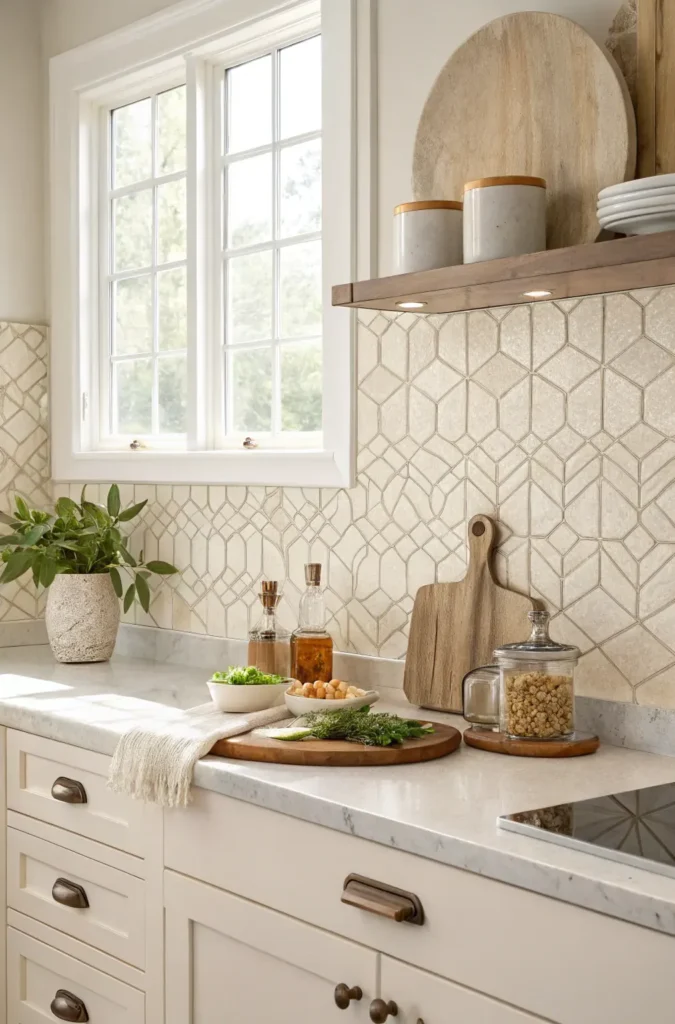
7. Integrated Appliances for Clean Lines
Where possible, integrate appliances to maintain uninterrupted cabinet faces. Practical tip: Prioritize functionality for frequently used appliances.
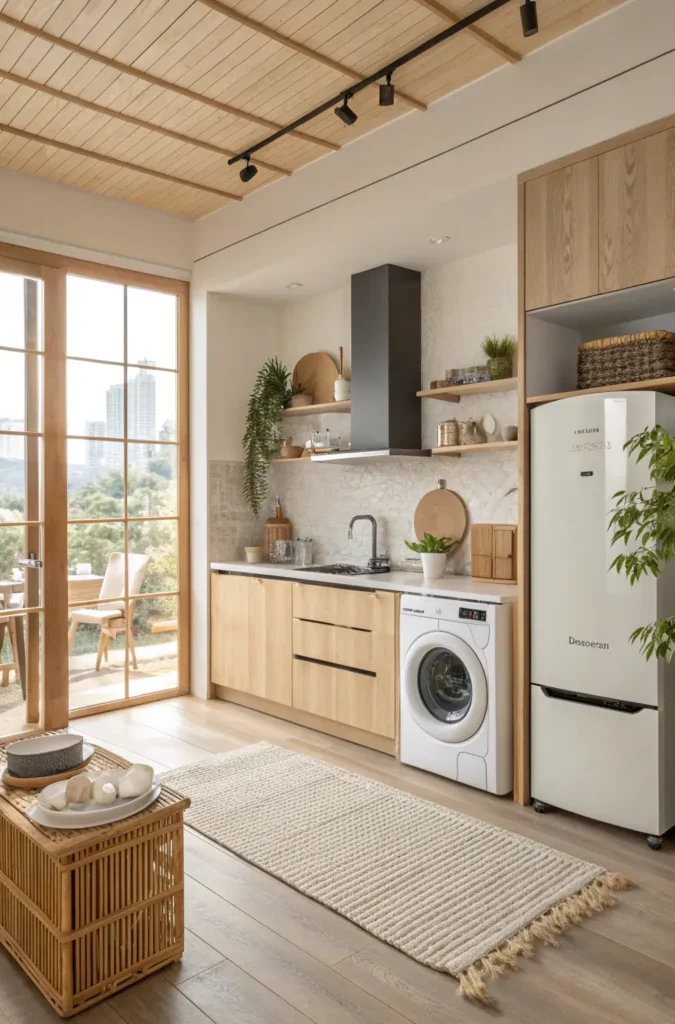
8. Functional Drawer Organizers and Trays
Keep utensils and tools organized with simple wooden or bamboo organizers. Practical tip: dedicate drawers by task to streamline cooking.
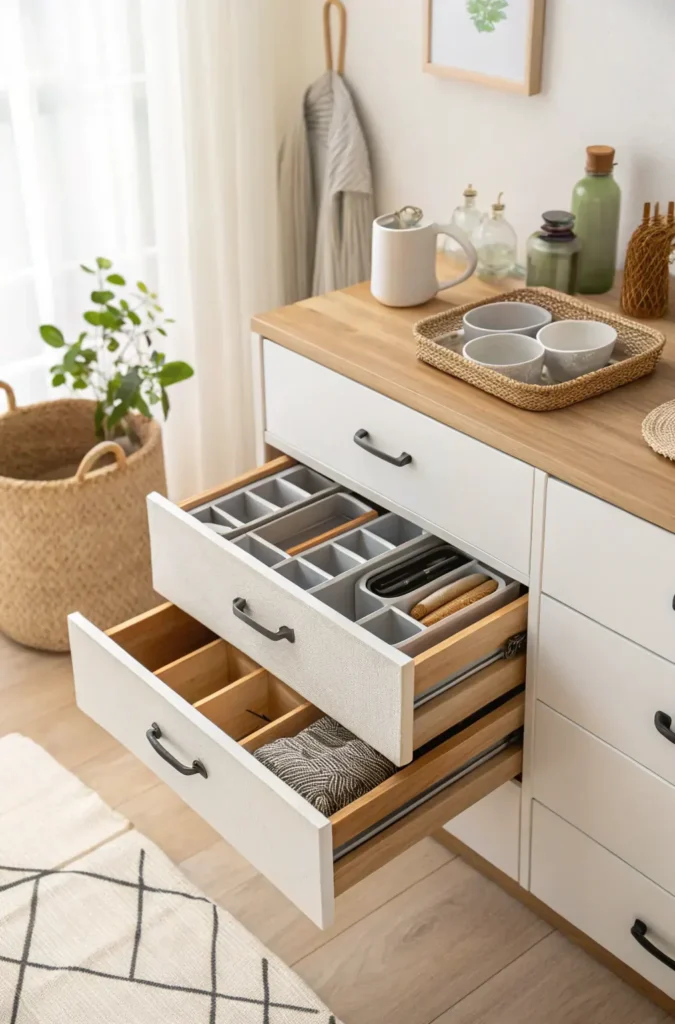
9. A Small Herb Corner with Simple Planters
Create a compact herb station near a window with ceramic pots and a small wooden shelf. Practical tip: choose herbs that thrive indoors like basil or chives.
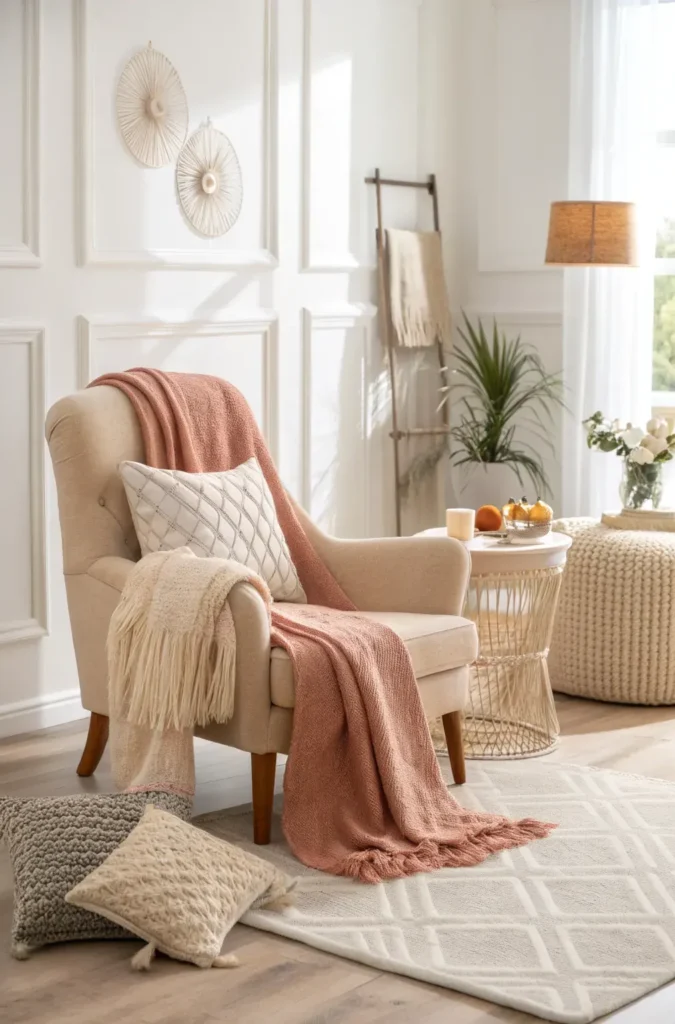
10. Warm Textiles for Seating
Add linen seat cushions or natural fiber stools to soften hard surfaces. Practical tip: choose removable covers for easy cleaning.
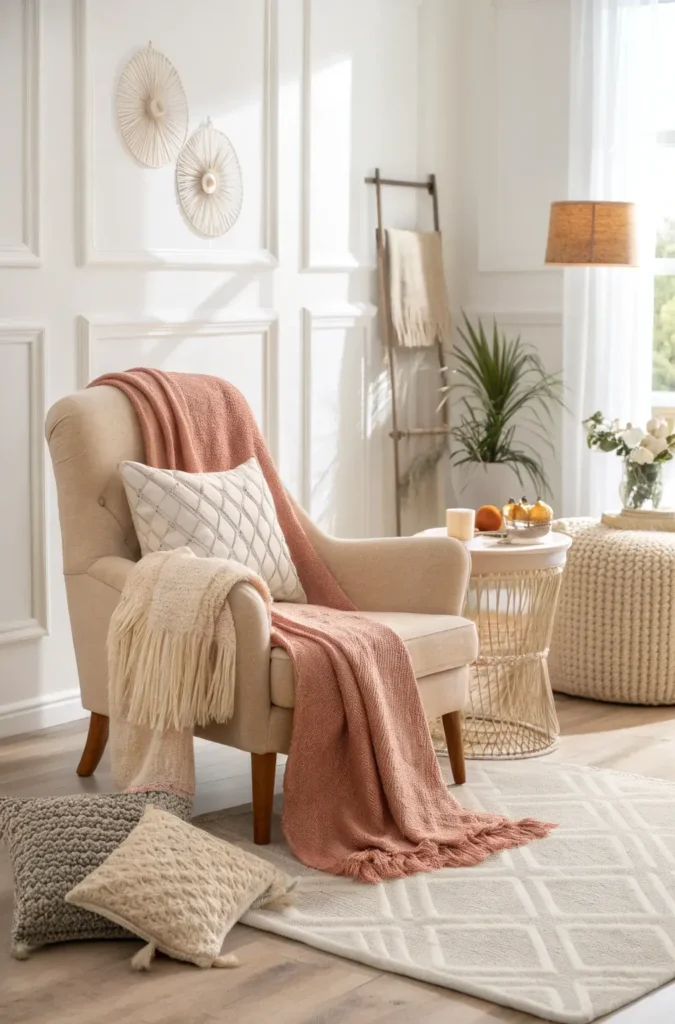
11. Low, Uncluttered Countertops
Keep countertops intentionally sparse with only daily essentials visible. Practical tip: store seldom-used items in cabinets to preserve serenity.
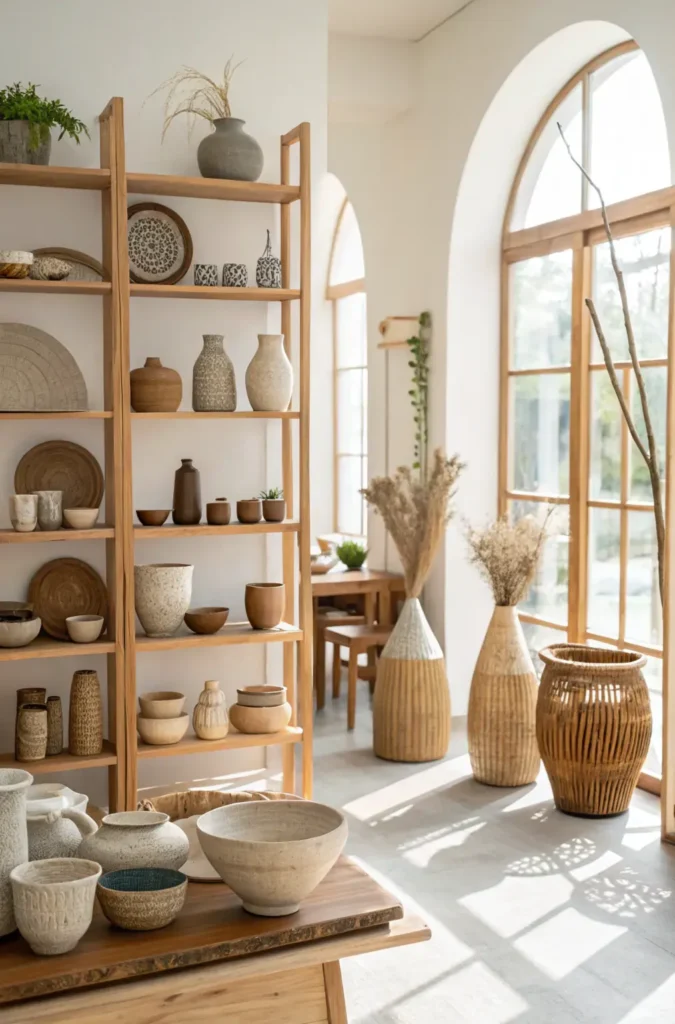
12. Handmade Pottery as Functional Decor
Use hand-thrown bowls and mugs in daily routines to add humanity and tactility. Practical tip: group pottery in odd numbers for visual rhythm.
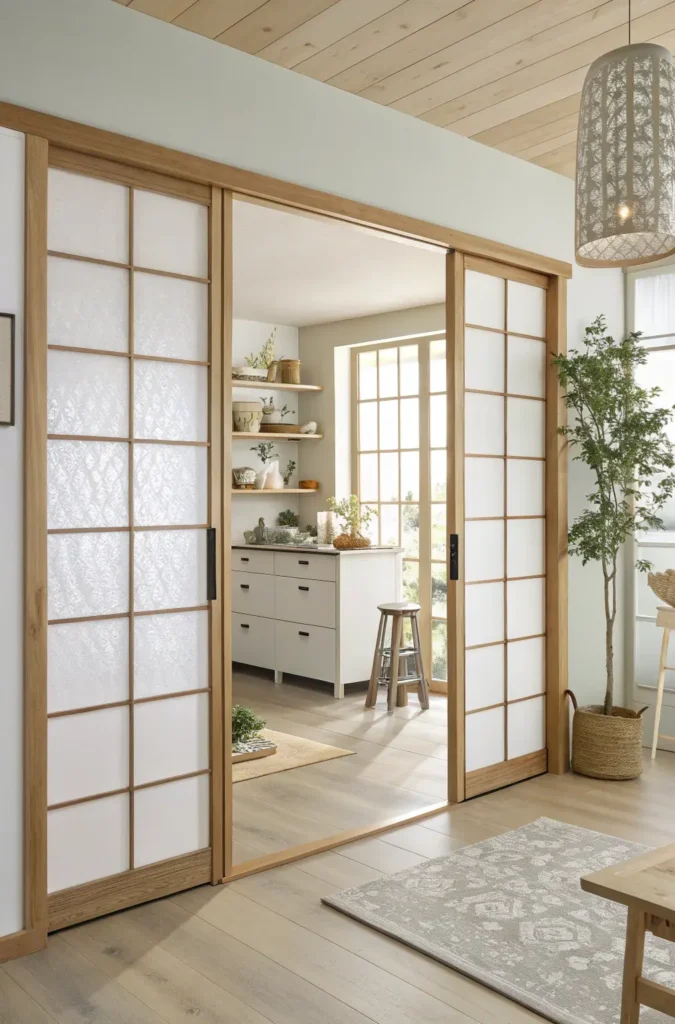
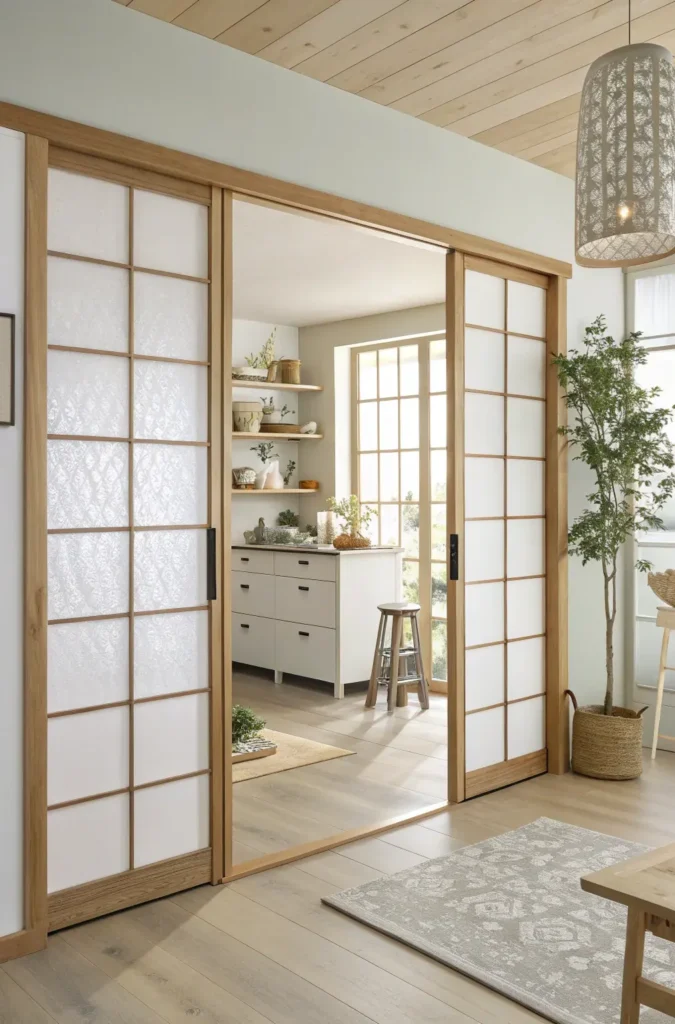
13. Sliding or Shoji-Inspired Doors for Pantry
Use sliding doors with simple frames to save space and add a quiet architectural detail. Practical tip: choose translucent panels for diffused light.
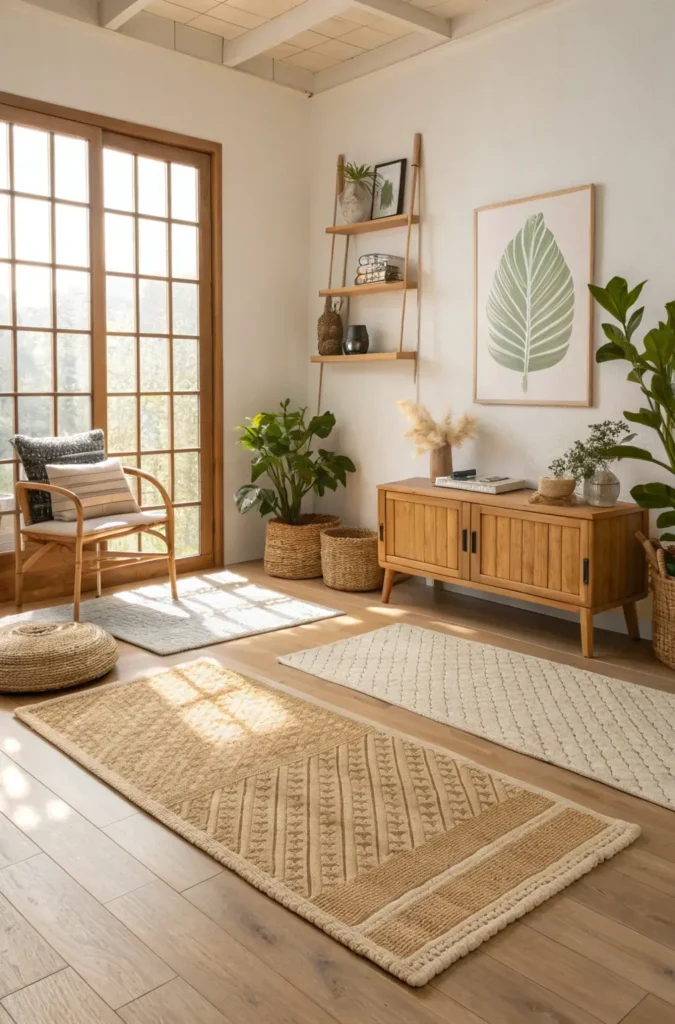
14. Natural Fiber Rugs in Work Zones
Place a flatweave rug in front of the sink to add comfort and warmth underfoot. Practical tip: select washable or easy-to-clean fibers.
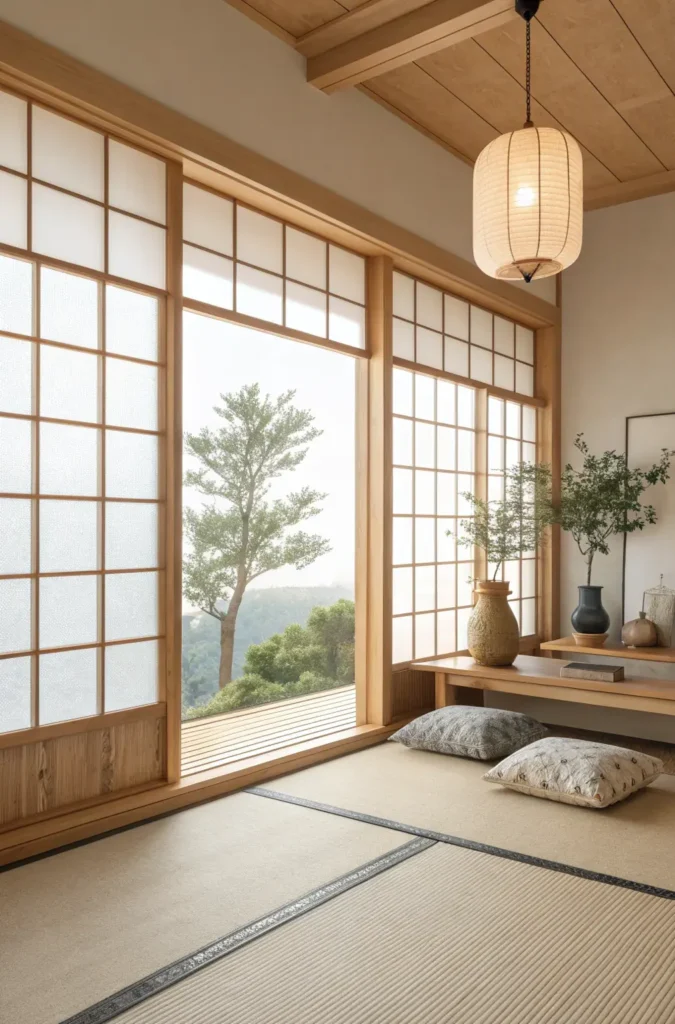
15. Minimal Window Treatments for Soft Light
Use simple roller shades or linen panels to filter light while maintaining clean lines. Practical tip: install shades close to the window for a tidy profile.
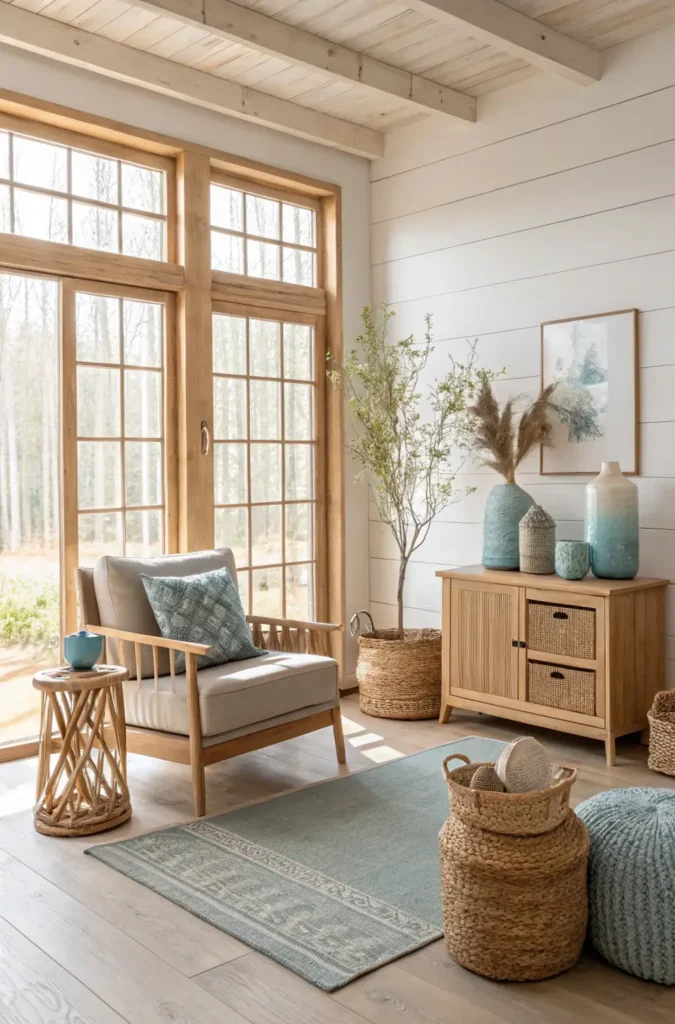
16. Thoughtful Color Accents in Muted Tones
Introduce muted color accents like deep moss or warm clay through small appliances or ceramics to ground the palette. Practical tip: keep accents limited and repeat colors sparingly for cohesion.
Common Mistakes to Avoid
– Over-accessorizing counters, keep surfaces sparse.
– Choosing too-dark woods that feel heavy, prefer lighter tones.
– Mixing too many metallics, maintain a limited finish palette.
Recommended Items
– Matte wood cabinets sample
– Neutral stone worktop samples
– Rattan pendant
– Bamboo drawer organizers
– Handmade pottery
– Natural fiber rugs
FAQs
What defines Japandi style? Japandi blends Japanese minimalism and Scandinavian warmth, focusing on natural materials, muted palettes, and functional beauty.
Can Japandi work in small kitchens? Yes, its focus on function, integrated solutions, and calm palettes is ideal for compact spaces.
What materials are best for a Japandi kitchen? Light woods, natural stone or porcelain, matte metals, and natural textiles all work well.
How do I keep counters uncluttered? Designate storage for daily items and use trays to corral essentials, keeping most things hidden.
Are handmade pieces necessary? They help add warmth and personality but aren’t required; curated, simple objects can achieve a similar effect.
Conclusion
Japandi kitchens offer a calm, functional, and tactile environment. Focus on natural materials, thoughtful storage, and a restrained palette to create a kitchen that supports daily life and soothes the senses.